
If you’re looking for the best VR-ready laptops for wireless PCVR in 2026, I recommend the MSI Ultra Thin 15 for portability, the MSI GT73VR Titan Pro-202 for powerful performance, and the Alienware x15 R1 for seamless wireless connection and high-end graphics. These models balance GPU power, wireless tech, and cooling to enhance your VR experience. Keep exploring, and you’ll find even more insights to help you pick the perfect machine.
Key Takeaways
- Look for laptops with high-performance GPUs like NVIDIA RTX 3060 or better for smooth wireless VR experiences.
- Ensure support for Wi-Fi 6/6E and Bluetooth 5.0+ for reliable, low-latency wireless connectivity.
- Prioritize models with powerful multi-core Intel Core i7/i9 processors and at least 16GB RAM for optimal performance.
- Choose laptops with high-resolution displays (Full HD or 4K) and efficient cooling systems for immersive visuals and hardware longevity.
- Verify the availability of multiple USB 3.0+, Thunderbolt ports, and external display options for seamless VR peripheral connectivity.
| MSI Ultra Thin 15 Gaming Laptop Bundle | 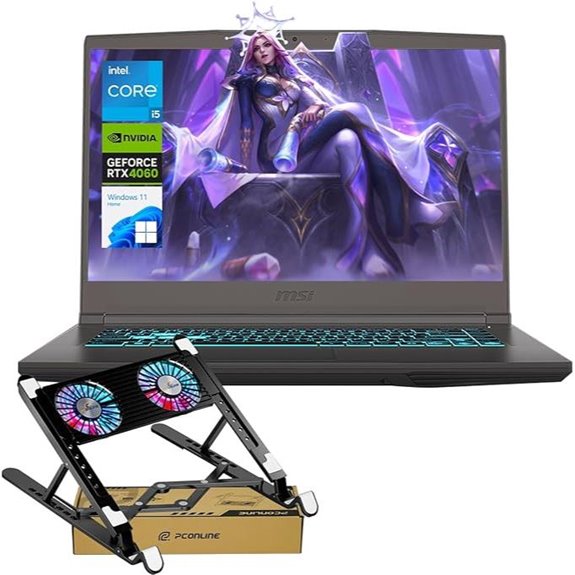 | Portable Powerhouse | Display Size: 15.6 inches | Refresh Rate: 144Hz | Graphics Card: NVIDIA GeForce RTX 4060 | VIEW LATEST PRICE | See Our Full Breakdown |
| MSI GT73VR Titan Pro-202 Gaming Laptop 17.3 | 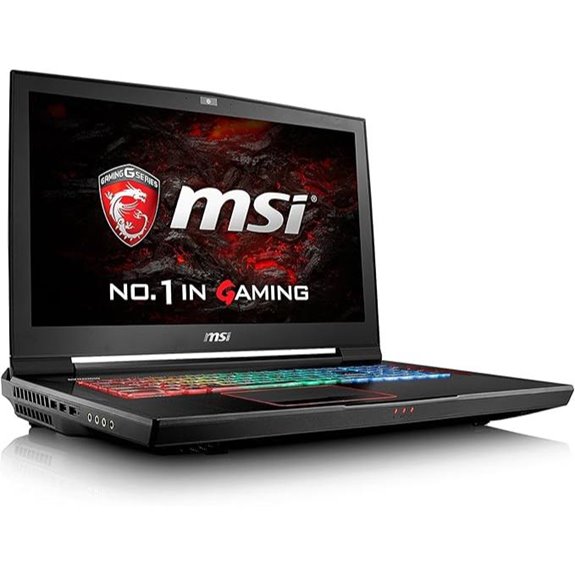 | Desktop Replacement | Display Size: 17.3 inches | Refresh Rate: 120Hz | Graphics Card: NVIDIA GeForce GTX 1080 | VIEW LATEST PRICE | See Our Full Breakdown |
| Alienware x15 R1 VR Gaming Laptop with RTX 3070 |  | Premium Performance | Display Size: 15.6 inches | Refresh Rate: 360Hz | Graphics Card: NVIDIA GeForce RTX 3070 | VIEW LATEST PRICE | See Our Full Breakdown |
More Details on Our Top Picks
MSI Ultra Thin 15 Gaming Laptop Bundle
Looking for a lightweight yet powerful laptop that can handle wireless PCVR in 2026? The MSI Ultra Thin 15 Gaming Laptop Bundle is a perfect choice. It features a 15.6″ FHD IPS display with a 144Hz refresh rate, making visuals smooth and immersive. Weighing just 4.1 pounds, it’s highly portable, with a sleek gray chassis. Equipped with an Intel Core i5 processor and NVIDIA GeForce RTX 4060 GPU, it delivers excellent performance for gaming and demanding tasks. Plus, with Wi-Fi 6 and Bluetooth, you get fast, reliable wireless connectivity. This VR-ready device, bundled with cooling accessories, combines power and portability for seamless wireless PCVR experiences.
- Display Size:15.6 inches
- Refresh Rate:144Hz
- Graphics Card:NVIDIA GeForce RTX 4060
- VR Ready:Yes
- Operating System:Windows 11 Home
- Weight:4.10 pounds
- Additional Feature:Supports Wi-Fi 6 connectivity
- Additional Feature:Backlit keyboard included
- Additional Feature:Modern portable design
MSI GT73VR Titan Pro-202 Gaming Laptop 17.3
The MSI GT73VR Titan Pro-202 is an ideal choice for serious gamers and VR enthusiasts who need powerful performance in a portable package. Its 17.3-inch FHD display with a 120Hz refresh rate and 5ms response time guarantees smooth visuals, while the NVIDIA GeForce GTX 1080 graphics handle demanding VR titles effortlessly. With a robust Intel Core i7-6820HK processor and 32GB of RAM, it delivers seamless multitasking and gaming. The laptop’s cooling system keeps temperatures in check during intense sessions, and its VR readiness, Thunderbolt 3, and advanced networking assure low latency and high-speed connectivity for wireless PCVR experiences.
- Display Size:17.3 inches
- Refresh Rate:120Hz
- Graphics Card:NVIDIA GeForce GTX 1080
- VR Ready:Yes
- Operating System:Windows 10
- Weight:8.59 pounds
- Additional Feature:Ultra-fast 120Hz display
- Additional Feature:Cooler Boost Titan cooling
- Additional Feature:Customizable RGB keyboard
Alienware x15 R1 VR Gaming Laptop with RTX 3070
If you want a laptop that combines powerful graphics with smooth VR performance, the Alienware x15 R1 with RTX 3070 is an excellent choice. Its 15.6-inch FHD display with a 360Hz refresh rate and 1ms response time guarantees fluid visuals for VR gaming. Powered by an 11th Gen Intel Core i7 processor, 16GB RAM, and a 1TB SSD, it handles demanding titles effortlessly. The RTX 3070 GPU offers exceptional graphics, while quad fan cooling keeps temperatures in check during intense sessions. Sleek and lightweight at just over 5 pounds, it’s perfect for gaming on the go, supporting seamless wireless PCVR experiences.
- Display Size:15.6 inches
- Refresh Rate:360Hz
- Graphics Card:NVIDIA GeForce RTX 3070
- VR Ready:Yes
- Operating System:Windows 11 Home
- Weight:5.2 pounds
- Additional Feature:360Hz high refresh rate
- Additional Feature:Alienware quad fan cooling
- Additional Feature:Built-in 0.92 MP camera
Factors to Consider When Choosing a VR Ready Laptop for Wireless PCVR

When selecting a VR ready laptop for wireless PCVR, I focus on key factors like graphics card power, wireless connectivity options, and processor performance. High display resolution and good battery life are also essential for an immersive experience. Considering these points helps guarantee the laptop meets both performance demands and portability needs.
Graphics Card Power
Choosing a powerful graphics card is vital for a smooth and immersive wireless PCVR experience. A high-performance GPU, like an NVIDIA RTX 3060 or better, is necessary to handle demanding VR rendering tasks without lag. The GPU’s VRAM, ideally 8GB or more, guarantees detailed virtual environments run smoothly, avoiding stuttering or delays. A robust graphics card also guarantees compatibility with the latest VR headsets and supports high-resolution, high-refresh-rate displays, which are essential for immersion. Additionally, thermal management and power efficiency impact sustained performance during extended sessions. Investing in a top-tier GPU not only enhances current VR experiences but also future-proofs your system for upcoming titles and updates, ensuring your laptop remains capable as VR technology advances.
Wireless Connectivity Options
Reliable wireless connectivity is crucial for a seamless wireless PCVR experience, so it’s necessary to pay close attention to a laptop’s networking capabilities. I look for Wi-Fi 6 (802.11ax) or higher support to confirm faster, more dependable connections that minimize lag. Dual-band Wi-Fi, supporting both 2.4GHz and 5GHz, helps optimize bandwidth and reduce latency during intense VR sessions. Bluetooth 5.0 or newer is essential for quick, stable connections with controllers and accessories. I also check that the wireless hardware supports high data transfer rates for smooth streaming of VR content. Additionally, gaming-grade network adapters like Killer Wi-Fi are a plus, as they prioritize network traffic, ensuring that VR streams receive the bandwidth they need without interruptions.
Processor Performance Level
A powerful processor is vital for smooth and responsive wireless PCVR experiences because it directly influences rendering speed and latency. I look for laptops with high-performance CPUs like Intel Core i7 or i9, which handle VR applications more efficiently and cut down lag. Multi-core processors with at least 8 cores are ideal, as they provide better parallel processing for demanding VR tasks and background multitasking. A higher clock speed, 3.5 GHz or above, ensures faster data processing, indispensable for real-time VR rendering. Modern VR-ready laptops often feature latest-generation processors, such as Intel’s 12th or 13th Gen, offering improved efficiency and power. Overall, the processor’s performance level directly impacts high frame rates, reducing lag and motion sickness, making it a key factor in choosing the right laptop.
Display Resolution Quality
The display resolution quality plays a vital role in delivering immersive and detailed VR experiences, especially when wireless PCVR demands high visual fidelity. A higher resolution, like 1920×1080 pixels or above, provides clearer visuals and reduces the screen-door effect, making virtual worlds feel more lifelike. For even better visual quality, some laptops offer 4K or ultra-wide resolutions, but these require more powerful GPUs to run smoothly. It is necessary to balance resolution with refresh rate and response time to maintain smooth, responsive gameplay. Additionally, a high-resolution display with accurate colors and wide viewing angles enhances comfort during long VR sessions. Choosing the right resolution ensures an immersive experience without sacrificing performance or visual clarity.
Battery Life Duration
Since wireless PCVR relies heavily on battery power, choosing a laptop with longer battery life becomes essential for uninterrupted gaming sessions. High-performance VR laptops often have shorter battery durations because of demanding CPUs and GPUs, which drain power quickly during intense VR use. Battery life can vary greatly depending on the activity; gaming and VR applications tend to consume more power than basic tasks. To maximize wireless operation time, look for laptops with larger capacity batteries measured in watt-hours. Additionally, efficient power management features and hardware optimization can help extend battery life during VR sessions. Ultimately, selecting a laptop with a balance of high performance and substantial battery capacity ensures you can enjoy longer, more immersive wireless VR experiences without frequent recharges.
Cooling System Efficiency
Choosing a VR-ready laptop with an efficient cooling system is essential because intense VR sessions generate substantial heat that can throttle performance. An effective cooling system keeps temperatures in check, ensuring smooth gameplay and preventing lag. High-quality designs often feature multiple heat pipes, strategically placed fans, and advanced airflow to dissipate heat quickly. Cooler components also extend hardware lifespan and preserve battery life, especially during long VR sessions. Additionally, a well-designed cooling system minimizes noise, maintaining immersion without distracting fan sounds. Monitoring system temperatures helps verify cooling performance and allows adjustments if needed. Prioritizing cooling efficiency means you’ll enjoy consistent, high-quality VR experiences without overheating concerns or hardware degradation, making it a crucial factor when selecting a laptop for wireless PCVR in 2026.
Port and Expansion
To guarantee smooth and reliable wireless PCVR experiences, it’s essential to prioritize port and expansion options on a VR-ready laptop. Multiple USB 3.0 or higher ports are crucial for connecting VR peripherals like sensors, controllers, and accessories simultaneously. Thunderbolt 3 or 4 ports are valuable for high-speed data transfer and future expandability, enabling faster connections for external GPUs or storage. An HDMI or DisplayPort output ensures compatibility with external displays or VR headsets that require these connections. Additionally, accessible RAM and SSD slots make upgrades straightforward, helping the laptop keep pace with evolving VR demands. Finally, verifying the number and type of ports supports both seamless wireless connectivity and stable wired connections, which are vital for a consistent PCVR experience.
Frequently Asked Questions
How Long Does Battery Life Typically Last During Wireless VR Sessions?
Battery life during wireless VR sessions usually lasts around 2 to 4 hours, depending on the device and intensity of use. I’ve found that lighter experiences or lower settings tend to extend battery life, while demanding graphics or longer sessions drain it faster. To get the most out of your VR, I recommend carrying a portable charger or swapping batteries if possible. It’s always best to plan for some downtime to recharge.
What Wireless Standards Are Supported for Seamless PCVR Connectivity?
Think of wireless standards like the lanes on a highway, guiding your data smoothly to avoid traffic jams. For seamless PCVR connectivity, I look for laptops supporting Wi-Fi 6E and Bluetooth 5.2, which offer faster speeds and lower latency. These standards act as express lanes, ensuring your VR experience stays fluid and responsive without lag or interruptions. Staying updated with these protocols makes my wireless VR sessions feel truly immersive.
Can These Laptops Upgrade Their Internal Components for Better Performance?
Yes, many of these laptops allow upgrades, especially RAM and storage. However, upgrading the GPU or CPU can be tricky or impossible in some models because of integrated components or compact designs. I recommend checking the specific model’s upgrade options before buying. If you’re aiming for top performance, choosing a laptop with user-accessible components is the best way to extend its lifespan and stay VR-ready.
Are There Specific Cooling Requirements for Prolonged Wireless VR Use?
Cooling is absolutely essential for prolonged wireless VR use, or your laptop might overheat faster than a rocket launch! I always recommend using a high-quality cooling pad and ensuring proper ventilation. Keep the device in a cool, well-ventilated area, and avoid blocking airflow vents. Regularly cleaning fans and dust filters also helps maintain peak performance, preventing overheating during those intense VR sessions.
How Do These Laptops Handle Latency Issues During Wireless VR Gameplay?
I’ve found that top VR-ready laptops handle latency well, thanks to advanced hardware and optimized networking. They often feature high-refresh-rate displays, powerful GPUs, and fast processors that minimize lag. Plus, many come with Wi-Fi 6E or 7 support, reducing wireless interference. Overall, these laptops guarantee smooth, immersive gameplay by prioritizing low latency, so I don’t experience frustrating delays during wireless PCVR sessions.
Conclusion
So there you have it—your ticket to wireless VR heaven, or at least a decent shot at it. Whether you pick the ultra-thin marvel or the beastly Titan, just remember: all that fancy tech won’t help if you forget to charge it or, heaven forbid, actually put on the headset. But hey, at least you’ll look cool trying, right? Happy gaming, and may your virtual adventures be glitch-free—though we all know that’s asking for too much!