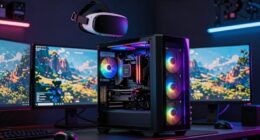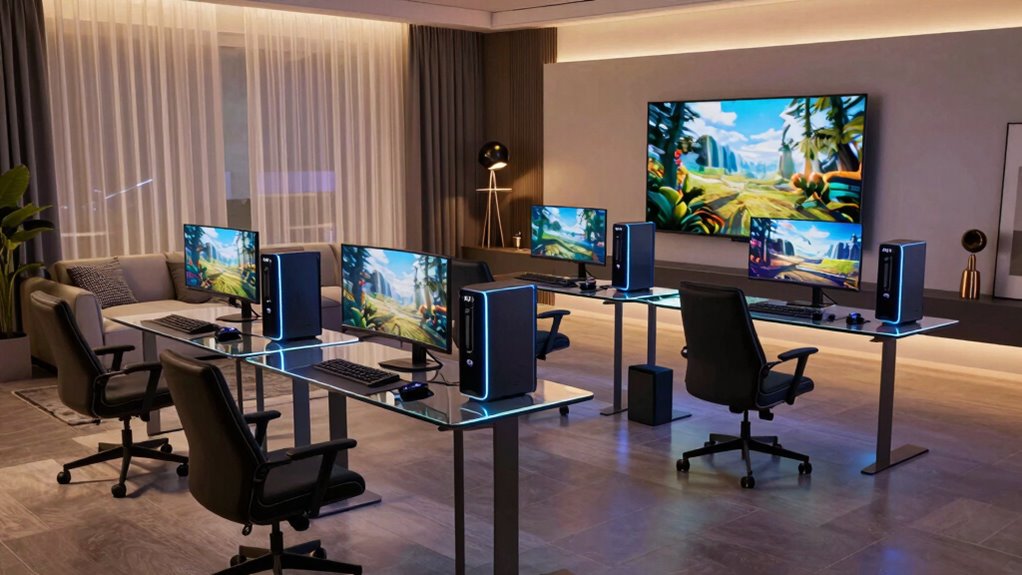

If you’re looking for the best living room VR gaming PCs in 2026, I recommend models with powerful processors like the latest i7s, high-end NVIDIA GPUs such as RTX 3060 or 4060, and at least 16GB of fast DDR5 RAM. They should have ample fast storage, multiple USB and video ports, and sleek designs for your space. Keep an eye on cooling and future upgrade options so your setup stays premier. Stick around to discover the top options that can elevate your VR experience.
Key Takeaways
- High-performance CPUs and GPUs like Intel Core i7-14700F and RTX 4060 ensure smooth, immersive VR experiences in living room setups.
- Modern connectivity options such as USB-C, HDMI, and WiFi 6 guarantee seamless headset and peripheral integration.
- Compact, stylish cases with RGB lighting and tempered glass panels enhance aesthetics suitable for living room environments.
- Systems with 16GB DDR5 RAM and fast NVMe SSDs provide quick load times and multitasking for extensive VR libraries.
- Budget-friendly options around $1,000 to premium models over $3,000 offer a range of features tailored for elevated VR gameplay.
CyberPowerPC Gamer Xtreme VR Gaming PC

If you’re looking for a reliable, high-performance PC to power your living room VR gaming setup in 2026, the CyberPowerPC Gamer Xtreme is an excellent choice. It features an Intel Core i5-11400F processor, 8GB DDR4 RAM, and a 500GB PCIe NVMe SSD, ensuring fast load times and smooth gameplay. The NVIDIA GeForce RTX 2060 6GB graphics card handles demanding VR experiences effortlessly. With Windows 11 Home, multiple connectivity options, and RGB lighting, it’s built for immersive gaming and multimedia. Its tempered glass side panel adds style, while the 7.1 channel audio boosts your VR environment’s realism. This PC combines power, aesthetics, and adaptability for an ideal living room setup.
CyberPowerPC Gamer Xtreme VR Gaming PC

The CyberPowerPC Gamer Xtreme VR Gaming PC is an excellent choice for gamers seeking a powerful, ready-to-play system right out of the box. It packs an Intel Core i5-14400F with 10 cores, paired with an NVIDIA GeForce RTX 4060 8GB GPU, ensuring smooth VR experiences and high-quality graphics. With 16GB DDR5 RAM and a 2TB PCIe Gen4 NVMe SSD, it offers fast load times and ample storage. Features like WiFi 5, multiple USB ports, HDMI, DisplayPorts, and Windows 11 make setup easy. Its sleek design, RGB lighting, and solid performance make it a compelling option for living room VR gaming in 2026.
CyberPowerPC Gamer Xtreme VR Gaming PC

For gamers seeking a powerful and reliable PC for immersive VR experiences, the CyberPowerPC Gamer Xtreme VR Gaming PC stands out. Equipped with an Intel Core i5-14400F 10-core processor, NVIDIA GeForce RTX 5060 Ti graphics, and 16GB DDR5 RAM, it delivers smooth, high-quality visuals. Its 2TB PCIe 4.0 SSD guarantees rapid load times and ample storage. The system supports Windows 11, WiFi 6, and Bluetooth 5.3, with multiple connectivity options like HDMI, DisplayPort, and USB-C. Its sleek case features tempered glass and RGB lighting, making it perfect for a modern living room setup while providing the performance needed for intense VR gaming.
CyberPowerPC Gamer Xtreme VR Gaming PC

Looking for a VR gaming PC that can handle intense virtual experiences without breaking a sweat? The CyberPowerPC Gamer Xtreme VR is exactly what you need. It packs an Intel Core Ultra 5 225F processor with 10 cores, paired with the reliable B860 chipset, ensuring smooth multitasking and gaming. With 16GB DDR5 RAM and a speedy 2TB PCIe 4.0 NVMe SSD, performance and storage are excellent. The NVIDIA GeForce RTX 5060 8GB graphics card delivers stunning visuals, perfect for immersive VR. Plus, fast WiFi 6 and Bluetooth 5.3 keep you connected, while the RGB-lit tempered case adds style. It’s a powerful, stylish choice for living room VR gaming.
CyberPower Gamer Xtreme VR Gaming PC

If you want a high-performance PC that can handle immersive VR gaming without breaking a sweat, the CyberPower Gamer Xtreme VR Gaming PC is an excellent choice. It features an Intel Core i7-14700F with 20 cores, a NVIDIA GeForce RTX 5060 Ti 16GB graphics card, and 16GB DDR5 RAM at 6000 MHz, ensuring smooth gameplay and fast load times. The 1TB PCIe 4.0 NVMe SSD offers quick data transfer, while support for 4K resolution enhances visual clarity. With WiFi 6, Bluetooth 5.3, multiple ports, and a sleek tempered glass case with RGB lighting, it’s designed for immersive, stylish VR experiences.
CyberPowerPC Gamer Xtreme VR Gaming PC

The CyberPowerPC Gamer Xtreme VR Gaming PC stands out as an excellent choice for serious gamers who want top-tier performance in their living room setup. It features an Intel Core Ultra 5 225F processor with 10 cores at 3.3GHz, paired with NVIDIA GeForce RTX 5050 8GB graphics for smooth, immersive gameplay. The system’s 16GB DDR5 RAM and 1TB PCIe 4.0 SSD ensure fast multitasking and quick load times. Connectivity options include WiFi 6, Bluetooth 5.3, multiple USB ports, HDMI, and DisplayPort. Plus, its sleek tempered case with RGB lighting makes it both stylish and functional for high-performance VR gaming at home.
CyberPowerPC Gamer Xtreme VR Gaming PC

Gamers who want a high-performance VR experience in their living room will find the CyberPowerPC Gamer Xtreme VR Gaming PC an excellent choice, thanks to its powerful NVIDIA GeForce RTX 5060 graphics card and fast DDR5 RAM. It’s equipped with an Intel Core i5-13400F processor, ensuring smooth multitasking and gaming. The 16GB DDR5 RAM and 1TB SSD deliver quick load times and seamless gameplay. The system supports high-resolution VR and multimedia tasks, with multiple connectivity options like HDMI, DisplayPort, and USB-C. Its sleek black design, RGB lighting, and included keyboard and mouse make it a stylish, ready-to-go setup for immersive gaming.
CyberPowerPC Gamer Xtreme VR Gaming PC

For those seeking a powerful yet accessible VR gaming PC, the CyberPowerPC Gamer Xtreme VR offers an impressive combination of hardware and design. It features an Intel Core i5-11600KF processor, 16GB DDR4 RAM, and an NVIDIA GeForce RTX 3060 12GB graphics card, ensuring smooth, high-quality visuals. The system includes a 500GB NVMe SSD and a 1TB HDD for ample storage, plus support for Windows 11. Its sleek tower design with tempered glass and RGB lighting enhances aesthetics and airflow. With multiple connectivity options, including USB ports, HDMI, DisplayPort, and Ethernet, it’s built for immersive VR gaming and multimedia performance.
Factors to Consider When Choosing a Living Room VR Gaming PC

When choosing a living room VR gaming PC, I focus on hardware performance to guarantee smooth gameplay and realistic visuals. I also consider connectivity options and space constraints to make setup easy and fit seamlessly into my living room. Finally, I check compatibility with accessories and quality of audio and visuals to enhance the overall experience.
Hardware Performance Capabilities
Choosing the right hardware is crucial for a smooth and immersive VR gaming experience in your living room. A high-performance CPU, like an Intel Core i5 or i7, guarantees your system handles demanding VR applications without lag. Pair it with a dedicated GPU with at least 8GB of VRAM, such as the NVIDIA GeForce RTX 3060 or higher, to render stunning visuals and maintain immersion. Adequate RAM—16GB or more—keeps multitasking seamless, especially when running complex games or multimedia. Fast storage solutions like NVMe SSDs with 1TB+ capacity cut load times and quicken game launches. Additionally, support for the latest connectivity standards, including WiFi 6 and multiple USB ports, guarantees smooth data transfer and compatibility with VR devices. These performance capabilities are essential for an ideal VR experience.
Connectivity Options Needed
To guarantee your living room VR gaming PC delivers a seamless experience, paying close attention to connectivity options is vital. You’ll want multiple USB ports, including USB-C and USB-A, for connecting VR headsets, controllers, and accessories without hassle. HDMI and DisplayPort outputs are essential for supporting high-resolution VR displays and multiple monitors, enhancing immersion. A reliable LAN port and WiFi 6 support ensure stable online gameplay and smooth firmware updates. Bluetooth 5.3 or higher is a must for effortless pairing with wireless peripherals. Additionally, audio jacks and 7.1 channel support help deliver immersive sound, making your VR experience more realistic. Prioritizing these connectivity features guarantees a smooth, hassle-free gaming session in your living room.
Space and Size Constraints
Have you measured your living room space to make sure your VR gaming setup fits comfortably? It’s essential to determine the available floor area to avoid clutter and guarantee easy movement around your setup. Consider the height and width of your PC case, especially if you plan to place it on a desk, shelf, or stand. You’ll also need extra space for VR headset sensors, cables, and movement during gameplay. If your living room is small or densely furnished, a compact or small form factor PC might be the best choice to save space. Ultimately, ensure there’s enough ventilation and airflow around your PC to prevent overheating, especially in confined or cluttered areas. Proper planning ensures a seamless, comfortable VR experience without rearranging your living space.
Visual and Audio Quality
When selecting a living room VR gaming PC, visual and audio quality play a vital role in creating an immersive experience. High-resolution displays, like 1920×1080 or 4K, are essential for crisp visuals that draw you into the game world. A powerful graphics card, such as an NVIDIA GeForce RTX series, guarantees smooth rendering and reduces lag, enhancing visual fidelity. Equally important is a high-quality audio system with 7.1 channel support, providing spatial sound that makes virtual environments feel real. This combination of sharp visuals and immersive audio heightens engagement and realism. While RGB lighting can enhance aesthetics, it doesn’t directly impact quality. Support for multiple display outputs like HDMI and DisplayPort assures compatibility with high-end VR headsets, completing the sensory experience.
Compatibility With Accessories
Ensuring your living room VR gaming PC is compatible with accessories is essential for a seamless experience. I look for a PC with multiple USB-C and USB-A ports so I can connect my VR headset, controllers, and sensors without hassle. It’s also important that the graphics card supports the latest VR standards, ensuring compatibility with current and future accessories. I verify that there are enough ports for audio headsets, microphones, and other peripherals to enhance immersion. Additionally, I check for HDMI and DisplayPort outputs, as many VR headsets need specific video connections. Finally, I make sure the hardware and software meet the VR headset’s system requirements to avoid connectivity issues. Compatibility is key to avoiding frustration and maximizing my VR setup.
Warranty and Support Coverage
Choosing a living room VR gaming PC with solid warranty and support coverage is essential to avoid unexpected expenses and downtime. I look for at least a one-year parts and labor warranty to cover hardware defects and malfunctions. Free lifetime tech support is a huge plus, ensuring I can troubleshoot issues anytime without extra costs. I also check if the warranty includes accidental damage or if it’s limited to manufacturer defects and hardware failures. Clear terms on repairs, replacements, and quick response times are important to keep my setup running smoothly. Additionally, I prefer support options accessible through multiple channels—online, phone, or in-store—so I can get help quickly whenever needed. Good coverage offers peace of mind and keeps my VR experience uninterrupted.
Budget and Pricing Range
Setting a clear budget is the first step in selecting a living room VR gaming PC, as prices can vary widely from around $1,000 for entry-level setups to over $3,000 for premium systems. Consider the differences between mid-range graphics cards like the NVIDIA GeForce RTX 3060 and high-end options such as the RTX 4060 or RTX 5060 Ti, which substantially impact cost and performance. Don’t forget to include additional expenses for peripherals like VR headsets, controllers, and accessories, which can add hundreds to your total. To get the best value, compare features like storage, RAM, and processor performance within your budget. Keep in mind that ongoing costs for upgrades or repairs should also fit within your initial price range to ensure long-term enjoyment.
Frequently Asked Questions
What Is the Recommended Room Size for Optimal VR Experiences?
I recommend a room size of at least 8 by 10 feet for ideal VR experiences. This space gives you enough room to move comfortably without feeling cramped, reducing the risk of bumping into furniture or walls. I always make sure to clear the area of obstacles before jumping into VR, so my gameplay stays safe and immersive. A spacious room truly enhances my virtual adventures.
How Do Cooling Systems Impact VR PC Performance in Living Rooms?
Cooling systems are essential for VR PC performance in living rooms because they prevent overheating during intense gaming sessions. When a PC runs too hot, it can throttle performance, cause crashes, or damage components. By investing in quality cooling—like liquid cooling or high-performance fans—you guarantee consistent performance, quiet operation, and extend your hardware’s lifespan. Proper cooling keeps your VR experience smooth, immersive, and worry-free.
Are There Specific Noise Level Considerations for Living Room VR PCS?
Absolutely, noise levels matter more than you’d think. Imagine trying to enjoy a VR game while your PC sounds like a jet engine—hard to focus, right? I always look for systems with quiet fans or liquid cooling, so my living room stays peaceful. Keeping noise low guarantees immersive gameplay without turning my cozy space into a noisy airport terminal. Silent operation truly elevates the whole VR experience.
What Are the Power Consumption Implications of High-End VR Gaming PCS?
High-end VR gaming PCs do consume a lot of power, which can lead to higher electricity bills and increased energy use. I always recommend checking the power supply efficiency and considering energy-saving modes when possible. While they deliver top-tier performance, I advise balancing power consumption with your gaming needs to avoid unnecessary energy waste. Keeping an eye on power requirements helps make sure you enjoy your VR experience without surprises on your energy bill.
How Often Should VR Hardware Be Upgraded for the Best Experience?
Honestly, I upgrade my VR hardware about as often as I change my socks—frequently enough to stay ahead of the curve. Ideally, every 1-2 years, I’d say, but realistically, it depends on your budget and patience. If you want the latest and greatest experience, don’t wait longer than that. Otherwise, enjoy your current setup; just keep in mind, the future’s always just around the corner.
Conclusion
Choosing the right VR gaming PC is like planting a seed that blossoms into immersive worlds and unforgettable moments. With the right balance of power, design, and features, your living room can transform into a personal arcade. Remember, it’s not just about the hardware, but about creating a space where your imagination can run wild. So, pick wisely, and let your gaming setup become the foundation of countless adventures ahead.