
If you’re aiming for ultra settings in VR in 2026, I recommend these top GPUs: the GIGABYTE GeForce RTX 3060 Gaming OC, ASUS RTX 3060 V2 OC, ZOTAC RTX 3060 Twin Edge OC, EVGA RTX 3080 FTW3 Ultra, and ASUS RTX 2060 EVO. They all offer powerful performance, ample VRAM, and excellent cooling features to handle demanding VR environments. Stay with me, and I’ll show you how to pick the best one for your setup.
Key Takeaways
- High CUDA and RT core counts (above 3000 cores) are essential for complex VR rendering at ultra settings.
- 12GB+ VRAM ensures smooth performance with high-resolution textures and detailed environments.
- Support for PCIe 4.0, HDMI 2.1, and DisplayPort 1.4a guarantees optimal data transfer and visual quality.
- Effective cooling and low-noise designs maintain stability and comfort during extended VR sessions.
- GPU prices range from $500 to over $1,500, with market fluctuations impacting availability and deals.
| GIGABYTE GeForce RTX 3060 Gaming OC 12G | 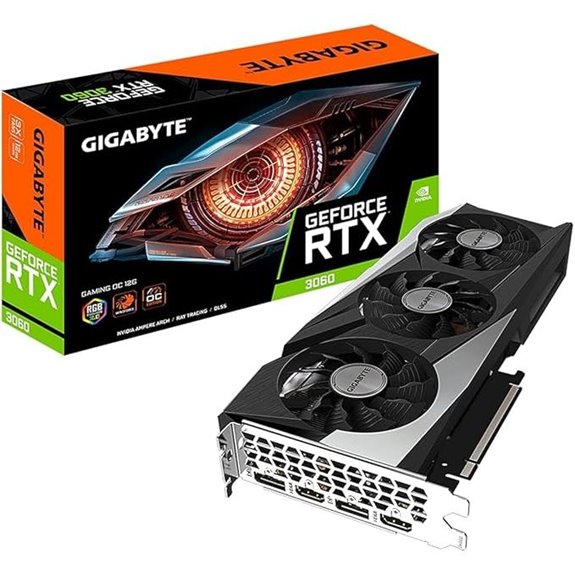 | Gaming Powerhouse | Architecture: NVIDIA Ampere | Memory Size: 12GB GDDR6 | Maximum Resolution: 7680×4320 | VIEW LATEST PRICE | See Our Full Breakdown |
| ASUS GeForce RTX 3060 V2 OC Graphics Card |  | Compact Performance | Architecture: NVIDIA Ampere | Memory Size: 12GB GDDR6 | Maximum Resolution: 7680×4320 | VIEW LATEST PRICE | See Our Full Breakdown |
| ZOTAC GeForce RTX 3060 Twin Edge OC Graphics Card |  | Reliable Runner | Architecture: NVIDIA Ampere | Memory Size: 12GB GDDR6 | Maximum Resolution: 7680×4320 | VIEW LATEST PRICE | See Our Full Breakdown |
| EVGA GeForce RTX 3080 FTW3 Ultra Gaming Graphics Card | 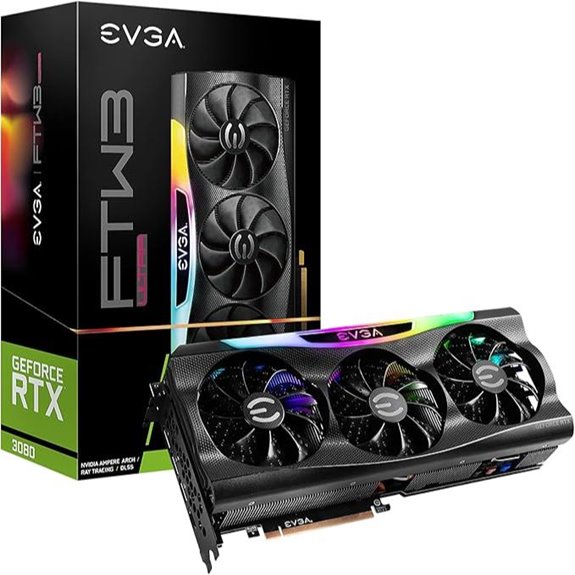 | High-End Beast | Architecture: NVIDIA GeForce RTX 3080 (Ampere) | Memory Size: 10GB GDDR6X | Maximum Resolution: 3840×2160 | VIEW LATEST PRICE | See Our Full Breakdown |
| ASUS GeForce RTX 2060 EVO 6G Graphics Card | 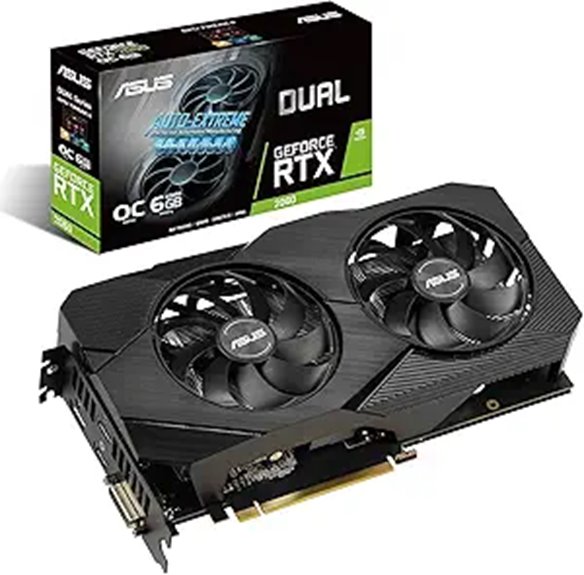 | Budget-Friendly Choice | Architecture: NVIDIA Turing | Memory Size: 6GB GDDR6 | Maximum Resolution: 7680×4320 | VIEW LATEST PRICE | See Our Full Breakdown |
| XFX Radeon RX 580 GTS XXX Edition Graphics Card |  | Versatile Classic | Architecture: AMD Polaris (GCN) | Memory Size: 8GB GDDR5 | Maximum Resolution: 4096×2160 | VIEW LATEST PRICE | See Our Full Breakdown |
More Details on Our Top Picks
GIGABYTE GeForce RTX 3060 Gaming OC 12G
If you’re looking for a reliable GPU that delivers high-performance gaming at ultra settings, the GIGABYTE GeForce RTX 3060 Gaming OC 12G is an excellent choice. It features NVIDIA’s Ampere architecture, second-generation RT Cores, and third-generation Tensor Cores, ensuring smooth gameplay and AI acceleration. With 12GB GDDR6 memory and a core clock of 1837 MHz, it handles high resolutions up to 7680×4320. The WINDFORCE 3X cooling with three fans keeps temperatures in check, while RGB Fusion 2.0 adds style. Compact and durable, it’s perfect for gamers wanting top-tier performance combined with sleek design.
- Architecture:NVIDIA Ampere
- Memory Size:12GB GDDR6
- Maximum Resolution:7680×4320
- Cooling System:WINDFORCE 3X
- Outputs:2x HDMI 2.1, 2x DisplayPort 1.4
- Support for VR:Yes
- Additional Feature:RGB Fusion 2.0 lighting
- Additional Feature:WINDFORCE 3X cooling system
- Additional Feature:Limited hash rate version
ASUS GeForce RTX 3060 V2 OC Graphics Card
The ASUS GeForce RTX 3060 V2 OC Graphics Card stands out as an excellent choice for gamers seeking high-performance VR experiences at ultra settings, thanks to its advanced NVIDIA Ampere architecture. It offers double the FP32 throughput, better power efficiency, and improved ray tracing with 2nd gen RT cores. The card features a boost clock of 1867 MHz in OC mode and 1837 MHz in gaming mode, along with 12GB GDDR6 memory supporting up to 8K resolution. Its Axial-tech fans ensure effective cooling, and its compact design fits well in smaller cases. Overall, it delivers strong performance and reliability for immersive VR gaming.
- Architecture:NVIDIA Ampere
- Memory Size:12GB GDDR6
- Maximum Resolution:7680×4320
- Cooling System:Axial-tech fans
- Outputs:HDMI 2.1, DisplayPort 1.4a
- Support for VR:Yes
- Additional Feature:Axial-tech fan design
- Additional Feature:PCIe 4.0 support
- Additional Feature:Compact 2-slot design
ZOTAC GeForce RTX 3060 Twin Edge OC Graphics Card
For gamers seeking a reliable and high-performance GPU for immersive VR experiences in 2026, the ZOTAC GeForce RTX 3060 Twin Edge OC stands out with its robust NVIDIA Ampere architecture and 12GB of GDDR6 memory. It features 3,584 CUDA cores, a boost clock of 1807 MHz, and supports PCIe 4.0 for fast data transfer. Its advanced cooling system, including IceStorm 2.0 technology, guarantees ideal thermal management, while its compact design fits most cases. With support for up to four displays, high-resolution outputs, and compatibility with DirectX 12 Ultimate, this card delivers impressive visuals and smooth performance for demanding VR gaming.
- Architecture:NVIDIA Ampere
- Memory Size:12GB GDDR6
- Maximum Resolution:7680×4320
- Cooling System:IceStorm 2.0
- Outputs:3x DisplayPort 1.4a, HDMI 2.1
- Support for VR:Yes
- Additional Feature:IceStorm 2.0 cooling
- Additional Feature:Dual-slot width
- Additional Feature:Supports DirectX 12 Ultimate
EVGA GeForce RTX 3080 FTW3 Ultra Gaming Graphics Card
The EVGA GeForce RTX 3080 FTW3 Ultra Gaming Graphics Card stands out as an excellent choice for gamers seeking top-tier performance at 4K resolution, especially in VR. It boasts 10GB of GDDR6X memory, a boost clock of 1800 MHz, and real-time ray tracing to deliver hyper-realistic visuals. Its advanced cooling with iCX3 technology guarantees stability during intense gaming sessions. The ARGB LED lighting adds a customizable touch, and the sturdy metal backplate enhances durability. With a maximum resolution of 3840×2160 and a rated 4.7-star customer review, this card truly powers up your VR experience with premium quality and reliability.
- Architecture:NVIDIA GeForce RTX 3080 (Ampere)
- Memory Size:10GB GDDR6X
- Maximum Resolution:3840×2160
- Cooling System:iCX3 technology
- Outputs:HDMI 2.1, DisplayPort 1.4a
- Support for VR:Yes
- Additional Feature:ARGB LED lighting
- Additional Feature:Metal backplate
- Additional Feature:iCX3 advanced cooling
ASUS GeForce RTX 2060 EVO 6G Graphics Card
If you’re aiming to enjoy immersive VR experiences at ultra settings in 2026, the ASUS GeForce RTX 2060 EVO 6G is an excellent choice thanks to its robust Turing architecture and overclocked performance. It features a 1785 MHz boost clock, 1920 CUDA cores, and 6GB GDDR6 memory, supporting resolutions up to 7680×4320. Its dual-fan cooling with dust resistance guarantees silent operation below 55°C, while the aluminum backplate offers durability. With multiple display outputs and ASUS’s GPU Tweak II software for overclocking and monitoring, it delivers solid performance for VR, especially at a budget-friendly price point.
- Architecture:NVIDIA Turing
- Memory Size:6GB GDDR6
- Maximum Resolution:7680×4320
- Cooling System:Dust-resistant fans, silent operation
- Outputs:HDMI 2.0, DisplayPort 1.4
- Support for VR:Yes
- Additional Feature:Dust-resistant wing-blade fans
- Additional Feature:ASUS GPU Tweak II software
- Additional Feature:Silent operation below 55°C
XFX Radeon RX 580 GTS XXX Edition Graphics Card
Looking for a reliable GPU that delivers solid VR performance at a budget-friendly price? The XFX Radeon RX 580 GTS XXX Edition is a great choice. It boasts a 1386MHz boost clock, 8GB GDDR5 memory, and supports up to 4K resolution, making it VR-ready. Its AMD Polaris architecture and advanced cooling system ensure smooth, efficient performance during intense gaming or VR sessions. Features like dual BIOS and Radeon Chill technology help optimize power and performance. Weighing just over two pounds, it’s compatible with high-resolution systems and offers multiple outputs, including DisplayPort and HDMI. Overall, it’s a dependable, cost-effective option for immersive VR experiences.
- Architecture:AMD Polaris (GCN)
- Memory Size:8GB GDDR5
- Maximum Resolution:4096×2160
- Cooling System:High-performance heatsink, direct heat transfer
- Outputs:HDMI, DisplayPort (multiple options)
- Support for VR:Yes
- Additional Feature:Factory overclocked (1366MHz)
- Additional Feature:Dual BIOS modes
- Additional Feature:AMD LiquidVR technology
Factors to Consider When Choosing a GPU for Ultra Settings VR
When choosing a GPU for ultra settings VR, I focus on key factors like graphics processing power to handle demanding games smoothly and VR-specific features that guarantee compatibility. I also consider memory capacity to support high-resolution textures and the cooling and noise levels for comfort during extended play sessions. Finally, I check power supply requirements to make sure my system can run the GPU reliably without issues.
Graphics Processing Power
Choosing the right GPU for ultra settings VR hinges on understanding its processing power, which directly affects performance and immersion. A GPU with more CUDA and RT cores can handle complex rendering tasks, offering smoother visuals and richer details. Boost clock speeds above 1800 MHz substantially improve frame rates and visual fidelity, *paramount* for demanding VR experiences. Larger VRAM, like 12GB or more, prevents bottlenecks during high-resolution rendering, ensuring seamless performance. Support for PCIe 4.0 and high memory bandwidth (15-19 Gbps) enhances data transfer, reducing latency and lag. Additionally, the GPU’s capacity for real-time ray tracing and AI acceleration boosts realism and immersion by delivering more lifelike environments and dynamic lighting. All these factors combine to define the processing power *fundamental* for ultra settings VR.
VR Compatibility Features
Ensuring your GPU is VR-compatible requires paying attention to key features that enable smooth and immersive experiences. First, it must support HDMI 2.1 or DisplayPort 1.4a to handle the high data transfer rates necessary for seamless visuals. Low latency and high frame rates—ideally above 90 FPS—are essential to prevent motion sickness and guarantee realism. Compatibility with advanced APIs like DirectX 12 Ultimate and Vulkan RT API is also vital for peak rendering performance. Additionally, a GPU should have at least 8GB of VRAM to manage high-resolution content and complex 3D environments without lag. Support for technologies like AMD LiquidVR or NVIDIA VRWorks can further enhance immersion by reducing latency and boosting visual fidelity, making your VR experience truly next-level.
Memory Capacity Needs
A GPU’s memory capacity plays a vital role in delivering smooth, high-quality VR experiences at ultra settings. For demanding VR titles, I recommend at least 8GB of VRAM to handle high-resolution textures and complex scenes without issues. If you want extra headroom for future updates and more detailed environments, 12GB or more is ideal. Insufficient memory can cause stuttering, frame drops, and a drop in visual fidelity during intense VR gameplay. Higher VRAM also benefits advanced features like ray tracing and high-quality anti-aliasing, ensuring these effects run smoothly. While the exact needs depend on the specific titles and settings, aiming for around 10GB to 12GB of VRAM generally provides the best balance for ultra settings VR in 2026.
Cooling and Noise Levels
To enjoy ultra settings VR without distraction, effective cooling and low noise levels are essential. A robust cooling system, like multiple fans or advanced heat dissipation tech, prevents overheating during long VR sessions. Optimized fan designs, such as axial-tech or alternate spinning fans, help reduce operational noise while maintaining excellent cooling. Features like metal backplates and direct heat transfer heatsinks keep GPU temperatures stable, ensuring quieter operation. Fans with zero RPM modes or fan stop technology can minimally cut noise when the GPU isn’t under heavy load, which enhances the overall experience. Proper airflow within the case, combined with high-efficiency cooling solutions, minimizes noise and prevents thermal throttling, so your VR gaming remains smooth, immersive, and distraction-free.
Power Supply Requirements
Choosing the right power supply is vital for running high-end GPUs at ultra settings in VR. I recommend selecting a PSU with a wattage capacity that exceeds your GPU’s maximum power draw by at least 20-30% to guarantee reliable performance and headroom for future upgrades. It’s essential to verify that your PSU includes the necessary power connectors, like 8-pin or 6-pin PCIe cables, compatible with your GPU’s requirements. Checking the GPU’s thermal design power (TDP) helps determine the minimum wattage needed for stable operation. Investing in a high-quality PSU with 80 Plus certification guarantees efficient power delivery, reduces heat, and minimizes energy waste. For most high-performance VR GPUs, a 650W or higher PSU is recommended, especially if your system contains multiple components.
Price and Availability
Have you noticed how the prices of top-tier GPUs for ultra settings VR can vary widely? They typically range from about $500 to over $1,500, depending on the brand and specs. Availability is also a challenge, often limited by supply chain issues that cause shortages and inflated prices. To get the best deal, I recommend checking multiple online retailers and local stores—sometimes stock and prices differ markedly. Keep an eye on new GPU releases and market fluctuations, as these can drastically impact pricing and availability. Reporting low prices or stock shortages to retailers or online forums can also help others and sometimes lead to better deals or restocks. Timing your purchase is essential to score a high-performance GPU at a reasonable price.
Frequently Asked Questions
Will Upcoming GPU Releases Outperform Current Models for VR in 2026?
Yes, upcoming GPU releases in 2026 will likely outperform current models for VR. Manufacturers are continually pushing hardware limits, introducing more powerful and efficient GPUs with better ray tracing, higher VRAM, and improved latency. I expect these advancements to enhance your VR experience with smoother graphics and more immersive worlds. Staying updated with the latest releases guarantees you get the best performance for ultra settings and future-proof your setup.
How Does GPU VR Performance Vary With Different Headsets and Resolutions?
GPU VR performance varies considerably depending on the headset and resolution I use. Higher resolutions demand more GPU power to maintain smooth, immersive experiences, especially with demanding headsets like the latest models. I notice that when I switch to higher-resolution headsets, my GPU needs to work harder, often requiring more powerful cards to keep frame rates high and visuals crisp. It’s all about balancing GPU capacity with headset specs for ideal VR.
Are There Specific GPU Features Essential for Ultra Settings VR Experiences?
Absolutely, essential GPU features for ultra settings VR include high VRAM capacity to handle detailed textures, robust ray tracing capabilities for realistic lighting, and high core counts for smooth frame rates. I look for powerful architectures like Nvidia’s RTX 40 series or AMD’s RX 8000 series, which provide the performance and features needed to deliver immersive, lag-free experiences. These specs guarantee my VR sessions are visually stunning and ultra-responsive.
What Is the Typical Lifespan of a High-End GPU for Future VR Titles?
Did you know high-end GPUs typically stay relevant for about 3 to 5 years? In my experience, a top-tier GPU in 2026 should handle future VR titles comfortably for around four years, thanks to rapid tech advancements. However, to maximize lifespan, I recommend keeping drivers updated and considering future-proof features like ray tracing and high VRAM. This way, you’ll enjoy immersive VR experiences longer without needing an immediate upgrade.
How Do GPU Cooling Solutions Impact VR Performance During Extended Use?
GPU cooling solutions substantially impact VR performance during extended use by preventing overheating and throttling. When my GPU stays cool, it maintains ideal clock speeds, ensuring smooth visuals and low latency. Efficient cooling also reduces noise, letting me focus better. I’ve noticed that upgraded cooling, like liquid or high-performance air options, keeps my VR experience seamless, even during long, intense sessions. Proper cooling is essential for consistent, high-quality VR gaming.
Conclusion
Choosing the right GPU for ultra settings VR in 2026 is like picking the brightest star in the night sky—crucial for a smooth, immersive experience. With options like the RTX 3080 and RTX 3060 series, you can power up your VR adventures and never miss a beat. Just remember, the best GPU for you depends on your needs and budget, so pick wisely and get ready for a whole new level of virtual reality.