In 2025, the top cooled CMOS astro cameras for deep sky imaging are the SVBONY SV605CC and the Astromania SGCMOS series. The SV605CC offers high sensitivity, excellent cooling, and high resolution, making it ideal for capturing faint nebulae and galaxies. The Astromania SGCMOS is praised for its durability, versatility, and auto-guiding features. Both deliver impressive performance, but understanding their features more deeply can help you choose the best fit for your astrophotography setup.
Listen free for 30 days with Audible
Thousands of audiobooks and originals — cancel anytime.
As an affiliate, we earn on qualifying purchases.
Key Takeaways
- The SVBONY SV605CC features an 80% QE, effective cooling to -30°C, and high resolution, ideal for detailed deep sky imaging.
- The Astromania SGCMOS offers durable construction, built-in auto-guiding, and reliable cooling, suitable for versatile astrophotography setups.
- High sensor sensitivity, QE, and cooling efficiency are critical for capturing faint celestial objects with minimal thermal noise.
- USB 3.0 connectivity ensures fast data transfer, real-time imaging, and seamless workflow integration.
- Both cameras are optimized for deep sky astrophotography, emphasizing high resolution, cooling performance, and compatibility with imaging systems.
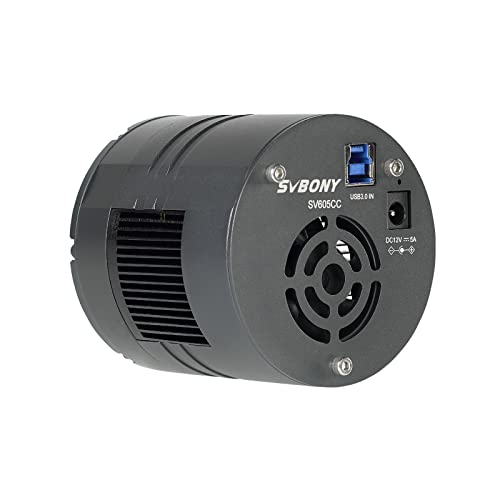
SVBONY SV605CC Cooled Color Astrophotography Camera, 9MP IMX533 Eyepiece
- Suitable for Deep Space Photography: Ideal for deep sky and meteor imaging
- High-Resolution Sensor: 3008x3008 pixel IMX533 CMOS sensor
- Enhanced Quantum Efficiency: 80% quantum efficiency for better imaging
As an affiliate, we earn on qualifying purchases.
SVBONY SV605CC Cooled Astronomy Camera
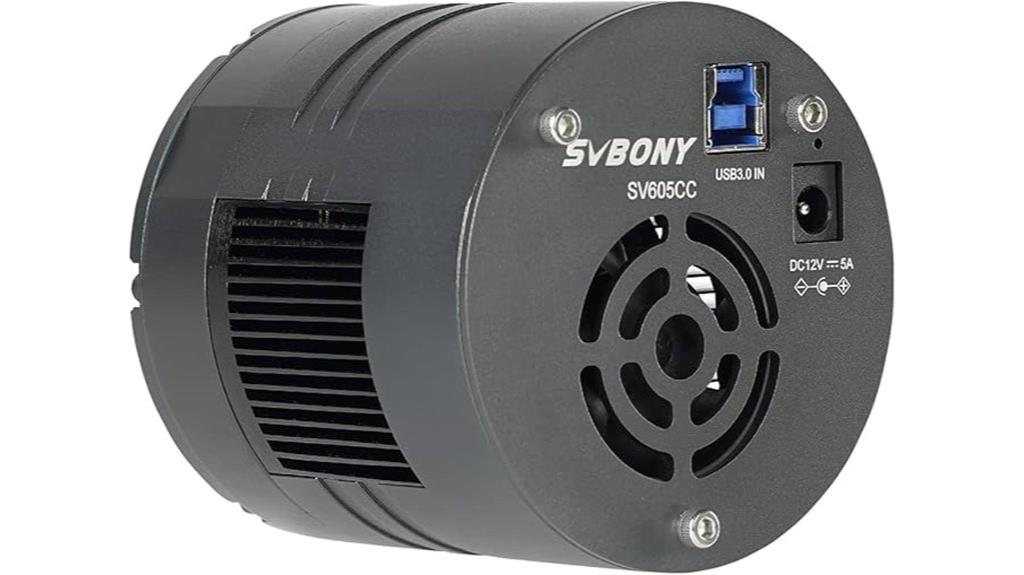
If you’re serious about deep sky astrophotography, the SVBONY SV605CC cooled astronomy camera is an excellent choice because its advanced cooling system and high-resolution sensor deliver stunning, detailed images with minimal noise. It features a 9MP IMX533 CMOS sensor with a 1-inch square frame, offering a resolution of 3008×3008 pixels and 80% quantum efficiency. The double-layer semiconductor refrigeration cools the sensor up to 30°C below ambient, reducing thermal noise during long exposures. Its glow suppression technology enhances image clarity, making it ideal for capturing faint celestial objects, meteor events, and panoramic sky views. This camera truly elevates your astrophotography game.
Best For: astrophotographers and astronomy enthusiasts seeking high-resolution, low-noise imaging of deep sky objects, meteors, and panoramic celestial views.
Pros:
- High-resolution 9MP IMX533 CMOS sensor with 3008×3008 pixels for detailed imaging
- Effective cooling system that reduces sensor temperature by up to 30°C below ambient, minimizing thermal noise
- Glow suppression technology enhances image clarity, especially for faint celestial objects
Cons:
- May require a compatible computer and software setup for optimal use
- Cooling system and high-resolution sensor can increase the camera’s cost and complexity
- Limited to astrophotography and specialized astronomical applications, not suitable for general photography

Astromania SGCMOS Series Telescope CMOS Camera - Great Camera for auto-Guiding and Multiple Types of Astrophotography - Multicolour Imaging
- High Sensitivity Sensor: Fast frame rate and long exposure
- Robust Aluminum Housing: CNC machined with 1.25 inch and C-mount interfaces
- Auto-Guiding Port: Built-in ST4 guider connection
As an affiliate, we earn on qualifying purchases.
Astromania SGCMOS Series Telescope CMOS Camera
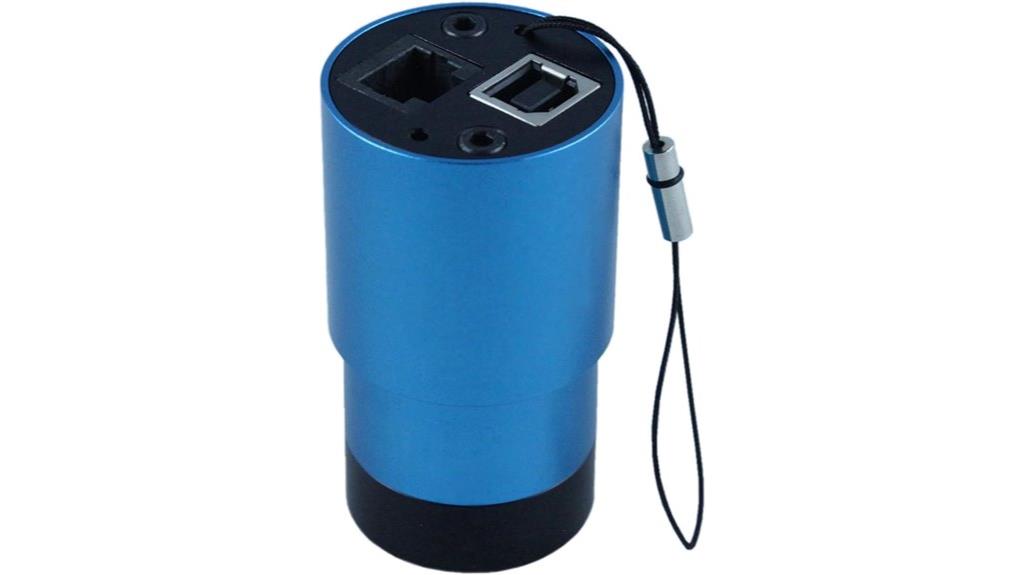
The Astromania SGCMOS Series Telescope CMOS Camera is an excellent choice for astrophotographers seeking high sensitivity and fast frame rates, especially during long exposure sessions. It features a high-sensitivity sensor capable of capturing detailed images with long exposures, making it it perfect for auto-guiding and multicolor astrophotography. Its thermal design ensures quick heat dissipation, maintaining ideal sensor performance. The durable CNC aluminum housing provides robustness, while the 1.25-inch interface allows easy connection to eyepieces and filters. With built-in ST4 auto guider port and versatile driver support, this camera integrates seamlessly into any setup, backed by dedicated software for imaging, processing, and control.
Best For: Amateur and professional astrophotographers seeking a high-sensitivity, durable CMOS camera for auto-guiding and multicolor imaging during long exposure astrophotography sessions.
Pros:
- High-sensitivity sensor with fast frame rate and long exposure capabilities for detailed astrophotography
- Durable CNC aluminum housing with effective thermal design for reliable performance during extended use
- Versatile connectivity options including built-in ST4 auto guider port and compatibility with ASCOM and WDM drivers
Cons:
- Rated 3.5 out of 5 stars based on customer reviews, indicating mixed user experiences
- Slightly heavier and larger compared to some compact astrophotography cameras, which may impact portability
- Price point may be higher than basic models, potentially limiting accessibility for casual users
Factors to Consider When Choosing Cooled CMOS Astro Cameras for Deep Sky Imaging

When choosing a cooled CMOS astro camera for deep sky imaging, I focus on key factors like sensor sensitivity and quantum efficiency to guarantee bright, detailed images. I also consider cooling efficiency levels to minimize noise and the camera’s resolution and pixel size for capturing fine details. Additionally, compatibility with software and noise reduction technologies play a vital role in achieving essential results.
Sensor Sensitivity and QE
Sensor sensitivity and quantum efficiency (QE) are critical factors that determine a cooled CMOS astro camera’s ability to capture faint celestial objects. Higher sensitivity means the sensor detects more light from distant nebulae and galaxies, especially during long exposures. QE measures the percentage of incoming photons converted into electrical signals; a higher QE results in brighter, more detailed images. Cameras with QE values above 80% are ideal for astrophotography, allowing shorter exposures and reducing noise. Improving both sensitivity and QE directly enhances image quality and efficiency, making it easier to observe faint objects. By choosing a camera with high sensor sensitivity and QE, I can maximize my data collection, cut down on exposure times, and achieve clearer, more vibrant deep-sky images.
Cooling Efficiency Levels
Higher cooling efficiency in a cooled CMOS astro camera directly impacts its ability to produce high-quality images by lowering the sensor temperature more effectively. When the sensor stays cooler, thermal noise and dark current are considerably reduced, especially during long exposures, leading to cleaner images with greater detail. Most cooled cameras use TEC systems with varying capacities, often specified by their temperature differential, such as -30°C below ambient. The cooling effectiveness also depends on good insulation and heat dissipation within the camera housing. Better cooling efficiency not only improves image quality but also extends sensor lifespan by minimizing heat-related stress and thermal drift. Ultimately, a camera with higher cooling efficiency provides more consistent, noise-free astrophotographs, making it a vital factor in deep sky imaging.
Resolution and Pixel Size
Choosing the right resolution and pixel size is essential for achieving the best results in deep sky imaging with cooled CMOS astro cameras. Higher resolution cameras have more pixels, capturing more detail, which is great for revealing fine structures in nebulae and galaxies. Smaller pixels, like 3.76μm, can record finer details but often require longer exposures to gather enough signal, especially in low-light conditions. Conversely, larger pixels collect more light per pixel, boosting sensitivity and reducing noise, making them ideal for faint objects. The balance between resolution and pixel size influences the field of view and image scale, so your choice depends on your astrophotography goals—whether you prefer wide-field captures or high-magnification detail. Selecting the right combination ensures suitable image quality tailored to your specific needs.
Noise Reduction Technologies
Advances in cooling technology play an essential role in reducing noise in cooled CMOS astro cameras, especially during long exposures necessary for deep sky imaging. Modern cooling systems like TEC (thermoelectric cooling) and double-layer semiconductor refrigeration help keep sensor temperatures stable and low, which markedly minimizes thermal noise. These technologies directly improve the signal-to-noise ratio, resulting in cleaner, more detailed images of faint celestial objects. Additionally, glow suppression algorithms embedded within the sensor or software further reduce residual glow and enhance image clarity. As sensor design continues to evolve, these cooling innovations become more effective, enabling astrophotographers to capture high-quality images with minimal noise. This progress is vital for revealing the subtle details of deep sky objects and achieving professional-grade astrophotography.
Compatibility With Software
When selecting a cooled CMOS astro camera for deep sky imaging, ensuring compatibility with your preferred software is essential for smooth operation. I look for cameras that support standard astrophotography software like ASCOM, INDI, or SharpCap, which simplifies controlling the camera and processing images. Compatibility with popular planetarium and imaging programs is vital for seamless integration and efficient workflow. I also verify that the camera’s drivers include native, WDM, or SDK options, ensuring reliable connection with my imaging and guiding software. High data transfer rates matter too, so I prefer cameras that connect via USB 3.0 or higher for real-time imaging. Additionally, I check if the camera’s software or SDK is regularly updated to stay compatible with the latest versions of astrophotography applications.
Data Transfer Speeds
High data transfer speeds are key to maximizing the efficiency of deep sky imaging with cooled CMOS astro cameras. Faster transfer rates mean I can quickly download high-resolution images, allowing me to spend more time capturing and less time waiting. USB 3.0 connectivity, with speeds up to 5 Gbps, markedly outperforms USB 2.0’s 480 Mbps, providing smoother, real-time data handling. This reduces image lag during live viewing or video recording, enhancing my imaging experience. Rapid data transfer also supports handling large files from high-resolution sensors, preventing bottlenecks that could compromise image quality. In astrophotography, especially when capturing fast-moving celestial events, efficient data transfer is essential for real-time processing and stacking. Choosing a camera with high transfer speeds ensures I get the best results in the shortest possible time.
Ease of Integration
Seamless integration is essential when selecting a cooled CMOS astro camera for deep sky imaging, as it guarantees smooth operation without unnecessary technical hurdles. Compatibility with your existing mount and imaging system is key, so I look for cameras supporting standard interfaces like USB 3.0, USB 2.0, or C-mount for easy connection. Built-in drivers and compatibility with popular software such as ASCOM or WDM simplify setup and operation, saving time and frustration. I also consider physical dimensions and weight, ensuring the camera fits my setup comfortably and remains stable. Features like auto-guiding ports and standardized screw sizes make it easier to connect guiding and focusing equipment. Overall, choosing a camera that integrates effortlessly enhances my imaging experience and reduces technical delays.
Frequently Asked Questions
How Do Cooled CMOS Cameras Compare to Traditional CCD Cameras?
Cooled CMOS cameras generally outperform traditional CCD cameras in deep sky imaging because they offer faster readouts, lower noise, and better sensitivity at a lower cost. I’ve found that CMOS sensors also excel in capturing dynamic scenes and can operate at higher frame rates. While CCDs still have advantages in certain situations, I prefer cooled CMOS for its versatility, affordability, and impressive image quality in most astrophotography applications.
What Is the Typical Lifespan of Cooled CMOS Sensors?
The typical lifespan of cooled CMOS sensors is around 5 to 10 years, depending on usage and environmental conditions. I’ve found that with proper care—like avoiding extreme temperatures and keeping the sensor clean—they can last quite a while. While some degradation may occur over time, regular maintenance and gentle handling help guarantee your camera stays in top shape for many observing seasons.
Are There Specific Software Requirements for These Astro Cameras?
You’ll want software that’s compatible with your camera’s brand and model, often provided by the manufacturer or third-party developers. I recommend using dedicated astrophotography software like SharpCap, Sequence Generator Pro, or N.I.N.A., which support most cooled CMOS cameras. Make sure your PC meets the system requirements and has good USB or Ethernet connections to guarantee smooth data transfer. Staying updated with firmware and drivers is also essential for peak performance.
Can Cooled CMOS Cameras Be Used for Planetary Imaging?
Absolutely, cooled CMOS cameras can be used for planetary imaging, but don’t expect them to turn your telescope into a planetary powerhouse overnight. They excel at deep sky shots, but with the right settings and patience, you can get decent planetary images too. Just remember, specialized planetary cameras often outperform them, so if planets are your main focus, consider those. Still, cooled CMOS options are versatile and worth trying!
What Maintenance Is Needed for Cooled CMOS Astrophotography Cameras?
I keep my cooled CMOS astrophotography camera in top shape by regularly checking and cleaning the sensor and optical surfaces with proper tools. I also guarantee the cooling system’s filters are free of dust and maintain the camera’s firmware and drivers for peak performance. Additionally, I store it in a dry, dust-free environment when not in use, and periodically inspect cables and connectors for any wear or damage.
Conclusion
Based on my research, the SVBONY SV605CC stands out for its excellent cooling and sensitivity, making it ideal for deep sky imaging. For example, I’ve seen amateurs capture stunning nebulae with this camera after just a few nights of setup. If you’re serious about astrophotography in 2025, investing in a camera with exceptional cooling and noise reduction can truly elevate your results. Trust me, the right choice makes all the difference in capturing the universe’s beauty.
Fall Picks
fall essentials
As an affiliate, we earn on qualifying purchases.