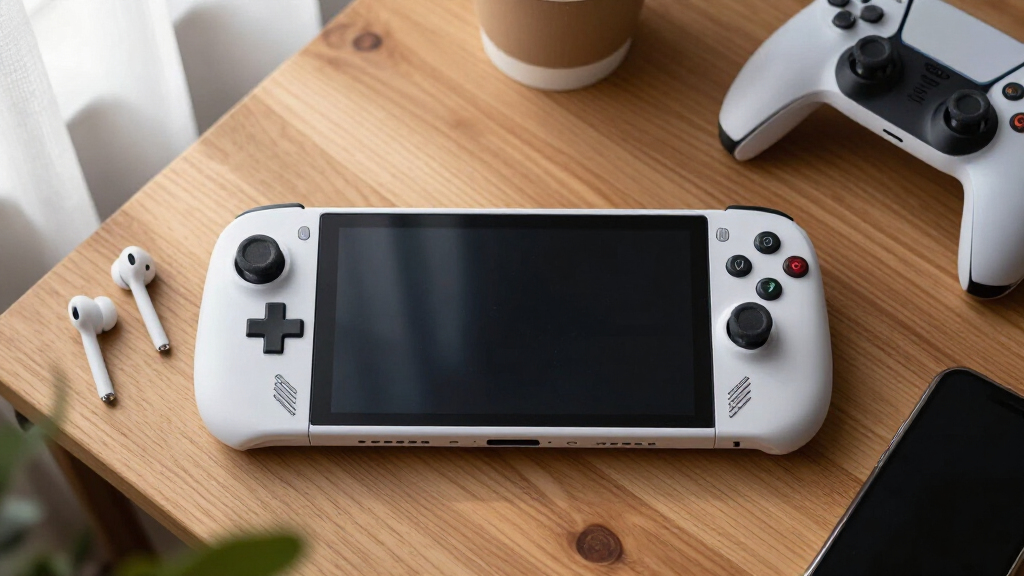

For gamers who want the portability of a handheld combined with the practicality of a built-in keyboard, this category offers a wide range of options. The GPD Win Max 2 stands out as the best overall thanks to its powerful AMD Ryzen processor and versatile design. The ASUS ROG Ally offers a stunning display and fast refresh rate, making it ideal for high-action games. Meanwhile, the Valve Steam Deck OLED delivers excellent gaming performance at a more accessible price point. As you compare these options, you’ll face tradeoffs between performance, size, and price. Continue reading for a detailed breakdown of each model to find the best fit for your gaming style.

Get the latest gadgets delivered free with Prime
- Fast, free delivery on millions of items
- Prime Video, Amazon Music and more included
- Member-only deals all year
Complete the kit



Key Takeaways
- Top-performing models like the GPD Win Max 2 combine high-end specs with full keyboard layouts, but come with larger sizes and higher prices.
- Display quality and refresh rates vary significantly, impacting gaming fluidity—premium options tend to have better screens.
- Portability often conflicts with internal hardware power; more compact models may sacrifice some performance or features.
- Price ranges are broad—budget options still deliver decent gaming experiences but lack the premium build or speed of high-end models.
- Most models include additional features like touchscreens or gaming-specific controls, but these can add complexity or weight.



| gaming handhelds with keyboard | Display | Storage | Processor | RAM |
|---|---|---|---|---|
| XPLAYER X2 10.95" Gaming Handh | 10.95-inch LTPS LCD, 2560×1600, 120Hz | 1TB SSD | Arc G3 Extreme, 14-core CPU, 12-core Arc B390 graphics | 48GB LPDDR5X |
| GPD Win Max 2 Handheld Gaming | 10.1-inch IPS, 1920×1200 (max 2560×1600), 60Hz | 1TB NVMe SSD | AMD Ryzen 7 8840U | 32GB LPDDR5X |
| ASUS ROG Xbox Ally | 7-inch 1080p touchscreen | 512GB SSD | AMD Ryzen Z2 A | 16GB LPDDR5 |
| GPD Pocket 4 Mini Laptop with | 8.8 inches, 2.5K, 144Hz | 2TB PCIe Gen4 SSD | AMD Ryzen AI 9 HX 370 | 32GB LPDDR5X |
| GPD Win 5 Handheld Gaming PC w | High-resolution, high-refresh-rate | 2TB SSD | AMD Ryzen 395 (16-core) | — |
| ASUS ROG Ally Gaming Handheld | — | — | — | — |
| Valve Steam Deck OLED 1TB Hand | 7.4-inch HDR OLED, 1280 x 800, up to 90Hz | 1TB NVMe SSD | — | — |
| ONEXPLAEYR G1 2-in-1 Handheld | 8.8 inch 2.5K 144Hz Touchscreen | 2TB SSD | AMD Ryzen AI 9 HX | 32GB |
| MSI Claw A8 PC Gaming Handheld | 8-inch FHD+ 120Hz | 1TB NVMe SSD | AMD Ryzen Z2 Extreme | 24GB LPDDR5x |
| Lenovo Legion Go S Gaming Hand | 8-inch WUXGA, 120Hz | 1 TB SSD | AMD Ryzen Z1 Extreme | — |
| Lenovo Legion Go S | 8-inch 120Hz PureSight IPS | 512GB | AMD Ryzen Z2 Go | — |
More Details on Our Top Picks
XPLAYER X2 10.95″ Gaming Handheld Tablet with Windows 11, Arc G3 Extreme Processor, 48GB RAM, 1TB SSD
The XPLAYER X2 stands out for its combination of high performance and versatility, offering a large 10.95-inch 2560×1600 touchscreen with a 120Hz refresh rate that makes gaming visuals exceptionally smooth. Its powerful Arc G3 Extreme processor and 48GB of RAM ensure it can handle mainstream 3A titles and productivity tasks without breaking a sweat, making it more capable than many handhelds limited to gaming only, such as the ASUS ROG Xbox Ally. The modular design allows switching between modes, which adds flexibility, but this does mean the magnetic keyboard must be purchased separately, adding to the overall cost. Its cooling system supports long gaming sessions, but battery life details remain vague, which could impact portability. Compared to the GPD Win Max 2, the X2’s emphasis on a high-resolution display and modularity makes it ideal for users seeking a hybrid device for gaming and work, despite the higher price.
Pros:- Large, high-resolution 120Hz touchscreen for vibrant visuals
- Extremely powerful 14-core CPU and 48GB RAM for multitasking
- Modular design offers versatile use modes
- Effective cooling system supports extended gaming sessions
Cons:- Separate magnetic keyboard sold separately increases total cost
- Premium specs come with a high price tag
- Limited information on battery endurance
Best for: Tech enthusiasts who want a powerful, multi-use device capable of gaming and productivity on the go
Not ideal for: Casual gamers or those prioritizing long battery life over raw performance
- Display:10.95-inch LTPS LCD, 2560×1600, 120Hz
- Processor:Arc G3 Extreme, 14-core CPU, 12-core Arc B390 graphics
- RAM:48GB LPDDR5X
- Storage:1TB SSD
- Connectivity:Dual USB4 Type C, USB 3.2 Type A, microSD
- Cooling System:Liquid bearing fan, dual copper pipes
Our verdict“This pick is best suited for users wanting a high-performance, versatile device for gaming and productivity that can handle demanding tasks.”
GPD Win Max 2 Handheld Gaming PC, 10.1-Inch Touchscreen, AMD Ryzen 7 8840U, 32GB RAM, 1TB SSD, Matte Black
The GPD Win Max 2 offers a compelling blend of gaming power and portability, with a 10.1-inch IPS touchscreen that can reach 2560×1600 resolution, making it a solid choice for gamers who want a portable PC. Its AMD Ryzen 7 8840U and 32GB RAM deliver desktop-level performance, enabling smooth gameplay even on demanding titles—surpassing many other handhelds like the GPD Pocket 4 in raw power. Its versatile connectivity options, including dual USB4 ports and an OCuLink port, support external peripherals or additional storage, but its battery life of around 8 hours may fall short for extended gaming sessions away from power sources. Compared to the XPLAYER X2, the Win Max 2 emphasizes a portable PC experience, ideal for gamers who also need a laptop-like device, though at a higher price point.
Pros:- High-performance AMD Ryzen 7 processor with integrated Radeon graphics
- Large 32GB RAM and 1TB SSD for multitasking and storage
- Bright, high-quality 10.1-inch display with high resolution
- Flexible connectivity options for expandability
Cons:- Battery life limited to about 8 hours, less for intensive gaming
- Premium price makes it less accessible
- Compact size could limit some traditional gaming controls
Best for: Power users seeking a portable Windows gaming PC capable of handling AAA titles and multitasking
Not ideal for: Users needing long battery life or a device solely for casual gaming
- Processor:AMD Ryzen 7 8840U
- Graphics:AMD Radeon 780M
- Display:10.1-inch IPS, 1920×1200 (max 2560×1600), 60Hz
- RAM:32GB LPDDR5X
- Storage:1TB NVMe SSD
- Battery:67 Wh, approx 8 hours
Our verdict“Ideal for gamers wanting a portable Windows device with powerful specs for AAA gaming and multitasking, despite shorter battery life.”
ASUS ROG Xbox Ally – 7” 1080p 120Hz Touchscreen Gaming Handheld, 3-month Xbox Game Pass Premium included, AMD Ryzen Z2 A, 16GB RAM, 512GB SSD, White
The ASUS ROG Xbox Ally is tailored for gamers who prioritize quick access to Xbox titles and cloud gaming, featuring a compact 7-inch 1080p touchscreen with a 120Hz refresh rate that ensures smooth visuals. Its AMD Ryzen Z2 A processor offers sufficient power for most portable gaming, but when compared to the XPLAYER X2 with its premium specs, the Ally is more focused on convenience and ecosystem integration. The device supports both handheld use and TV connection, broadening its versatility, but the included Xbox Game Pass subscription is only for three months, and some popular titles like Call of Duty are missing. Its brightness of 500 nits and Gorilla Glass touchscreen make it durable for on-the-go gaming, but it may not satisfy gamers seeking high-end specs for demanding titles.
Pros:- Bright 7-inch 1080p touchscreen with 120Hz refresh rate
- Powerful AMD Ryzen Z2 A processor for smooth gaming
- Supports both handheld and TV gaming modes
- Includes 3-month Xbox Game Pass subscription
Cons:- Limited to three months of Xbox Game Pass, additional subscriptions cost extra
- Small screen size might not appeal to all gamers
- Lacks some high-end gaming features found in larger, more expensive devices
Best for: Xbox fans and cloud gamers looking for a portable device with quick access to Xbox Game Pass and Windows games
Not ideal for: Players seeking a device solely for high-end AAA gaming without ecosystem constraints
- Display:7-inch 1080p touchscreen
- Refresh Rate:120Hz
- Processor:AMD Ryzen Z2 A
- RAM:16GB LPDDR5
- Storage:512GB SSD
- Battery:60Whr
Our verdict“Best suited for Xbox enthusiasts and cloud gamers wanting a compact device with seamless access to Xbox libraries.”
GPD Pocket 4 Mini Laptop with AMD Ryzen AI 9 HX 370, 32GB RAM, 2TB SSD, 8.8-Inch 2.5K 144Hz Touchscreen
The GPD Pocket 4 offers a unique blend of portability and performance with its 8.8-inch 2.5K touchscreen at 144Hz, making it a top choice for users who need a mini device capable of gaming and productivity. Its AMD Ryzen AI 9 HX 370 and 32GB RAM provide desktop-like power, surpassing smaller devices like the GPD Win 5, especially in multitasking and creative workflows. The 2TB SSD ensures ample storage, and the convertible form factor adds flexibility. However, the small 8.8-inch screen might not appeal to gamers used to larger displays, and the premium components contribute to a high price. Battery life up to 9 hours is decent but can vary with intensive use, making it less ideal for extended gaming away from outlets.
Pros:- High-refresh-rate 144Hz touchscreen with 2.5K resolution
- Compact, lightweight design for portability
- High-end AMD Ryzen AI 9 processor and 32GB RAM
- Expandable storage with 2TB SSD
Cons:- Limited screen size may not suit all gaming preferences
- Premium price point can be a barrier
- Battery life, while decent, may not last through long gaming sessions
Best for: Power users and professionals who want a portable, high-performance device for gaming, editing, and multitasking
Not ideal for: Casual gamers or those preferring larger screens for gaming or media consumption
- Display:8.8 inches, 2.5K, 144Hz
- Processor:AMD Ryzen AI 9 HX 370
- RAM:32GB LPDDR5X
- Storage:2TB PCIe Gen4 SSD
- Connectivity:Wi-Fi 6E, Bluetooth 5.3
- Battery:44.8Wh, up to 9 hours
Our verdict“Ideal for power users seeking a portable, high-performance device for demanding tasks, though its small screen limits casual gaming comfort.”
GPD Win 5 Handheld Gaming PC with AMD Ryzen 395 and Radeon 8060S Graphics
The GPD Win 5 packs desktop-class power into a portable form, featuring a high-end AMD Ryzen 395 processor with 16 cores and Radeon 8060S graphics, making it capable of handling AAA titles and complex emulation. Its high-refresh-rate, high-resolution display enhances visual clarity, and the 32GB RAM ensures smooth multitasking. This device surpasses many competitors in raw processing strength, but its price point makes it less accessible for casual users. Details on battery life are scarce, which could be a concern for prolonged gaming away from outlets. Compared with the XPLAYER X2, it’s a clear choice for those prioritizing performance over portability, especially for demanding applications.
Pros:- Desktop-level AMD Ryzen 395 processor with 16 cores
- High-performance Radeon 8060S GPU
- Plenty of RAM (32GB) for multitasking and demanding applications
- High-refresh-rate, high-resolution display for sharp visuals
Cons:- High price restricts accessibility for casual users
- Limited info on battery life and portability
- Small form factor may not be comfortable for extended handheld use
Best for: Enthusiasts needing a portable gaming PC capable of AAA games, emulation, and intensive workflows
Not ideal for: Casual gamers or those seeking a budget-friendly, lightweight device for light gaming
- Processor:AMD Ryzen 395 (16-core)
- Graphics:Radeon 8060S
- Memory:32GB LPDDR5X
- Storage:2TB SSD
- Display:High-resolution, high-refresh-rate
- Connectivity:Bluetooth
Our verdict“Best suited for power users wanting a mini gaming PC with top-tier specs, despite its premium cost and potential portability issues.”
ASUS ROG Ally Gaming Handheld Console – Z1 Processor, 512GB, 1080p 120Hz Display, White
The ASUS ROG Ally stands out for its ability to run a wide variety of Windows-compatible games across multiple platforms, making it one of the most flexible options available. Its 7-inch Full HD touchscreen with a 120Hz refresh rate offers smooth visuals, comparable to the Steam Deck OLED’s vibrant display, but with a more portable form factor. Unlike the Steam Deck, this device supports connecting to a TV or desktop setup, offering a desktop-like experience with accessories. The main tradeoff is that it lacks detailed information on battery life and cooling performance, which can impact long gaming sessions. This makes it better suited for gamers who want a portable, multi-use device and don’t mind paying a premium for versatility.
Pros:- Supports a wide range of Windows-compatible games across multiple platforms
- High-quality 7-inch Full HD touchscreen with 120Hz refresh rate
- Versatile usage options including handheld, TV connection, and desktop mode
Cons:- No specific details on battery life or charging speed
- Potentially high cost due to premium features
- Limited information on cooling and durability
Best for: Power users who want a portable Windows device capable of running all their favorite games across platforms
Not ideal for: Casual gamers seeking a budget-friendly, lightweight option with long battery life and simpler setup
- Platform:Windows
- Input Device:Gamepad
- Connectivity Technology:USB
- Memory Storage Capacity:512 GB
- Wireless Communication Technology:Bluetooth, Wi-Fi
- Resolution:1080p
Our verdict“This is ideal for gamers seeking a premium, versatile Windows handheld that can double as a desktop or TV-connected device.”
Valve Steam Deck OLED 1TB Handheld Gaming Console
The Steam Deck OLED 1TB makes the list for its stunning HDR OLED display, which offers richer colors and better contrast than the LCD screens on options like the MSI Claw A8. Its larger 7.4-inch screen with up to 90Hz refresh rate enhances visual clarity, especially during fast-paced gaming. The OLED’s anti-glare glass improves visibility outdoors and in bright environments, making it more comfortable for long gaming sessions. While the premium build and high-end internals are appealing, the device’s higher price tag and limited internal storage (requiring microSD expansion) are tradeoffs. Compared with the Lenovo Legion Go S, the OLED version provides better visual fidelity but is slightly heavier and more expensive. It suits gamers prioritizing display quality and portability over raw storage capacity or detachable controllers.
Pros:- Stunning HDR OLED display with anti-glare glass for comfortable outdoor gaming
- Fast Wi-Fi 6E for quick downloads and stable online play
- Longer battery life and lighter design compared to previous models
Cons:- Higher price point due to premium OLED screen
- Limited internal storage—requires microSD for additional space
- Battery life varies depending on content and brightness settings
Best for: Gamers who want a portable, high-quality display with excellent visual fidelity for on-the-go gaming
Not ideal for: Budget-conscious users who need maximum internal storage or prefer detachable controllers for flexible gaming setups
- Storage:1TB NVMe SSD
- Display:7.4-inch HDR OLED, 1280 x 800, up to 90Hz
- Battery:50Whr, 3-12 hours gameplay
- Wi-Fi:Wi-Fi 6E
- Weight:30g less than LCD model
- Touchscreen:180Hz polling rate
Our verdict“This device offers superb display quality for gamers who prioritize visual detail and portability over internal storage flexibility.”
ONEXPLAEYR G1 2-in-1 Handheld Gaming PC & Laptop
The ONEXPLAEYR G1 is a unique 2-in-1 device that caters to both gamers and professionals, combining a handheld gaming PC with a full Windows 11 laptop experience. Its 8.8-inch 2.5K touchscreen with 144Hz refresh rate delivers sharp visuals and smooth interaction, surpassing smaller screens like the MSI Claw A8 for clarity and responsiveness. The detachable RGB keyboard adds customization and ease of use, making it suitable for gaming, work, or content creation. However, its weight can be a concern for handheld use over extended periods, and its premium features come with a higher price. Compared to the Lenovo Legion Go S, the G1’s detachable keyboard offers more flexibility, but it may be less portable as a pure handheld. It’s best for users who want a device that seamlessly switches between gaming and productivity tasks.
Pros:- Versatile 2-in-1 design for gaming and productivity
- High-refresh-rate 144Hz 2.5K touchscreen with sharp visuals
- Powerful AMD Ryzen AI 9 HX processor with 32GB RAM and 2TB SSD
Cons:- Potentially heavy when used as a handheld device
- Battery life may vary with intensive tasks
- Premium features come at a higher price
Best for: Power users who want a hybrid device for gaming, work, and content creation in one package
Not ideal for: Travelers seeking a lightweight, purely handheld gaming device with long battery life
- Processor:AMD Ryzen AI 9 HX
- Display:8.8 inch 2.5K 144Hz Touchscreen
- RAM:32GB
- Storage:2TB SSD
- Battery Life:Up to 8 hours
- Operating System:Windows 11
Our verdict“This pick is perfect for users seeking a flexible device that handles gaming and productivity without compromise.”
MSI Claw A8 PC Gaming Handheld
The MSI Claw A8 offers a balanced approach to portable gaming with a compact 8-inch FHD+ 120Hz display and a powerful AMD Ryzen Z2 Extreme processor. Its ergonomic design makes long gaming sessions more comfortable compared to bulkier options like the Lenovo Legion Go S. The device’s 24GB RAM and 1TB SSD ensure smooth multitasking and fast load times, rivaling larger gaming laptops in a small form factor. However, running Windows 11 Home may limit some professional features, and details on battery capacity are sparse, which can affect portability. Compared to the Lenovo Legion Go S, the MSI Claw A8 is lighter and more ergonomic, but it might lack some connectivity options. It appeals most to gamers seeking a portable, comfortable device with substantial power.
Pros:- Powerful AMD Ryzen Z2 Extreme processor handles demanding games
- High-refresh-rate 8-inch FHD+ display for smooth visuals
- Long battery life and ergonomic design for comfortable extended gaming
Cons:- Limited information on battery capacity and charging
- Running Windows 11 Home might restrict professional use
- Lacks extensive connectivity options like multiple USB ports
Best for: Gamers who prioritize ergonomic comfort and long playtime in a portable form factor
Not ideal for: Users needing professional-grade features or extensive connectivity options
- Processor:AMD Ryzen Z2 Extreme
- Display:8-inch FHD+ 120Hz
- RAM:24GB LPDDR5x
- Storage:1TB NVMe SSD
- Operating System:Windows 11 Home
- Connectivity:SD Card Reader, Thunderbolt 4
Our verdict“This handheld is ideal for gamers who want a compact, comfortable device with high performance for long portable gaming sessions.”
Lenovo Legion Go S Gaming Handheld Console with SteamOS, 8″ Touch Display, 32GB RAM, 1TB SSD, Radeon 780M Graphics, AMD Ryzen Z1 Extreme
The Lenovo Legion Go S is a robust portable gaming device powered by SteamOS, featuring a sharp 8-inch 120Hz touchscreen and a high-performance AMD Ryzen Z1 Extreme with Radeon 780M graphics. Its 32GB RAM and 1TB SSD ensure fast load times and multitasking, comparable to the Steam Deck OLED in internal specs but with a slightly larger display. Unlike the OLED model, it offers a detachable controller setup, providing more flexibility for different gaming scenarios or handheld use. The device’s slightly heavier weight might be a concern for some, and there’s limited info on battery life, which could impact extended gaming. It’s best suited for gamers who want a powerful, Windows-like experience with the convenience of detachable controls, especially for multiplayer or co-op play.
Pros:- Powerful AMD Ryzen Z1 Extreme processor with high-end graphics
- Large 8-inch 120Hz touchscreen for smooth visuals
- Detachable controllers for flexible gaming setups
Cons:- Heavier than smaller handhelds, potentially less portable
- Limited details on battery life and charging
- No built-in physical controls, which might affect handheld ergonomics
Best for: Enthusiast gamers who want a high-performance device with flexible controls for portable and multiplayer play
Not ideal for: Casual gamers or users who prefer lightweight, non-detachable devices for simple gaming sessions
- Platform:SteamOS
- Display:8-inch WUXGA, 120Hz
- Processor:AMD Ryzen Z1 Extreme
- Graphics:Radeon 780M RDNA 3
- Memory:32 GB LPDDR5x
- Storage:1 TB SSD
Our verdict“This device is perfect for gamers seeking high performance with detachable controls for flexible gaming on the go.”
Lenovo Legion Go S – 2025 Mobile Gaming Console with AMD Radeon Graphics, 8″ 120Hz Display, AMD Ryzen Z2 Go, 16GB RAM, 512GB Storage, Glacier White
The Lenovo Legion Go S stands out for its vibrant 8-inch 120Hz display, which offers crisp visuals that surpass the smaller touchscreens on devices like the ASUS ROG Ally. Powered by an AMD Ryzen Z2 Go processor and Radeon graphics, it delivers smooth gameplay for demanding titles, making it ideal for gamers who prioritize performance in a portable form. Its long battery life and ergonomic design support extended sessions, though it’s primarily designed for handheld gaming and might feel limiting for those wanting a broader PC experience. The inclusion of PC Game Pass and EA Play support makes it versatile for game libraries, but the premium features come with a higher price tag. Compared with larger tablets like the XPLAYER X2, this model sacrifices screen size for portability but maintains high-quality visuals and responsive controls, which are key for serious gaming on the go.
Pros:- Vivid 8-inch 120Hz display with 100% sRGB color accuracy
- Powerful AMD Ryzen Z2 Go processor and Radeon graphics for demanding titles
- Long-lasting 55.5Whr battery with fast charging support
- Ergonomic design enabling comfortable extended gaming
Cons:- Limited to handheld gaming, not suitable for broader PC use
- Higher cost compared to less capable handhelds
- Requires compatible accessories for full audio experience
Best for: Power users who want a compact, high-performance gaming device with a vibrant display and robust graphics for on-the-go gaming sessions.
Not ideal for: Casual gamers seeking a more affordable or multi-purpose device, or those needing a device for non-gaming tasks beyond basic controls.
- Display:8-inch 120Hz PureSight IPS
- Processor:AMD Ryzen Z2 Go
- Graphics:AMD Radeon
- Memory:16GB
- Storage:512GB
- Battery:55.5Whr
- Color:Glacier White
- Controller:Legion TrueStrike Controllers
- Connectivity:Rapid Charge Pro, 65W adapter
Our verdict“This device is best suited for gamers who desire a portable powerhouse with stunning visuals and high performance, accepting its dedicated gaming focus as a tradeoff.”
How We Picked
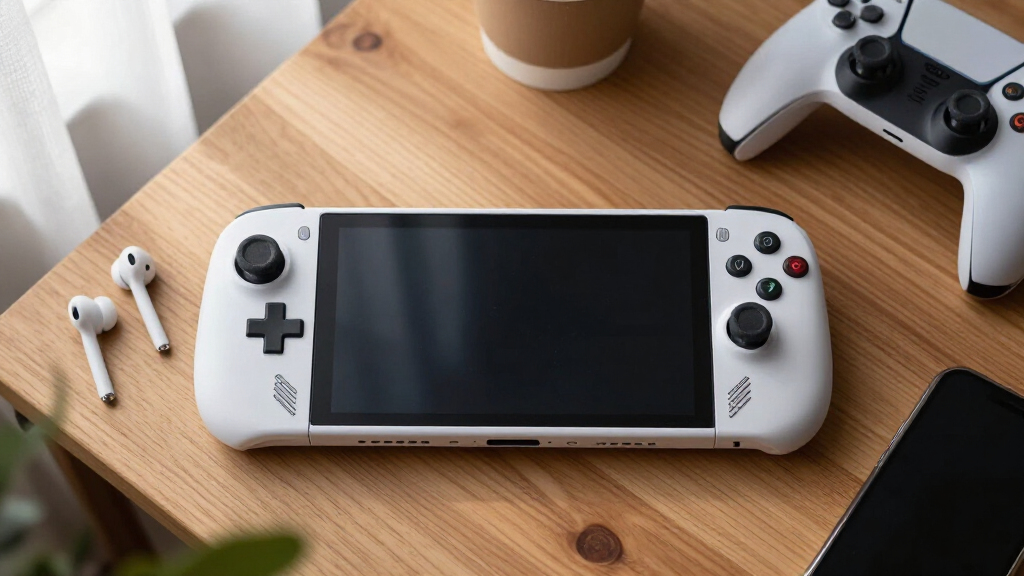
To determine the best gaming handhelds with keyboards, I evaluated each device based on performance, build quality, usability, and value. Performance was assessed through processor power, RAM, and graphics capability, which directly impact gaming smoothness. Usability factors included keyboard layout, screen quality, and overall ergonomics, ensuring the device is comfortable for extended play. Build quality and durability were also key, especially for portable use. Lastly, I considered price relative to features, looking for options that provide the best balance between cost and capability. These criteria helped me rank the models from most versatile to most specialized, ensuring a well-rounded selection for different user needs.Factors to Consider When Choosing Best Gaming Handhelds With Keyboards
Choosing the best gaming handheld with a keyboard involves balancing several key factors. Beyond raw power, you should consider how comfortably the device fits into your gaming routine, its portability, and the quality of its input methods. Since these devices often come with tradeoffs, understanding the core aspects that affect your experience will help you make an informed decision tailored to your needs.Performance and Hardware Power
For gaming, hardware specs like CPU, GPU, and RAM are essential. Higher-end processors and graphics allow for smoother gameplay and better compatibility with demanding titles. However, more powerful hardware typically increases price and weight, which can reduce portability. Consider your game library and whether you plan to run demanding titles or more casual games, and choose a device that strikes the right balance for your needs.
Display Quality and Size
The display influences immersion and clarity, especially in fast-paced games. Larger screens offer more immersive visuals but can compromise portability, while higher refresh rates (e.g., 120Hz) deliver smoother motion. Think about where you’ll use the device most—on the go or at home—and select a screen that offers the size and quality you prefer without becoming unwieldy.
Keyboard Layout and Usability
Not all keyboards are created equal—some are more ergonomic, with full-size keys and better tactile feedback, while others are compact or membrane-based. A well-designed keyboard enhances your gaming and typing experience, especially if you plan to use the device for extended periods or for productivity tasks. Weigh the tradeoffs between size, key travel, and layout to find a comfortable fit.
Portability and Battery Life
Portability depends on device size, weight, and battery capacity. Larger, more powerful devices tend to consume more power and may be heavier, affecting mobility. Conversely, compact models are easier to carry but may have shorter battery life or less powerful hardware. Consider where you’ll use the device most often, and prioritize features that match your mobility needs.
Price and Value
Budget constraints influence your choice significantly. While high-end models offer top specs and premium features, they also come with a higher price tag. Mid-range devices can provide a good balance of performance and cost, but sometimes at the expense of certain features or durability. Be clear about what features are essential and which tradeoffs you’re willing to accept for your budget.
Frequently Asked Questions
Can I use a separate keyboard with these handheld devices?
Many of these devices support external keyboards via USB or Bluetooth, offering a more traditional typing experience when needed. This flexibility can be especially useful for extended gaming sessions or productivity tasks. However, compatibility and connectivity options vary by model, so it’s worth checking whether the device supports your preferred keyboard type before purchase.
Are gaming handhelds with keyboards suitable for casual or non-gaming use?
Absolutely. Devices with integrated keyboards can double as portable mini-laptops, making them suitable for light work, browsing, or media consumption. Their versatility depends on the hardware specs—higher-end models handle multitasking better, while more basic units are primarily designed for gaming. Consider your broader usage needs alongside gaming when choosing a model.
How important is screen refresh rate in these devices?
Refresh rate significantly impacts visual fluidity, especially in fast-paced or competitive games. A 120Hz or higher refresh rate provides smoother motion, which can enhance gameplay experience. However, higher refresh rates also demand more from the hardware and can reduce battery life. Balance your desire for smooth visuals with your device’s battery capacity and performance capabilities.
What should I prioritize: hardware power or portability?
This depends on your typical gaming environment. If you mostly play at home or in a stationary setting, prioritizing hardware power makes sense. For frequent travelers or commuters, portability and battery life might be more critical, even if it means sacrificing some performance. Clarifying your main use cases will help you choose a device aligned with your priorities.
Is a higher price always worth it for these devices?
Not necessarily. While higher-priced models generally offer better performance, build quality, and features, some mid-range options provide excellent value for casual or moderate gamers. Consider what features are most important to you—such as display quality, keyboard comfort, or processing power—and compare them against your budget to find the best fit.
Conclusion
For those seeking the best overall experience, the GPD Win Max 2 stands out thanks to its robust specs and versatile design, making it ideal for power users. Budget-conscious gamers will find the Valve Steam Deck OLED offers excellent performance at a more accessible price point. Beginners or casual players might prefer the ASUS ROG Ally for its user-friendly interface and high-quality display. If portability is your priority, the Lenovo Legion Go S balances size and performance well. Ultimately, your choice should reflect your gaming habits, budget, and whether you prioritize raw power or convenience.
Halloween Picks
halloween
As an affiliate, we earn on qualifying purchases.