
TL;DR
Open a free Amazon Business account
Business pricing, bulk buying and tax-exempt orders.
Create a free accountAs an affiliate, we earn on qualifying purchases.
A webcam-based app is being tested to help remote workers manage eye strain by monitoring blink rate and suggesting breaks. This innovation aims to improve eye health without sending video data off-device. Validation through pilot testing is underway.
A new webcam-based application designed to monitor blink rate and suggest eye breaks is entering pilot testing for remote knowledge workers who spend over 8 hours daily at their laptops. This development offers an objective, on-device solution to reduce digital eye strain, a common issue among remote workers.
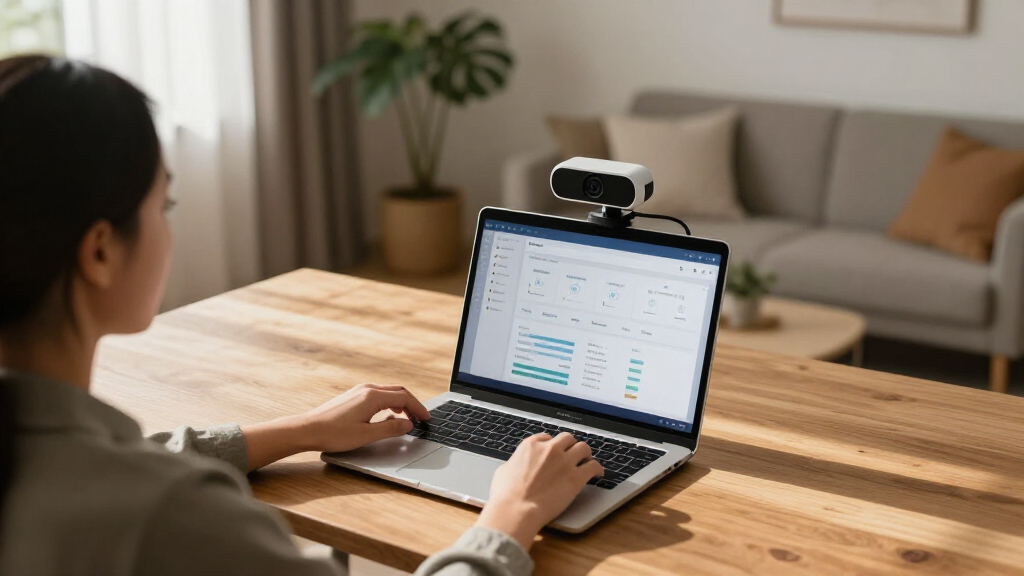
The proposed app uses on-device computer vision via webcams to estimate users’ blink rate and screen distance, providing real-time nudges for 20-20-20 breaks when blinking drops below healthy levels. The system logs daily eye comfort scores and aims to improve adherence to break schedules without transmitting video data externally.
According to sources, the app is intended for individual users and small remote teams, with a subscription model. A two-week pilot involving twenty remote workers is planned to validate whether the system effectively reduces eye discomfort and increases break compliance. The initiative responds to increased screen time driven by remote and hybrid work arrangements, which have amplified issues like dry eyes and headaches.
Potential Impact on Remote Work Eye Health
This development could significantly improve eye health management for remote workers by providing an objective, easy-to-use tool that encourages regular breaks. If successful, it may reduce the prevalence of digital eye strain symptoms, such as dry eyes, headaches, and fatigue, which are increasingly common in the remote work environment. The use of on-device computer vision also addresses privacy concerns, making it more acceptable for widespread adoption.
As an affiliate, we earn on qualifying purchases.
Growing Need for Eye Strain Solutions in Remote Work
Remote work has caused a surge in daily screen time, with many workers experiencing increased eye discomfort. Current approaches rely largely on self-awareness or manual reminders, which are often ignored or forgotten. Existing solutions lack objective measurement of blink rate or eye health metrics. The new webcam app aims to fill this gap by leveraging advances in computer vision technology that can estimate blink rate and screen distance without transmitting video data externally. This approach aligns with broader trends toward digital wellness and privacy-conscious health tools.
“On-device computer vision can objectively monitor blink rate without compromising user privacy, providing a practical way to reduce digital eye strain.”
— an anonymous researcher
As an affiliate, we earn on qualifying purchases.
Uncertainties About Effectiveness and Adoption
It is not yet clear how effective the app will be in real-world settings or whether users will adhere to break recommendations over the long term. The results of the upcoming pilot study are pending, and broader user acceptance, cost, and integration with existing workflows remain to be seen.
As an affiliate, we earn on qualifying purchases.
Next Steps in Validation and Deployment
The immediate next step is the completion of the two-week pilot involving twenty remote workers, with data collection on eye comfort and break adherence. If results are positive, developers plan to refine the app and expand testing to larger user groups. A commercial launch or wider rollout could follow within the next year, contingent on pilot outcomes and user feedback.
on-device computer vision eye health
As an affiliate, we earn on qualifying purchases.
As an affiliate, we earn on qualifying purchases.
Key Questions
How does the webcam app estimate blink rate without sending video data externally?
The app uses on-device computer vision algorithms that process webcam footage locally, ensuring user privacy while estimating blink rate and screen distance.
Will this app work on all laptops and webcams?
The app is designed to work with standard webcams on most laptops, but compatibility may depend on specific hardware and software requirements, which are still being tested.
Can this technology replace manual eye health monitoring?
It aims to supplement existing methods by providing objective, real-time data, but it is not intended to replace comprehensive eye examinations by professionals.
When will the app be available for general use?
A commercial release is not yet scheduled; the focus is currently on pilot testing and validation, with potential availability within the next year depending on results.
What are the privacy implications of using webcam-based eye tracking?
The app processes video data locally on the device, so no video is transmitted or stored externally, addressing common privacy concerns.
Source: IdeaNavigator AI
Fall Picks
fall essentials
As an affiliate, we earn on qualifying purchases.