📊 Full opportunity report: 9 AI Innovations Poised To Transform Industries In 2026 on ThorstenMeyerAI.com — validation score, market gap, and execution plan.
Open a free Amazon Business account
Business pricing, bulk buying and tax-exempt orders.
Create a free accountAs an affiliate, we earn on qualifying purchases.
TL;DR
In 2026, nine AI innovations are confirmed to be advancing across multiple sectors, promising to reshape industry practices. While some are already in deployment, others remain in research phases, with their full impact yet to be realized.
Nine artificial intelligence innovations are currently emerging in 2026, with several already deployed across industries and others in advanced research stages. These developments are set to significantly alter how sectors such as healthcare, manufacturing, and finance operate, making AI more integral to everyday business functions.
Confirmed AI innovations include advanced natural language processing models, autonomous robotics systems, and AI-driven predictive analytics tools. For example, companies like OpenAI and Google have announced new language models that outperform previous versions in accuracy and contextual understanding, with some already integrated into commercial products.
Additionally, breakthroughs in AI hardware, such as specialized chips optimized for machine learning tasks, are now in mass production, enabling faster and more energy-efficient AI computations. Autonomous robotics for logistics and manufacturing are also being deployed at scale in several sectors, with pilot programs demonstrating increased efficiency and safety.
While these innovations are confirmed through official releases and deployment announcements, several other promising AI technologies—such as AI for climate modeling and personalized medicine—are still in research phases, with limited or no commercial deployment yet. Experts caution that regulatory and ethical considerations may influence how quickly some of these AI innovations become mainstream.
Impact of 2026 AI Innovations on Industry Practices
The confirmed emergence of these nine AI innovations in 2026 signals a major shift toward automation, efficiency, and data-driven decision-making across industries. Businesses that adopt these technologies early could gain competitive advantages, while delays might risk obsolescence. Furthermore, these developments raise important questions about workforce adaptation, ethical use, and regulatory frameworks, making their impact far-reaching and complex.
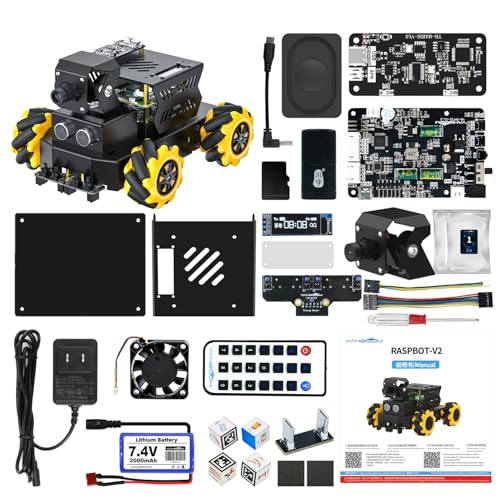
Yahboom Raspberry Pi 5 ROS2 Robot Car 360°Movement, AI Vision & Tracking, Integrated Multimodal Large AI Model OpenRouter, AI Voice Interaction (Superior Without RPi5)
- Powerful Raspberry Pi 5 Control: Enhanced processing, multimedia, and AI performance
- Large AI Model Integration: Advanced human-computer interaction and environmental perception
- Multiple Control Options: App, PC, remote control, and FPV transmission
As an affiliate, we earn on qualifying purchases.
As an affiliate, we earn on qualifying purchases.
2026 AI Advancements: From Research to Real-World Application
Over the past few years, AI has transitioned from experimental research to practical deployment. Major technology firms announced new models and hardware in late 2025, with several innovations entering commercial use early in 2026. For example, the release of GPT-5 by OpenAI and Google’s Bard improvements marked significant milestones in natural language understanding.
Industry-specific AI applications, such as autonomous vehicles in logistics and AI-powered diagnostics in healthcare, are now moving from pilot projects to broader adoption. Nonetheless, some innovations, like climate modeling AI and advanced AI ethics frameworks, remain in research phases, with their real-world impact yet to be fully realized.
“The advancements in AI hardware and models this year are unprecedented, setting the stage for widespread industry transformation.”
— Dr. Lisa Chen, AI Research Lead at TechInsights
As an affiliate, we earn on qualifying purchases.
Unconfirmed and Developing AI Technologies in 2026
While nine AI innovations are confirmed to be advancing in 2026, several others, such as AI for climate change mitigation and fully autonomous vehicles, are still in research or pilot stages. The pace of regulatory approval and ethical considerations could influence their adoption timelines, and some claims about their capabilities remain preliminary or based on early prototypes.
As an affiliate, we earn on qualifying purchases.
Next Steps for AI Innovation Adoption in 2026
Industry stakeholders will closely monitor the deployment and integration of these confirmed AI innovations throughout 2026. Expect further product launches, regulatory developments, and pilot programs that could accelerate or hinder adoption. Researchers and policymakers are also likely to focus on establishing standards and ethical frameworks to guide responsible AI use.
As an affiliate, we earn on qualifying purchases.
Key Questions
Which industries will be most affected by these AI innovations?
Major impacts are expected in healthcare, manufacturing, logistics, finance, and climate modeling, where AI can improve efficiency, accuracy, and decision-making.
Are these AI innovations already available to businesses?
Some, like advanced language models and autonomous robots, are already in deployment or pilot phases, while others remain in research or early testing stages.
What challenges might slow down AI adoption in 2026?
Regulatory approval, ethical concerns, infrastructure requirements, and workforce adaptation are key factors that could influence the pace of AI integration across sectors.
Will AI innovations in 2026 replace human workers?
While some roles may be automated or augmented, experts emphasize that AI is more likely to complement human work, with significant emphasis on reskilling and new job creation.
Source: ThorstenMeyerAI.com
Back to school Picks
back to school
As an affiliate, we earn on qualifying purchases.