
TL;DR

Get the latest gadgets delivered free with Prime
- Fast, free delivery on millions of items
- Prime Video, Amazon Music and more included
- Member-only deals all year
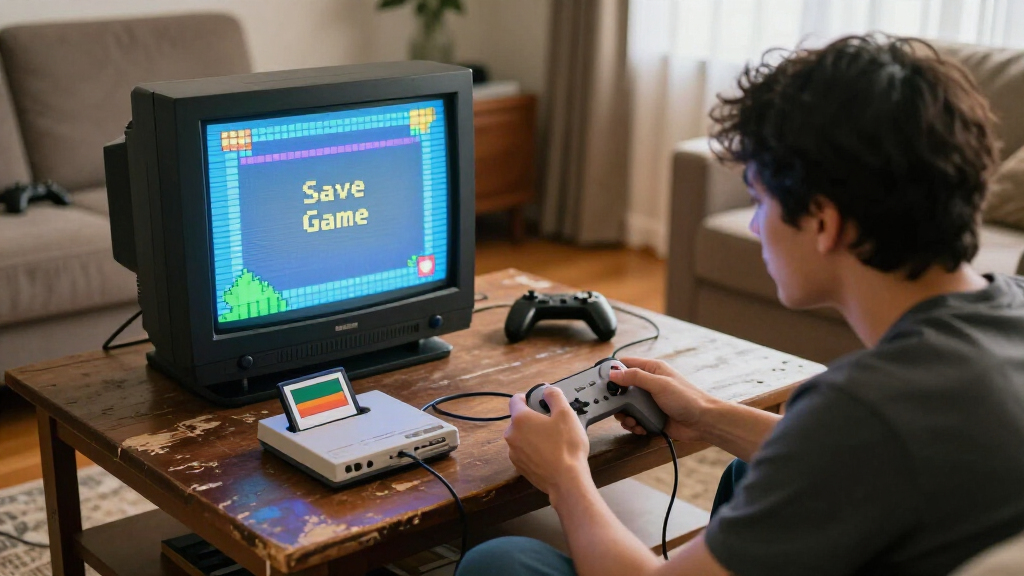
ScabShack published a personal essay calling for modern consoles to bring back the distinctive save-file displays associated with sixth-generation systems. The piece recalls the Dreamcast, GameCube, PlayStation 2 and original Xbox interfaces, but reports no console-maker response or announced plans to change current menus.
ScabShack has published a personal essay calling for a return to the distinctive save-file screens of the Dreamcast, GameCube, PlayStation 2 and original Xbox. The piece is a nostalgic argument about interface design, not an announcement of a new console feature or a confirmed change by any manufacturer.
The essay’s author, Aaron, recalls how players on several sixth-generation consoles managed game saves through memory-card menus. Instead of presenting only a game’s cover image, those menus displayed small game-specific icons, figures or models alongside information about stored files. The article says this gave players a recognizable visual way to find saves and made the management screen feel connected to the games themselves.
The examples vary by platform. The Dreamcast showed save icons against a background of water and clouds, while the GameCube placed icons on floating cubes above a dark grid. On the PS2, the essay describes a grid containing three-dimensional models or blocks associated with games. The original Xbox used round save icons within its green, honeycomb-themed interface, according to the article.
The author also highlights the Dreamcast’s Visual Memory Unit, or VMU, which could serve as a secondary display in some games and run downloadable mini-games. These examples support the essay’s larger point: save management once offered small, platform-specific details that players could encounter outside the main game. The article contrasts that experience with current systems, which it says generally use game cover art to represent saved data.
The essay speaks to a modest but recognizable part of console interface design: the menus players use between sessions. Save screens are functional, but the article argues that they can also carry visual cues and memories tied to particular games. A character model or unusual icon could make stored data feel less anonymous than a standard cover image.
That matters to readers interested in game preservation and interface history, as well as players who remember using these systems. The source does not establish that older menus were better for every user, nor does it report a broader demand for their return. Its contribution is a personal case for treating small interface details as part of a console’s identity, rather than as disposable utility screens.
Products Worth Considering

Bose QuietComfort Ultra Earbuds (2nd Gen), Deep Plum

Logitech MX Mechanical Wireless Illuminated Keyboard, Tactile Quiet, Graphite

Jackery Explorer 300 Portable Power Station, 292Wh
As an affiliate, we earn on qualifying purchases.
How Four Consoles Styled Saves
The essay focuses on the sixth generation of home consoles, naming the Dreamcast, GameCube, PlayStation 2 and original Xbox. Their save-management systems reflected different hardware and interface choices. For several platforms, removable memory cards were part of the experience; the article notes the Xbox as an exception, pointing to its built-in hard drive.
In the author’s account, the differences were visible in the save menus themselves: Dreamcast icons sat over a cloud-and-water scene, GameCube icons appeared on floating cubes, PS2 saves could be represented by detailed 3D objects, and Xbox used circular icons within a green interface. The piece recalls these details as examples of platform-specific presentation, not as a technical comparison of storage capacity or usability.
“Sometimes I wish we still had these small treasures buried inside of our memory cards or devices.”
— Aaron, author of the ScabShack essay
No Console Changes Announced
The source is an opinionated personal essay, and it does not cite surveys, developer interviews or technical research showing that players broadly want older save screens restored. It also reports no plans from Nintendo, Sony, Microsoft or other console makers to change their current interfaces.
The article’s description of contemporary systems is general; it does not compare every console, software version or way saved data may be displayed. It is also unclear whether the author is asking for a faithful recreation of the older menus or simply for more distinctive visual treatment in modern systems. No implementation proposal, cost estimate or accessibility assessment is provided.
A Design Argument, Not a Launch
No product release, company response or follow-up milestone is identified in the source. The immediate development is the publication of Aaron’s essay on ScabShack; any revival of game-specific save icons would depend on future decisions by platform makers or game developers.
Readers can treat the article as a prompt for discussion about how consoles present saved data, rather than as evidence that a redesign is underway. The source provides no indication of when or whether any manufacturer might revisit those menus.
Key Questions
What is the news in this story?
ScabShack published a personal essay asking for a return to distinctive save-file screens like those on the Dreamcast, GameCube, PS2 and original Xbox. It does not report a new console feature.
Which systems does the essay discuss?
The article focuses on four sixth-generation systems: the Dreamcast, Nintendo GameCube, PlayStation 2 and original Xbox.
What made the older save screens distinctive?
They used platform-specific settings and game-related icons or 3D models, rather than relying only on cover art to represent saved data, according to the essay.
Has a console maker said it will bring these screens back?
No such announcement appears in the source material. The essay presents a personal preference and does not describe a confirmed redesign or company response.
Source: hn