
If your drone crashes or gets lost, first verify everyone’s safety by checking for injuries and keeping bystanders away. Turn off the drone to prevent fires, carefully examine the crash site for hazards, and handle the battery with care. Use your drone’s tracking features to locate it, and approach cautiously during recovery. Inspect your equipment afterward, document the incident, and report it to authorities or your insurer. Following these steps will help you manage the situation effectively.
Key Takeaways
- Prioritize safety by checking for injuries, securing the area, and turning off the drone immediately.
- Carefully retrieve the drone using remote tracking features or tools, avoiding hazards and further damage.
- Inspect the drone and battery for visible damage, and review flight data to determine crash causes.
- Document the incident thoroughly with photos, videos, and notes for insurance or legal reporting.
- Notify authorities and insurance providers promptly, submitting detailed reports and supporting evidence.
Immediate Safety Measures and Assessing the Situation

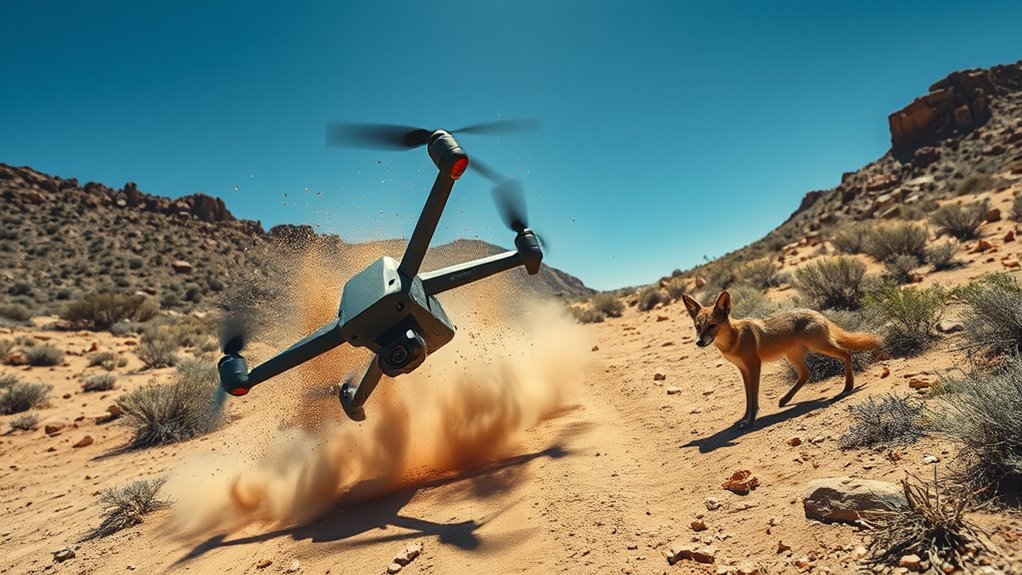
When a drone crashes, your first priority is ensuring safety for everyone nearby. Check if anyone is hurt and keep bystanders at a safe distance. Assess the weather considerations; strong winds or rain can worsen the situation or cause further damage. Turn off the drone immediately to prevent battery management issues, such as overheating or fire risks. Avoid touching the drone’s components if they’re hot or damaged, as batteries may still pose a hazard. Examine the crash site carefully, noting debris or hazards like exposed wires. Keep calm and avoid rushing to move the drone, which can cause injury or damage. Remember, safety always comes first—prioritize clearing the area and securing the scene before proceeding with further actions. Additionally, understanding the contrast ratio of your drone’s imaging system can assist in evaluating damage to the camera or sensor components post-crash. Recognizing the European cloud infrastructure standards can also aid in securely managing data recovery and reporting procedures after an incident. Implementing proper risk management strategies can help prevent future accidents and ensure compliance with safety regulations. Incorporating damage assessment protocols can further streamline the process of evaluating the drone after a crash and facilitate timely repairs. Being aware of the drone’s battery safety features can also be crucial in preventing fire hazards during crash recovery.
Retrieving Your Drone Safely and Effectively

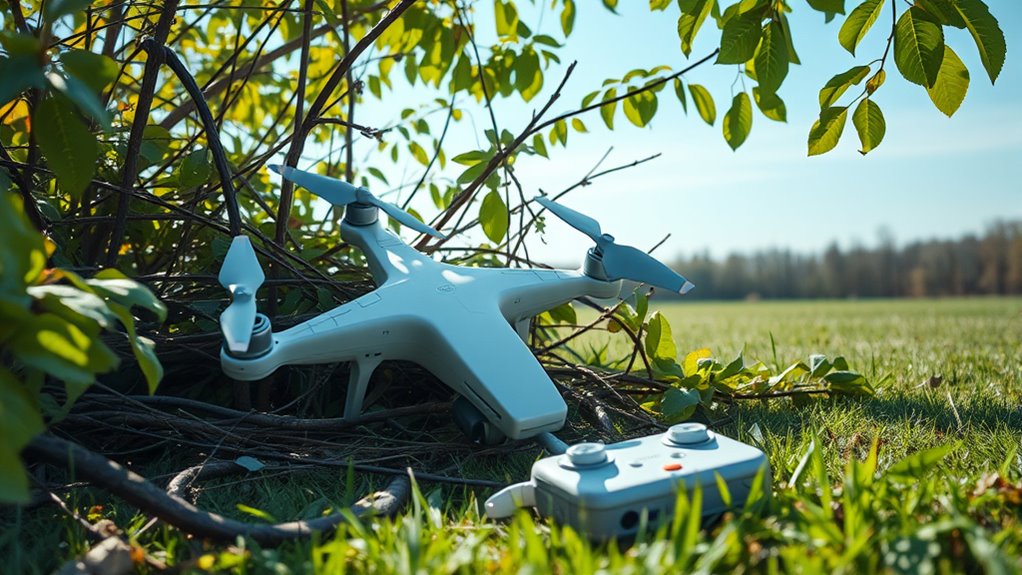
To retrieve your drone safely, approach the crash site with caution and plan your steps carefully. Check your drone’s battery management to avoid further power loss or damage during recovery. If the drone’s battery is still connected, handle it carefully to prevent overheating or fire hazards. Be mindful of potential signal interference from nearby electronic devices or structures, which can hinder communication with your drone. Use your remote’s find-my-drone feature if available, but stay vigilant for obstacles like trees or power lines. Move slowly and deliberately to avoid causing more damage. If the drone is in a difficult spot, consider using a long pole or retrieval tool, but prioritize safety over quick access, especially if interference affects your controls. It’s also helpful to familiarize yourself with home safety and accessibility tips to plan your approach and ensure a secure recovery. Additionally, understanding electromagnetic interference can help you troubleshoot communication issues during drone recovery. Being aware of environmental hazards can further assist you in assessing the safest method to retrieve your drone while minimizing risks. Incorporating proper safety gear can also protect you from unexpected hazards during the retrieval process. Recognizing potential hazards in the environment can aid in preventing accidents during the recovery effort.
Checking Your Equipment and Data Post-Crash
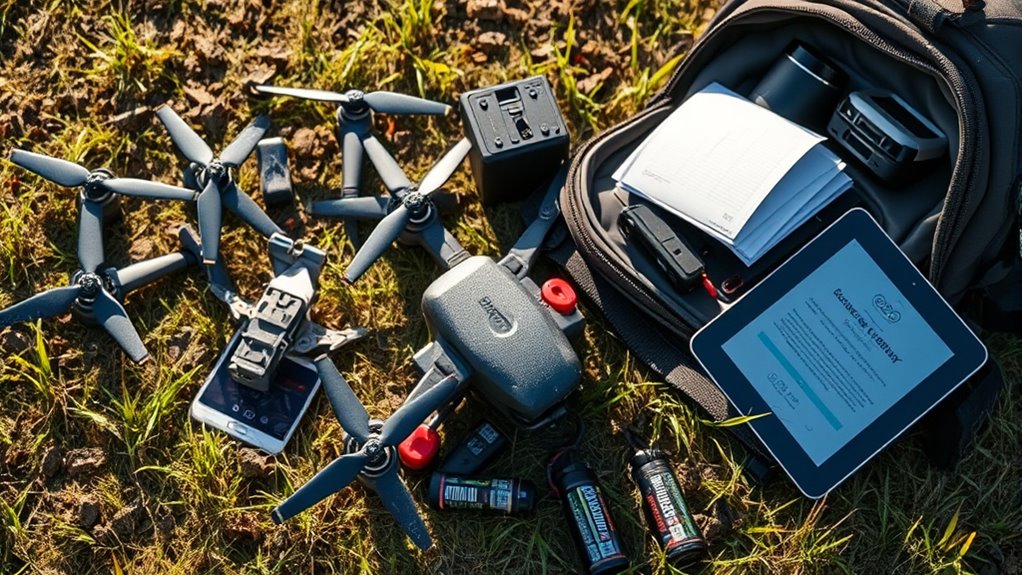
After safely retrieving your drone, it’s important to thoroughly assess your equipment and data. Check the physical condition of your drone for any visible damage, especially around the battery compartment and propellers. Perform a battery inspection to ensure no swelling or corrosion occurred. Confirm that your firmware is up to date, as this can prevent future issues and improve safety. Review your flight data to identify any anomalies or errors during the crash. Also, back up any footage or photos stored on your device. Be cautious of loose or broken parts that might need repair before your next flight. Additionally, inspecting your field-of-view and imaging-scale settings can help identify potential calibration issues that contributed to the incident. Regularly reviewing your wave and wind conditions can help anticipate challenging environments and reduce the likelihood of crashes. Familiarity with your drone’s specifications can also aid in understanding its limitations and preventing future accidents. Conducting a pre-flight safety check before each flight can further minimize risks and ensure all systems are functioning correctly. Remember that proper maintenance routines are vital for long-term drone performance and safety. Taking these steps helps ensure your drone is safe to operate again and reduces the risk of future crashes.
Reporting Loss or Damage to Authorities and Insurance
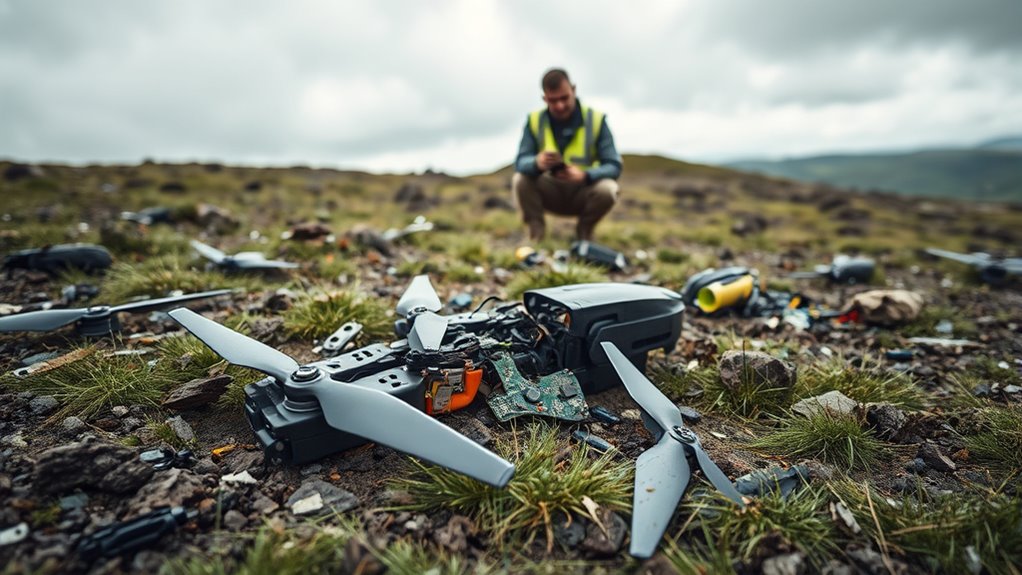
Have you considered notifying the relevant authorities and your insurance company immediately after a drone crash? Prompt legal reporting is essential, especially if your drone caused property damage or injury. Filing insurance claims quickly can help you recover costs and ensure proper documentation. Make sure to provide detailed information about the incident, including date, location, and extent of damage. Depending on your jurisdiction, you may be legally required to report certain crashes, such as those involving injuries or property over a specific value. Contact your insurance provider to understand their process for claims and what evidence they need. Reporting promptly not only helps with insurance reimbursement but also ensures you stay compliant with any legal reporting obligations. Staying informed about local regulations can help you avoid potential penalties and legal issues. Additionally, maintaining thorough incident records can facilitate smoother insurance claims and legal processes. Being aware of Rhythm Failure and related guidelines can help you navigate the aftermath more effectively. Staying proactive and understanding drone safety protocols can further assist in preventing future incidents and ensuring compliance. Regularly reviewing safety procedures can improve your response to emergencies and minimize risks. Stay proactive to protect yourself and streamline the recovery process.
Preventative Steps to Avoid Future Incidents
Preventing future drone crashes starts with thorough pre-flight preparations and ongoing maintenance. Regularly check your drone’s battery health and perform proper battery maintenance to avert power failures mid-flight. Keep your firmware up to date, as manufacturers often release updates that fix bugs and improve stability. Before each flight, review weather conditions and ensure your GPS signal is strong. Conduct a quick pre-flight checklist to verify propellers are secure and sensors are clean. Additionally, practice flying in open areas to build your skills and reduce risky maneuvers. Paying attention to body jewelry measurements and materials can also serve as a reminder to stay attentive to detail and proper maintenance. Incorporating drone safety guidelines into your routine can further help in minimizing accidents, keeping your flights safe and enjoyable. Being familiar with common causes of drone crashes can help you identify potential issues before they happen. Staying vigilant with these preventative steps helps minimize the chances of accidents, keeping your flights safe and enjoyable.
Frequently Asked Questions
How Can I Prevent My Drone From Losing GPS Signal Mid-Flight?
To prevent your drone from losing GPS signal mid-flight, avoid areas with GPS interference like dense urban environments or thick foliage. Use signal boosters if your drone supports them to strengthen the connection. Keep your drone within a clear line of sight and update its firmware regularly to guarantee the best GPS performance. These steps help maintain a stable GPS connection, reducing the risk of losing signal during flight.
What Are the Legal Implications of Crashing in a Public Area?
If you crash your drone in a public area, you could face liability issues if it damages property or injures someone. Additionally, privacy concerns may arise if your drone captures images or videos of individuals without their consent. Always check local regulations, obtain necessary permits, and be mindful of privacy laws to avoid legal trouble. Responsible flying helps protect you from potential lawsuits and privacy violations.
How Do I Recover Data if My Drone’s Storage Is Damaged?
It might seem like a coincidence, but data recovery is still possible even if your drone’s storage is damaged. You should carefully remove the storage device and connect it to a computer using a compatible reader. Use specialized data recovery software to scan for recoverable files. Remember, avoid overwriting data, and if needed, consult a professional to maximize your chances of retrieving important footage or data.
Can Drone Crashes Void My Warranty or Insurance Coverage?
A drone crash can void your warranty if it’s caused by user negligence or unauthorized modifications, leading to warranty voidance. Insurance coverage may also be affected if the crash results from reckless flying or violating the terms of your policy. Always review your warranty and insurance agreements to understand their policies on crash-related damages. To protect your coverage, fly responsibly and follow manufacturer guidelines, avoiding actions that could lead to warranty voidance or insurance claims denial.
What Are the Long-Term Effects of Repeated Crashes on Drone Components?
Repeated crashes can turn your drone into a ticking time bomb, causing severe battery degradation and motor wear that drastically reduce flight time and stability. Over time, these impacts weaken critical components, making your drone more prone to breakdowns and costly repairs. The relentless battering accelerates wear and tear, ultimately shortening your drone’s lifespan and risking total failure. Keep crashes to a minimum to protect your investment!
Conclusion
Remember, handling a drone crash isn’t just about fixing a gadget—it’s about safeguarding lives, property, and your reputation. Stay calm, follow these steps carefully, and don’t let the chaos turn into a catastrophe. With the right actions, you can turn a potential disaster into a minor blip on your drone journey. Keep safety top priority, learn from each incident, and soon, you’ll be flying smoother than a bird in the sky—impervious to crashes.