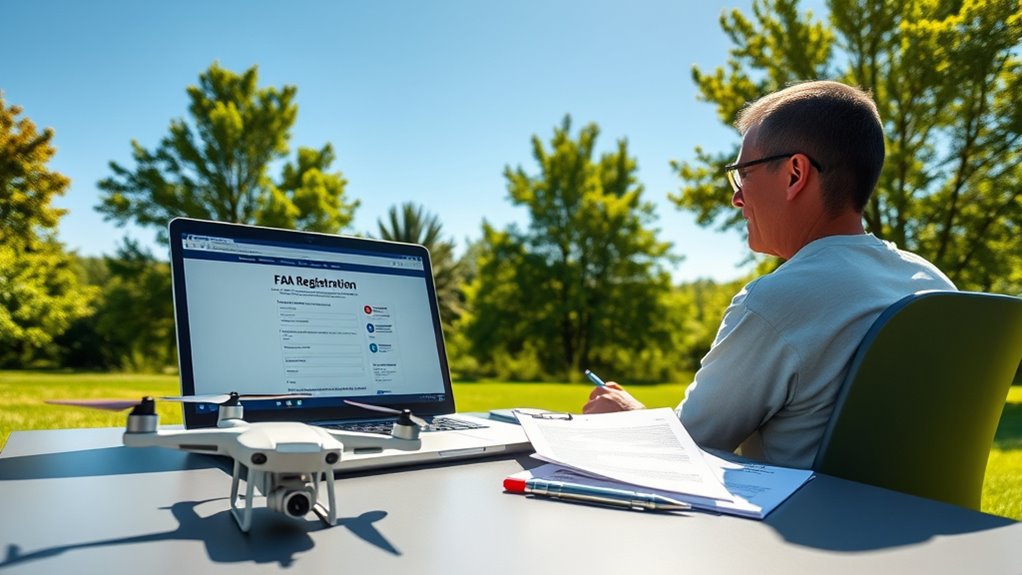

To register your drone with the FAA, start by gathering your personal ID, drone details like make, model, and serial number, and know its weight. Then, visit the FAA DroneZone website, create an account, and complete the registration form. Pay the fee, receive your registration number, and label your drone accordingly. Keep your registration info updated and follow FAA rules for safe flying. If you want to learn each step in detail, keep going.
Key Takeaways
- Visit the FAA DroneZone website and create an account with your personal details.
- Provide accurate drone information, including make, model, serial number, and weight.
- Complete the registration process, verify your email, and pay the registration fee.
- Receive your unique registration number and mark it clearly on your drone.
- Keep your registration current and maintain records for safe, compliant drone operation.
Understanding FAA Drone Registration Requirements
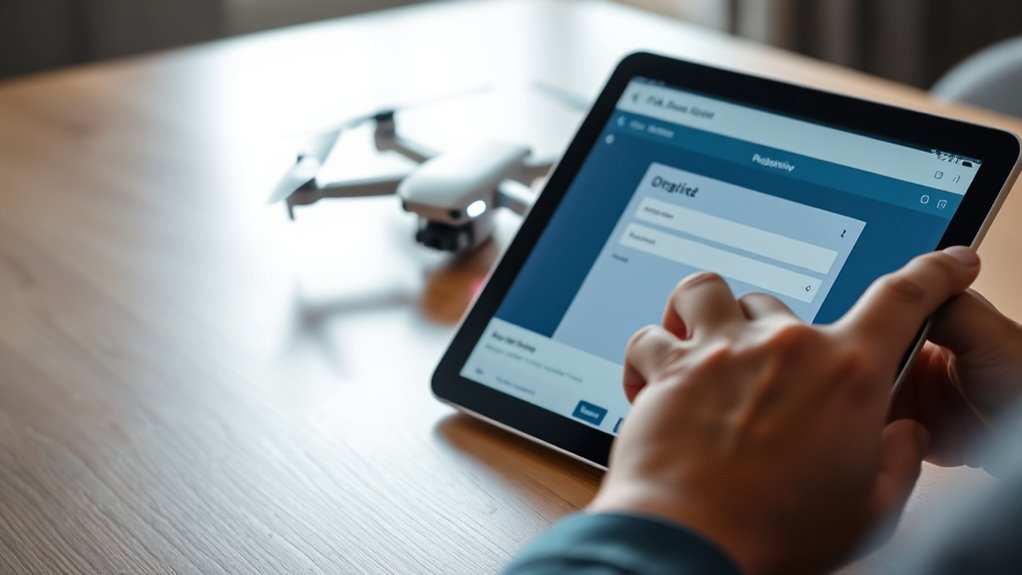
To legally operate a drone in the United States, you need to understand the FAA’s registration requirements. Ensuring drone safety starts with proper registration, which confirms your compliance with federal rules. When you register your drone, you’ll receive a unique registration number that must be marked on your aircraft. This registration is valid for three years, so staying aware of its validity helps you avoid penalties. Registration demonstrates your commitment to responsible flying and helps authorities track drones if necessary. If your drone weighs more than 0.55 pounds and less than 55 pounds, registration is mandatory. Remember, proper registration not only keeps you compliant but also promotes safe drone operations, protecting both you and others in the airspace. Additionally, understanding the importance of European cloud innovation can inspire responsible and sustainable technological practices in related fields. Being aware of drone regulations is essential to ensure you meet all legal requirements and operate safely within designated airspace. Familiarity with air traffic management systems can further support safe drone integration into existing airspace. Moreover, understanding electric power generation methods can help drone operators optimize energy use and extend flight times. Staying informed about emerging drone safety standards can also help you adapt to evolving regulations and best practices.
Gathering Necessary Information Before Registering
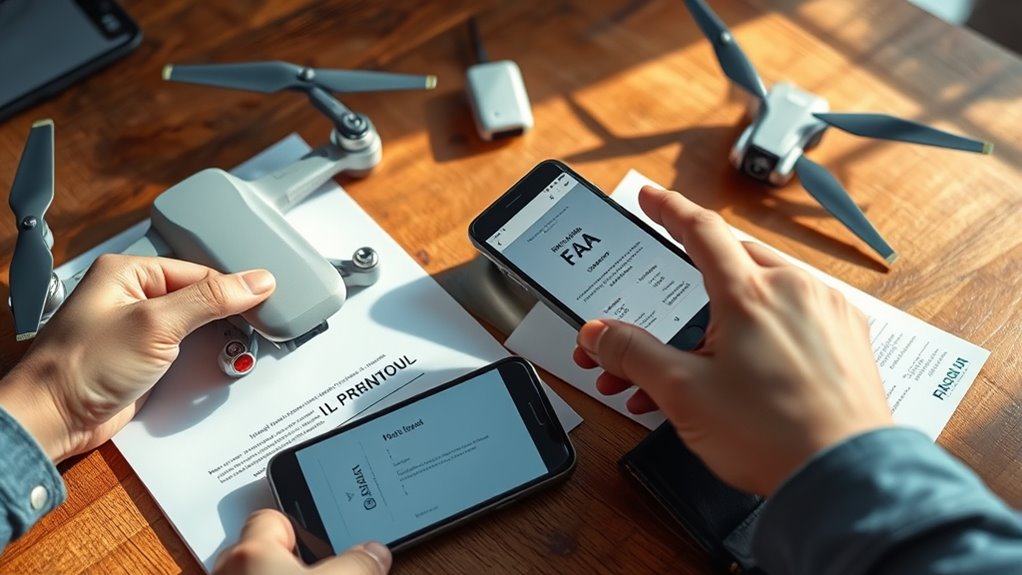
Before you start registering your drone, make sure you have your personal identification details ready, like your driver’s license or passport. You’ll also need to gather specific information about your drone, such as its make, model, and serial number. Having these details on hand will make the registration process quick and smooth, especially if you pay attention to designer aesthetics to ensure your drone’s appearance is well-maintained. Additionally, understanding the regulations and requirements related to drone registration can help you comply with federal guidelines and avoid potential penalties. Being familiar with drone safety practices can further ensure responsible operation and compliance with FAA rules. It’s also helpful to review website performance metrics to stay informed about any updates or changes that might impact your registration process. Recognizing the importance of Suprem fabric in creating durable and eco-friendly designs underscores the value of sustainable choices in various applications.
Personal Identification Details
Have you gathered all the personal information you’ll need for the registration process? Before starting, make sure you have your details ready to streamline identity verification and protect your personal data security. Here are three key items to prepare:
- Your full name and physical address, matching your official ID.
- Your email address and phone number for communication.
- Your FAA-accepted form of identification, like a driver’s license or passport.
- Familiarize yourself with the affiliate disclosure to understand how your data might be used during the process.
Having this information handy helps prevent errors during registration and safeguards your personal data security. Keep your details accurate and readily accessible to avoid delays. Confirm your identity verification details are correct to ensure a smooth registration process. Being prepared makes the process faster and more secure, especially considering that proper maintenance of your personal data can prevent issues down the line.
Drone Specifications Required
Gathering your drone’s specifications is a vital step to guarantee your registration process goes smoothly. You need accurate details about your drone, including weight, model, and serial number. This information ensures your drone complies with FAA regulations, promoting drone safety and maximizing registration benefits. Double-check your drone’s weight, as anything over 0.55 pounds requires registration. Here’s a quick overview:
| Specification | Details Needed |
|---|---|
| Weight | In pounds or grams |
| Model and Serial Number | Found on the drone or packaging |
| Usage Intent | Recreational or commercial |
Having this information ready streamlines the process, helps avoid delays, and ensures your drone is legally compliant for safe flying. Understanding drone regulations can further assist in ensuring full compliance with all relevant laws, including knowledge about vetted deals for deals buy that might help you find affordable accessories or registration services.
Creating an Account on the FAA DroneZone Website

To get started, visit the FAA DroneZone website and create an account. You’ll need to register for a new account by entering your personal information. After signing up, be sure to verify your email address to complete the process and gain access to the registration tools. Remember, modern drone registration involves understanding the latest regulations and technological requirements.
Access the DroneZone Site
Are you ready to register your drone with the FAA? First, access the DroneZone site by opening your web browser and proceeding to the official FAA DroneZone webpage. This platform is where you’ll manage all your drone registration needs, guaranteeing your drone stays compliant with flight safety regulations. To get started smoothly, follow these steps:
- Click on the “Get Started” button to begin the registration process.
- Review the user guide to understand how to maintain your drone properly and guarantee safe operation.
- Prepare your personal info and drone details for easy account setup.
Accessing the DroneZone site is simple and essential for maintaining drone maintenance records and staying compliant with FAA rules.
Register for a New Account
Creating a new account on the FAA DroneZone website is a straightforward process that guarantees you can manage your drone registration and compliance efficiently. When you register, you access the benefits of proper drone safety protocols and easier access to future updates. To get started, you’ll need your personal info and drone details. Here’s a quick overview:
| Step | Action |
|---|---|
| 1 | Visit the FAA DroneZone site |
| 2 | Click “Create Account” |
| 3 | Enter your email and info |
| 4 | Set a secure password |
| 5 | Confirm registration |
This account simplifies managing your drone registration benefits and encourages responsible drone safety practices.
Verify Your Email Address
Have you completed the initial registration steps? Now, it’s time to verify your email address to guarantee your account security. An email verification confirms that you control the email linked to your FAA DroneZone account, helping prevent unauthorized access. Here’s what you need to do:
- Check your inbox for the verification email from FAA DroneZone.
- Click the link inside to confirm your email address.
- Ensure the link opens correctly and completes the verification process.
This step is essential for account security, protecting your personal information and drone registration data. Skipping email verification could delay your registration process or compromise your account’s safety. Take a moment to verify your email to finalize your registration smoothly and securely.
Completing the Drone Registration Application
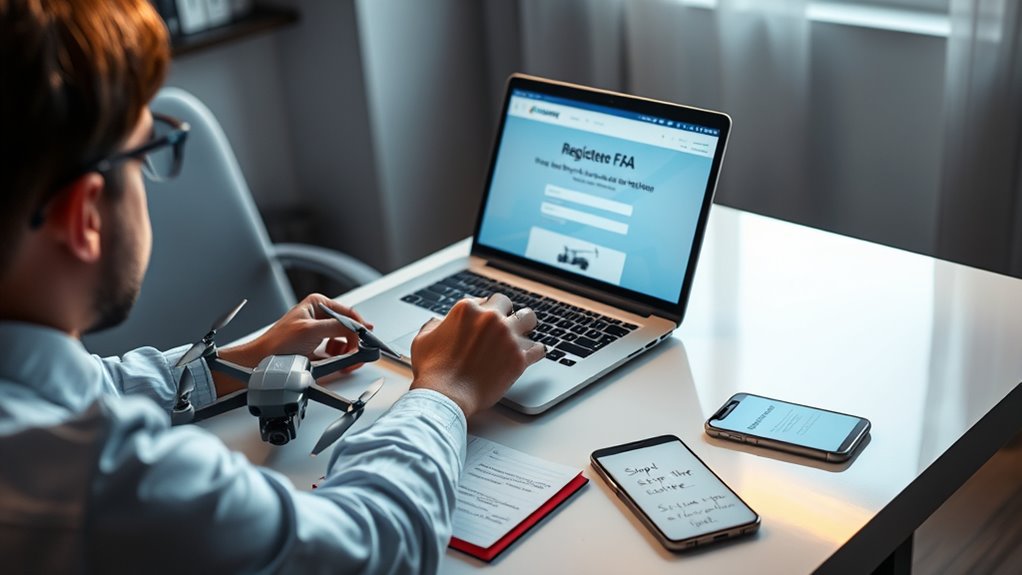
To complete the drone registration application, you’ll need to provide accurate information about yourself and your drone. Be prepared to enter details like your name, address, and email address. You’ll also specify the drone’s make, model, and serial number. The FAA emphasizes drone safety and airspace regulations, so double-check that your drone complies with current rules. Answer questions honestly to guarantee your registration is valid and avoid potential penalties. Take your time to review all entries before submitting. The application process is straightforward, but accuracy is essential. Once submitted, you’ll receive a registration number that must be marked on your drone. Ensuring your drone complies with regulations helps you stay compliant with FAA regulations and ensures safe operation within the national airspace. Familiarizing yourself with airspace restrictions can prevent unintentional violations. Being aware of airspace classifications is also important for safe drone operation and avoiding restricted zones. Additionally, understanding remote pilot responsibilities helps maintain safe and legal drone flights. Being knowledgeable about airspace management can further enhance your safe flying practices and compliance.
Paying the Registration Fee

Once you’ve completed your drone registration application, the next step is paying the registration fee. The payment process is straightforward, and understanding the fee structure helps you budget accordingly. To ensure your registration is valid, make sure your payment method is accepted and functioning properly. Here’s what to expect: 1. Choose your preferred payment method, such as credit or debit card. 2. Confirm the fee amount, which typically is a flat rate for most registrations. 3. Complete the transaction, and you’ll receive a receipt confirming your payment. The fee structure is simple, with only one fee for registration, making it easy to know what you’ll owe. Properly payment processing ensures your registration is completed without delays. Confirming your payment confirmation is crucial to avoid any issues that could delay your registration approval. Guarantee your payment goes through successfully to avoid delays in processing your registration. Once paid, you’ll be ready to move on to the next step.
Receiving and Printing Your Registration Certificate

Once you complete your registration, you can access your certificate online. Just download the document and print it out. Make sure to display it properly on or near your drone whenever you’re flying.
Access Your Registration Online
How can you quickly access and print your drone registration certificate? Once you’ve registered, you can easily retrieve it online to support drone safety and ensure compliance with airspace regulations. Follow these steps:
- Log in to the FAA’s drone registration website using your credentials.
- Navigate to your account dashboard where your registration details are stored.
- Select the option to view or print your registration certificate.
Having your certificate readily available helps verify your registration during inspections and promotes responsible flying. Printing a physical copy can be useful if required by local authorities. Remember, keeping your registration accessible supports adherence to airspace regulations and demonstrates your commitment to drone safety. Accessing your registration online is quick, secure, and an essential part of responsible drone operation.
Download Registration Certificate
To download and print your registration certificate, start by logging into your account on the FAA’s drone registration website. Once logged in, navigate to your registration details, where you’ll find your official certificate. This document is essential for legal drone flight and for engaging in aerial photography activities. Be sure to review the information for accuracy before printing. Having a physical copy of your registration certificate helps you comply with FAA regulations and quickly demonstrate your registration status if needed. Keep a printed version handy whenever you’re flying your drone, especially during aerial photography sessions or drone flights in restricted areas. Downloading and printing your certificate ensures you’re prepared and compliant for all your drone operations.
Print and Display Properly
After you’ve downloaded your registration certificate, it’s important to print it clearly and display it properly. A visible, legible certificate helps promote drone safety and guarantees you follow flight regulations. To do this effectively, consider these steps:
- Use high-quality paper and a clear font to make your registration easy to read.
- Laminate or protect the certificate to prevent damage during outdoor flights.
- Place the certificate visibly on your drone, such as inside a clear case or attached securely, so authorities or fellow drone operators can verify your registration quickly.
Properly displaying your registration helps maintain safety standards and guarantees you’re compliant with FAA rules. It’s a simple step that promotes responsible drone operation and smoothens the process during inspections or emergencies.
Labeling Your Drone With Registration Number

Once you’ve registered your drone with the FAA, the next step is to clearly display your registration number on the device. Proper labeling is essential for drone safety and helps authorities identify your drone if needed. Use a durable, legible marker or stickers to place the registration number on the outside of your drone, typically on the main body or a prominent area. Make sure the number is easily visible and not obstructed by propellers or other parts. Proper labeling not only complies with FAA regulations but also reinforces the registration benefits, such as accountability and transparency. By ensuring your drone is properly marked, you help promote safe drone operation and protect yourself from potential fines or penalties.
Maintaining and Updating Your Registration Details
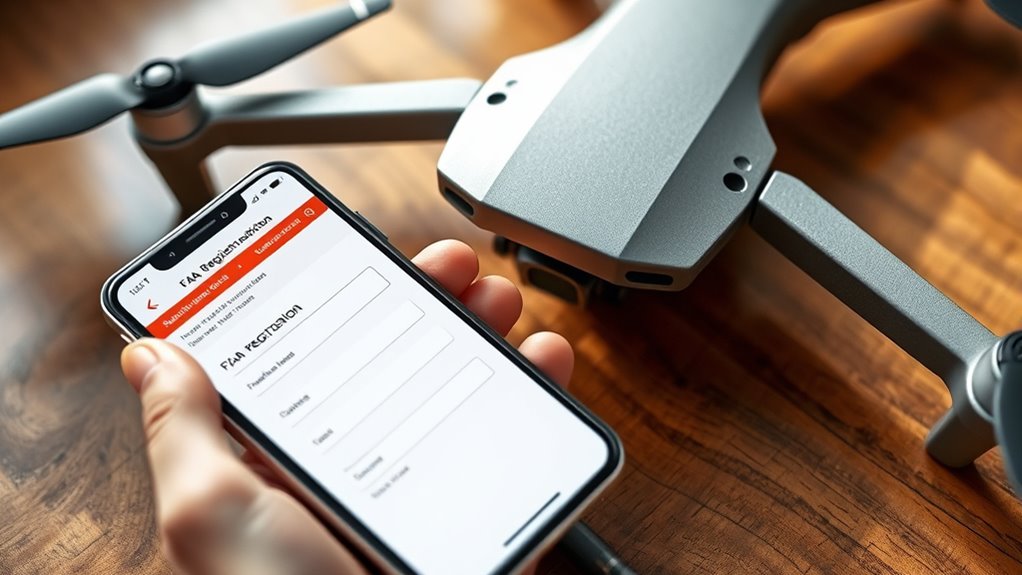
How can you guarantee your drone registration stays valid and accurate over time? Regularly review your registration details to make certain they’re current, especially if you change your address or other contact info. Staying on top of registration deadlines prevents your registration from expiring, which is vital for drone safety and legal flying. Here’s what you should do:
- Update your registration info promptly if there are any changes.
- Mark registration renewal deadlines on your calendar.
- Check for any FAA updates or regulation changes that might affect your registration status.
Registering Multiple Drones

If you own multiple drones, registering each one individually with the FAA is essential to stay compliant with regulations. Doing so guarantees you can operate drone safely and avoid penalties. The registration benefits include legal protection and peace of mind, knowing you’re following the law. To register multiple drones, you can use your existing FAA account to add each drone’s details, saving time and effort. This process keeps your registration current and helps track your fleet easily. Remember, each drone must have its own registration number displayed visibly. Registering multiple drones also simplifies compliance checks and demonstrates responsible drone ownership. By staying organized and updating registration info as needed, you ensure smooth flying experiences and uphold drone safety standards.
Complying With FAA Rules After Registration
After registering your drone with the FAA, it’s essential to follow all applicable rules to stay compliant and avoid penalties. Prioritize drone safety by always maintaining visual line of sight and avoiding reckless maneuvers. Be aware of flight restrictions, including no-fly zones near airports, crowded areas, or sensitive sites. To ensure you’re on track:
- Check for temporary flight restrictions before each flight.
- Follow altitude limits—generally 400 feet or less.
- Respect privacy and avoid flying over private property without permission.
Staying informed about FAA regulations helps protect everyone and keeps your drone activities within legal boundaries. Remember, adhering to these rules is key to responsible drone operation and avoiding costly violations.
Frequently Asked Questions
Can I Register My Drone if I’M Under 13 Years Old?
You can’t register your drone with the FAA if you’re under 13 years old. FAA’s age restrictions require users to be at least 13, but a parent or guardian can register the drone on your behalf with their own account. They need to provide parental consent, ensuring the registration process follows regulations. Remember, adult supervision is essential if you’re under 13 and interested in flying or registering a drone.
How Long Does the Registration Process Typically Take?
The registration process typically takes anywhere from a few minutes to a few days, depending on whether you register online or by mail. If you complete your registration online, expect a quick turnaround—often within minutes—thanks to automated processing. However, if you mail your application, allow extra time for processing. Overall, the registration duration varies based on method, but most users find it fast and straightforward.
Is There a Different Process for Commercial Drone Registration?
Yes, there is a different process for commercial drone registration. You’ll need to complete a commercial registration, which involves providing additional information about your drone and intended use. The drone registration process for commercial purposes is more detailed, requiring you to adhere to FAA Part 107 regulations. You also need to obtain a remote pilot certificate. Make sure you follow these extra steps to ensure legal compliance for commercial drone operations.
What Should I Do if I Lose My Registration Certificate?
Like Odysseus lost in the sea, if you lose your registration certificate, don’t despair. You should log into your FAA drone registration account and request a duplicate certificate through the FAA’s online system. This process is straightforward and quick, ensuring you can continue flying legally. Remember, keeping your registration details handy is essential, and recovering your certificate is just a few clicks away for certificate recovery and peace of mind.
Are There Penalties for Flying Unregistered Drones?
Yes, there are penalties for flying unregistered drones. If you neglect registration requirements, you risk enforcement consequences like fines up to $27,500 for civil penalties or even criminal charges. Registration penalties can also include confiscation of your drone and legal action. To avoid these issues, always guarantee your drone is properly registered before flying and stay compliant with FAA regulations to prevent costly penalties and enforcement consequences.
Conclusion
Now that you know how to register your drone with the FAA, you’re ready to take flight confidently, like a bird soaring with a clear sky beneath. Following these steps guarantees you stay on the right side of the law and keep your drone adventures safe and enjoyable. Remember, proper registration is the compass guiding your journey through the skies—so keep your details updated and fly responsibly. Happy flying!