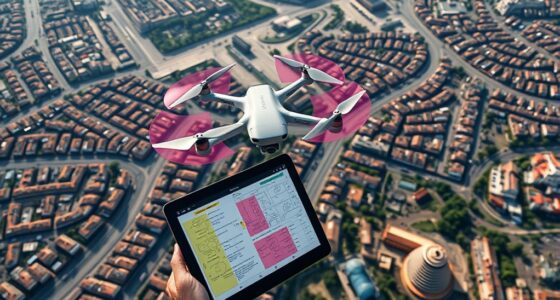
LAANC, or Low Altitude Authorization and Notification Capability, is an FAA-approved system that gives you instant approval to fly your drone in restricted airspace, like near airports. To get authorization, you submit a request through approved UAS service providers or the FAA portal, and the system quickly evaluates your planned flight. It helps you stay compliant, avoid penalties, and fly safely. If you’d like to understand how to use LAANC effectively, you’ll find helpful tips below.

Get the latest gadgets delivered free with Prime
- Fast, free delivery on millions of items
- Prime Video, Amazon Music and more included
- Member-only deals all year
Key Takeaways
- LAANC provides instant FAA-approved authorization for drone flights in restricted airspace.
- Requests are submitted through approved UAS service providers or the FAA portal.
- The system evaluates flight details against current restrictions, granting approvals within seconds or minutes.
- Using LAANC helps ensure compliance with airspace regulations and reduces the risk of penalties.
- It simplifies planning by offering real-time airspace status and permission notifications.

Have you ever wondered how drone pilots get quick approval to fly in restricted airspace? The answer lies in understanding the processes designed to streamline drone operations while maintaining drone safety and respecting airspace regulations. Traditionally, obtaining authorization to fly in controlled or restricted airspace involved lengthy approval processes, often requiring you to contact the FAA or other authorities directly. This delay could hinder time-sensitive missions or commercial projects. Luckily, the Low Altitude Authorization and Notification Capability (LAANC) has changed that by providing a fast, automated way to request and receive airspace authorization.
LAANC is an FAA-approved system that allows drone pilots to access real-time airspace information and request necessary permissions through approved UAS service suppliers or directly from the FAA’s portal. When you plan a flight near or within restricted zones like near airports, military bases, or other sensitive areas, LAANC simplifies the process. Instead of submitting lengthy paperwork or waiting days for approval, you can receive instant authorization if your planned flight complies with current airspace regulations. This helps ensure drone safety by preventing unauthorized flights into restricted zones, reducing risks to manned aircraft, people, and property.
To use LAANC effectively, you need to understand airspace regulations that apply to your planned flight. The system provides detailed information about the current status of different airspace classes and restrictions. When you submit a request through LAANC, it evaluates your proposed flight location, altitude, and time against existing restrictions. If everything aligns with regulations, you’ll get an approval almost immediately, often within seconds or minutes. If not, the system will notify you of the specific restrictions, and you may need to adjust your plan or seek further authorization. This process keeps your drone operations compliant with federal rules, helping you avoid penalties or fines. Additionally, airspace regulations are continually updated, so staying informed is essential for ongoing compliance.
LAANC also helps you plan safer and more efficient flights. By knowing in advance whether your desired operation is permitted, you can save time and avoid last-minute surprises. The system integrates with popular drone apps and platforms, making it accessible whether you’re a hobbyist or a commercial operator. Remember, even with LAANC, it’s your responsibility to stay updated on airspace regulations and ensure your drone activities don’t violate any restrictions. Using LAANC not only accelerates your approval process but also promotes drone safety by respecting the boundaries set by aviation authorities. This way, you can focus on your mission with confidence, knowing your flight is authorized and compliant with current airspace rules.
Products Worth Considering

Kindle Paperwhite Kids (2024), 16 GB, 7-inch Display, Cyber City Cover

DJI Osmo 360 Road Cycling First-Person Combo 360° Action Camera

Apple iPad 11-inch with A16 Chip, 512GB, Wi-Fi 6, and Apple Pencil (USB-C) — Blue
As an affiliate, we earn on qualifying purchases.
Frequently Asked Questions
Can LAANC Be Used for Commercial and Recreational Drone Flights?
Yes, you can use LAANC for both commercial and recreational drone flights. It helps you quickly get airspace authorization, but keep in mind recreational restrictions still apply, like flying within visual line of sight and avoiding certain areas. For commercial flights, you may also need specific exemptions or certifications. LAANC streamlines the approval process, making it easier to comply with regulations regardless of your drone’s purpose.
How Long Does It Take to Receive LAANC Authorization?
You can usually get LAANC authorization within seconds to a few minutes during approval processing. However, delays may occur due to factors like high request volume, airspace restrictions, or system issues. To avoid delays, verify your flight details are accurate and up-to-date. If approval takes longer than expected, check for system outages or contact the FAA for further assistance. Quick processing helps you fly legally and safely in controlled airspace.
Are There Any Fees Associated With LAANC Approvals?
No, there are generally no fees associated with LAANC approvals. The fee structure for obtaining airspace authorization through LAANC is designed to be free, making it cost-effective for drone pilots. You won’t face any cost implications when submitting your request or receiving approval via the system. This streamlined process helps you focus on flying safely without worrying about additional charges or hidden fees.
What Are the Limitations of LAANC in Different Airspace Classes?
You should know that LAANC has limitations based on airspace class restrictions and coverage areas. It mostly works in controlled airspace classes like B, C, D, and some surface areas, but doesn’t cover all locations, especially in Class G or restricted zones. This means you might need additional authorization outside LAANC or avoid flying in certain areas altogether. Always check the specific LAANC coverage areas before planning your drone operation.
Can Pilots Request Multiple Authorizations Simultaneously Through LAANC?
Like juggling fireballs, you can’t request multiple authorizations simultaneously through LAANC, as each request goes through its own approval process. The system processes each authorization separately, so you need to wait for approval before submitting another. This guarantees safety and compliance, but it can slow you down if you need multiple permissions quickly. Plan your flights accordingly, and don’t try to speed up the process with multiple requests at once.
Conclusion
Now that you understand LAANC, think of it as your trusted compass guiding you through the skies’ maze. With this system, you’re not just flying blindly but steering a clear, open highway in the vast sky highway. Embrace the process, and you’ll find yourself soaring confidently, turning every drone flight into a smooth voyage. Remember, with LAANC, you’re not just getting permission—you’re opening the sky’s boundless potential, making your drone adventures truly limitless.