
To fly your drone legally and safely, you need to be aware of no-fly zones like airports, military bases, and sensitive sites, which are often marked on airspace maps or apps. Temporary Flight Restrictions (TFRs) can also limit flight during events or emergencies. Always check updates, follow local rules, and use reliable tools to stay informed. If you want to guarantee your drone flights are both fun and compliant, there’s more to consider below.
Key Takeaways
- Always check FAA airspace maps and apps for controlled zones, airports, and no-fly areas before flying.
- Avoid restricted zones like airports, military bases, and no-fly zones unless you have explicit permission.
- Be aware of Temporary Flight Restrictions (TFRs) during emergencies, events, or security situations.
- Comply with local regulations and obtain necessary permits for flying near urban areas or sensitive sites.
- Maintain visual line of sight, stay informed about airspace restrictions, and register your drone where required.
Types of No-Fly Zones

There are several types of no-fly zones, each serving different safety and security purposes. You need to be aware that drone registration is often required before flying near certain zones, ensuring authorities can track your drone if necessary. Some no-fly zones restrict all drone flights without explicit flight permissions, such as around airports or military bases. Other zones may allow limited flying if you obtain proper permissions or special authorizations. These restrictions are designed to prevent accidents, protect sensitive sites, and maintain safety in crowded or high-risk areas. By understanding the different types of no-fly zones, you can avoid legal issues and keep your drone activities safe and compliant. Always verify if your planned flight area falls within a restricted zone before taking off. Understanding innovative cloud solutions can help you stay informed about evolving regulations and safety measures in drone airspace management, especially as airspace regulations continue to develop with new technology. Additionally, consulting official geographic boundary maps can assist in identifying restricted zones more effectively. Staying updated on real-time airspace alerts can further help you avoid accidental violations during your drone flights. Furthermore, being aware of local ordinances can provide additional guidance specific to your area.
Identifying Restricted Airspace
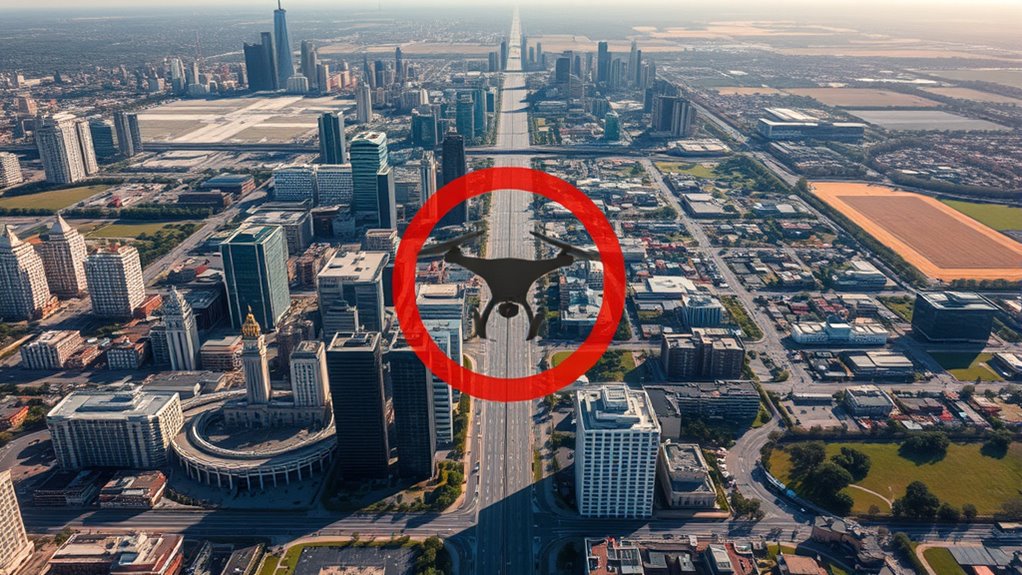
To identify restricted airspace, you should familiarize yourself with official notices and maps that outline no-fly zones. Start by checking FAA charts and local government resources to understand where restrictions apply. When planning your drone flight, verify your drone is properly registered, as this helps authorities track compliance and enforces no-fly zones. During flight planning, review airspace classifications and restrictions carefully—these details can change based on location or events. Using reliable apps or websites that display real-time airspace data can make this process easier. Always verify whether your intended flight area overlaps with restricted zones before takeoff. Being proactive in identifying no-fly zones helps you avoid violations and keeps your drone operations safe and responsible. Additionally, familiarize yourself with airspace classifications to better understand the different levels of restrictions and permissions. Understanding Free Floating airspace regulations is crucial to ensure safe and legal drone operation in various environments. Consulting official NOTAMs (Notice to Airmen) can provide the most current updates on temporary restrictions or changes. Regularly checking airspace updates can help you stay informed about new or temporary no-fly zones that may affect your planned flights. Being aware of dynamic restrictions such as temporary flight restrictions (TFRs) is essential for adapting to changing airspace conditions.
Temporary Flight Restrictions (TFRs)
Temporary Flight Restrictions happen for various reasons, like emergencies or special events. You’ll need to learn how to identify where these restrictions are in effect. Knowing how long they last helps you plan your flights safely and avoid violations. Always check for official notices before your flight to stay informed about current restrictions. Additionally, airspace classifications can change rapidly during these periods, so staying updated is crucial for safe drone operation. Being aware of NOTAMs can provide real-time updates on temporary restrictions affecting your planned flight areas. Monitoring airspace status updates ensures you have the latest information and can adapt your plans accordingly, especially when temporary restrictions are in place.
Causes of TFRs
Many events and situations can lead to the implementation of Temporary Flight Restrictions (TFRs), which are designed to guarantee safety and security in the airspace. These restrictions often arise from concerns over high-profile events, emergencies, or security threats. Common causes include:
- National security threats or military operations
- Major public events like sports or concerts
- Emergency response efforts, such as wildfires or natural disasters
- Special considerations like drone registration and pilot certification requirements during sensitive times
- As drone activity increases, authorities may impose TFRs to prevent potential interference with manned aircraft and protect airspace integrity Security Measures. Maintaining awareness of airspace regulations is crucial for responsible drone operation. TFRs are enforced promptly to protect lives and property, so always stay informed about current restrictions. Knowing the causes ensures you can adjust your drone activities accordingly and respect the boundaries set for safety. Proper understanding of airspace classifications can help drone pilots avoid unintentional violations and ensure compliance with federal guidelines.
Identifying TFR Locations
Identifying TFR locations is essential for safe drone operation, as these restrictions are not always visible or obvious. To stay compliant and avoid penalties, use official sources like FAA notices, flight planning apps, and NOTAMs. These tools alert you to temporary restrictions that could impact drone photography and hobbyist activities. Keep a close eye on TFR updates, especially during events, emergencies, or national security concerns.
| Source | Type of TFR | Location Focus |
|---|---|---|
| FAA NOTAM System | Nationwide | Airports, Events |
| FAA Website | Temporary Notices | Major Cities |
| Flight Apps | Real-time Alerts | Local Areas |
| Local Authorities | Event Restrictions | Specific Venues |
| News & Announcements | Emergency Alerts | High-profile Sites |
Duration of Restrictions
How long a TFR remains in effect can vary widely depending on the reason behind the restriction. Some TFRs last only a few hours, while others may be in place for days or weeks. The duration often depends on the severity of the event, such as a natural disaster or a special event. Understanding airspace classifications helps you know when drone no go zones are temporary.
- TFRs near airports may be short-term or extended based on safety needs
- Major events or emergencies can lead to longer restrictions
- Use official notices to stay updated on the duration of restrictions
- Remember, temporary restrictions aim to protect crowds and critical infrastructure
Always check for updates, as restrictions can change rapidly, affecting your drone flight plans.
How to Use Airspace Maps and Apps
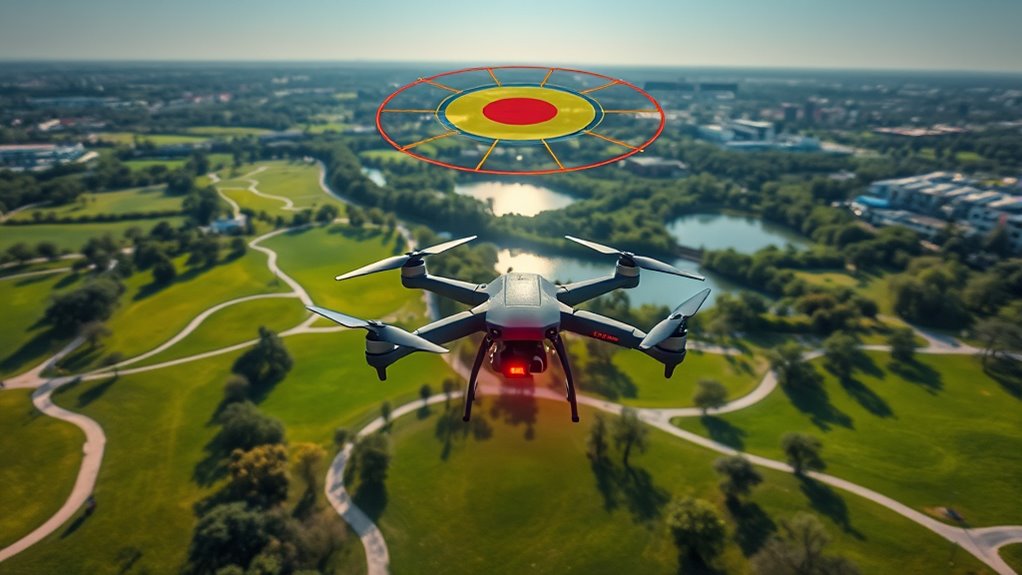
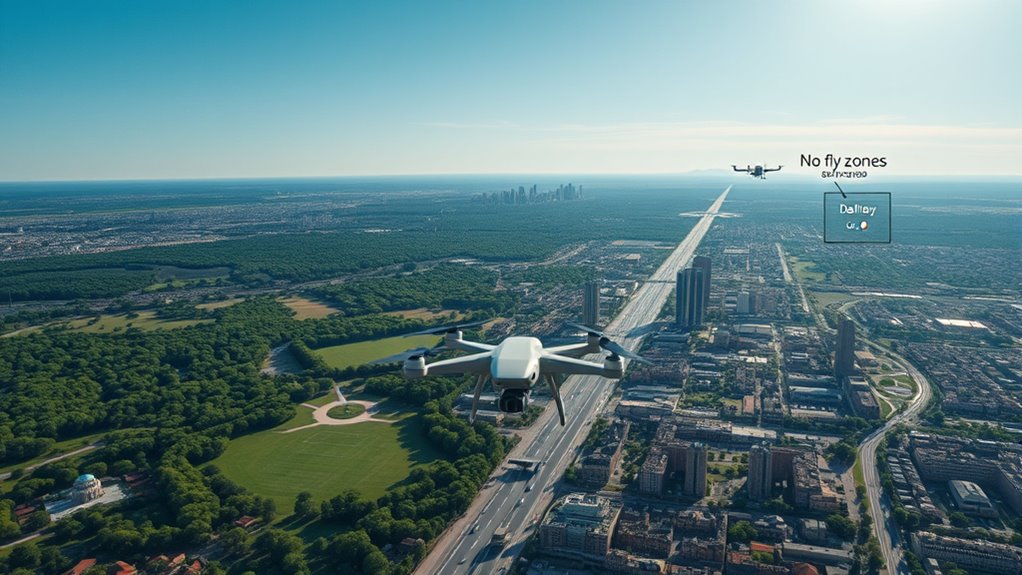
Using airspace maps and apps effectively is essential for safe and legal drone operation. These tools help you identify no-fly zones, restricted areas, and safe flight corridors. When using drone app features, pay attention to real-time updates and notifications about temporary restrictions. Many apps allow you to view layered airspace maps, highlighting controlled airspace, airports, and other hazards. Familiarize yourself with how to navigate these maps quickly and interpret different symbols and colors. Enable alerts so you’re immediately informed of any changes or new restrictions in your area. By mastering these tools, you can plan your flights with confidence, avoid violations, and ensure you’re flying within legal boundaries. Proper use of airspace maps and drone app features keeps your flights safe and compliant. Additionally, understanding the airspace classifications helps you better anticipate restrictions and plan your flights accordingly. Developing a flight planning routine that incorporates these tools will further enhance your safety and compliance efforts. To improve your understanding, consider reviewing official airspace maps regularly to stay updated on current restrictions and changes.
Legal Consequences of Violating No-Fly Zones
Violating no-fly zones can lead to serious legal consequences, including hefty FAA penalties, criminal charges, and restrictions on your drone activities. If you ignore airspace regulations, you risk civil liability for damages or injuries caused by your drone. Understanding the stakes helps you stay compliant and avoid penalties. Additionally, being aware of airspace regulations principles like sleek contrasts and balanced designs can help you create a safe and responsible flying environment.
Best Practices for Responsible Drone Flying
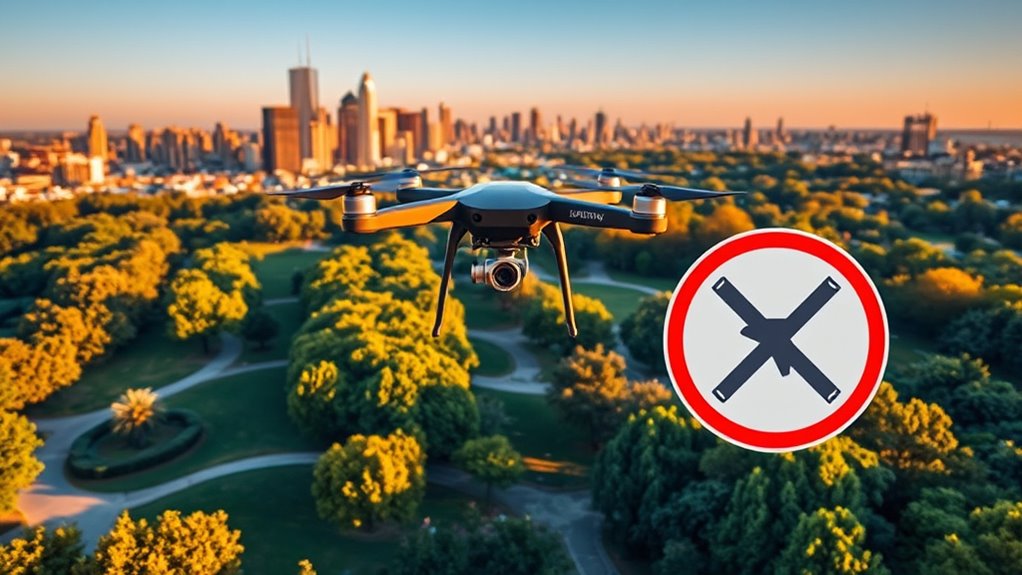
To fly your drone responsibly, it’s essential to stay informed about airspace rules and respect no-fly zones. Regular drone maintenance ensures your equipment functions correctly, reducing risks during flight. Before each flight, check battery levels, calibrate sensors, and inspect for damage. Follow flight safety tips like maintaining visual line of sight, avoiding high winds, and never flying over crowds or private property without permission. Respect no-fly zones and keep updated on local restrictions to prevent accidents or legal issues. Responsible flying also means planning your routes carefully and staying aware of your surroundings. By combining proper drone maintenance with adherence to safety guidelines, you help ensure a safe, enjoyable experience for yourself and others.
Special Considerations for Urban Areas

Urban areas often have strict no-fly restrictions you need to follow, which can vary by location. High-rise buildings pose obstacle risks that demand constant awareness and careful navigation. Additionally, local regulations can differ from one city to another, so staying informed is essential.
Urban No-Fly Restrictions
Navigating no-fly restrictions in urban areas requires careful attention due to the high density of people, buildings, and sensitive infrastructure. Urban restrictions are often stricter to protect public safety and privacy. City regulations may prohibit flying near schools, hospitals, or government facilities. You should also be aware of local rules that restrict drone flights during certain hours or in specific zones. Ignoring these regulations can lead to fines or confiscation. To stay compliant, consider these key points:
- Check for temporary restrictions during events or emergencies
- Know the boundaries of no-fly zones established by authorities
- Respect privacy by avoiding residential areas without permission
- Stay informed about updates to local city regulations
Understanding these urban restrictions helps you fly safely and responsibly within the law.
High-Rise Obstacle Risks
High-rise buildings pose significant obstacle risks for drone pilots in city environments. These structures create complex flight paths and increase the chance of collisions if you don’t stay vigilant. High rise risks demand constant obstacle avoidance, especially in crowded urban areas where buildings are closely packed. You need to plan your flight carefully, keeping your drone within line of sight and avoiding sudden maneuvers near tall structures. Using obstacle detection sensors can help, but don’t rely solely on technology. Always anticipate potential hazards and adjust your altitude accordingly. Remember, even a small miscalculation can lead to crashes or damage to property and people. Prioritize safety by maintaining awareness of your surroundings and practicing strong obstacle avoidance techniques at all times in urban environments.
Local Regulations Variability
Because local regulations can vary markedly from one city to another, it’s essential for drone pilots to familiarize themselves with the specific rules that apply in each urban area. Regional variation in local regulations means what’s permitted in one city might be restricted elsewhere. Different areas may have unique restrictions on altitude, flight times, or privacy zones. Understanding these nuances helps you avoid fines or penalties. Key considerations include:
- Restrictions based on city ordinances and zoning laws
- Unique privacy concerns in densely populated areas
- Local enforcement practices and penalties
- Specific rules around flying near landmarks or events
Knowing these regional differences ensures safe, legal drone operation tailored to each urban environment. Always check local regulations before taking off.
Flying Near Airports and Military Bases
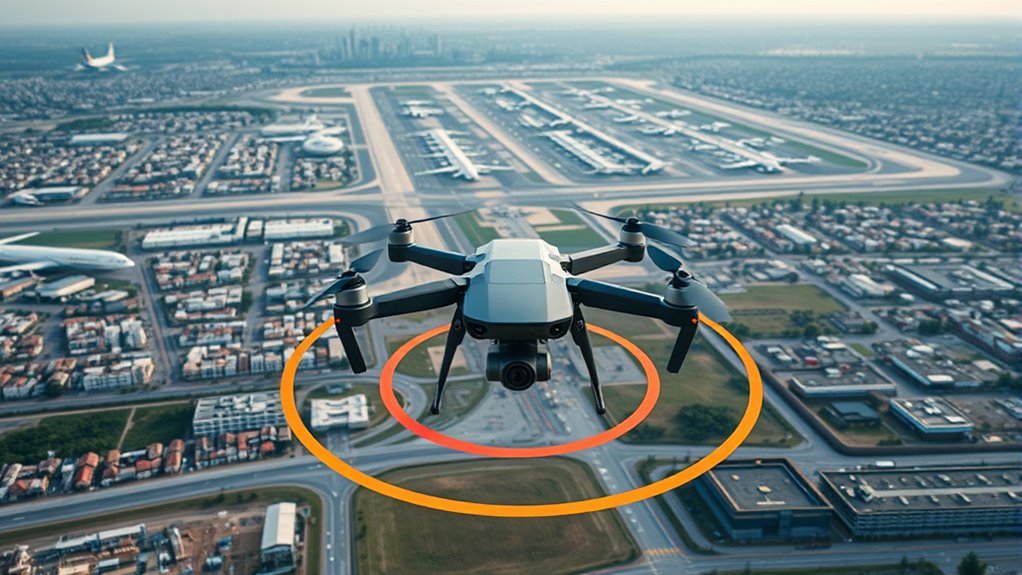
Flying near airports and military bases requires careful attention to airspace regulations, as these areas often have strict no-fly zones to guarantee safety and security. Before flying, verify your drone is properly registered, as some jurisdictions mandate drone registration for operations near sensitive sites. You may also need to obtain specific flight permits if your drone activity is within restricted zones. These permits help authorities monitor drone activity and prevent accidents or security breaches. Keep in mind that flying without proper registration or permits can lead to hefty fines or legal trouble. Always check local regulations and airspace maps before your flight. Staying informed and compliant ensures your drone flights remain safe, legal, and enjoyable near these sensitive areas.
Tips for Planning Your Drone Flights
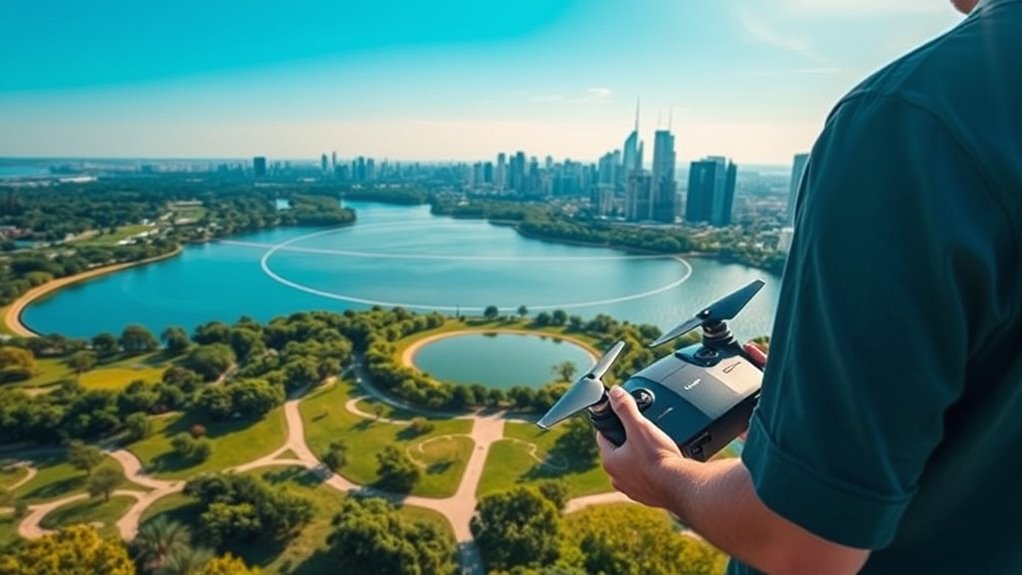
Proper planning is essential to guarantee your drone flights are safe, legal, and smooth. Before launching, check your drone battery level to ensure you have enough power for the entire flight and potential return. Think about your camera angles in advance to capture the shots you want without unnecessary adjustments mid-flight. Always review local no-fly zones and airspace restrictions to avoid surprises.
Here are some tips to consider:
- Map out your flight path using reliable apps or tools.
- Choose optimal times of day for lighting and weather conditions.
- Plan battery swaps if your flight is lengthy.
- Decide on camera angles beforehand to maximize your footage.
Proper planning minimizes risks and helps you enjoy a successful drone experience.
Frequently Asked Questions
How Do Weather Conditions Affect Drone Flight Permissions?
Weather impacts your drone flight permissions considerably. Strong winds, rain, snow, or fog can lead to flight restrictions because they affect your drone’s stability and visibility. Always check weather conditions before flying, as poor weather can result in temporary bans or increased risk of crashes. You should postpone flights during adverse weather to stay safe and comply with regulations, ensuring your drone operates within permitted conditions.
Are There Specific Rules for Flying Drones in National Parks?
Yes, flying drones in national parks is generally prohibited to protect wildlife and preserve natural beauty. You must register your drone and follow flight safety guidelines, but most parks restrict drone use entirely. Always check specific park regulations before flying. Respect no-fly zones, adhere to local rules, and consider alternative locations where drone flying is allowed, ensuring safe and responsible use.
Can I Fly My Drone Over Private Property Without Permission?
You shouldn’t fly your drone over private property without permission, as it raises privacy concerns and infringes on property rights. Even if you’re careful, the property owner can ask you to stop or report the violation. To avoid legal issues and respect privacy, always seek permission before flying over private land, and be mindful of local laws that protect property rights and privacy concerns around drone use.
What Are the Age Restrictions for Drone Pilots?
You need to be at least 16 years old to pilot a drone commercially and 13 for recreational flying, depending on your country’s rules. Before flying, you must register your drone and complete pilot certification if required. These regulations guarantee safe operation and legal compliance. Always check local laws because age restrictions and certification requirements can vary, and staying informed helps you fly responsibly and avoid penalties.
How Do I Report Violations of No-Fly Zones?
To report violations of no-fly zones, you should contact local authorities or the FAA. Provide details like location, time, and any evidence you have. Make sure your drone is registered and that you have the necessary flight permissions before flying. Reporting helps maintain safety and compliance, ensuring others follow regulations. You can also use specific apps or websites to alert authorities about potential no-fly zone breaches.
Conclusion
By understanding no-fly zones and airspace rules, you can confidently navigate the skies, capturing stunning views without risking chaos or legal trouble. Picture your drone soaring smoothly over open fields or quiet parks, free from restrictions, with a clear path ahead. Respecting these boundaries guarantees your flights remain safe and responsible, turning your aerial adventures into seamless journeys through the sky’s vast canvas—where freedom meets accountability, and every flight becomes a memorable, responsible experience.