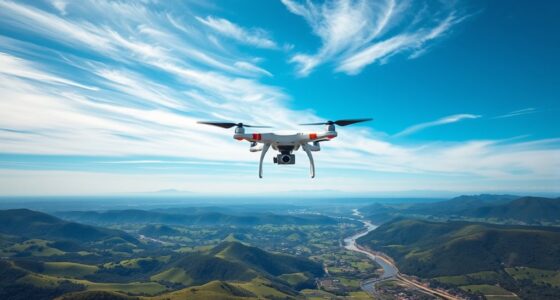
To do the perfect dronie, start by choosing a reliable drone with good stability, camera quality, and flight time. Plan your shot in scenic, open areas with natural light, and adjust your camera settings for clarity. Fly smoothly, using gentle movements and steady altitude while framing yourself with the rule of thirds or interesting backgrounds. Always prioritize safety and compliance, and master post-flight edits for a polished look—continue on to learn more tips for capturing stunning aerial selfies.
Open a free Amazon Business account
Business pricing, bulk buying and tax-exempt orders.
As an affiliate, we earn on qualifying purchases.
Key Takeaways
- Choose a scenic, open location with good lighting and minimal obstacles for a clear dronie shot.
- Plan smooth, controlled movements like slow ascent, panning, or zooming to keep footage professional.
- Use intelligent flight modes and stabilization features for steady, accurate framing during self-portraits.
- Frame yourself using the camera’s viewfinder, applying composition techniques like the rule of thirds.
- Review and edit your footage for brightness, contrast, and smoothness before sharing your perfect dronie.
As an affiliate, we earn on qualifying purchases.
Selecting the Right Drone for Your Dronie

Choosing the right drone is vital for capturing a stunning dronie. You want a drone with a reliable drone battery to guarantee longer flight times, giving you more opportunity to perfect your shot. Look for models with strong battery life, so you won’t worry about running out of power mid-flight. Additionally, a stable GPS signal is essential for smooth, precise movements, especially when executing complex dronie shots. A good GPS system helps keep the drone steady and maintains your desired position without drifting. GPS stability is crucial for ensuring your drone stays in the right position throughout your shot. Consider drones with intelligent flight modes that assist with positioning and stabilization. The combination of a long-lasting drone battery and dependable GPS signal makes it easier to focus on capturing that perfect shot without interruptions or technical issues. Incorporating energy-efficient technology can also extend flight times and reduce power consumption, making your drone sessions more sustainable and reliable. Moreover, understanding the contrast ratio of your drone’s camera can significantly impact the clarity and depth of your aerial shots.
As an affiliate, we earn on qualifying purchases.
Planning Your Shot and Choosing the Perfect Location

To create a compelling dronie, you need to plan your shot carefully and select the perfect location. Consider lighting conditions to guarantee your shot is bright and clear—early morning or late afternoon often offers ideal natural light. Environmental considerations matter too; choose a spot with minimal obstacles, scenic backgrounds, and safe surroundings. Think about the mood you want to convey and how the location complements it. Here are some tips:
Plan your dronie with scenic spots, natural light, and safe surroundings for a stunning shot.
- Scout open areas with panoramic views
- Avoid crowded or busy places
- Pick locations with interesting natural features
- Check for wind or weather issues
- Guarantee good lighting and minimal shadows
As an affiliate, we earn on qualifying purchases.
Setting Up Your Drone and Camera Settings

Start by choosing the best resolution to guarantee your footage looks sharp and professional. Then, adjust your flight parameters to keep your drone steady and responsive during the shot. Finally, set your camera angles to capture the perfect framing for a smooth and impressive dronie. Remember to consider camera stability to minimize vibrations and ensure smooth footage throughout your shot. Additionally, selecting the right drone settings can help optimize performance and safety during your shoot.
Choose Optimal Resolution
Selecting the right resolution is essential for capturing sharp, professional-looking dronies. Your resolution options directly impact image clarity and detail. Higher resolutions, like 4K, deliver crisp visuals perfect for large prints or detailed viewing. Lower resolutions save storage space and processing power but may sacrifice some detail. When choosing, consider your end goal: do you want maximum clarity or quicker sharing? Most drones offer multiple options, including 1080p, 2.7K, and 4K. Keep in mind that higher resolutions require better lighting and stable conditions to avoid blurry images. Adjusting your resolution settings guarantees you get the best quality for your scene and purpose, making your dronie stand out. Remember, balancing resolution and storage helps you capture stunning visuals without overwhelming your device. Additionally, understanding video compression can help optimize your footage quality and file size.
Adjust Flight Parameters
Before launching your drone, you should carefully adjust its flight parameters and camera settings to guarantee smooth footage and ideal image quality. Check your drone’s battery life to ensure it has enough power for the entire shot, avoiding interruptions. Evaluate weather conditions; avoid windy or rainy days, as they can destabilize your drone and affect footage quality. Set your maximum altitude and speed to maintain control and safety. Adjust the drone’s stability features, like GPS mode, to keep it steady during your shot. Confirm camera settings such as exposure and ISO are optimized for the lighting conditions. Properly setting these parameters minimizes the risk of crashes and ensures you capture a clear, professional-looking dronie. Additionally, thermal behavior of the drone can influence its performance in different environments, so understanding how it reacts to temperature changes can help you prepare better for outdoor shoots. Recognizing the environmental factors affecting your drone’s thermal performance can be crucial for long outdoor sessions.
Set Camera Angles
Setting the right camera angles is key to capturing dynamic and engaging dronies. By adjusting your drone’s camera, you create compelling perspective shifts that enhance your shot. To achieve this, consider:
- Vary your angle for unique perspective shifts
- Capture from high, low, or tilted positions
- Experiment with upward or downward angles
- Use slight tilt adjustments to add drama
- Combine angle variation with smooth movements for fluidity
These tweaks help emphasize depth and scale, making your selfie stand out. Remember, changing your camera angle can dramatically alter the mood and emphasis of your dronie. Play with different perspectives to find the most flattering or exciting shot. Properly setting your camera angles ensures your drone selfie is both enthralling and visually interesting. Incorporating camera positioning techniques can further enhance your overall shot quality.
As an affiliate, we earn on qualifying purchases.
Framing Your Selfie for Maximum Impact

To create a selfie that truly captures attention, you need to focus on how you frame yourself in the shot. Proper framing highlights your best features and enhances overall impact. Pay attention to lighting conditions—natural light usually works best, but avoid harsh midday sun that creates unflattering shadows. Use composition techniques like the rule of thirds to position yourself off-center, adding visual interest. Experiment with angles to find what works for you. Here’s a simple guide:
| Lighting Conditions | Composition Techniques | Tips |
|---|---|---|
| Soft, diffused light | Rule of thirds | Avoid cluttered backgrounds |
| Golden hour sunlight | Symmetry | Keep horizon straight |
| Bright but indirect | Leading lines | Use foreground elements |
Additionally, understanding air quality can help you choose the optimal environment for outdoor selfies, ensuring your photos are taken in the best possible conditions. Good battery performance can also be useful if you’re using a drone or other electronic devices to enhance your photography experience. Moreover, considering sound vibrations can help you stay relaxed and focused during outdoor shoots, leading to better results.
Executing the Dronie: Smooth Movements and Techniques

Achieving smooth and professional-looking dronies requires mastering steady drone movements and proper control techniques. To do this, focus on camera stabilization by maintaining a consistent altitude and speed, avoiding sudden jerks or quick direction changes. Be mindful of wind conditions, as gusts can cause shaky footage; adjust your drone’s sensitivity and use smooth, gradual movements to counteract this. Practice slow, controlled ascents and pans, keeping your thumb steady on the controls. Keep your drone level and use gentle inputs to prevent jitteriness. Consider using features like gimbal stabilization to enhance smoothness. Remember, steady movements help highlight your selfie’s background and create a cinematic effect. With patience and focus, you’ll master executing dronies that look polished and professional. To improve your technique, regularly practice controlled movements and review your footage to identify areas for smoother operation. Additionally, understanding proper wiring basics can ensure your drone’s electrical components function reliably, leading to better control and stability during filming. Maintaining proper wiring not only prevents malfunctions but also contributes to overall drone stability, which is essential for capturing high-quality footage.
Tips for Maintaining Safety and Compliance

To keep your drone flights safe and legal, you need to follow local regulations and restrictions. Always conduct thorough pre-flight checks to guarantee everything is functioning properly. By doing so, you protect yourself, others, and your equipment while staying compliant with the rules. Additionally, familiarizing yourself with local drone laws can help prevent unintentional violations and ensure a smooth flying experience. Being aware of airspace classifications and restrictions can also help you plan safe flight paths and avoid hazards. Understanding privacy policies related to drone use can further safeguard you from legal issues and respect others’ rights. Monitoring website privacy policies and cookie management options can also help you stay informed about how your data is used during your drone activities.
Follow Local Regulations
Following local regulations is essential for flying your drone safely and legally. Ignoring rules can lead to privacy concerns and potential fines. To stay compliant, always check the laws in your area before flying. Be aware of restricted zones, such as airports or government buildings. Respect privacy by avoiding capturing images of people without permission. Consider drone insurance to protect against accidents or damages. Keep your drone within the allowed altitude and line of sight. Register your drone if required, and follow any specific rules about flying at certain times. By staying informed and respecting regulations, you ensure a safe, enjoyable, and responsible flying experience. These steps help you avoid legal issues and keep your flying fun.
Conduct Safe Flight Checks
Before taking off, it’s essential to run thorough safety checks to guarantee your drone is in good working order. First, inspect the battery health to ensure it’s fully charged and holding power properly, reducing the risk of mid-flight power loss. Check the weather conditions; avoid flying in high winds, rain, or fog, as these can affect control and visibility. Verify that your drone’s firmware is up-to-date and that all sensors and GPS systems are functioning correctly. Confirm the propellers are secure and undamaged. Review your flight plan and surroundings to avoid obstacles. Additionally, consider integrating local automation features to receive real-time alerts about weather or airspace restrictions. Conducting these navigation and mapping checks helps ensure your drone’s environment is clear and safe for flight. Performing pre-flight inspections regularly also helps catch potential issues early, preventing accidents. Implementing risk assessment procedures prior to flying can further enhance safety and compliance. By conducting these safety checks, you minimize risks, stay compliant with regulations, and ensure a smooth, safe, and enjoyable dronie experience.
Editing and Sharing Your Aerial Selfie

Once you’ve captured your aerial selfie, editing can enhance its impact and guarantee it stands out. Use basic photo editing apps to adjust brightness, contrast, and saturation for vibrant colors. Crop or straighten the image to improve composition, highlighting your best features. Consider applying filters or effects that complement your scene, making your aerial photography techniques pop. Add text or stickers with drone accessories for a fun touch or to share context. When sharing, choose platforms that support high-resolution images and include relevant hashtags to reach a broader audience. Keep your caption engaging and authentic, describing the moment or location. Remember, a well-edited aerial selfie reflects your creativity and mastery of drone photography. Share confidently, and enjoy your stunning drone selfie!
Frequently Asked Questions
How Do Weather Conditions Affect Drone Selfies?
Weather conditions greatly impact your drone selfies. Wind turbulence can cause instability, making your shots blurry or uneven. Rain effect is even more problematic, as moisture can damage your drone’s electronics and reduce visibility. Always check the weather forecast before flying, avoid windy or rainy days, and consider weather conditions to make sure your drone stays steady and your selfie turns out perfect.
Can I Fly a Drone Indoors for a Dronie?
You can fly a drone indoors for a dronie, but you need to prioritize indoor flight safety. For example, a hobbyist successfully captured a stunning indoor dronie by choosing a compact drone, like a mini or foldable model, which minimizes collision risks. Always guarantee ample space, avoid obstacles, and consider drone size considerations to prevent crashes. With proper precautions, indoor dronies can be both safe and impressive.
What Are the Best Times of Day for Drone Selfies?
The best times for drone selfies are during golden hour, just after sunrise or before sunset, when lighting conditions create warm, soft light that enhances your photo. These times also offer scenic backgrounds with vibrant colors and dramatic shadows. Flying then helps you capture stunning images with balanced exposure, making your drone selfie stand out. Avoid midday hours, as harsh sunlight can create unflattering shadows and overexposed areas.
How Do I Prevent Battery Drain During Filming?
Ever wonder how to extend your drone’s flight time? You should focus on battery optimization and power management strategies. Turn off unnecessary features like Wi-Fi or camera stabilization when not needed, fly in moderate weather to reduce strain, and avoid rapid ascents or descents. Keeping your drone’s firmware updated also helps improve battery efficiency. These tips can help prevent battery drain during filming, ensuring you capture the perfect dronie without interruptions.
Are There Privacy Concerns When Capturing Aerial Selfies?
Yes, you should consider privacy concerns when capturing aerial selfies. You’re responsible for respecting privacy laws and avoiding capturing images of private property or individuals without permission. To protect data security, keep your drone’s software updated and avoid sharing footage that could identify private details. Being mindful of others’ privacy helps prevent legal issues and maintains ethical standards while enjoying your drone photography.
Conclusion
Now that you’ve mastered the art of the dronie, you’re ready to turn your world into a breathtaking canvas. With each flight, imagine your drone as an extension of your eyes, capturing moments that tell your story from a soaring perspective. Embrace the adventure, stay safe, and let your aerial selfies paint a vivid picture of your experiences—because the sky isn’t the limit; it’s just the beginning of your creative journey.
Flea & tick season Picks
flea and tick prevention
As an affiliate, we earn on qualifying purchases.