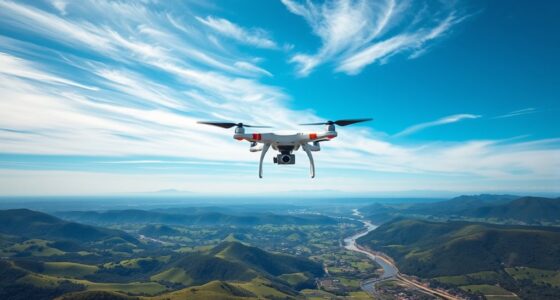
To master long-exposure drone photography and create stunning light trails, you should start by setting your camera to low ISO and narrow aperture for clear, noise-free images. Use longer shutter speeds—several seconds or more—to capture motion and illuminate moving lights like cars or water reflections. Stabilize your drone and experiment with exposure times to achieve dynamic effects. Continue exploring these techniques to unseal more creative possibilities in nighttime aerial shots.
Key Takeaways
- Use low ISO, narrow aperture, and slow shutter speed to capture vibrant light trails during night drone flights.
- Stabilize your drone with gimbals or stabilization tools to prevent blur in long-exposure shots.
- Plan flight paths around illuminated landmarks and moving light sources for dynamic compositions.
- Experiment with different exposure durations to vary the length and intensity of light trails.
- Focus on composition by considering light interactions, reflections, and urban elements for captivating images.

Have you ever wondered how photographers capture stunning aerial shots without needing a plane or helicopter? The secret lies in mastering aerial composition and taking full advantage of night photography techniques. With drones equipped with high-quality cameras, you can create breathtaking long-exposure images that reveal a city’s vibrant light trails or the subtle glow of a starry sky. These shots require a different approach than daytime photography, demanding patience, precision, and an understanding of how light interacts with your environment.
When working on aerial composition at night, you want to think about the placement of lights and the movement of subjects below. Your drone becomes a tool to frame dynamic scenes—roads weaving through urban landscapes, glowing windows in skyscrapers, or the shimmering reflections on water. To maximize the impact, consider how the light trails from moving vehicles can add energy and direction to your shot. Long-exposure night photography involves keeping your camera’s shutter open longer, sometimes for several seconds, so that moving lights create streaks that guide the viewer’s eye through the image. This technique transforms ordinary cityscapes into mesmerizing canvases of motion and color.
Achieving sharp, well-exposed long-exposure shots from a drone requires some planning. Make sure your drone’s camera settings are optimized: set a low ISO to prevent noise, use a narrow aperture for depth of field, and adjust shutter speed based on the scene’s brightness. A tripod or stabilization feature becomes essential to prevent blur caused by drone movement during the exposure. You might also want to experiment with different exposure times to capture various light trail effects, from subtle to dramatic. Additionally, understanding the importance of contrast ratio can help you better evaluate how well your images will render dark and light areas, especially in night scenes with varying illumination.
Another vital aspect is controlling ambient light. When shooting at night, ambient light levels are low, so you’ll need to find locations with a good balance of light sources—bright city streets, illuminated bridges, or lit-up landmarks. These sources will contribute to the luminous streaks or soft glows that make night photography so enthralling. Remember to plan your flight path carefully, ensuring you stay within safety guidelines and maintain a steady hand during long exposures.
Frequently Asked Questions
What Are the Best Drone Models for Long-Exposure Photography?
You should consider drones like the DJI Mavic 3 or the Autel Evo Lite+ for long-exposure photography. These models offer excellent drone stabilization, ensuring sharp images during long exposures, and have larger camera sensor sizes that capture more light and detail. Their advanced stabilization systems and high-quality sensors make them ideal for capturing stunning light trails and long-exposure shots, helping you achieve professional results with ease.
How Do Weather Conditions Affect Drone Long-Exposure Shots?
Did you know that 65% of drone photographers say weather variability substantially impacts shot quality? Weather conditions like wind, rain, and fog can cause drone instability, blurring your long-exposure images. Cloud cover can diffuse light, creating softer, more dramatic effects, but excessive clouds may block your shot entirely. Always check the weather forecast to confirm clear skies and minimal wind, helping you capture crisp, stunning long-exposure drone photos.
What Safety Precautions Are Necessary for Night Drone Photography?
When doing night drone photography, you need to follow night flight regulations and prioritize battery safety. Always check local rules before flying after sunset. Keep your drone’s batteries fully charged and avoid overheating by monitoring their temperature. Use obstacle avoidance features, stay within line of sight, and avoid flying over people. Verify you have proper lighting and signals on your drone to stay visible, reducing risks during low-light conditions.
How Can I Prevent Drone Camera Shake During Long Exposures?
Imagine your drone’s camera trembling like a leaf in a storm—that’s what shake feels like during long exposures. You can prevent this by using gimbal stabilization, which keeps your camera steady as a rock. Also, tweak your camera settings—lower ISO, slower shutter speed, and adjust focus—to reduce vibrations. These tricks ensure your shots stay crystal clear, capturing stunning light trails without a hint of blur.
What Post-Processing Techniques Enhance Light Trail Images?
To enhance your light trail images in post-processing, start with HDR blending to balance exposure levels and bring out details in both highlights and shadows. Then, apply noise reduction carefully to smooth out grain without losing sharpness. You can also adjust contrast and saturation to make light trails pop. These techniques help create striking, professional-looking images that emphasize the dynamic movement captured during your drone’s long exposure.
Conclusion
Now that you’ve explored long-exposure drone photography, you’re ready to create stunning light trails and dynamic shots. Did you know that over 60% of drone photographers report a boost in creativity by experimenting with different exposures? So, grab your drone, experiment with settings, and capture breathtaking images that tell a story beyond the ordinary. With practice, you’ll turn night skies into vibrant canvases, making your photography truly stand out.