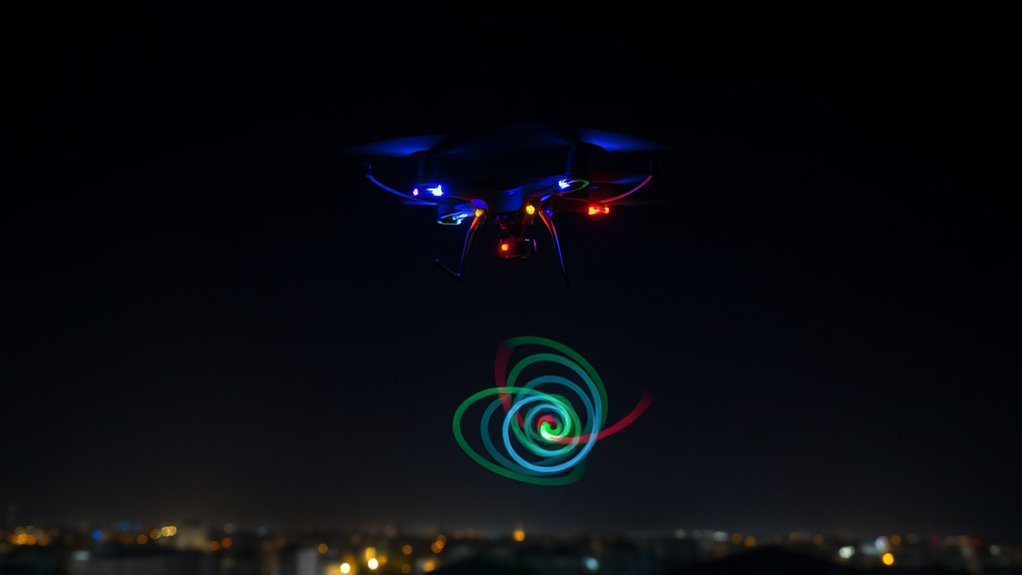

Drone light painting combines flying drones with long-exposure photography to create stunning illuminated art in the night sky. By attaching LED lights or glow sticks to the drone, you can move it in patterns, spelling words, or creating abstract shapes while the camera captures the trails of light over time. Mastering drone control and timing lets you craft vibrant, dynamic images that turn night into a creative canvas. Keep going to discover how to elevate your aerial light art skills.

Get the latest gadgets delivered free — and shop member deals
- Fast, free delivery on millions of items
- Access to Prime Big Deal Days deals on October 6–7
- Prime Video, Amazon Music and more included
Key Takeaways
- Drone light painting combines aerial drone movement with long-exposure photography to create luminous images in the night sky.
- Drones act as flying brushes, using LED lights to draw patterns, words, or abstract designs during extended exposures.
- Precise control of drone paths and light emission is essential for intricate, visually striking light art.
- Experimenting with colors, speeds, and shapes enhances creative possibilities in drone light painting.
- This technique transforms drone flights into artistic performances, producing captivating, luminous visual storytelling.

Drone light painting combines the creativity of traditional light art with the precision and versatility of modern drone technology. As you maneuver your drone through the night sky, you discover a unique form of artistic expression that blends visual storytelling with technical skill. Unlike static photography, drone light painting allows you to craft dynamic, luminous images that seem to dance across the dark canvas of the sky. This technique pushes the boundaries of aerial photography, giving you the power to create long-exposure images that capture not just the landscape below, but the very movement of light itself.
Drone light painting merges traditional art with drone technology to create dynamic, luminous images in the night sky.
When you set your drone to perform light painting, you’re fundamentally turning it into a flying brush, wielding light sources like LED wands or glow sticks. You program the drone to follow specific paths or perform intricate maneuvers, creating trails of light that are recorded over extended exposure times. The result is a stunning mix of motion and stillness, where the illuminated patterns seem to float or swirl in midair, transforming your aerial scenes into vibrant works of art. As you experiment with different colors, shapes, and speeds, you gain a new way to express your vision, elevating aerial photography from mere documentation to a form of creative storytelling.
Your ability to control the drone’s movements and light emissions opens up endless possibilities for artistic expression. You can outline shapes, spell words, or generate abstract designs that appear to move in real time. The long-exposure technique captures these fleeting moments, allowing you to produce images that are both technically impressive and visually engaging. Whether you’re shooting from a hilltop, over a cityscape, or across open fields, drone light painting lets you explore the interplay of light and space from a bird’s-eye view, adding depth and dimension to your work. Mastering drone flight can significantly enhance your creative outcomes and safety during complex light painting projects.
As you refine your skills, you’ll discover that the combination of aerial photography and light art can convey emotions, tell stories, or simply delight viewers with mesmerizing visuals. It’s a way to push the limits of what’s possible with drone photography, turning simple flight into an act of artistic creation. With patience, practice, and a keen eye for detail, you’ll find yourself producing images that are not only technically impressive but also emotionally compelling. Drone light painting transforms the night sky into your canvas, giving you the tools to craft luminous masterpieces from above.
Frequently Asked Questions
What Safety Precautions Are Essential During Drone Light Painting?
You should always prioritize safety during drone light painting by managing your battery carefully to prevent crashes. Check local laws and regulations to make certain you’re flying legally, avoiding restricted areas or private property. Maintain visual line of sight, avoid crowds, and stay aware of weather conditions. Also, regularly inspect your drone for damage, and keep a safe distance from people and obstacles to minimize risks during your creative flights.
How Do Weather Conditions Affect Drone Light Painting Sessions?
Weather conditions substantially impact your drone light painting sessions. Wind interference can make controlling your drone difficult, causing instability or crashes. Precipitation risks, like rain or snow, can damage your drone’s electronics and reduce visibility. Always check the forecast beforehand, avoid flying in strong winds or wet conditions, and prioritize safety. Planning around favorable weather ensures smooth flights, better photos, and minimizes the risk of accidents or equipment damage.
Can Beginners Easily Learn Drone Light Painting Techniques?
A journey of a thousand miles begins with a single step, and the same applies here. As a beginner, you’ll find drone light painting has a manageable learning curve with patience and practice. Focus on beginner tips like practicing in open spaces, starting with simple shapes, and adjusting camera settings. With dedication, you’ll create stunning light art, making the learning process both rewarding and enjoyable.
What Specific Drone Features Are Necessary for Successful Light Painting?
To succeed in drone light painting, you need a drone with strong camera stability and precise control. Stable flight guarantees clear, sharp images during long exposures, while precise control allows you to craft intricate designs smoothly. Look for features like GPS stabilization, responsive controls, and adjustable camera settings. These capabilities help you execute your artistic vision accurately, making your light painting projects more successful and visually stunning.
How Long Does It Typically Take to Complete a Complex Drone Light Painting?
Like Da Vinci’s meticulous sketches, your complex drone light painting can take anywhere from several minutes to hours, depending on your artistic planning and timing considerations. The more intricate your design, the longer it takes to execute. Expect to spend ample time on rehearsals, precise drone movements, and adjusting camera settings. Patience and preparation are key, ensuring your vision unfolds beautifully in the night sky without unnecessary delays.
Conclusion
So, next time you’re bored with traditional art, grab a drone and some lights—who needs paintbrushes when you’ve got flying LEDs? Light painting with drones turns nighttime into your personal canvas, proving that even in the sky, you can be a misunderstood artist—or at least make your friends wonder what kind of wizardry you’re up to. Just remember, with great power (and LEDs), comes great responsibility (and potential sky-high chaos). Happy flying!
Fall Picks
fall essentials
As an affiliate, we earn on qualifying purchases.