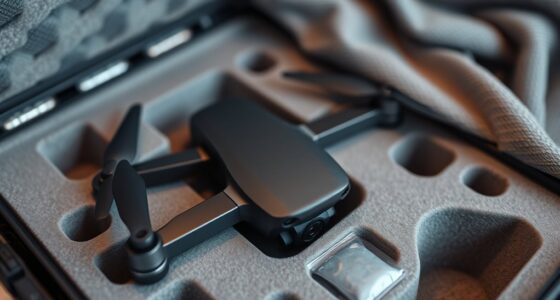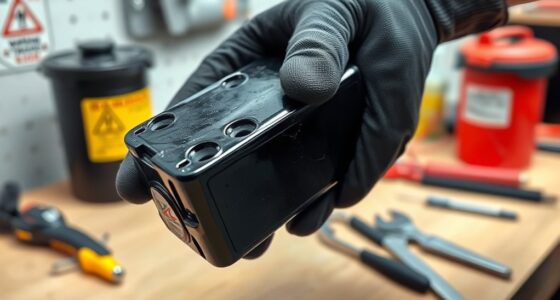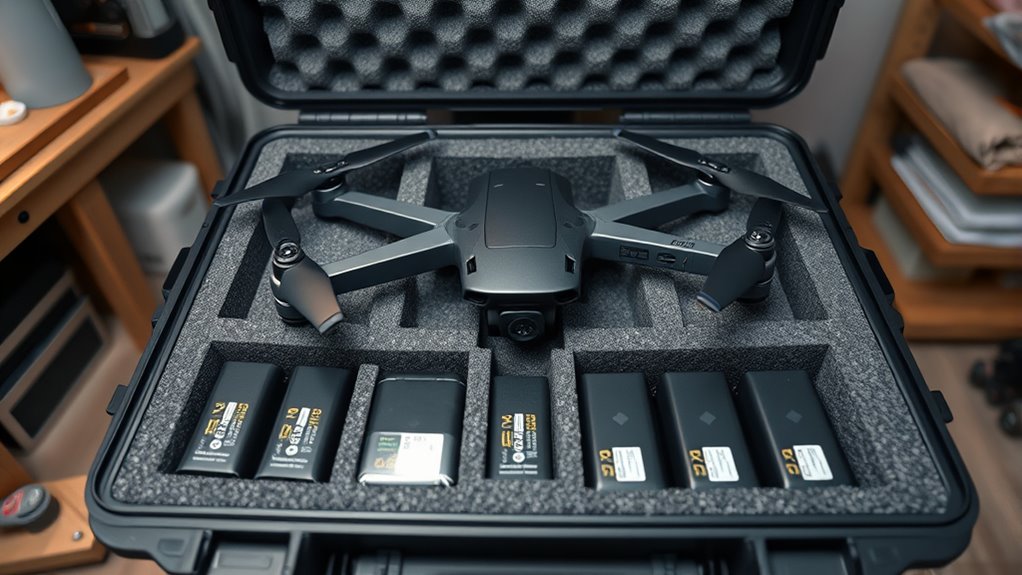

To store your drone and batteries properly, keep them in a cool, dry place away from sunlight and extreme temperatures. Remove batteries and store them separately at a charge level between 40% and 60%. Clean and inspect your drone before storage, and use protective cases to prevent damage. Organize your equipment in labeled containers and confirm safety by following proper handling guidelines. Discover more tips to keep your gear in top condition long-term.
Key Takeaways
- Store your drone and batteries in a cool, dry environment away from sunlight and humidity.
- Keep batteries charged between 40% and 60% for optimal long-term storage.
- Detach batteries carefully, label them with charge level and date, and store separately in impact-resistant containers.
- Organize equipment using labeled bins on sturdy shelves, maintaining a clutter-free, protected storage area.
- Regularly inspect batteries and drone components for damage, and recharge or clean as needed before use.
Choose an Appropriate Storage Environment
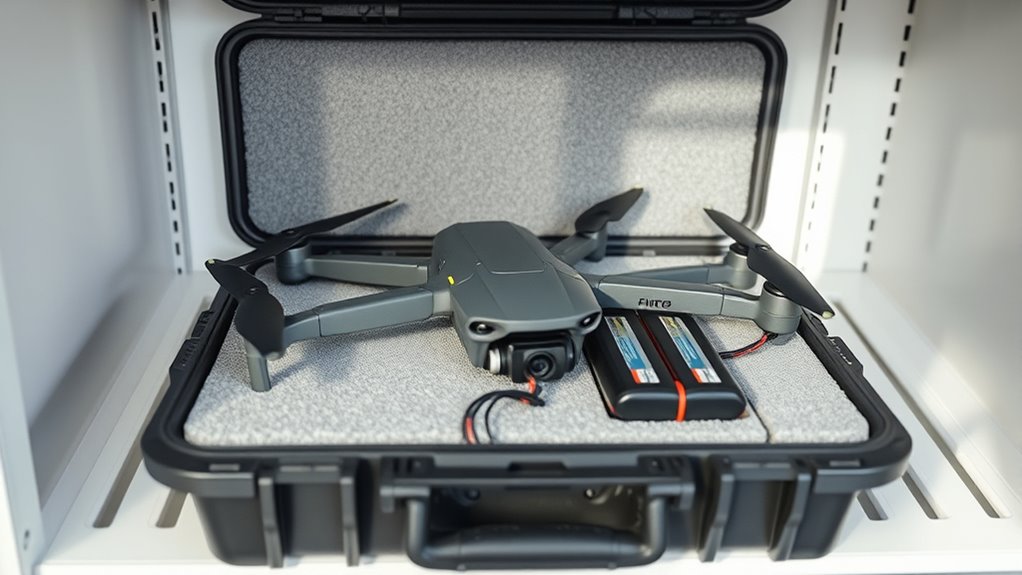
Choosing the right storage environment is essential to keep your drone and batteries in top condition. You should store your equipment in a cool, dry place, ideally between 15°C and 25°C (59°F and 77°F). Avoid direct sunlight, high humidity, and extreme temperatures, as these can damage batteries and electronics. Don’t store your drone in vehicles, garages, or attics where temperature fluctuations occur. Use a protective case or storage container to shield your drone from dust and impacts. Keep the storage area away from heat sources and flammable materials for added safety. Proper organization and a stable environment prevent battery swelling, corrosion, and electronic failure, ensuring your drone stays ready for use whenever you need it. Regularly monitoring storage conditions can help prevent damage and maintain battery health over time. Trusted businesses and services can help you find quality storage solutions for your equipment. Additionally, regularly checking your storage environment helps maintain optimal battery health and prolongs the lifespan of your drone. Implementing climate-controlled storage can further safeguard your equipment from temperature-related issues.
Maintain Proper Battery Charge Levels

Maintaining proper battery charge levels is essential for preserving your drone batteries’ health and safety during storage. You should aim to store your batteries between 40% and 60% charge, as this range helps prevent capacity loss and swelling. Avoid leaving batteries fully charged or completely drained for long periods, since both can damage the cells. If your batteries fall below 40% during storage, recharge them to the recommended level. Check their charge every few months to ensure they stay within the ideal range. Regularly monitoring the charge helps prevent degradation, and extends battery lifespan. Additionally, storing batteries in a cool, dry place away from direct sunlight is crucial to avoid battery overheating and further damage. Properly maintained charge levels during storage are key to ensuring your batteries remain reliable and safe when you’re ready to fly again. For optimal results, consider storage conditions that promote battery longevity and safety. Following manufacturer guidelines and understanding battery maintenance best practices can further enhance your batteries’ durability and performance over time. Incorporating proper storage techniques can significantly contribute to maintaining optimal battery performance and safety over the long term.
Remove and Store Batteries Separately

Removing batteries from your drone before long-term storage is essential to prevent accidental power-on, overheating, or damage. When you take out the batteries, you reduce the risk of electrical issues and ensure safer storage. To do this effectively: 1. Detach the batteries carefully, following the manufacturer’s instructions. 2. Store batteries in a cool, dry place, away from metal objects or flammable materials. 3. Label each battery with the date and charge level to track their condition over time. 4. Be aware of battery safety guidelines to prevent potential hazards. Keep old and new batteries separate to avoid confusion, and check them periodically for swelling or damage. Proper storage practices help prolong battery life and keep your equipment safe until you’re ready to use it again. Additionally, monitoring battery performance over time can help identify when batteries need replacement or reconditioning, especially by understanding how battery chemistry affects longevity.
Ensure Battery Safety and Protection Measures
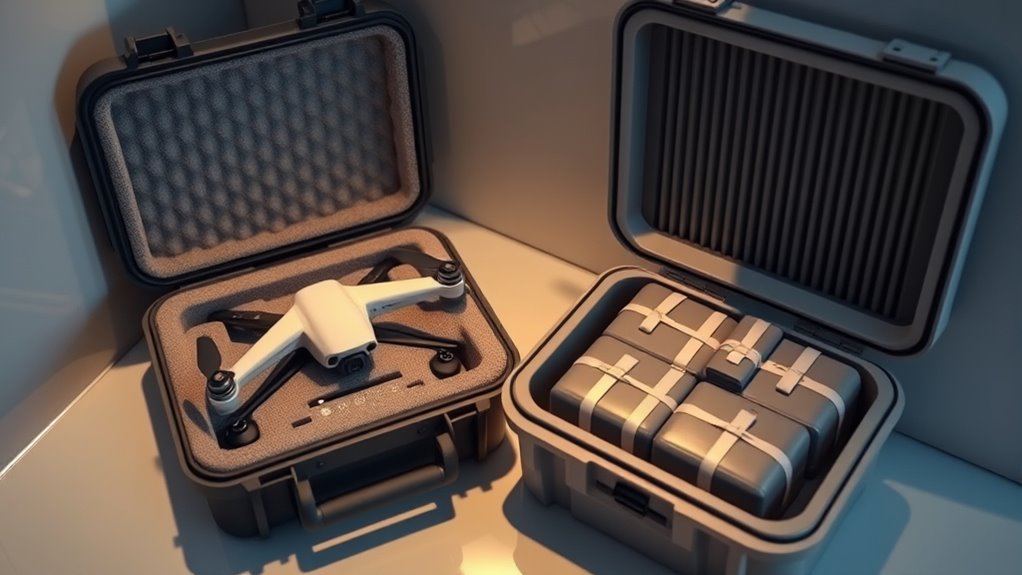
To keep your batteries safe during storage, it is vital to implement proper protection measures that prevent accidents and damage. Always store LiPo batteries in LiPo-safe bags, especially in environments where sparks or heat could ignite a fire. Keep batteries away from metal objects to avoid short circuits, which can cause fires or damage. Regularly inspect batteries for swelling, leaks, or cracks—discard any damaged ones immediately. Store batteries in a cool, dry place with stable temperatures between 15°C and 25°C, avoiding direct sunlight and extreme heat. Make certain there’s enough space around each battery to prevent squeezing or impact. Label batteries with their charge level and date to monitor their condition over time. Proper storage methods also include understanding the importance of battery chemistry to ensure safety and longevity during storage. Ensuring proper storage conditions can help prevent potential hazards and extend the lifespan of your batteries. Additionally, it’s crucial to avoid over-discharging batteries during storage, as this can reduce their overall lifespan and performance. Maintaining proper battery balance during storage is essential for optimal performance and safety. These steps help maintain safety and prolong battery lifespan during storage.
Clean and Prepare Your Drone for Storage
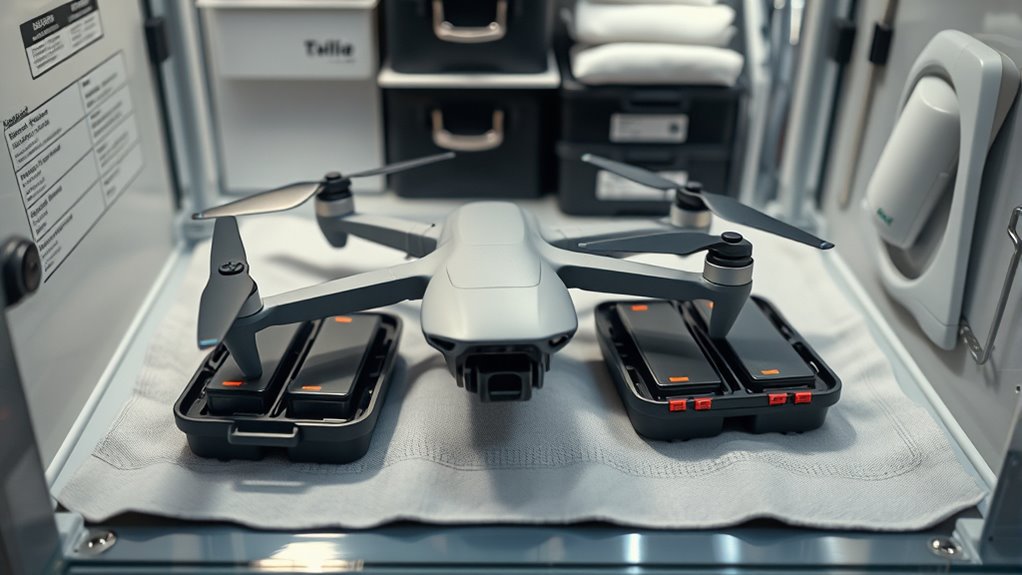
Before storing your drone, it’s essential to give it a thorough cleaning to prevent dirt, dust, and debris from causing damage or affecting performance later on. First, power off your drone and disconnect the batteries. Then, wipe down the body with a soft, damp cloth to remove dirt and grime. For sensitive parts like motors and camera lenses, use compressed air or a gentle brush to clear dust. Finally, check for any damage or loose components, tightening screws if needed. To paint a clear picture:
Always clean your drone thoroughly before storage to prevent damage and ensure optimal performance.
- Remove and clean batteries separately, ensuring they’re fully discharged.
- Use a microfiber cloth to wipe down the drone’s exterior and sensors.
- Cover delicate parts with protective caps or lens covers to prevent scratches.
- Regularly review your outdoor tech gear to ensure all components remain in good condition for future use.
- Proper storage techniques can help extend the lifespan of your drone and batteries, preventing corrosion and damage from environmental factors. Additionally, storing your drone in a controlled environment helps protect it from humidity and extreme temperatures.
Organize Your Equipment and Storage Space

You should set aside a dedicated area for your drone equipment to keep everything in one place. Using clear storage containers makes it easy to find batteries, chargers, and accessories quickly. Keeping your gear organized helps prevent damage and saves you time when you’re ready to fly.
Designate a Dedicated Area
Designating a dedicated area for storing your drone equipment is essential for maintaining organization and ensuring safety. When you set aside a specific space, you reduce the risk of damage, loss, or accidents. To create this space, consider these key points:
- Choose a clean, dry spot away from heat sources and direct sunlight to protect your gear from environmental damage.
- Use a sturdy shelf or cabinet with compartments to keep batteries, drones, and accessories separated and easily accessible.
- Clearly label storage containers and sections to quickly find what you need and prevent mix-ups, especially with different batteries and drone parts.
A dedicated area helps you stay organized, prolongs your equipment’s lifespan, and keeps your flying space safe for everyone.
Use Clear Storage Containers
Using clear storage containers is an effective way to keep your drone equipment organized and easily accessible. With transparent sides, you can quickly identify what’s inside without opening multiple boxes, saving time and reducing frustration. Choose containers with secure lids to prevent dust, dirt, and moisture from reaching your gear. Label each container clearly with contents, such as batteries, controllers, or spare propellers, to streamline your setup process. Consider stacking similar items together to maximize space and keep everything tidy. Using durable, impact-resistant containers also offers protection from accidental drops or bumps. This approach helps you maintain a clean, organized storage area, ensures your equipment stays in good condition, and simplifies your routine when preparing for your next flight.
Keep Equipment Organized
To keep your drone equipment organized, establish a dedicated storage area that is clean, well-lit, and free from clutter. This helps you easily find what you need and prevents damage. Consider these key steps:
- Use labeled bins or shelves for different components like batteries, controllers, and tools, making everything easy to locate.
- Keep fragile parts, such as propellers and lenses, in protective cases or padded containers to prevent breakage.
- Maintain a log of your equipment, noting maintenance dates and usage, so you stay on top of care and replacements.
Follow Legal Guidelines for Battery Storage and Transport
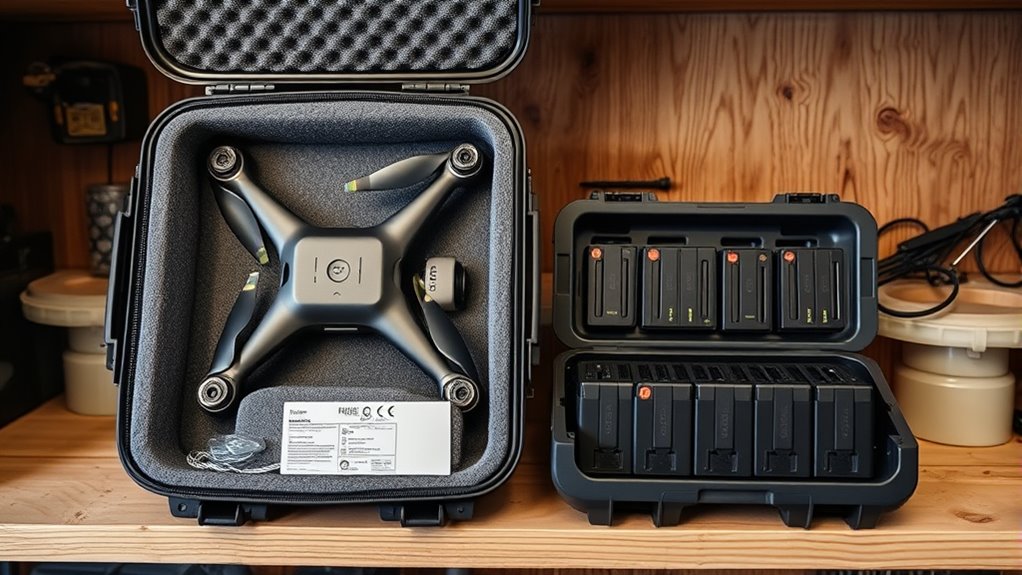
When storing or transporting batteries, you need to follow legal guidelines to guarantee issues. Make sure you have the proper documentation and permits required by local authorities or airlines. Always check transit regulations to ensure your batteries are compliant and safely carried in your luggage.
Proper Documentation and Permits
Ensuring you have the proper documentation and permits is essential for compliant storage and transportation of drone batteries. Without the correct paperwork, you risk fines, delays, or confiscation. To stay compliant, make sure you:
- Keep copies of any permits required by local or national authorities for transporting batteries, especially if traveling internationally.
- Carry proof of purchase or registration for your batteries and drone equipment, which can be useful during inspections.
- Familiarize yourself with airline policies and regulations, guaranteeing you have all necessary documentation for carry-on batteries and drone gear.
Having these documents ready helps streamline security checks and ensures your batteries are stored and transported legally. Always verify specific regulations before travel or storage to avoid complications.
Airline and Transit Regulations
Are you aware of the specific airline and transit regulations that govern the storage and transportation of drone batteries? Airlines often have strict rules about carrying lithium batteries, especially in checked luggage. You should always carry batteries in your carry-on, not checked bags, to reduce fire risk. Check your airline’s policies on battery capacity limits; many restrict batteries over 100Wh or 160Wh with special approval. Ensure batteries are stored in protective cases or LiPo-safe bags and are fully or partially charged per regulations. Be prepared to show documentation if required, and carry any necessary permits. Remember, some countries or transit points may have additional restrictions, so research local guidelines before traveling. Following these rules helps ensure safe, hassle-free transit of your drone equipment.
Regularly Inspect and Maintain Stored Batteries and Drones
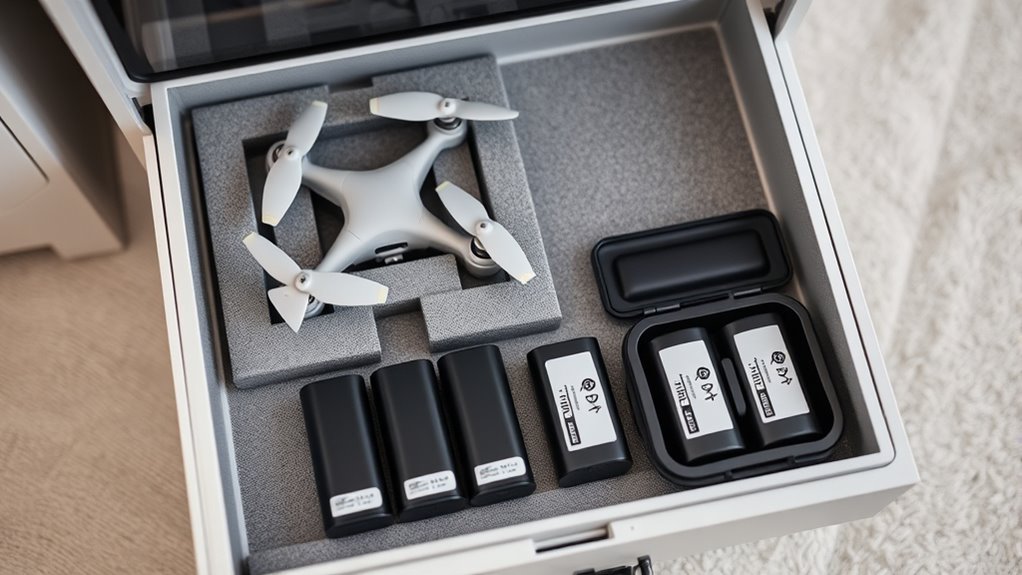
Regular inspections are essential to keep your stored drones and batteries in ideal condition. You need to check them regularly to spot issues early and prevent damage.
Regular drone and battery inspections prevent damage and ensure optimal performance.
- Examine batteries for swelling, leaks, or corrosion, and replace any damaged ones immediately.
- Test drone functionality by powering them on briefly to ensure electronics are responsive and motors are clean.
- Inspect storage area for dust, moisture, or pests, and keep the environment clean and dry.
Tips for Long-Term Storage and Periodic Checks
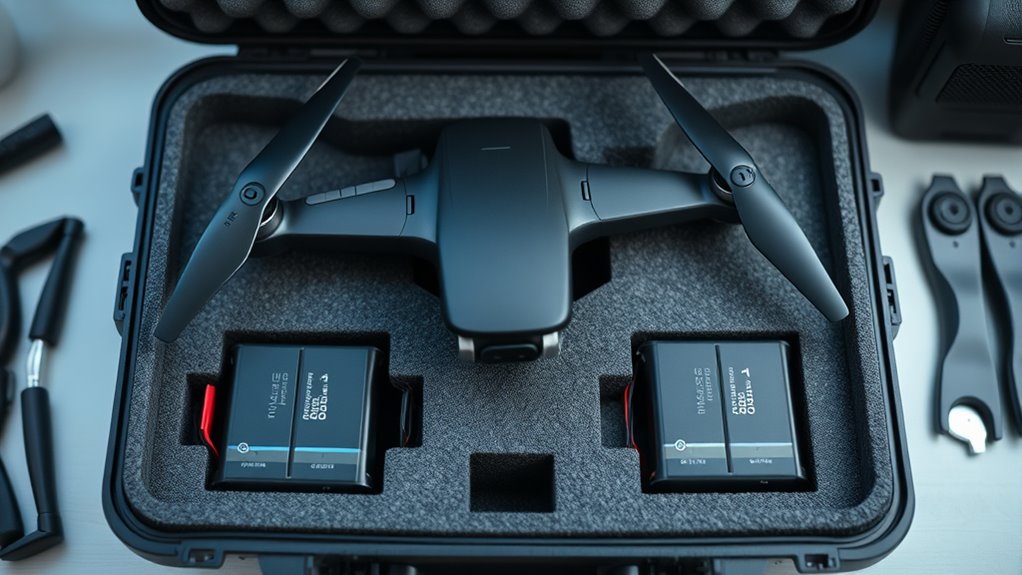
To keep your drones and batteries in top condition during long-term storage, it’s important to establish a routine of periodic checks. Every few months, verify the battery charge levels and recharge to 40–60% if needed. Inspect batteries for swelling, leaks, or damage, and replace any compromised units immediately. Guarantee the storage environment remains cool, dry, and away from direct sunlight or temperature fluctuations. Clean your drone before storing, removing dust and debris, and confirm all protective covers are in place. Check that batteries are stored separately and labeled with dates and charge levels. Confirm your storage setup remains secure and organized. These regular checks help prevent deterioration, ensure safety, and keep your equipment ready for quick use when needed.
Frequently Asked Questions
How Long Can I Safely Store Drone Batteries Without Charging?
You should store your drone batteries at 40–60% charge for safe, long-term storage. Avoid leaving them fully charged or completely empty, as this can damage the battery over time. Check the charge level every few months and recharge if it drops below 40%. Properly stored, batteries can last several months to a year without recharging, but regular checks help guarantee they stay in good condition.
What Should I Do if My Batteries Swell During Storage?
Swollen batteries indicate a chemical imbalance, which is dangerous and requires immediate action. You should carefully remove the swollen battery from storage, avoid puncturing or squeezing it, and place it in a LiPo-safe bag or fireproof container. Dispose of the damaged battery according to local regulations—never use or charge it again. Regularly inspect batteries before storage to catch swelling early and prevent potential hazards.
Can I Store Multiple Batteries Together Without Risk?
You shouldn’t store multiple batteries together without risk. Always keep batteries separated to prevent short circuits and accidental damage. Use LiPo-safe bags and store them individually in a cool, dry place, away from metal objects. Label each battery with dates and charge levels to track their condition. Regularly inspect for swelling or damage, and never store damaged batteries. Proper separation and careful storage protect your batteries and extend their lifespan.
How Do I Dispose of Damaged or Swollen Batteries Properly?
When you spot a swollen or damaged battery, treat it like a ticking time bomb. You should carefully place it in a LiPo-safe bag or non-conductive container, then take it to a designated hazardous waste disposal site. Never throw it in regular trash or pour it down the drain. By handling it responsibly, you prevent potential fires or environmental harm, ensuring safety for everyone and the planet.
Is It Safe to Leave My Drone Powered on in Storage?
No, it’s not safe to leave your drone powered on in storage. Doing so risks overheating, accidental activation, or damage to the electronics. Always turn off your drone completely before storing it, and remove the batteries if you’ll be storing it for an extended period. This practice helps prevent potential hazards, preserves your device’s longevity, and keeps your storage area safe from accidental power-ons or electrical issues.
Conclusion
Storing your drone and batteries properly prevents problems and prolongs performance. By creating a clean, controlled, and consistent storage space, you’ll keep your gear safe, secure, and ready for your next adventure. Remember to regularly review and revive your setup with simple inspections and safety checks. With careful curation and consistent care, your drone and batteries will stay pristine and prepared, ensuring you soar smoothly and safely whenever you take to the skies again.