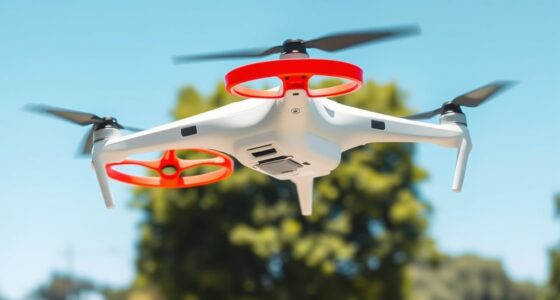
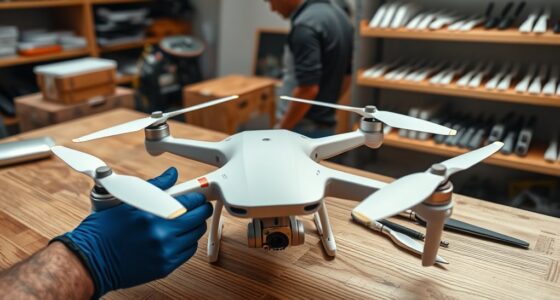
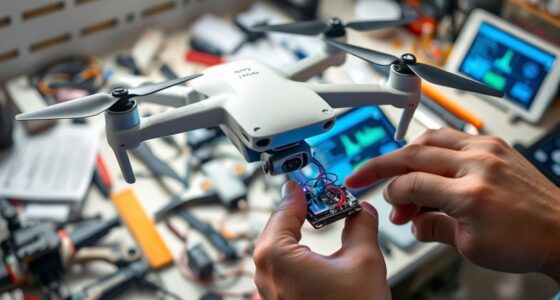
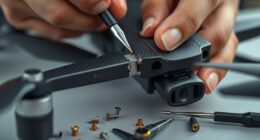
To keep your drone motors running smoothly, regularly check and balance your propellers to prevent vibrations that cause wear. Monitor motor temperatures during flights, especially after intense maneuvers, and guarantee proper cooling and ventilation. Inspect mounts, wiring, and connections for damage or looseness, tightening or replacing parts as needed. Keep your motors clean and lubricate shafts if applicable. Proper maintenance can extend motor life and improve performance—continue exploring these tips to optimize your drone’s reliability.
Key Takeaways
- Regularly inspect and balance propellers to prevent vibrations and reduce motor stress.
- Monitor motor temperatures during flights and land promptly if overheating occurs.
- Check and tighten motor mounts and wiring connections to avoid mechanical issues.
- Keep motors and cooling systems clean, and ensure proper ventilation to prevent overheating.
- Perform routine maintenance like lubrication and firmware updates to enhance motor longevity.
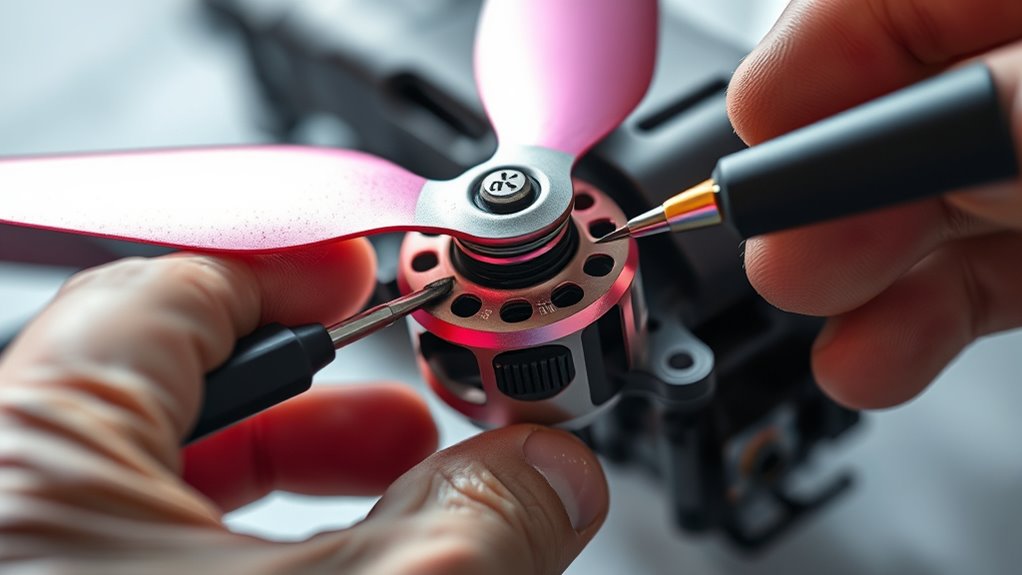
Maintaining your drone’s motors is vital for guaranteeing peak performance and extending their lifespan. One of the most important aspects of this is regularly checking the propeller balance. Unbalanced propellers create uneven vibrations that put extra stress on the motors, leading to premature wear and tear. When your props aren’t balanced properly, the motor has to work harder to stabilize the drone during flight, which can cause overheating and reduce efficiency. To keep your motors in top shape, always inspect your propellers before each flight. Use a propeller balancer to detect any imbalance and make necessary adjustments. Balancing your props not only improves flight stability but also minimizes vibrations that could lead to motor overheating. It’s a simple step that pays off by preventing unnecessary strain on your drone’s motors.
In addition to propeller balance, keeping an eye on motor overheating is vital. Overheating can happen if your motors run too long at high power or if there’s inadequate cooling. When a motor gets too hot, it can cause permanent damage, degrading performance and shortening its lifespan. To prevent this, monitor your drone’s temperature during flights, especially after prolonged use or aggressive maneuvers. If you notice the motors feeling unusually hot, land your drone immediately to let them cool down. Make sure your drone has proper ventilation and isn’t operating in excessively hot environments, as high ambient temperatures can exacerbate overheating issues. Regularly cleaning dust and debris from the motors and ESCs also helps maintain ideal cooling. If you’re consistently experiencing overheating, consider upgrading to motors with higher thermal ratings or installing additional cooling systems. Additionally, choosing high-quality projectors with superior color accuracy can help ensure your visual experience remains sharp and vibrant, even in demanding environments.
Proper maintenance also includes inspecting the motor mounts and wiring for damage or loose connections. Vibrations from unbalanced props or loose mounts can cause additional stress on the motors, leading to mechanical failure over time. Tighten any loose screws and replace worn-out wiring or connectors promptly. Consistently lubricating the motor shafts, if applicable, can also reduce friction and heat buildup. Remember, smooth operation reduces the workload on your motors, which in turn helps prevent overheating and extends their service life. Regular maintenance routines, like updating firmware and checking for software issues that might cause abnormal motor operation, are equally important. Staying vigilant and proactive about these aspects ensures your drone remains reliable, safe, and efficient every time you fly.
Frequently Asked Questions
How Often Should I Replace Drone Motors?
You should replace your drone motors when they show signs of wear, like decreased performance or unusual noise, usually every 200-300 flight hours. Keep in mind that a shorter battery lifespan can strain motors, and incompatible propellers may cause extra stress. Regular inspections help. If you notice reduced flight time, overheating, or vibration, it’s time for new motors to guarantee your drone runs smoothly and safely.
What Are Signs of a Failing Drone Motor?
Your drone motor’s telling you it’s struggling when it overheats or vibrates unusually, like a engine sputtering before a stall. These signs indicate the motor might be failing. Overheating suggests it’s working too hard or has poor cooling, while unusual vibrations point to imbalance or damage. Pay attention to these clues; ignoring them risks losing control or damaging your drone further. Stay vigilant, and address issues early to keep your drone flying smoothly.
Can I Repair Damaged Drone Motors Myself?
Yes, you can attempt DIY repairs on damaged drone motors if you’re comfortable with small electronics and have the right tools. However, for complex issues or if you’re unsure, it’s best to seek professional servicing to ensure safety and proper functioning. Always follow manufacturer instructions, and avoid risking further damage. When in doubt, professional servicing guarantees your drone’s motors are repaired correctly and safely.
What Tools Are Needed for Drone Motor Maintenance?
Think of your drone’s motors as the heart of your flight. To keep them beating smoothly, you’ll need a tools checklist that includes small screwdrivers, tweezers, a soldering iron, cleaning brushes, and lubricants. Follow proper maintenance procedures, like inspecting for wear and cleaning debris. Having these tools ready guarantees you can perform effective repairs and upkeep, keeping your drone’s motors in top shape for steady, reliable flights.
How Do Environmental Conditions Affect Drone Motor Lifespan?
Environmental conditions substantially impact your drone motor lifespan. Weather impact, like rain or humidity, can cause corrosion and electrical issues if not properly protected. Temperature effects are also vital; high temperatures can lead to overheating, reducing motor efficiency and lifespan, while cold weather may cause lubrication issues. To extend your motor’s life, avoid extreme weather, and regularly inspect and clean your drone, especially after flying in harsh conditions.
Conclusion
By regularly maintaining your drone motors, you’re not just preventing breakdowns—you’re ensuring every flight stays smooth and reliable. It’s funny how a simple check-up can save you from unexpected crashes or lost missions. When you keep your motors in top shape, you might find yourself reaching for your drone more often, discovering new heights and opportunities. So, stay vigilant, perform routine maintenance, and watch how your drone’s performance surprises you every time.