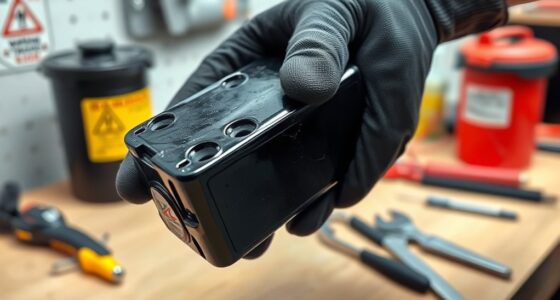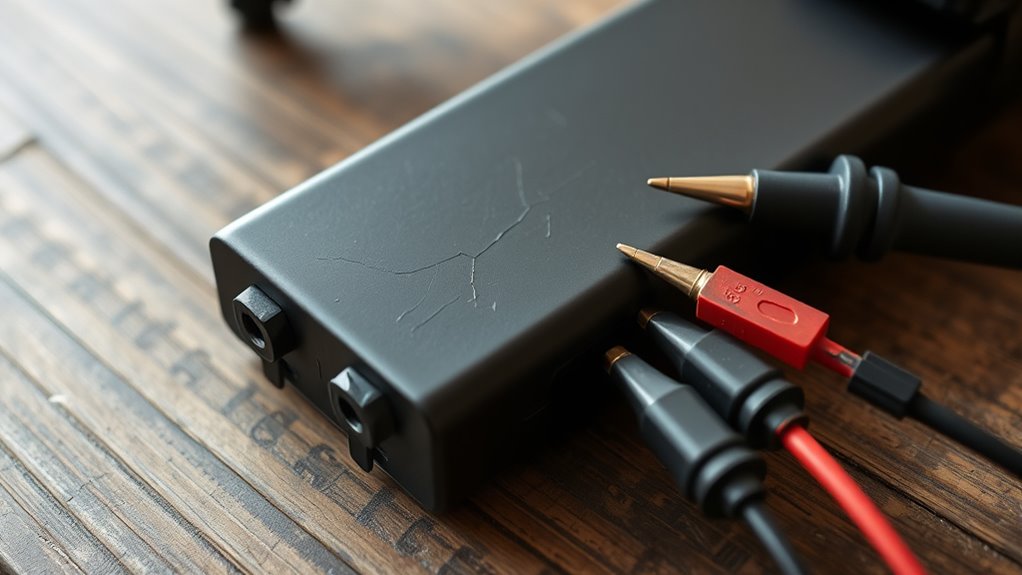

If your drone battery won’t charge, check for signs of aging, such as decreased capacity or swelling, and replace it if needed. Examine the charging port for dirt, dust, or damage, and clean gently if necessary. Verify you’re using compatible chargers and cables, and try different power sources. Sometimes, reconnecting the battery or inspecting for physical damage can fix the issue. To learn more about troubleshooting and solutions, keep exploring these common causes.
Key Takeaways
- Check for dirt, dust, or corrosion in the charging port and clean gently if needed.
- Inspect the battery for swelling, damage, or signs of aging and replace if necessary.
- Ensure you’re using the correct charger compatible with your drone model.
- Test the charging cable and power source with another device to rule out faults.
- Re-seat the battery properly and try charging in a different outlet or after restarting the charger.

Have you ever experienced your drone suddenly losing power or failing to take off? It can be frustrating, especially when you’re enthusiastic to fly. One common culprit behind these issues is the drone’s battery, which might not be charging properly. Over time, batteries age, and their ability to hold a charge diminishes. Battery aging is a natural process; with repeated charge and discharge cycles, the internal chemistry of the battery breaks down, leading to decreased capacity and longer charging times. If your drone’s battery is past its prime, it may refuse to charge altogether or only hold a very limited charge, making flights unreliable or impossible.
Battery aging causes reduced capacity, longer charges, and unreliable drone flights. Replace old batteries for optimal performance.
Another frequent problem involves the charging port. Dirt, dust, or corrosion can accumulate in the port, preventing a good connection between the charger and the battery. If the charging port looks dirty, bent, or damaged, your drone might not recognize the charger or may not initiate the charging process. Always inspect the port visually; if you notice debris, gently clean it with a soft brush or compressed air. Avoid inserting anything sharp or metal that could damage the connectors. Sometimes, the port might be loose or damaged, which also disrupts charging. In such cases, you might need to replace the port or have a professional repair it.
Beyond physical issues, it’s essential to verify you’re using the correct charger and power source. Using incompatible chargers can lead to incomplete charging or damage to the battery and port. Always follow the manufacturer’s recommended charging specifications. Additionally, check the charging cable for signs of wear or fraying; a faulty cable can prevent the battery from charging properly.
If your drone’s battery isn’t charging, it’s worth trying a few simple troubleshooting steps before replacing parts. First, disconnect the battery, then reconnect it firmly, ensuring it’s seated correctly. Sometimes, a loose connection can cause charging failures. Next, try charging the battery in a different outlet or with a different charger if available, to rule out power source issues. If none of these steps work, and your battery is old or shows signs of swelling or damage, it’s probably time for a replacement. Remember, a well-maintained, newer battery charges more efficiently and provides reliable power for your drone. Charging technology has advanced significantly, improving overall charging efficiency and battery lifespan.
Frequently Asked Questions
Can I Fix My Drone Battery Myself?
You can try fixing your drone battery yourself if it’s safe and within your skill level. Start by following proper charging tips, like using the recommended charger and avoiding overcharging. If the battery is damaged, consider battery recycling options instead of attempting repairs. Always handle batteries carefully to prevent hazards. However, for complex issues, it’s best to consult a professional to guarantee safety and proper functioning.
How Long Should a Drone Battery Last?
A bird in the hand is worth two in the bush, so knowing your drone’s battery lifespan helps you plan flights better. Typically, a drone battery lasts about 200 to 300 charging cycles, equating to 1-2 years with regular use. Proper care extends this lifespan, but expect performance to decline after repeated cycles. To get the most out of your battery, follow manufacturer guidelines and avoid overcharging or deep discharging.
Is It Safe to Use a Damaged Drone Battery?
You shouldn’t use a damaged drone battery, especially if you notice battery corrosion or other signs of damage. Damaged batteries can pose safety risks during charging, like overheating or fires. Always inspect your battery carefully, and if you see corrosion or other issues, dispose of it properly. For safe charging, use the recommended charger and avoid charging a damaged or compromised battery to prevent accidents.
What’s the Best Way to Store Drone Batteries?
You should store drone batteries in a cool, dry place away from direct sunlight to prevent damage. Follow storage best practices by keeping them at about 50-60% charge to maintain battery health. Always use a fireproof container if possible, and avoid extreme temperatures. Proper battery maintenance includes regular checks and avoiding full discharges. This guarantees your batteries stay in good condition and perform well when you need them.
How Do I Know if My Drone Battery Is Defective?
Think of your drone battery as a loyal engine—if it stalls unexpectedly, it’s likely defective. You can tell by performing simple battery testing: try to charge it, and if it refuses to hold a charge or quickly loses power, it’s a sign of trouble. Charging issues that persist despite proper connections also point to a faulty battery. When these signs appear, it’s time to replace the battery to keep your drone flying smoothly.
Conclusion
When your drone battery isn’t charging, don’t throw in the towel just yet. Troubleshooting can be a bit of a puzzle, but with patience and a bit of detective work, you’ll often get to the root of the problem. Remember, every issue has a solution—sometimes it’s just about looking at things from a different angle. Keep at it, and soon enough, you’ll be back in the sky, soaring high without a hitch.