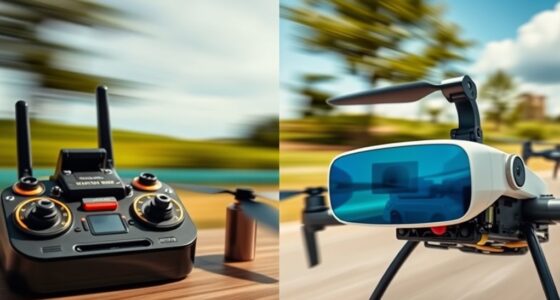
Choosing the right FPV antennas can considerably improve your drone’s video range and signal stability. Focus on matching antenna polarization—vertical, horizontal, or circular—to reduce signal loss and interference. Properly aligned antennas deliver clearer video feeds and extend your flying distance. Directional antennas can boost range further, while omnidirectional options provide more coverage. Understanding these factors helps you maintain a steady connection and enjoy better flight performance. Keep exploring to uncover tips that optimize your FPV setup even more.
Key Takeaways
- Choosing the right antenna polarization, such as circular polarization, reduces signal loss and enhances video clarity over longer distances.
- Properly aligning ground and drone antennas ensures a stable, reliable FPV connection, minimizing video dropouts.
- Using high-gain antennas can extend your FPV range but requires correct polarization matching to maximize effectiveness.
- Omnidirectional antennas offer wider coverage, while directional antennas focus signals for increased range and clearer video feed.
- Regularly troubleshooting antenna polarization and quality helps maintain optimal signal strength and improves overall FPV flight performance.
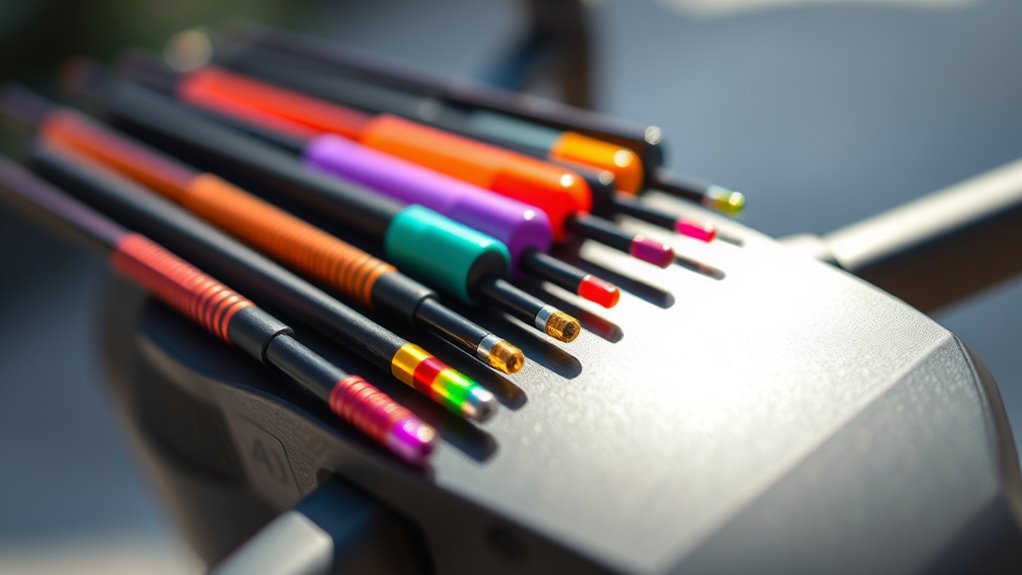
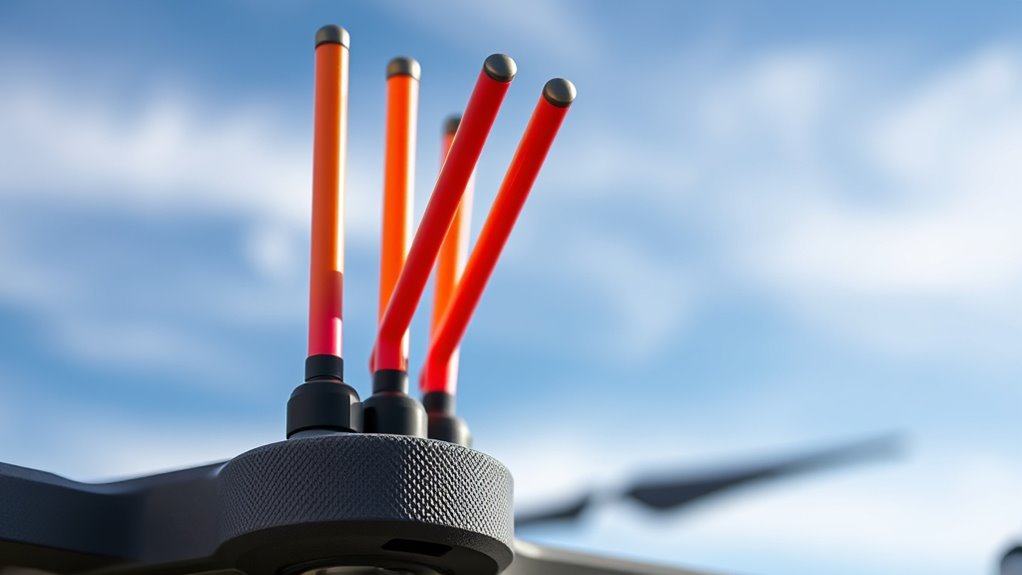
FPV antennas are essential components that can substantially impact your drone’s video transmission quality. The right antenna choice influences how well your FPV system performs, especially when it comes to maintaining a clear, reliable video feed over longer distances. One critical factor to contemplate is antenna polarization, which plays a significant role in minimizing signal loss and ensuring a strong, steady connection between your drone and your receiver. Antenna polarization refers to the orientation of the electromagnetic waves emitted by the antenna. If your transmitter and receiver antennas are polarized differently—say, one is vertical and the other is horizontal—you’ll likely experience increased signal loss, resulting in fuzzy or lost video signals. To avoid this, you should match the polarization of your antennas. Most FPV pilots opt for circular polarization, which helps reduce signal degradation caused by multipath interference, especially when flying in environments with many reflective surfaces like trees or buildings.
Choosing antennas with the correct polarization isn’t just about reducing signal loss; it’s also about maximizing range and image clarity. When your antennas are properly aligned in polarization, you’ll notice less drop in video quality as you fly farther away. Signal loss occurs when the electromagnetic waves are not aligned or when obstacles interfere with the signal path. This loss can cause lag, pixelation, or complete disconnection, which is frustrating during critical moments of your flight. By selecting antennas designed for the same polarization, you improve your chances of maintaining a stable link, even at extended distances. Additionally, some antennas are designed with specific gain patterns—like omnidirectional or directional—that influence how signals are transmitted and received. Combining the right polarization with the appropriate gain can dramatically extend your effective range.
Furthermore, understanding how antenna polarization affects your setup helps you troubleshoot issues better. If you notice frequent signal loss or inconsistent video quality, double-check your antenna polarization. Ensuring that both your drone and ground station antennas are aligned correctly can make a noticeable difference. Investing in high-quality antennas optimized for your flying environment can also reduce signal loss caused by environmental interference. Keep in mind that polarization is just one aspect of antenna performance, but it’s a fundamental one that can dramatically improve your FPV experience. When you pay attention to these details and choose antennas that match in polarization, you’ll enjoy clearer video streams, longer flight ranges, and a more confident flying experience overall. Additionally, understanding the impact of Free Floating environments on signal quality can help you better adapt your setup for diverse flying conditions.
Frequently Asked Questions
How Do I Choose the Best FPV Antenna for My Drone?
To select the best FPV antenna for your drone, consider antenna polarization—vertical or circular—to match your drone’s setup and guarantee clear signal transmission. Look at signal gain; higher gain antennas offer longer range but narrower coverage, while lower gain provides wider coverage. Balance these factors based on your flying style and environment, and choose an antenna that complements your transmitter and receiver for superior performance.
What Is the Difference Between Omni and Directional FPV Antennas?
Omni antennas radiate signals in all directions, offering broad coverage and easy setup, but they’re more prone to signal interference and have shorter range. Directional antennas focus signal transmission in one direction, providing stronger, longer-range connections and better resistance to interference. Your choice depends on antenna polarization; omni antennas are circularly polarized, while directional ones are usually linear, affecting how they handle interference and signal strength.
Can I Use Multiple Antennas Simultaneously?
Sure, you can use multiple antennas simultaneously—think of it as giving your drone a superhero cape of antenna diversity. But beware: more antennas can boost signal interference if not managed properly. It’s like adding more cooks to the kitchen; sometimes, chaos ensues. To get the best performance, use a diversity system that intelligently switches between antennas, reducing interference and maximizing your FPV range.
How Do I Troubleshoot Poor Signal Quality?
To troubleshoot poor signal quality, start with your ground station setup—check antenna connections and positioning for ideal alignment. Minimize interference by moving your equipment away from potential sources like Wi-Fi routers or power lines. Test different antennas to see if performance improves, and consider using filters or higher gain antennas. Regularly update your firmware and ensure your cables are in good condition to maintain a strong, consistent signal.
Are There Specific Antennas for Racing Versus Cinematic FPV Flying?
You might think all FPV antennas work equally, but specific antennas are designed for racing or cinematic flying. Racing antennas often have circular polarization to combat signal interference during high-speed maneuvers, providing better stability and range. Cinematic drones may favor linear polarization for smooth footage, but this can be more susceptible to interference. Choosing the right antenna depends on your flying style, considering polarization and interference for superior performance.
Conclusion
Now that you know how different FPV antennas work and choose the right gear, aren’t you excited to boost your drone’s range and performance? Remember, the right antenna can make all the difference in your flying experience. So, are you ready to upgrade your setup and take your flights to the next level? With the right antennas, you’ll enjoy clearer signals, longer flights, and more confidence in every adventure. Happy flying!