Including weather awareness in your drone kit is essential for safety and successful flights. Being prepared for changing conditions helps you avoid accidents, equipment damage, and loss of control. Monitoring wind, rain, or fog allows you to adapt plans proactively and choose safer flying windows. Integrating weather info into your routine enhances reliability and protects your investment. Keep going to discover smart strategies that guarantee you stay ahead of unpredictable weather and fly with confidence.

Get the latest gadgets delivered free — and shop member deals
- Fast, free delivery on millions of items
- Access to Prime Big Deal Days deals on October 6–7
- Prime Video, Amazon Music and more included
Key Takeaways
- Ensures safe flight operations by anticipating and avoiding adverse weather conditions.
- Reduces risk of equipment damage from storms, wind, or precipitation.
- Enhances decision-making through real-time weather data, leading to proactive flight adjustments.
- Protects investments by preventing accidents caused by unexpected weather changes.
- Promotes a safety-first approach, minimizing accidents and increasing overall operational success.
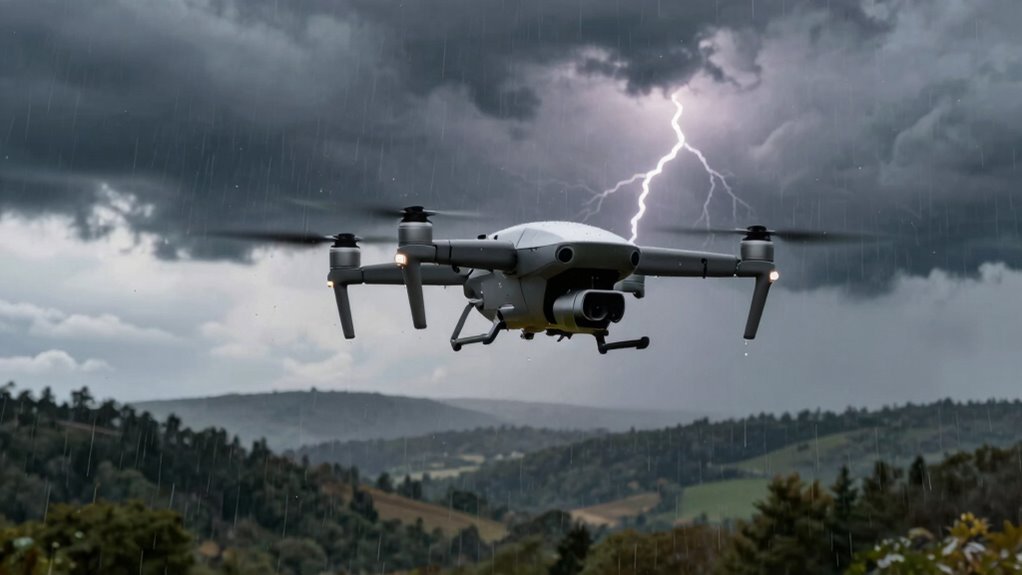
Weather conditions play a crucial role in drone operations, and understanding how they can impact your flight is essential for safety and success. When you’re planning a mission, weather awareness isn’t just an optional skill — it’s a fundamental part of effective flight planning. Ignoring weather factors can jeopardize your drone’s safety, damage equipment, or cause you to lose control altogether. That’s why including weather considerations in your pre-flight checklist is a must. By staying alert to current and forecasted conditions, you reduce the risk of accidents, ensuring smoother operations and safeguarding your investment.
Weather awareness is essential for safe, successful drone flights—integrate it into your pre-flight checklist.
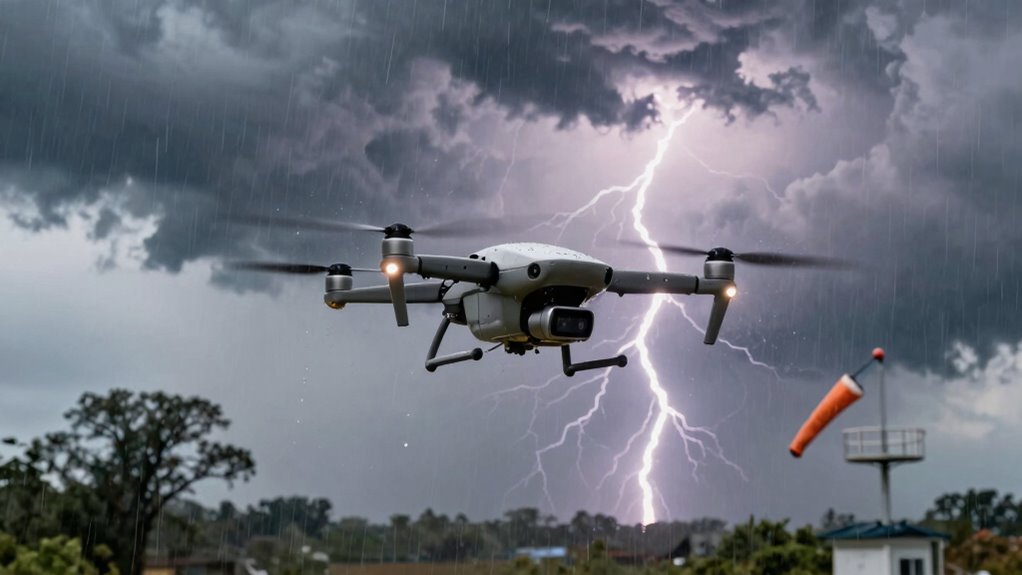
Good drone safety begins with evaluating the weather before you even power up your drone. Wind speed, for example, can considerably affect stability and control. Even moderate gusts can push your drone off course or cause unstable hovering, especially for smaller models. Heavy rain or snow not only impair visibility but can also damage sensitive electronics. Lightning is an obvious hazard you want to avoid at all costs, because a strike can destroy your drone and pose risks to you. Temperature fluctuations matter, too — extremely hot days can cause overheating, and cold weather can drain your battery faster, reducing your flight time and risking power loss mid-air. Humidity levels can also impact drone electronics, potentially leading to corrosion or short circuits if conditions are particularly damp. Additionally, understanding the impact of weather on drone electronics can help you prepare and protect your equipment effectively. Being aware of the current weather conditions** and how they relate to your specific drone model can further enhance safety. Knowing how different weather conditions influence drone performance allows for better decision-making during flight. Moreover, staying informed about the long-term weather trends in your area can help you plan for seasonal challenges. It’s also helpful to consider how unexpected weather changes** might occur, so you’re prepared for sudden shifts in conditions.
Effective flight planning requires you to factor in these weather conditions well in advance. Check reliable weather forecasts, and don’t rely solely on real-time data. Use weather apps designed for drone pilots, which can provide detailed insights into wind patterns, precipitation, and temperature. Planning your flight around favorable conditions maximizes safety and minimizes surprises. If winds are forecasted to be high, consider postponing your flight or choosing a safer, sheltered location. When visibility drops due to fog, rain, or snow, it’s better to wait than risk losing sight of your drone or encountering unexpected obstacles. Remember, even if the weather seems decent, sudden changes can occur, so keep a close eye on updates.
Incorporating weather awareness into your drone safety protocol and flight planning isn’t just about avoiding trouble — it’s about making smarter, safer choices. By understanding the potential impacts of weather, you’re better equipped to adapt your plans accordingly, ensuring each flight is successful and safe. Always prioritize weather conditions as part of your pre-flight checklist, and stay informed during your mission. This proactive approach helps you fly smarter, protect your equipment, and enjoy drone flying with confidence, no matter what Mother Nature throws your way.
As an affiliate, we earn on qualifying purchases.
Frequently Asked Questions
How Does Weather Affect Drone Battery Life?
Weather greatly impacts your drone’s battery life. Cold temperatures cause battery degradation, reducing capacity and flight time, while hot conditions can overheat batteries, risking damage and decreasing power efficiency. You might notice shorter flights or unstable power levels. To maximize performance, keep batteries warm in cold weather and cool in heat, and avoid exposing them to extreme conditions. Proper weather awareness helps you maintain ideal battery health and flight safety.
What Are the Signs of Weather-Related Drone Malfunctions?
You’ll notice weather-related drone malfunctions through signs like unstable flight caused by wind turbulence, which makes controlling your drone difficult. You might also see sudden power drops or erratic behavior in your drone’s sensors. Lightning risks are critical; if lightning is nearby, your drone could experience electrical surges or even complete failure. Always monitor weather conditions closely to prevent these issues and guarantee safe, smooth flights.
Can Weather Conditions Impact Drone Camera Quality?
Weather conditions can drastically impact your drone camera quality, making images look as blurry as a foggy mirror. Weather patterns like rain, snow, or fog, combined with atmospheric turbulence, distort light and reduce clarity. Wind can shake the drone, causing shaky footage. To get the best shots, you need to monitor weather forecasts closely and avoid flying in conditions that compromise your camera’s performance or your safety.
How Quickly Can Weather Change During a Drone Flight?
Weather can change rapidly during a drone flight, especially with unpredictable weather patterns and storm behavior. You might see clear skies one moment, then sudden clouds or gusts of wind as storm behavior intensifies. These shifts can happen in just minutes, so staying alert and monitoring weather updates is essential. Being prepared for quick weather changes guarantees your drone’s safety and helps you avoid losing control or damaging your equipment.
Are There Specific Weather Apps for Drone Pilots?
Yes, there are specific weather apps tailored for drone pilots, focusing on weather forecasting and storm tracking. These apps give you real-time updates on wind speed, precipitation, and storm movement, helping you plan safer flights. By using tools like UAV Forecast or AirMap, you stay informed about changing weather conditions, reducing risks. Incorporating these apps into your drone kit guarantees you’re always prepared for unexpected weather shifts.
As an affiliate, we earn on qualifying purchases.
Conclusion
By keeping weather awareness in your drone kit, you’re not just avoiding crashes—you’re embracing a deeper connection with nature’s rhythms. Sometimes, a sudden shift in wind or a passing storm reminds us that even technology can’t outmatch the sky’s unpredictable dance. When you stay informed, you’re not just protecting your equipment—you’re respecting the environment’s subtle cues. In that moment, you realize that harmony with weather isn’t just smart—it’s essential for every drone pilot’s journey.
As an affiliate, we earn on qualifying purchases.
drone pre-flight weather check kit
As an affiliate, we earn on qualifying purchases.
As an affiliate, we earn on qualifying purchases.
Fall Picks
fall essentials
As an affiliate, we earn on qualifying purchases.