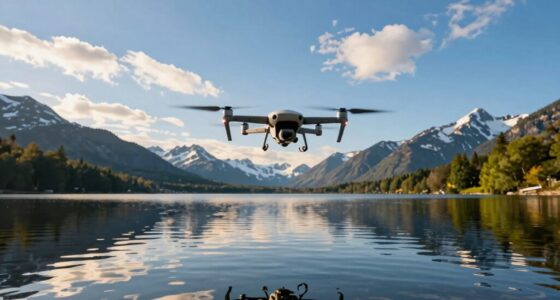
When operating drones in the field, it’s essential to prioritize safety gear like eye protection to shield against propeller debris, gloves to prevent burns or cuts, and high-visibility vests to stay visible in busy or low-light areas. Wearing the right equipment boosts your confidence and minimizes personal injury risks. Proper safety gear helps you stay prepared for unexpected situations, ensuring smoother flights and better safety. Keep exploring to discover more must-have safety gear for drone operators.
Listen free for 30 days with Audible
Thousands of audiobooks and originals — cancel anytime.
As an affiliate, we earn on qualifying purchases.
Key Takeaways
- Eye protection to prevent injuries from spinning propellers or battery hazards
- Gloves to safeguard against burns, cuts, or electrical contact during handling
- High-visibility vests for improved visibility in busy or low-light environments
- Fire-resistant bags and extinguishers to manage battery fires safely
- Weather-resistant clothing and gear to ensure safety in adverse weather conditions
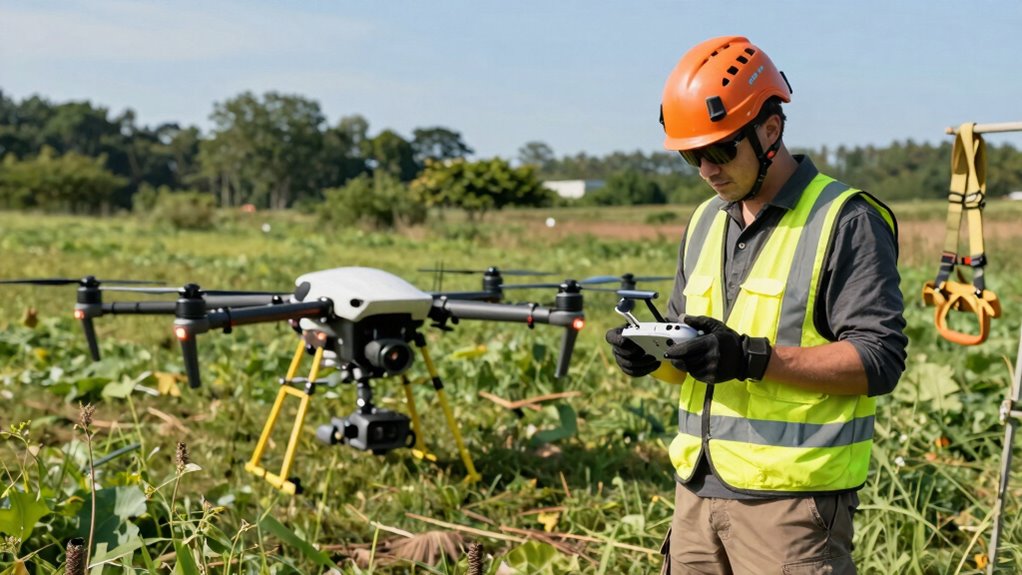
Flying a drone can be exciting, but it also comes with safety risks that you shouldn’t overlook. As a drone operator, your safety gear isn’t just about protecting your gear; it’s about protecting yourself and ensuring a smooth flight experience. One of the most critical aspects of safety gear involves understanding battery safety. Lithium-polymer batteries, common in drones, can pose fire hazards if mishandled, damaged, or improperly charged. That’s why carrying a fire-resistant bag for charging and storage is essential. You should also have a fire extinguisher nearby, especially if you’re working with multiple batteries or charging stations. Properly inspecting batteries before flight and avoiding overcharging can prevent dangerous thermal runaways, so guarantee your safety gear includes tools and accessories that help you monitor battery health. Additionally, being aware of battery safety guidelines can significantly reduce the risk of accidents caused by thermal runaway or fires. Ensuring your batteries are stored in appropriate containers can further minimize risks linked to mishandling or damage. Regularly reviewing battery maintenance best practices can also extend your batteries’ lifespan and enhance safety during use.
Weather preparedness is another crucial component of your safety gear. Wind, rain, and extreme temperatures can turn a routine flight into a dangerous situation. Before heading out, you need weather-resistant clothing, such as waterproof jackets and sturdy footwear, to keep yourself comfortable and safe. Protecting your electronics from moisture is equally important; consider carrying a weatherproof case or bag for your drone and accessories. Additionally, a portable weather station or a reliable weather app on your phone can help you stay informed about changing conditions. If the weather forecast predicts high winds or rain, it’s best to postpone your flight rather than risking a crash or loss. Checking the weather isn’t just a precaution—it’s an essential part of your pre-flight safety protocol.
Beyond safety gear for weather and batteries, don’t forget other protective equipment like eye protection, especially when working close to spinning propellers or handling batteries. Gloves can prevent burns or cuts, and high-visibility vests make sure you’re seen in busy or low-light environments. Remember, safety gear isn’t just about your equipment; it’s about your own well-being. Properly prepared, you’re more confident to handle unexpected situations, whether it’s a sudden gust of wind or a battery malfunction. Investing in the right safety gear and understanding how to use it ensures you’re ready for the field, minimizing risks and maximizing your enjoyment and success as a drone operator.
As an affiliate, we earn on qualifying purchases.
Frequently Asked Questions
Are There Specific Safety Gear Requirements for Different Drone Types?
Yes, specific safety gear requirements vary with drone types. For larger or industrial drones, you should wear protective clothing like gloves and eye protection. Smaller consumer drones may need less gear, but always carry emergency kits with first aid supplies. Always assess your drone’s size and environment, and choose gear accordingly to stay safe. Proper protective clothing and emergency kits guarantee you’re prepared for any unexpected situations in the field.
How Often Should Drone Operators Inspect Their Safety Gear?
You should inspect your safety gear before every flight, visualizing the rugged terrain you’ll navigate. Regular maintenance routines keep your gear in top shape, preventing wear and tear. Check for cracks, loose fittings, and proper calibration of protective equipment like goggles and gloves. By doing this consistently, you guarantee your safety gear functions flawlessly, reducing risks and giving you confidence to operate your drone smoothly and securely in the field.
Can Safety Gear Prevent All Drone-Related Injuries?
Safety gear can’t prevent all drone-related injuries, but it markedly reduces your risk. Wearing protective eyewear shields your eyes from debris or unexpected drone malfunctions. Carrying emergency kits guarantees you’re prepared for accidents, providing first aid supplies if needed. While gear isn’t foolproof, combining protective eyewear and emergency kits offers essential protection, helping you respond swiftly and minimize injury severity during drone operations.
Is Specialized Safety Gear Necessary for Nighttime Drone Flights?
Yes, specialized safety gear is necessary for nighttime drone flights. You should wear reflective clothing to increase visibility and prevent accidents in low light. Using night vision equipment can help you see clearly in the dark, reducing the risk of collisions. Combining these safety measures guarantees you’re more visible and aware of your surroundings, keeping you safer while operating your drone in nighttime conditions.
What Training Is Recommended for Safe Safety Gear Usage?
You should undergo hands-on training focusing on the proper use and maintenance of your safety gear, including inspecting equipment before each flight. Practice emergency preparedness by familiarizing yourself with quick-response procedures and safety protocols. Regular safety gear maintenance guarantees reliability, and understanding emergency procedures helps you stay safe during unexpected situations. This training boosts your confidence, minimizes risks, and guarantees you’re well-prepared to handle any field emergencies effectively.
fire-resistant drone battery bag
As an affiliate, we earn on qualifying purchases.
As an affiliate, we earn on qualifying purchases.
Conclusion
So, as a drone operator, you know safety gear isn’t just an accessory—it’s your first line of defense. Wearing the right gear keeps you protected and confident, no matter the environment. Are you ready to prioritize your safety and guarantee every flight is secure? Remember, a well-prepared operator is a successful one. Gear up, stay alert, and keep your flights safe—because your safety gear matters most when it counts.
high visibility safety vest for drone operators
As an affiliate, we earn on qualifying purchases.
As an affiliate, we earn on qualifying purchases.
weatherproof drone carrying case
As an affiliate, we earn on qualifying purchases.
As an affiliate, we earn on qualifying purchases.
NFL season / tailgating Picks
team gear
As an affiliate, we earn on qualifying purchases.