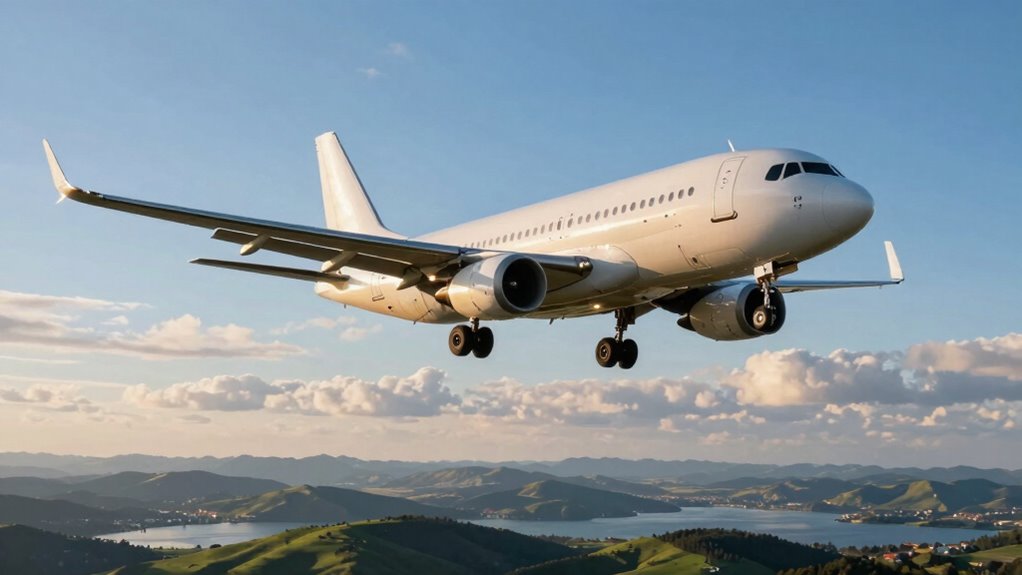

To fly responsibly without fear, focus on mindful choices that reduce your environmental impact, such as booking direct flights and selecting airlines committed to sustainability. Maintain courteous behavior and follow safety instructions to support a smooth journey. Educate yourself on eco-friendly practices like packing light and advocating for greener policies. Recognizing your influence and making informed decisions can ease worries and promote responsible travel, helping you enjoy your trip while supporting the planet’s health—more tips await to empower your sustainable flying journey.
Key Takeaways
- Educate yourself on sustainable flying practices to foster confidence and positive environmental impact.
- Focus on small, responsible actions like packing light and choosing direct flights to reduce your carbon footprint.
- Stay informed about airlines’ eco-friendly initiatives to make mindful travel choices without anxiety.
- Practice mindfulness and breathing techniques to manage flight-related fears and stay present.
- Remember that responsible travel balances personal needs with ecological consciousness, easing guilt and fear.
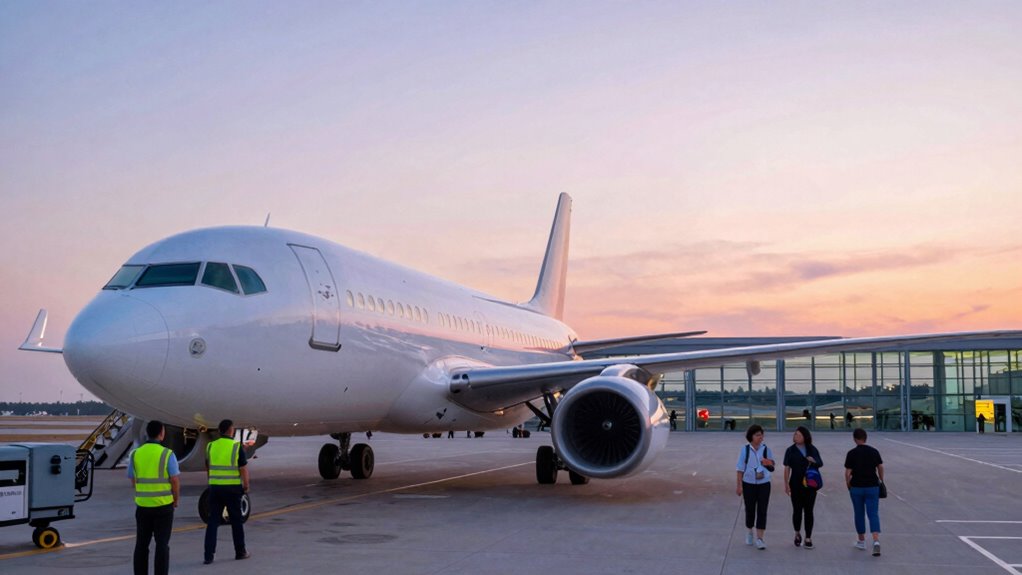
Have you ever wondered how your flight choices impact the environment? Every time you book a flight, you’re contributing to a complex web of environmental effects, from carbon emissions to resource consumption. While flying can be necessary, it’s important to contemplate how your behavior as a passenger can minimize negative impacts. Passenger etiquette plays a key role here—not just in maintaining a respectful environment onboard but also in promoting responsible travel practices that help reduce your footprint. For example, being courteous and mindful of your surroundings encourages a smoother, more efficient flight, which can help lower fuel consumption. Simple acts like turning off electronic devices when instructed, properly disposing of waste, and respecting crew instructions all contribute to a more eco-friendly journey.
Understanding your role as a passenger means recognizing that your actions influence the overall environmental impact of your flight. Small gestures, like packing light, can considerably reduce weight and fuel consumption. Opting for direct flights when possible minimizes total emissions compared to connecting flights, which require takeoffs and landings that emit more carbon per mile. Additionally, choosing airlines committed to sustainable practices makes a tangible difference; some carriers invest in more fuel-efficient aircraft or offset programs that neutralize emissions. Your awareness and advocacy for these choices send a message that environmentally responsible flying matters, encouraging airlines to adopt greener policies. This awareness can also inspire broader industry changes toward adopting sustainable practices.
But it’s not just about individual actions; it’s also about fostering a mindset that balances your travel needs with environmental responsibility. While it’s natural to feel anxious about flying, especially with concerns over climate change, you can reduce fear by focusing on what you can control. Learning about sustainable travel options helps you fly more consciously without becoming overly fearful. For instance, you might research airlines’ environmental commitments or consider alternative transportation methods for shorter distances. Being informed empowers you to make choices aligned with your values, which alleviates guilt and anxiety about your travel habits.
In essence, responsible flying isn’t about perfection but about making mindful decisions that lessen your environmental impact. By practicing passenger etiquette that promotes efficiency and respect, you contribute to a smoother flight experience for everyone and help reduce emissions. Staying informed about sustainable options and adopting a conscious attitude towards travel allows you to enjoy your journeys without the weight of guilt or fear. Ultimately, responsible flying is a balance—one that respects the environment while still fulfilling your desire to explore the world. Recognizing the importance of biodiversity and sustainable practices can further motivate you to choose eco-friendly travel options and advocate for change.

Ricardo Beverly Hills Avalon Softside Carry-On Luggage Made with Sustainable 100% Recycled PET (rPET), Lightweight, Eco-Friendly Travel, Expandable, Dual Spinner Wheels, Juniper Green, 20-inch
ECO-FRIENDLY CONSTRUCTION: Elevate your travel experience guilt-free with our environmentally conscious construction. Crafted from 100% rPET recycled plastic,…
As an affiliate, we earn on qualifying purchases.
As an affiliate, we earn on qualifying purchases.
Frequently Asked Questions
How Can I Stay Calm During Turbulence?
When turbulence hits, stay calm by practicing calming techniques like deep breathing exercises. Focus on slow, steady breaths—inhale deeply through your nose, then exhale slowly through your mouth. Ground yourself by paying attention to your surroundings or listening to calming music. Remind yourself that turbulence is normal and temporary. These techniques help reduce anxiety, keeping you centered and relaxed, so you can ride out the bumps with confidence.
What Safety Measures Are Airlines Implementing?
Ever wonder how airlines keep you safe? They implement strict safety protocols, including thorough airline sanitation practices to minimize germs and infection risks. Crew members follow rigorous procedures for safety checks, and aircraft are equipped with advanced safety features. These measures guarantee your wellbeing from boarding to landing. By understanding their commitment, you can fly confidently, knowing that airlines prioritize your safety through continuous improvements and diligent protocols.
Is It Safer to Fly Than Drive?
It’s safer to fly than drive because airlines prioritize safety through rigorous pilot training and strict safety protocols. Travel insurance can give you extra peace of mind, covering potential mishaps. Modern aircraft are equipped with advanced technology, and pilots undergo extensive training to handle emergencies. Overall, flying is statistically safer, especially when you choose reputable airlines that adhere to high safety standards and all-encompassing training programs.
How Do I Reduce My Environmental Impact When Flying?
Think of your flight as a leaf floating on a stream—you can steer it toward greener currents. To reduce your environmental impact, choose eco-friendly alternatives like direct flights, which cut emissions. Plus, consider carbon offsetting programs that plant trees or fund renewable energy projects, helping balance out your travel footprint. Small choices like these turn your flight into a more sustainable journey, making a positive ripple in the environment.
What Should I Do if I Feel Anxious on a Plane?
If you feel anxious on a plane, try practicing mindfulness exercises to ground yourself. Focus on your breath, using calming breathing techniques like deep inhales and slow exhales to ease tension. You can also discreetly listen to soothing music or do gentle stretches. Reminding yourself that flying is safe and focusing on the present moment helps reduce anxiety. These strategies help you stay calm and enjoy your journey.

Aerotrunk Compression Packing Cubes for Travel – Luggage Organizer Bags – Double Zipper Packing Cubes for Suitcases (6-Pack, Light Grey)
PACK FASTER & ORGANIZE YOUR SUITCASE BETTER – An assortment of sizes (2PCS, 4 PCS or 6 PCS…
As an affiliate, we earn on qualifying purchases.
As an affiliate, we earn on qualifying purchases.
Conclusion
As you take to the skies responsibly, remember that every mindful choice you make aligns with the universe’s quiet harmony. Coincidentally, a single flight can spark not just new adventures but also a deeper respect for our planet and fellow travelers. So, embrace your journey with confidence, knowing that your conscious efforts ripple outward—making the world a better, more connected place, one responsible flight at a time.
airline carbon offset programs
As an affiliate, we earn on qualifying purchases.
As an affiliate, we earn on qualifying purchases.

Traveling With Anxiety 2026: When Fear Says No — The Practical Guide To Cbt Techniques, Breathing Tools & Fear Of Flying Strategies For Anxious Travellers
As an affiliate, we earn on qualifying purchases.
As an affiliate, we earn on qualifying purchases.