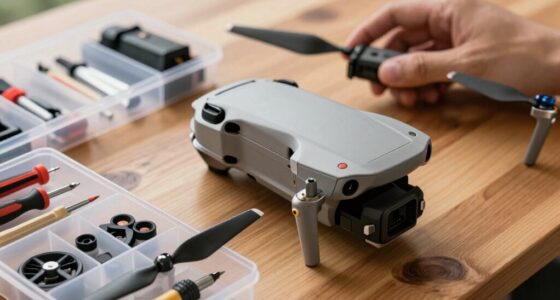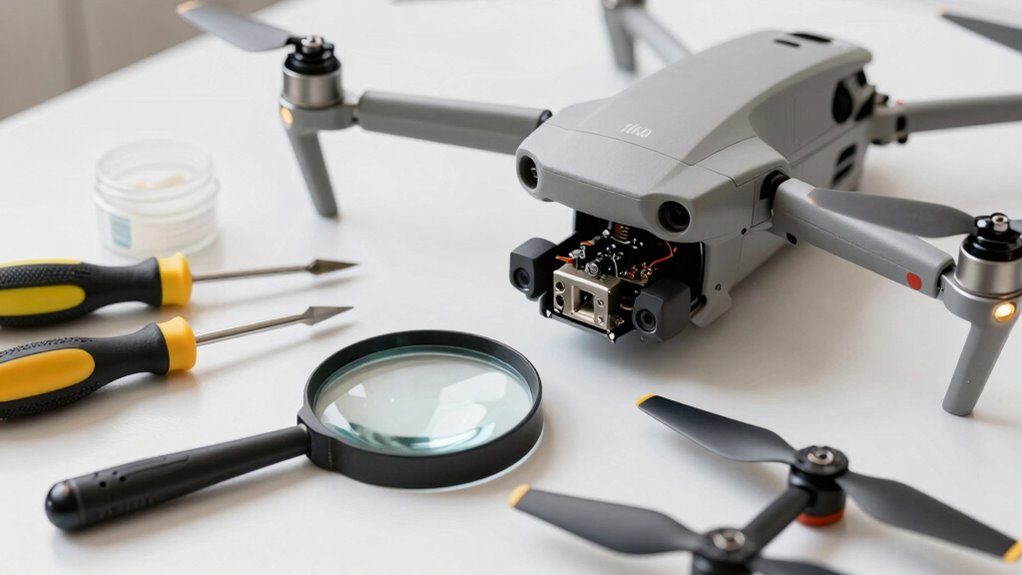

For routine drone maintenance, you’ll want a soft brush or compressed air to keep dust off, a microfiber cloth for lens cleaning, and tiny screwdrivers for minor repairs. A multimeter helps check battery health, while a storage case keeps batteries safe. Use diagnostic tools and thermal cameras to monitor performance and temperature. Keeping these tools handy guarantees your drone stays reliable and lasts longer. To discover more ways to keep your drone in top shape, keep exploring essential maintenance tips.
Get ready for Prime Big Deal Days — try Prime free
Exclusive member deals on October 6–7, plus fast free delivery. Cancel anytime.
As an affiliate, we earn on qualifying purchases.
Key Takeaways
- Microfiber cloth and soft brushes for lens and gimbal cleaning to maintain image quality.
- Multimeter and diagnostic tools to monitor battery health and prevent failures.
- Compressed air or soft brushes for dust and debris removal from sensitive components.
- Proper storage cases for batteries and electronic parts to ensure safety and longevity.
- Routine inspections and safety protocols to detect issues early and prolong equipment lifespan.
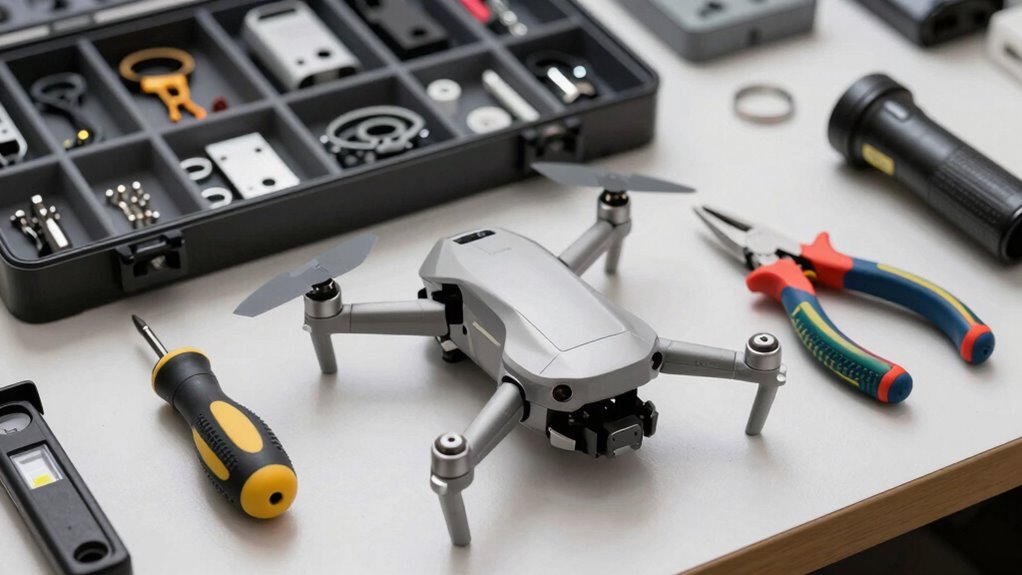
Ever wondered what tools are indispensable for keeping your drone in top shape? Maintaining your drone isn’t just about flying it; it’s about guaranteeing it performs reliably and safely every time. Two pivotal areas to focus on are aerial photography capabilities and battery management, both of which require specific tools for proper upkeep. When you’re involved in aerial photography, your drone’s camera and gimbal need regular attention. A small, soft brush or compressed air can help clear dust and debris from delicate camera lenses and gimbal joints, preventing image quality issues. A microfiber cloth is invaluable for gently cleaning camera lenses without scratching. For more precise cleaning or fixing, tiny screwdrivers—often included in drone repair kits—are necessary for removing screws securing camera mounts or gimbals. Keeping the camera system in pristine condition guarantees your aerial shots remain sharp and professional, which is essential if you rely on your drone for photography work. Proper camera maintenance can also help extend the lifespan of your equipment and ensure consistently clear images.
Battery management is another foundation of routine drone maintenance. Proper care extends battery life, reduces the risk of failure, and maximizes flight time. To do this effectively, you’ll need a few specialized tools. A multimeter is indispensable for checking battery voltage and health, helping you detect potential issues before they cause problems mid-flight. Using a battery management system (BMS) or a dedicated charger with balancing capabilities ensures the cells inside your drone’s batteries stay evenly charged, preventing overcharging or overheating. Always have a storage case or container designed for batteries—this isn’t just for organization but also for safety, especially if you need to transport or store batteries for extended periods. Additionally, a thermal camera or infrared thermometer can help monitor battery temperature during charging or after flights, alerting you to overheating conditions that could compromise the battery’s integrity. Regular inspections with diagnostic tools can help identify issues early, preventing costly repairs or replacements. Incorporating proper maintenance tools into your routine can further improve your ability to catch problems before they escalate. Maintaining a clean and safe workspace is also crucial to prevent accidental damage or contamination during handling. Moreover, understanding battery safety protocols can significantly reduce the risk of accidents during maintenance or storage. When you’re handling batteries or delicate electronic components, anti-static tools—like wrist straps—are essential to prevent static discharge that can damage sensitive parts. By investing in the right tools for aerial photography maintenance and battery management, you’re taking proactive steps to keep your drone in top condition. This not only enhances your flying experience but also extends the lifespan of your equipment, saving you money and headaches down the line. Proper routine maintenance isn’t optional; it’s indispensable to flying safely and capturing stunning aerial imagery every time.
As an affiliate, we earn on qualifying purchases.
Frequently Asked Questions
How Often Should Drone Batteries Be Calibrated?
You should calibrate your drone batteries every 3 to 5 cycles to maintain ideal drone performance. Regular battery calibration ensures accurate readings of battery life and prevents unexpected power loss during flights. By consistently calibrating, you help extend your batteries’ lifespan and keep your drone operating smoothly. Don’t skip this step; doing so guarantees your drone remains reliable and performs at its best, especially during critical missions.
What Safety Gear Is Recommended During Maintenance?
Are you prepared to keep yourself safe during drone maintenance? You should always wear protective gloves and safety goggles to prevent injuries from sharp components or accidental sparks. These safety gear essentials protect your skin and eyes from debris, chemicals, or electrical hazards. Don’t skip these precautions—your safety is just as important as maintaining your drone. Proper safety gear guarantees you can perform routine checks and repairs confidently and securely.
Can I Perform Maintenance Without Technical Experience?
You can perform DIY maintenance on your drone without extensive technical expertise, but it’s essential to follow proper procedures and safety guidelines. Start with simple tasks like cleaning or checking propellers, and avoid complex repairs unless you’re confident. Use basic tools like screwdrivers and pliers, and consult tutorials or manuals to make sure you don’t damage your drone. Building your skills gradually helps guarantee safe, effective maintenance.
Are There Specific Tools for Different Drone Models?
Yes, there are specific tools for different drone models, especially when it comes to drone model customization and specialized maintenance tools. You’ll need tools tailored to your drone’s design, like unique screwdrivers or connectors, to guarantee proper handling. Using the right tools prevents damage and makes maintenance easier. Always check your drone’s manufacturer recommendations or compatibility guides to find the exact tools needed for your particular model.
How Do I Store Tools Properly for Longevity?
You should focus on tool organization and choose the right storage solutions to keep your tools in top shape. Use labeled compartments, small containers, or toolboxes to prevent clutter and damage. Store your tools in a cool, dry place away from moisture and extreme temperatures. Regularly clean and inspect them, and replace worn or damaged items promptly. Proper storage prolongs your tools’ lifespan and ensures they’re ready whenever you need them.
microfiber lens cleaning cloth for drones
As an affiliate, we earn on qualifying purchases.
As an affiliate, we earn on qualifying purchases.
Conclusion
Remember, a well-maintained drone flies smoother and lasts longer. Keep your toolkit ready with the essential tools, like screwdrivers, cleaning wipes, and replacement parts, to handle routine checks confidently. Don’t wait for issues to arise—preventative care is key. As the saying goes, “A stitch in time saves nine.” Stay proactive with your drone maintenance, and you’ll enjoy better flights and fewer surprises. Happy flying!
As an affiliate, we earn on qualifying purchases.
thermal camera for drone batteries
As an affiliate, we earn on qualifying purchases.
As an affiliate, we earn on qualifying purchases.
Fall Picks
fall essentials
As an affiliate, we earn on qualifying purchases.