
Keep essential items like spare batteries, weather protection gear, and quick tools within easy reach so you can swap batteries quickly and respond to sudden weather changes. Store less urgent items, such as extra clothing or snacks, securely to reduce weight and stay organized. Properly organizing your gear helps you act swiftly and makes your drone session smoother. Want to learn more about optimizing your drone bag setup? Keep going for expert tips!

Get the latest gadgets delivered free — and shop member deals
- Fast, free delivery on millions of items
- Access to Prime Big Deal Days deals on October 6–7
- Prime Video, Amazon Music and more included
Key Takeaways
- Keep essential items like batteries, weather protection gear, and quick tools within reach for rapid access during flights.
- Pack spare batteries, filters, and delicate accessories in organized compartments to prevent damage and ensure availability.
- Store less urgent items such as clothing and snacks securely to reduce bag weight and maintain balance.
- Keep weather monitoring tools and moisture removal supplies accessible for quick weather response.
- Balance immediate accessibility of critical gear with secure storage of non-essential items for efficient organization.

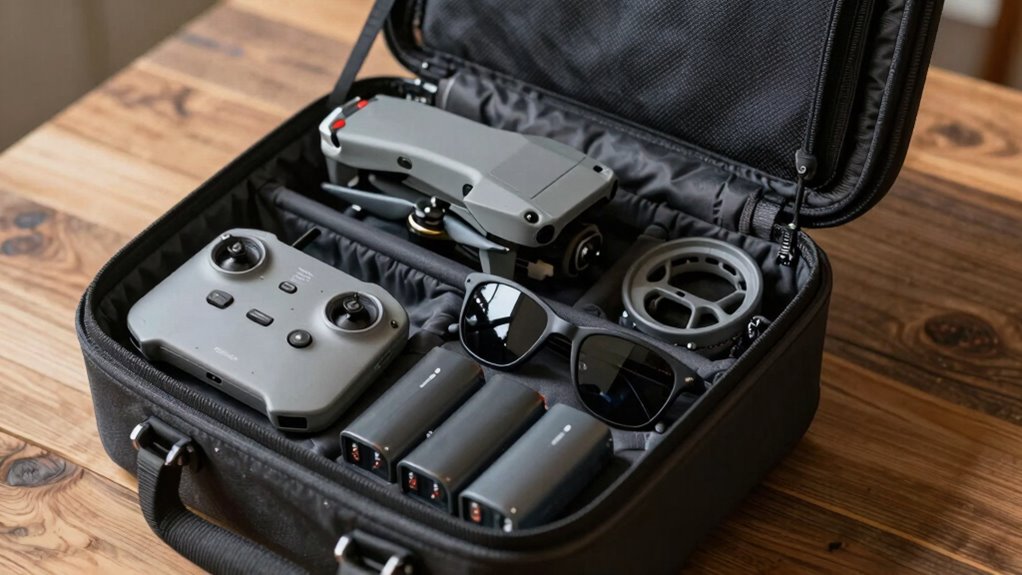
When packing your drone bag, knowing what to keep within reach and what to pack away can make or break your flying experience. The first thing you want close at hand is your drone’s batteries. Proper battery maintenance is essential, so having easy access to spare batteries allows you to swap out power sources quickly, especially if you’re planning a long session. Keep your batteries in a dedicated compartment, and consider carrying a portable charger or power bank to recharge on the go. Remember, batteries are sensitive to temperature changes, so include a temperature-controlled pouch if possible. This guarantees your batteries stay within safe operating conditions, extending their lifespan and maintaining performance.
Keep spare batteries handy in a dedicated compartment for quick swaps and optimal performance.
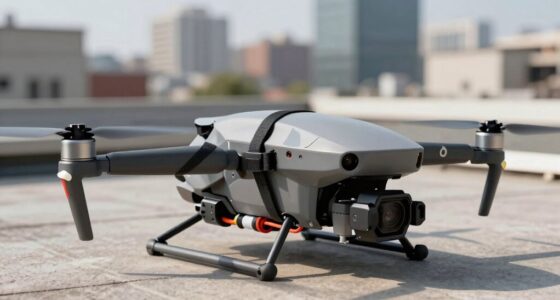
Weather considerations are just as important when deciding what stays within reach. Before heading out, check the forecast carefully. If rain or high humidity is expected, keep your drone and accessories protected in waterproof or weather-resistant cases. When you’re at the field or scenic spot, quickly assess if the weather is stable enough for flying. If conditions change suddenly—like a quick rain shower—you’ll want to be able to retrieve your drone swiftly, so keep your drone and essential gear within easy reach but stored securely. Having a rain cover or protective casing nearby can save you from scrambling in bad weather. Also, consider keeping a small cloth or lens cleaner handy to wipe off any moisture or dust from your drone’s camera and sensors. Being aware of weather patterns can help you better plan your flights and avoid unexpected delays. Additionally, understanding drone components and their importance can help you organize your gear more effectively. Knowing the drone’s flight time can also assist in planning your sessions to maximize flying time without unexpected power loss.
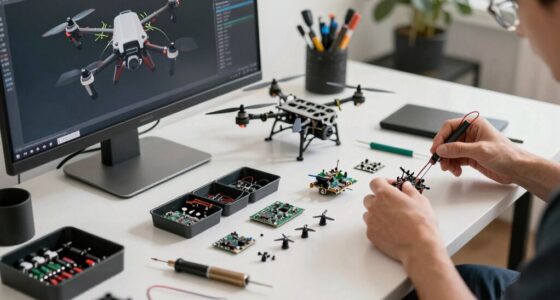
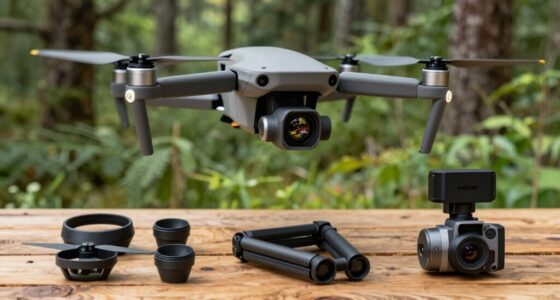
Other accessories, like extra propellers, filters, or a screwdriver, should be packed away yet organized for easy access when needed. If you’re in a remote location, having these essentials within reach can save you time and frustration. On the other hand, items like extra clothing, snacks, or non-essential tech gear should be packed away to keep your bag light and focused on your flying needs. Additionally, understanding the components of drone and their importance can help you organize your gear more effectively. Keeping a well-structured bag with designated compartments can also prevent damage to delicate parts during transit. Remember, a well-organized setup not only protects your gear but also ensures you’re prepared for any situation during your flight.
Ultimately, your goal is to strike a balance: keep what you need immediately accessible—such as batteries, weather protection gear, and quick tools—while storing less urgent items securely. This way, you’re prepared for changing weather, can perform timely battery swaps, and respond swiftly to any unexpected conditions. Proper packing ensures a smoother flight, minimizes downtime, and helps you enjoy your drone flying experience to the fullest.
As an affiliate, we earn on qualifying purchases.
Frequently Asked Questions
How Often Should I Clean My Drone and Accessories?
You should clean your drone and accessories after every few flights, especially if you notice dirt or debris. Follow a regular cleaning schedule to keep your equipment in top shape, and perform accessory maintenance as needed. Regular cleaning prevents damage and guarantees peak performance. Use gentle tools and solutions, and always check for any wear or loose parts. Keeping up with maintenance extends your drone’s lifespan and ensures better flight quality.
What Are the Best Weather Conditions for Drone Flying?
Did you know drones are safest in clear, calm weather? For ideal flying conditions, avoid strong winds over 15 mph, rain, and fog, which can impair visibility and damage your drone. Bright, sunny days with stable air offer the best weather considerations, ensuring steady footage and safe operation. Always check local weather forecasts before flying to prevent crashes and extend your drone’s lifespan.
How Do I Update My Drone’s Firmware?
To update your drone’s firmware, connect it to your computer or mobile device via the official app or software. Follow prompts for firmware updates and guarantee your drone stays powered during the process. After updating, calibrate the battery to optimize performance. Firmware updates fix bugs and improve stability, while proper battery calibration ensures accurate battery life readings. Always keep your firmware current for safe, smooth drone flights.
What Safety Precautions Should I Take Before Flying?
Before flying, you should follow a pre-flight checklist to guarantee everything is in order, including battery levels and GPS signal. Review emergency procedures, like how to land quickly if needed. Keep your drone’s manual and a first aid kit nearby. Make certain the area is safe, free of obstacles, and legal for flying. These precautions help prevent accidents and ensure a smooth, safe flight.
How Can I Extend My Drone’s Battery Life?
To extend your drone’s battery life, focus on battery maintenance and power optimization. Always keep your batteries at the recommended charge level and avoid extreme temperatures. Use power-saving modes during flight and reduce unnecessary movements to conserve energy. Regularly check for damage and keep batteries clean. Proper maintenance and smart power management guarantee longer flight times, giving you more opportunities to capture stunning footage without frequent recharges.
As an affiliate, we earn on qualifying purchases.
Conclusion
Keeping your essentials within reach guarantees quick access when moments matter, while storing extras keeps your drone gear organized and protected. Did you know that nearly 60% of drone pilots report losing valuable equipment due to disorganized bags? Don’t let that be you. By thoughtfully packing your drone bag, you’re not just protecting your gear—you’re making certain every flight is smooth and successful. Stay prepared, stay safe, and keep those vital items close at hand.
As an affiliate, we earn on qualifying purchases.
As an affiliate, we earn on qualifying purchases.
Fall Picks
fall essentials
As an affiliate, we earn on qualifying purchases.