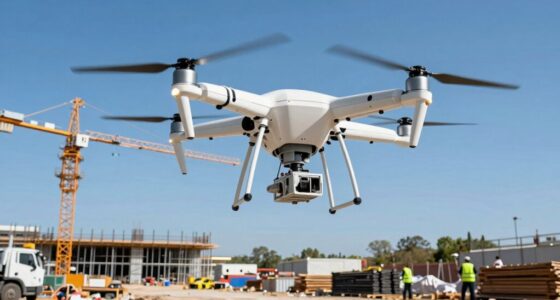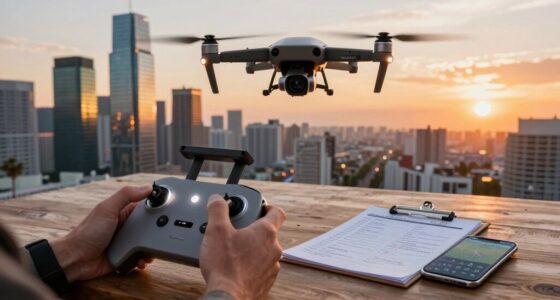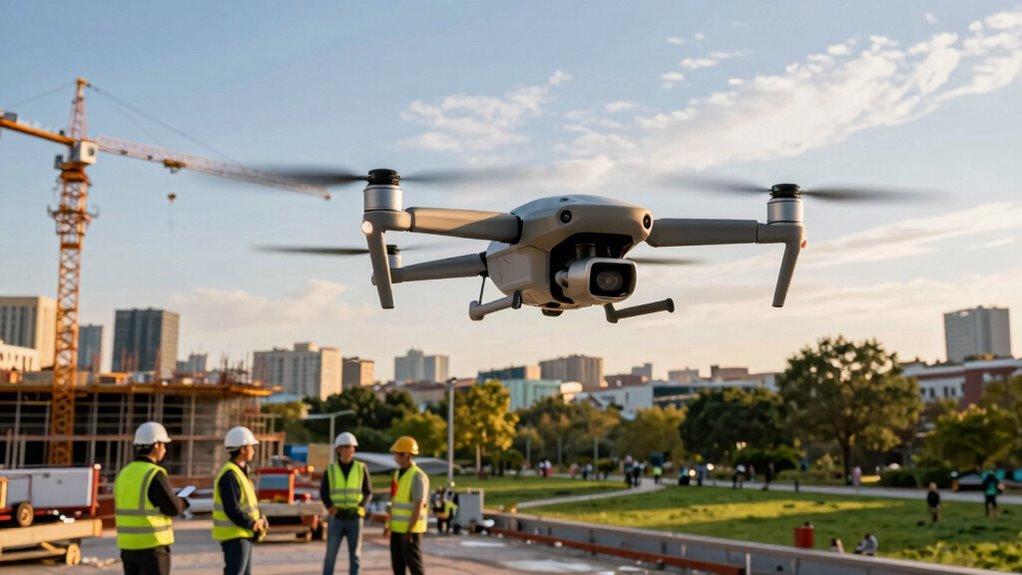

If you’re starting a new drone business, your first priority should be understanding and complying with local, state, and federal drone laws. Get the necessary licenses, register your drones, and follow altitude, zoning, and privacy rules to avoid fines or shutdowns. Once you have legal compliance under control, focus on building your marketing, investing in quality equipment, and honing your skills. Keep exploring to learn how to grow your business and stand out in the industry.
Key Takeaways
- Ensure compliance with local, state, and federal drone laws and obtain necessary licenses.
- Invest in quality equipment and stay updated on industry standards and safety protocols.
- Identify and target specific markets like real estate, construction, or events for focused marketing efforts.
- Develop a strong online presence with high-quality content and testimonials to build credibility.
- Create a detailed financial plan to manage expenses, reinvest profits, and support sustainable growth.
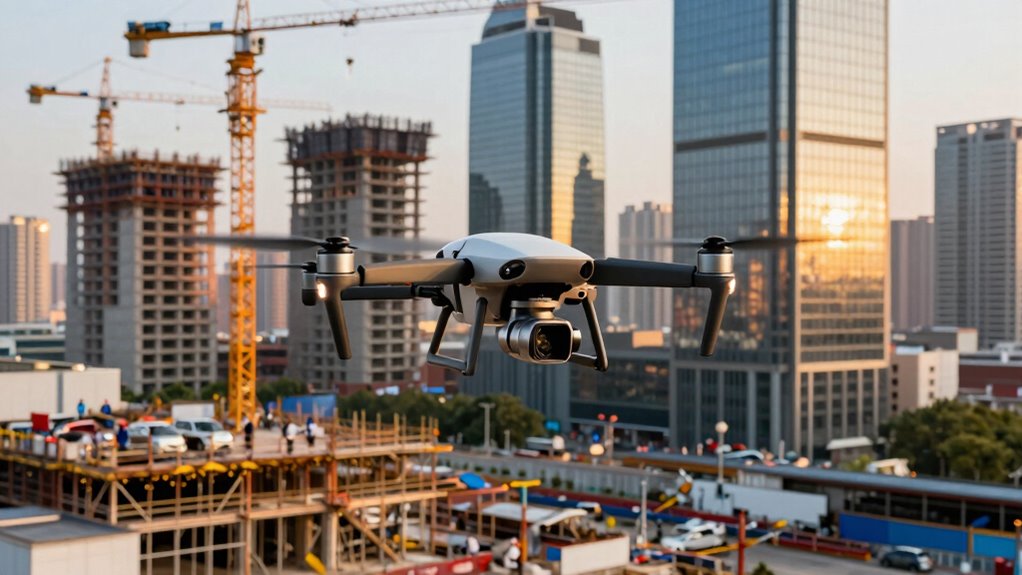
Starting a drone business can be exciting, but success depends on setting clear priorities from the beginning. One of your first steps should be understanding drone regulation. The rules governing drone operations vary by location and can be complex, so it’s essential to familiarize yourself with local, state, and federal drone laws. This includes obtaining any necessary licenses, registering your drones, and adhering to restrictions on altitude, flight zones, and privacy. Ignoring these regulations can result in hefty fines or even the shutdown of your business. Prioritizing drone regulation early on guarantees you’re compliant, minimizes legal risks, and builds trust with clients who value professionalism and safety. Additionally, recognizing the importance of biodiversity can help you identify unique opportunities for eco-friendly and conservation-focused drone applications. Once you’ve got your legal foundation in place, turn your focus to marketing strategies. Developing a solid marketing plan helps you stand out in a competitive industry. Start by identifying your target market—whether it’s real estate agents, construction companies, event organizers, or photographers—and craft messages that highlight how your drone services meet their specific needs. Use social media platforms, a professional website, and local networking events to showcase your work. Sharing high-quality footage and client testimonials can boost your credibility rapidly. Remember, your marketing strategies should emphasize what makes your drone business unique, whether it’s your expertise, quick turnaround, or specialized equipment. While drone regulation and marketing strategies are top priorities, don’t neglect equipment and skills. Investing in quality drones and staying updated on the latest technology can give you an edge. Staying informed about industry standards and safety protocols can help you maintain compliance and credibility. Incorporating ongoing training can enhance your flying skills and technical knowledge, leading to better service quality. Additionally, staying current on emerging drone technology can open up new service opportunities and improve operational efficiency. Building a reputation for reliability and quality will make your marketing efforts more effective over time. Moreover, understanding cloud server solutions can help you manage your data securely and efficiently, especially as your business grows. Honing your flying skills and editing abilities ensures you deliver professional results that satisfy clients and encourage repeat business. Building a reputation for reliability and quality will make your marketing efforts more effective over time. Financial planning is another critical area. Establish a budget that accounts for drone purchases, maintenance, insurance, licensing, and marketing expenses. Keeping a close eye on your finances helps you avoid overspending and ensures your business remains profitable. As you grow, reinvest in your equipment and training to expand your service offerings.

Ruko F11PRO 2 Drone with 6K Camera for Adults, 4K/30fps Video, Ideal Gift
- Ideal Gift for All Occasions: Great for Father's Day, birthdays, holidays
- Professional-Grade Camera Stabilization: 3-Axis Gimbal for smooth 4K/30fps videos
- High-Quality Photos and Videos: Captures 6K photos and 4K videos with clarity
As an affiliate, we earn on qualifying purchases.
As an affiliate, we earn on qualifying purchases.
Frequently Asked Questions
How Much Initial Investment Is Needed for a New Drone Business?
You’ll need around $5,000 to $20,000 for initial investment in a new drone business. This covers quality drone equipment, insurance requirements, and licensing costs, especially considering drone flight regulations that vary by location. Budget for safety gear, marketing, and training too. Starting small and scaling as your business grows helps manage expenses and guarantees you meet all legal requirements, making your drone venture more sustainable.
What Legal Licenses Are Required to Operate Commercially?
Think of yourself as a modern Icarus, soaring high with your drone. To stay grounded in legal safety, you need to meet licensing requirements and guarantee regulatory compliance. This means obtaining a Part 107 certification from the FAA, registering your drone, and following airspace rules. These legal licenses are essential for lawful operation, helping you avoid fines and penalties while confidently steering the skies of your new drone business.
How Do I Find My First Clients or Market Niche?
To find your first clients or market niche, focus on client outreach by networking within your target industry, like real estate or agriculture. Use niche marketing strategies to identify specific needs and tailor your services accordingly. Attend local events, join online forums, and leverage social media to showcase your drone expertise. Building relationships and demonstrating value will help you secure initial clients and establish a strong presence in your chosen market.
What Safety Protocols Should I Implement From the Start?
You should implement extensive safety protocols from the start by focusing on risk management and pilot training. Conduct thorough risk assessments for each flight, establishing clear safety procedures. Invest in proper pilot training to guarantee your team understands airspace regulations and emergency protocols. Regularly review and update safety measures, fostering a safety-first culture. This proactive approach minimizes accidents, builds client trust, and keeps your drone operations compliant and secure.
Which Drone Equipment Offers the Best Value for Beginners?
Think of choosing drone equipment like finding a steady friend—you want reliability and trust. For beginners, the DJI Mini 2 offers great value with excellent camera stability and impressive battery longevity, letting you capture smooth footage without breaking the bank. I’ve seen new pilots soar confidently with it, realizing that investing in quality gear early on makes all the difference in building your skills and confidence.

FAA Drone Labels (2 Sets of 3) + FAA UAS Registration ID Card for Hobbyist Pilots – Optional Battery Labels
- Includes 2 sets of 3 labels: Customized FAA information on labels
- Laminated and waterproof labels: Resist fading, scratches, and abrasions
- Extreme temperature resistant: Labels stay put in all conditions
As an affiliate, we earn on qualifying purchases.
As an affiliate, we earn on qualifying purchases.
Conclusion
As you start your drone business, prioritize building reliable technology and understanding your target market. Remember, 70% of drone ventures see success when they focus on safety and customer service first. By refining your skills and staying compliant with regulations, you’ll set a strong foundation for growth. Keep these priorities in mind, and you’ll be well on your way to standing out in the rapidly expanding drone industry. Your future success depends on it!

Drone ID Services FAA UAS Registration Card, Trust Recreational UAS Safety Test Completion Certificate Card, Drone FAA Labels (2 Sets of 3), Battery Labels for hobbyist Drone Pilots (DB-TRUST-1)
- Includes 2 sets of 3 labels: Customized FAA and TRUST labels with ID card and certificate
- Laminated and waterproof labels: Resistant to water, UV, scratches, and fading
- Durable in extreme temperatures: Labels stay secure and carry a lifetime warranty
As an affiliate, we earn on qualifying purchases.
As an affiliate, we earn on qualifying purchases.

Sunnymove 10 Pcs Drone Ground Control Point GCP, 50 Pcs Metal Fixing Stakes with Storage Bag, UAV Aerial Target for Mapping & Surveying, Black/White Markers (Grid Plaid)
- Complete Ground Control Set: Includes 10 GCPs, 50 stakes, and storage bag
- Secure Anchoring Design: Pre-punched holes for firm staking in wind
- High-Visibility Colors: Black and white non-reflective surface for glare reduction
As an affiliate, we earn on qualifying purchases.
As an affiliate, we earn on qualifying purchases.