
📊 Full opportunity report: The Intersection Of Group Support And Phone Overuse Recovery on IdeaNavigator AI — validation score, market gap, and execution plan.
Open a free Amazon Business account
Business pricing, bulk buying and tax-exempt orders.
Create a free accountAs an affiliate, we earn on qualifying purchases.
TL;DR
A new pilot study tests eight-week cohort-based recovery programs for adults with severe phone overuse. Early results suggest peer support may help those who fail app blockers, offering a scalable treatment option.
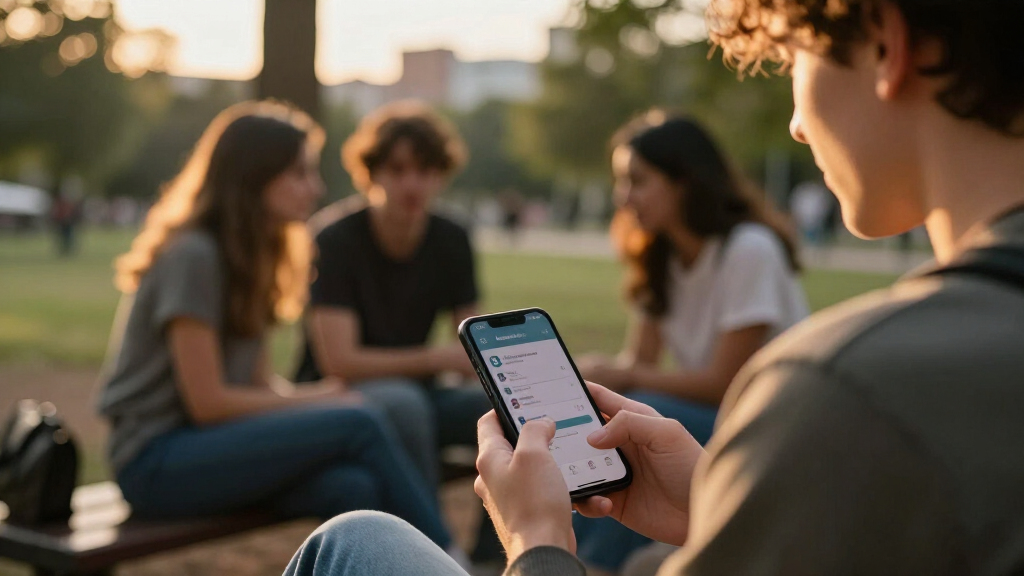
A new approach to addressing severe phone overuse in adults involves structured, cohort-based recovery programs that leverage peer support. These programs aim to serve adults who have already failed traditional app blockers, offering a scalable alternative that could reshape digital wellness strategies.
The initiative, developed by IdeaNavigator AI, proposes eight-week cohorts of ten adults each, with weekly facilitated sessions, daily check-ins, and personalized relapse prevention tools. Unlike existing solutions—ranging from inexpensive app blockers to high-cost private coaching—this program targets the underserved tier of users with persistent, hard-to-break phone habits.
Preliminary plans include running two paid pilot cohorts at a fee of $400 per participant, measuring reductions in screen time at weeks 8 and 16, and tracking alumni participation in ongoing support groups. The program emphasizes peer accountability, personal trigger mapping, and optional in-group screen-time sharing, with the goal of fostering sustainable behavioral change.
Experts note that the recent mainstreaming of phone overuse concerns and the availability of screen-time APIs make such structured group interventions feasible. The approach aims to capitalize on existing infrastructure for behavioral health programs, adapted for digital wellness.
Potential Impact on Digital Wellness Treatment
If successful, this cohort-based approach could fill a critical gap in digital wellness treatment options for adults with severe phone habits. It offers a scalable, community-driven alternative to ineffective blockers and expensive coaching, potentially reducing phone overuse on a broad scale.
By focusing on peer support and accountability, the program may foster lasting behavioral change, which has been difficult with current solutions. This development could influence how digital addiction is addressed in clinical and wellness settings, especially as concern over screen overuse becomes more mainstream.
phone addiction recovery support groups
As an affiliate, we earn on qualifying purchases.
As an affiliate, we earn on qualifying purchases.
Growing Concern and Existing Treatment Gaps
Phone overuse has become a widespread concern, with many adults unable to break habits despite using simple app blockers. Market options are split between inexpensive tools, which are often overridden within days, and high-cost private coaching, which reaches only a small segment of users. The need for an effective, scalable intervention has become more urgent as digital wellness gains mainstream attention.
Recent advances in screen-time APIs and increased acceptance of behavioral health models support the development of structured group programs. These programs leverage peer accountability, a proven strategy in addiction recovery, adapted for digital habits.
Previous efforts to address phone addiction have largely focused on individual tools or high-cost therapy, leaving a significant gap for those with persistent, hard-to-change behaviors. The proposed cohort model aims to bridge this gap by providing accessible, community-based support tailored to adult users.
adult digital detox group programs
As an affiliate, we earn on qualifying purchases.
As an affiliate, we earn on qualifying purchases.
Uncertainties Around Program Effectiveness and Scalability
It is not yet clear how effective these cohort-based programs will be in reducing screen time long-term, as pilot results are pending. The scalability of the model, especially in diverse adult populations, remains untested. Additionally, questions remain about engagement levels and whether peer support alone can sustain behavioral change without additional interventions.
peer support phone overuse recovery
As an affiliate, we earn on qualifying purchases.
As an affiliate, we earn on qualifying purchases.
Next Steps for Pilot Testing and Validation
The next phase involves launching two paid pilot cohorts, each with ten participants, to evaluate the program’s impact on screen time at weeks 8 and 16. Data collected will inform adjustments to the curriculum and support structure. Success metrics include significant reductions in daily screen time and high alumni engagement in ongoing support groups. If results are promising, plans include expanding the program and exploring integration with existing digital wellness platforms.
cohort-based digital wellness programs
As an affiliate, we earn on qualifying purchases.
As an affiliate, we earn on qualifying purchases.
Key Questions
How does the cohort-based recovery program differ from existing solutions?
It emphasizes peer support, accountability, and personalized relapse prevention over simple app blockers or expensive coaching, targeting adults with persistent phone habits.
What are the costs involved for participants?
The pilot program is planned at $400 per participant for eight weeks, with ongoing alumni memberships available for continued support.
When will results from the pilot be available?
Results are expected to be analyzed after the completion of the 16-week follow-up, likely within three to four months of program launch.
Could this model be applied to other behavioral health issues?
Yes, leveraging peer support and structured group formats has proven effective in various addiction and mental health treatments, suggesting potential for adaptation.
What remains the biggest challenge for this approach?
Ensuring sustained engagement and long-term behavioral change beyond the program duration remains uncertain until pilot results are available.
Source: IdeaNavigator AI
College move-in / dorm season Picks
dorm essentials
As an affiliate, we earn on qualifying purchases.