
📊 Full opportunity report: SpaceX Owns Every Layer of AI Now. The Model Is Still the Weak Link. on ThorstenMeyerAI.com — validation score, market gap, and execution plan.
Listen free for 30 days with Audible
Thousands of audiobooks and originals — cancel anytime.
Start your free trialAs an affiliate, we earn on qualifying purchases.
TL;DR
SpaceX has completed its acquisition of Cursor, gaining control over every layer of the AI stack except the model itself. While this consolidates its industry position, the AI model remains a weak link, raising questions about future performance.
SpaceX has acquired Cursor for $60 billion, gaining control over every layer of the AI stack—compute, power, research, and application—except for the AI model itself. This move positions SpaceX as a dominant force in AI infrastructure, but the AI model remains a weak link, limiting overall effectiveness and competitive advantage.
On June 16, SpaceX announced it exercised its option to purchase Cursor, a profitable AI coding company, for $60 billion in all-stock. The deal, expected to close in Q3 2026, makes Cursor a wholly owned subsidiary and consolidates SpaceX’s control over the entire AI infrastructure, including supercomputers, silicon, data centers, research labs, and distribution channels.
Founded in 2022, Cursor generated approximately $4 billion in annual revenue by June 2026, focusing on AI coding applications that generate reliable income. It had previously rebuffed offers from OpenAI and Microsoft, emphasizing independence. SpaceX’s purchase includes a jointly trained model designed to bridge Cursor’s application with SpaceX’s Grok model line, integrating the AI stack from silicon to application.
SpaceX’s AI infrastructure is unmatched in the industry, with its Colossus supercomputers in Memphis, powered by around 555,000 Nvidia GPUs, and ambitions to deploy orbital AI satellites. The company owns its silicon, power generation, research teams, and distribution channels, creating an integrated AI ecosystem that few competitors can match. However, the core AI model—crucial for performance—remains a weak point, with reports indicating low utilization and limited training efficiency.
SpaceX owns every layer
of AI now
The $60B Cursor buy completes the stack: power, compute, research, model, app, distribution. But owning every layer isn’t winning every layer — and the model is the weak one.
(Anysphere)
You can buy a coding app and a model team. You can’t buy the research lead that makes your foundation model the one everyone else builds on — which is why Anthropic pays Musk $1.25B/month, not the other way around. Owning every layer bought SpaceX the right to attempt the hard thing. It hasn’t done it yet.
Implications of Full AI Stack Ownership for Industry Dominance
By owning all layers of the AI stack except the core model, SpaceX positions itself as a unique, fully integrated AI conglomerate. This vertical integration could give it a significant competitive edge in deployment speed, cost control, and strategic flexibility. However, the weak performance of its AI models presents a potential bottleneck, limiting the effectiveness of its infrastructure and raising questions about the true value of such consolidation. The acquisition also signals a shift toward highly concentrated AI infrastructure ownership among a few tech giants, which could impact market competition and innovation.

ASUS Ascent GX10 AI Supercomputer, DGX Spark, NVIDIA GB10 Superchip, 128GB LPDDR5x, 1TB PCIe Gen4 NVMe SSD, Wi-Fi 7 & BT5.4, Agentic AI Ready, Supports OpenClaw, NemoClaw, Stackable Chassis
- AI Performance: Powered by NVIDIA GB10 Superchip with 1 petaFLOP
- High Memory Capacity: 128GB LPDDR5x memory for large models
- Fast Storage: 1TB PCIe Gen4 NVMe SSD
As an affiliate, we earn on qualifying purchases.
As an affiliate, we earn on qualifying purchases.
Background on SpaceX’s AI Infrastructure and Cursor Acquisition
SpaceX’s move to acquire Cursor follows its broader strategy of controlling every aspect of AI development and deployment. The company has built the Colossus supercomputers in Memphis, capable of training massive AI models with hundreds of thousands of GPUs, at a cost exceeding $18 billion. It also owns silicon, power generation, and research teams, making it one of the most vertically integrated players in AI. Prior to the acquisition, Cursor was a profitable startup specializing in AI coding applications, with notable revenue growth and independence from major tech giants like OpenAI and Microsoft.
The deal consolidates SpaceX’s control over the entire AI stack, from hardware to application, but highlights a critical gap: the AI models themselves are underperforming relative to expectations. This situation reflects a broader industry challenge of developing robust, scalable AI models capable of matching the infrastructure’s potential.
“Our goal is to build the most useful AI models, and Cursor’s technology accelerates that vision by providing a profitable, scalable application.”
— SpaceX spokesperson

Data Centers and AI Hardware Chips
As an affiliate, we earn on qualifying purchases.
As an affiliate, we earn on qualifying purchases.
Unresolved Questions About AI Model Performance and Strategy
It remains unclear how quickly SpaceX can improve the performance of its AI models, given current low utilization rates and training inefficiencies. The long-term impact of owning every layer but the model itself on competitive advantage and innovation is still uncertain. Additionally, the strategic implications of leasing compute to rivals and the potential for model performance bottlenecks are ongoing concerns.

AI Innovation Labs: AI Lab Equipment Needs | AI Ethics and Policies | Case Studies in AI | Emerging AI Technologies | AI in Finance Innovations
As an affiliate, we earn on qualifying purchases.
As an affiliate, we earn on qualifying purchases.
Next Steps in AI Development and Infrastructure Expansion
SpaceX is expected to focus on enhancing its AI models’ efficiency and scalability, potentially through in-house development or partnerships. The company will also likely expand its orbital AI satellite network and further integrate Cursor’s applications into its broader ecosystem. Monitoring how quickly SpaceX addresses the model’s weaknesses will be critical in assessing the full impact of this consolidation.
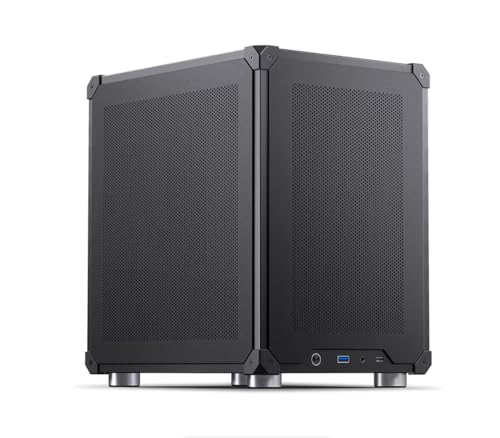
S SPLENDID SOUND Compact Al Server, Pre-Installed LLM Models, High Performance Local Computing, Black
- Pre-Installed AI Models: High-performance 14B LLM ready to use
- Easy Model Management: One-click model switching and updates
- Advanced AI Features: Pre-installed RAG and Embedding Models
As an affiliate, we earn on qualifying purchases.
As an affiliate, we earn on qualifying purchases.
Key Questions
Why did SpaceX buy Cursor for $60 billion?
SpaceX acquired Cursor to control a profitable AI application, its developer distribution, and the team behind it, completing its control over nearly all layers of the AI infrastructure except the core model.
What does owning every layer of AI infrastructure mean for SpaceX?
It positions SpaceX as a vertically integrated AI powerhouse, capable of controlling hardware, power, research, and applications, but the effectiveness depends on the performance of its AI models.
What are the main challenges facing SpaceX’s AI models?
The models currently have low utilization and training inefficiencies, which limit their performance despite the extensive infrastructure and compute resources.
How might this acquisition impact the AI industry?
It could accelerate industry consolidation, with fewer players owning complete AI stacks, potentially impacting competition, innovation, and access to advanced AI technologies.
What are SpaceX’s future plans for AI development?
Expect efforts to improve model performance, expand orbital AI infrastructure, and further integrate Cursor’s applications into its ecosystem.
Source: ThorstenMeyerAI.com
College move-in / dorm season Picks
dorm essentials
As an affiliate, we earn on qualifying purchases.