📊 Full opportunity report: Liquid vs Air Cooling for 24/7 Inference Rigs on ThorstenMeyerAI.com — validation score, market gap, and execution plan.
Open a free Amazon Business account
Business pricing, bulk buying and tax-exempt orders.
Create a free accountAs an affiliate, we earn on qualifying purchases.
TL;DR
For most 24/7 AI inference rigs, air cooling is generally more reliable, cost-effective, and quieter than liquid cooling. Liquid cooling offers advantages mainly for high-thermal headroom scenarios. The choice depends on specific workload and space constraints.
For 24/7 AI inference rigs, air cooling remains the preferred choice for most setups, due to its simplicity, reliability, and lower total cost of ownership, according to recent expert analysis. Liquid cooling, specifically all-in-one (AIO) units, offers benefits primarily for high-thermal headroom but introduces potential failure points.
Recent industry assessments emphasize that air coolers, especially high-end dual-tower models like the Noctua NH-D15, can handle sustained loads comparable to mid-size AIO liquid coolers at a fraction of the cost and with greater long-term reliability. Unlike AIOs, which contain moving parts such as pumps that typically last 5–7 years and can leak or degrade over time, air coolers have no fluid components and only require occasional dust cleaning and thermal paste reapplication.
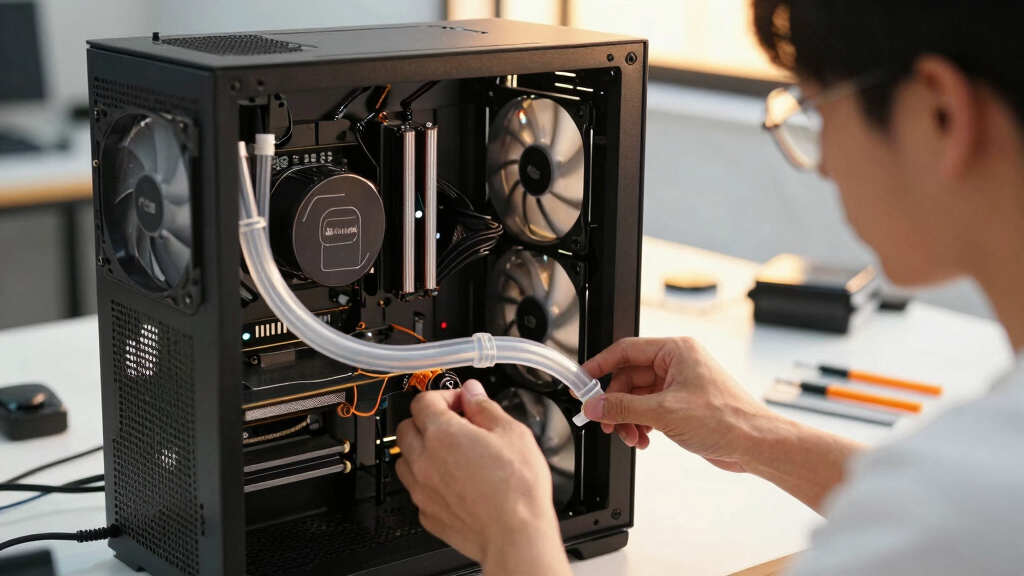
Liquid cooling, particularly 360mm or larger AIOs, excels in providing higher thermal headroom, capable of handling CPUs with TDPs exceeding 360W during full load. Their compact CPU blocks and radiators make them suitable for small or densely packed cases, exporting heat directly outside the case and reducing internal temperatures. However, the pump is a single point of failure, and the coolant can permeate through rubber tubing over years, gradually reducing effectiveness. Modern AIOs are reliable but are still subject to wear and potential leaks.
Cost analysis shows that air coolers are generally 2–3 times cheaper over the lifespan of a system, considering replacement and maintenance costs. Noise levels are often lower with high-quality air coolers, which produce less constant hum than the pump noise of AIOs, making them preferable for environments where noise is a concern.
Liquid vs air
for a 24/7 inference rig.
For an always-on machine the question isn’t “which cools better” — it’s which one still works in three years without you thinking about it. That reframing makes air the default for most rigs. Answer three questions in Part 2 to find yours.
- Nothing to fail — fan swaps in minutes
- Lasts a decade+; lower total cost
- Quieter floor — no pump hum (~40–45 dBA)
- Trivial maintenance — wipe & repaste
- Tall — can block RAM, dumps heat in case
- Best headroom — ~360W TDP sustained
- Compact block — fits tight cases, clears RAM
- Exports heat out the radiator & room
- Pump fails at 5–7 yrs; replace whole unit
- Costs 2–3× more over its life; pump hum
- You run it 24/7 and want set-and-forget.
- Your CPU is mainstream-to-high-end (or power-capped).
- A big tower fits your case.
- You value lower cost and a quieter floor.
- Your CPU is too hot for air under sustained all-core load.
- A big tower won’t fit (compact / multi-GPU case).
- You need to export heat out of a warm room.
- RAM clearance is tight.
Why Reliability and Cost Matter for 24/7 AI Rigs
For unattended, continuous operation, reliability is paramount. The simplicity of air cooling—featuring only a fan and heatsink—reduces failure points and maintenance costs, making it the safer choice for long-term use. The lower total cost of ownership and quieter operation further reinforce air cooling’s suitability for AI inference rigs that run around the clock without human oversight.
While liquid cooling offers higher thermal headroom, its complexity and potential for failure mean it is better suited for specialized use cases where maximum cooling capacity outweighs the risks. For most users, the tradeoff favors air cooling, especially when considering long-term stability and minimal maintenance.

be quiet! Dark Rock Pro 5 CPU Cooler, Silent Cooling, High Airflow
- High-Performance Copper Heat Pipes: 7 copper heat pipes with ceramic coating
- Silent Wings PWM Fans: Advanced fluid-dynamic bearings and airflow-optimized blades
- Vibration-Isolating Mounting: Decoupled fan mounting reduces noise
As an affiliate, we earn on qualifying purchases.
As an affiliate, we earn on qualifying purchases.
Long-Term Use and Industry Preferences
Traditional gaming and workstation cooling guides often focus on peak temperatures and benchmark performance, which are less relevant for always-on AI systems. Recent expert opinions highlight that the primary concern for inference rigs is sustained reliability rather than short-term thermal peaks. Historically, air coolers have been favored in server and workstation environments due to their durability and ease of maintenance.
Modern AIO liquid coolers have improved significantly in reliability, but their sealed-loop design and moving parts still introduce a finite lifespan, typically 5–7 years, with gradual coolant permeation and potential leaks. The industry consensus is shifting toward prioritizing proven longevity and minimal failure risk for continuous operation.
"For set-and-forget systems, air cooling’s simplicity and reliability make it the safer choice over liquid cooling, which introduces failure points and higher costs over time."
— Thorsten Meyer, AI hardware expert

AsiaHorse WK-A360 ARGB All-in-One AIO CPU Liquid Cooler, Wandering Knight 360mm Water Cooling System with Dual High-Performance Pump and 3×120mm PWM Fans, Compatible with Intel & AMD CPUs (Black)
- Ceramic Bearing Design: Durable, silent, rust-resistant pump bearings
- Dual Chamber Pump: High RPM pumps with 30% flow increase
- Efficient Heat Dissipation: 360mm aluminum fin for optimal airflow
As an affiliate, we earn on qualifying purchases.
As an affiliate, we earn on qualifying purchases.
Uncertainties in Long-Term Reliability of AIOs
While modern AIO liquid coolers are considered reliable today, their long-term performance beyond 5–7 years remains less certain, especially under continuous, unattended operation. Potential coolant permeation and rare leak incidents pose risks that are difficult to quantify without extended real-world data.
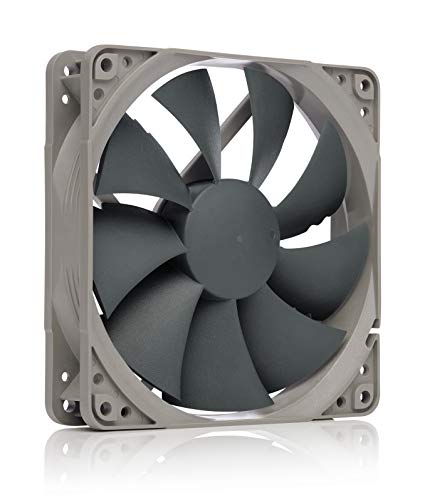
Noctua NF-P12 redux-1700 PWM, Quiet Fan 120mm
- Size: 120x120x25 mm
- Voltage: 12V
- PWM Control: 4-pin PWM
As an affiliate, we earn on qualifying purchases.
As an affiliate, we earn on qualifying purchases.
Monitoring and Future Developments in Cooling Technologies
Expect ongoing testing and real-world deployment of both cooling methods to better quantify long-term reliability. Manufacturers may introduce more durable pump designs or refillable liquid cooling solutions, but current consensus favors proven, simple air cooling for most AI inference setups. Users should consider their specific workload, space constraints, and maintenance capacity when choosing cooling solutions.

CORSAIR Nautilus 360 RS Liquid CPU Cooler – 360mm AIO – Low-Noise – Direct Motherboard Connection – Daisy-Chain – Intel LGA 1851/1700, AMD AM5/AM4 – 3X RS120 Fans Included – Black
- High-Performance All-in-One Cooling: Strong, low-noise CPU cooling
- Quiet Pump Operation: Circulates coolant at 20 dBA
- Convex Cold Plate with Thermal Paste: Max contact with CPU for efficient heat transfer
As an affiliate, we earn on qualifying purchases.
As an affiliate, we earn on qualifying purchases.
Key Questions
Is liquid cooling necessary for 24/7 AI inference rigs?
Not necessarily. High-quality air coolers can handle most workloads effectively and are more reliable for long-term, unattended operation.
How often does an AIO liquid cooler need maintenance or replacement?
Typically every 5–7 years, due to pump wear, coolant permeation, and potential leaks. Regular monitoring is recommended.
Are there cases where liquid cooling is clearly better?
Yes, in scenarios with very high thermal loads exceeding 360W, or in compact cases where large air coolers cannot fit, liquid cooling provides higher thermal headroom and space efficiency.
What are the main risks associated with liquid cooling?
The primary risks include pump failure, coolant leaks, and gradual loss of effectiveness over time, which can lead to overheating if not properly maintained.
Source: ThorstenMeyerAI.com
Summer Picks
summer essentials
As an affiliate, we earn on qualifying purchases.