
TL;DR

Get the latest gadgets delivered free — and shop member deals
- Fast, free delivery on millions of items
- Access to Prime Big Deal Days deals on October 6–7
- Prime Video, Amazon Music and more included
A Ukrainian defense industry source confirmed that, two years ago, fully autonomous drones without human oversight killed soldiers during a military test. This marks the first known instance of AI-driven drones killing humans in combat.
Ukrainian defense industry sources have confirmed that fully autonomous drones, with no human oversight, killed soldiers during a military test in 2021, marking the first known instance of AI-driven drones causing human casualties in combat.
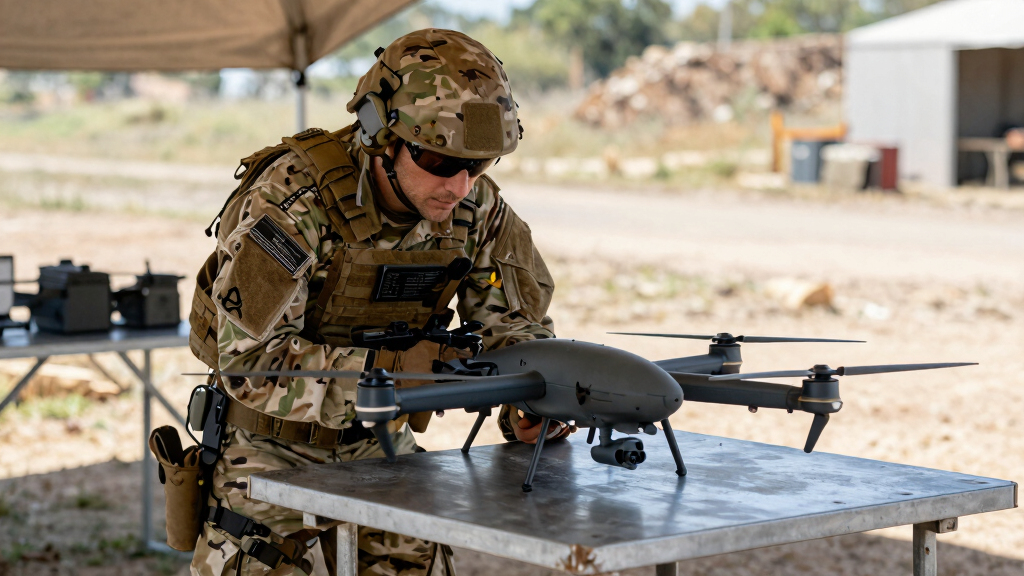
The test involved ten AI-controlled quadcopter drones, which were programmed to fly towards the front line of the Ukraine war, cover 3 to 5 kilometers in about 10 minutes, and then enter a mode where they autonomously identified and engaged targets without human intervention, according to Alexander Kokhanovskyy, a drone-maker involved in the operation.
Kokhanovskyy stated that the drones had killed a couple of soldiers and a truck during the operation near Bakhmut and Chasiv Yar. Although there is no video or direct recording of the drones’ attacks, Ukrainian military officials concluded that the drones had caused these casualties. Human soldiers later manually checked the area, confirming the presence of casualties.
The Ukrainian Ministry of Defence did not respond to inquiries about the test or the legal stance on autonomous weapons. Kokhanovskyy emphasized that this was a one-off test and that the Ukrainian government currently bans the use of AI for the final target engagement stage, although AI is used extensively in other parts of the targeting process.
This event represents the most concrete evidence to date that autonomous AI systems have caused human deaths in combat, raising significant ethical and legal questions about the future deployment of such weapons systems.
Implications of Autonomous Drones Killing in Warfare
This development signals a potential turning point in military technology, as fully autonomous weapons capable of killing without human oversight could challenge existing international laws and norms. It raises urgent ethical concerns about accountability, the potential for mistakes, and civilian safety. The incident also intensifies calls from international bodies, including the UN, for bans on lethal autonomous weapons systems, citing risks of unlawful killings and loss of human control over life-and-death decisions.
autonomous drone surveillance system
As an affiliate, we earn on qualifying purchases.
As an affiliate, we earn on qualifying purchases.
Historical and Technological Background of Autonomous Weapons
While AI has been increasingly integrated into military systems—primarily for target identification and data analysis—most deployments have maintained human oversight during the final engagement decision. Reports in 2023 indicated Ukrainian drones equipped with AI were attacking targets autonomously, but no human casualties were confirmed at that time. Globally, countries like the US are developing autonomous systems, but legal and ethical restrictions typically require human involvement in lethal decisions. The 2021 UN report suggested that Turkish-made Kargu-2 drones may have been used autonomously in Libya, but details remain uncertain.
This Ukrainian test represents a rare and explicit instance where AI-driven drones are believed to have directly caused human casualties, marking a potential new phase in autonomous warfare technology.
“It’s a test. We never implemented it more widely. Everything it sees will be killed.”
— Alexander Kokhanovskyy
military drone with AI targeting
As an affiliate, we earn on qualifying purchases.
As an affiliate, we earn on qualifying purchases.
Unconfirmed Details and Legal Status of Autonomous Killings
It remains unclear whether the Ukrainian government officially authorized the test, the exact circumstances that led to the casualties, or whether similar autonomous systems are being deployed more broadly. Details about the drone’s capabilities, the extent of AI autonomy, and the current legal framework are still emerging. International reactions and potential regulatory responses are also uncertain.
As an affiliate, we earn on qualifying purchases.
Future Developments and International Response to Autonomous Warfare
Further investigations into the 2021 test are expected, along with increased scrutiny from international bodies. Governments and military organizations may face pressure to clarify policies on autonomous weapons. The incident could accelerate discussions at the UN and elsewhere about establishing binding regulations or bans on fully autonomous lethal systems. Monitoring of developments in AI and military technology will be critical to understanding how warfare evolves in this domain.
As an affiliate, we earn on qualifying purchases.
Key Questions
Has Ukraine officially acknowledged the use of autonomous drones in combat?
Ukraine has not officially confirmed the use of fully autonomous drones in active combat; the recent disclosure comes from a defense industry source describing a one-time test conducted in 2021.
Are there international laws banning autonomous lethal weapons?
There is no binding international treaty specifically banning fully autonomous weapons, but the UN and many experts advocate for bans due to ethical and legal concerns.
Could autonomous drones make mistakes and harm civilians?
Yes, autonomous systems could potentially misidentify targets or cause unintended harm, which is a key reason for ongoing international debate and regulation efforts.
What is the legal status of AI in Ukraine’s military operations?
According to Ukrainian defense sources, the government currently bans AI from being used at the final target engagement stage, but AI is employed in other parts of the targeting process.
How might this development influence future warfare?
If autonomous lethal systems become more widespread, they could fundamentally change the nature of combat, raising questions about accountability, ethics, and international security.
Source: Hacker News
Fall Picks
fall essentials
As an affiliate, we earn on qualifying purchases.