
Drones for search and rescue put life-saving eyes in the sky, helping you locate missing persons quickly and safely. They can access hard-to-reach areas, provide real-time high-resolution and thermal images, and guide rescue teams with aerial views. Drones also deliver essential supplies and adapt to changing conditions, making efforts more efficient and safer. If you want to discover how these advanced tools transform rescue missions, keep exploring the possibilities they offer.
Key Takeaways
- Drones enable rapid deployment and access to hard-to-reach areas, speeding up search efforts.
- High-resolution and thermal imaging improve survivor detection in challenging environments.
- Real-time aerial footage enhances coordination, guiding ground teams effectively.
- Drones can deliver supplies and act as mobile command centers to support rescue operations.
- Their operational flexibility allows quick adaptation to changing conditions, increasing rescue success rates.

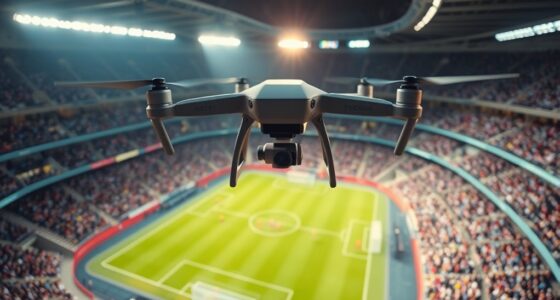
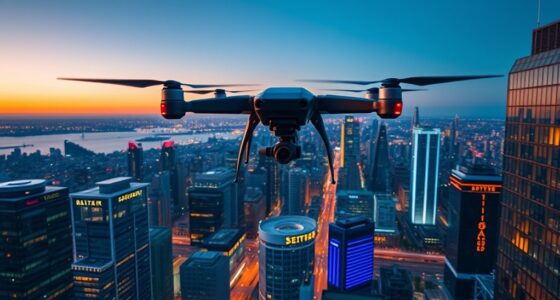
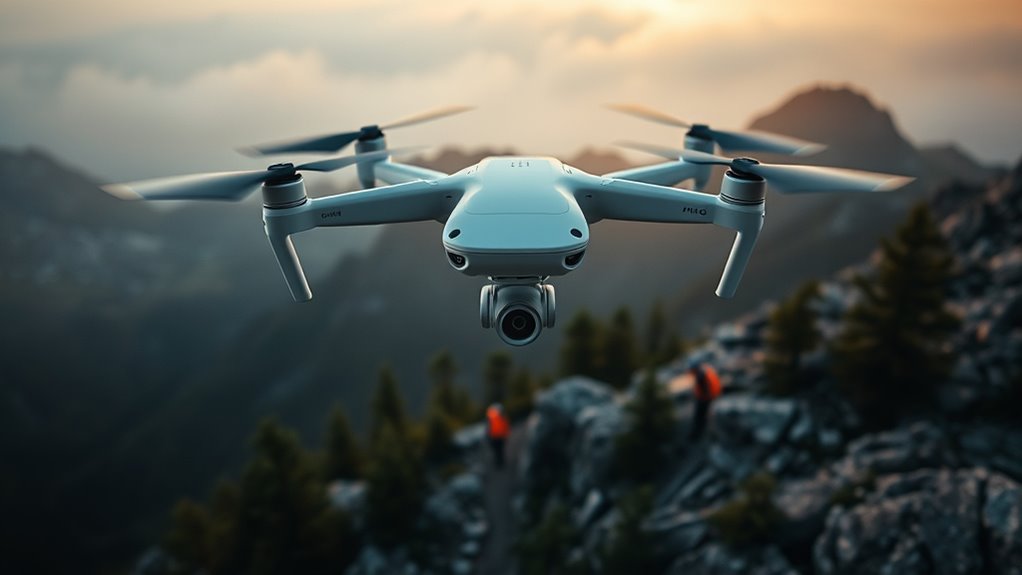
Drones have become an invaluable tool in search and rescue operations, offering rapid deployment and access to hard-to-reach areas. When time is critical, these flying devices provide a bird’s-eye view that can make all the difference in locating missing persons quickly. Their ability to perform aerial surveillance allows you to scan large expanses of terrain efficiently, saving precious time and resources. Instead of relying solely on ground teams, you can deploy drones to quickly survey remote forests, rugged mountains, or disaster-stricken zones where traditional methods might be too slow or dangerous. With high-resolution cameras and thermal imaging, you can detect heat signatures even in dense foliage or at night, increasing your chances of finding survivors faster.
Aerial surveillance with drones enhances rescue operation coordination by providing real-time imagery that keeps all team members informed. As you monitor drone feeds, you can direct ground teams more precisely, avoiding redundant searches and covering more ground systematically. The live video feeds help you assess the situation from above, identify obstacles, and plan the most effective routes for rescue efforts. This integration of drone technology streamlines communication between teams, reducing confusion and ensuring everyone works towards the same goal. You can also use drones to deliver essential supplies such as water, medicine, or communication devices to stranded individuals, further improving rescue outcomes. Additionally, integrating AI-powered analysis can optimize search patterns and identify potential survivor locations more quickly.
In addition to reconnaissance, drones contribute to rescue operation coordination by acting as mobile command units. Their ability to relay live data from the scene allows commanders to make informed decisions quickly. Whether it’s coordinating multiple drone units for broader coverage or adjusting search patterns based on aerial data, you’re able to respond dynamically to evolving situations. The flexibility of drones means you’re not limited by terrain or weather conditions as much as traditional methods, which enhances your overall efficiency. As you integrate drone technology into your rescue operations, you gain a strategic advantage that improves response times, increases safety for rescue teams, and ultimately saves more lives.
Frequently Asked Questions
How Long Can Rescue Drones Operate on a Single Battery Charge?
You can expect rescue drones to operate for about 20 to 40 minutes on a single battery charge, depending on the drone model and load. Once the battery runs out, you’ll need to recharge it, which typically takes around 30 to 60 minutes. To maximize operation time during search and rescue missions, it’s wise to have spare batteries ready for quick swaps and minimal downtime.
What Legal Restrictions Exist for Drone Use in Emergency Situations?
You must adhere to legal regulations, respect privacy concerns, and obtain necessary permissions when using drones in emergencies. While laws often allow drones to assist in search and rescue, you need clear authorization, especially in sensitive areas. Privacy concerns demand that you avoid intruding on private property or capturing unnecessary footage. By following these rules, you guarantee your rescue efforts are effective, lawful, and respectful of people’s rights.
How Do Drones Identify Victims in Search and Rescue Missions?
You can rely on drones for victim detection using thermal imaging, which detects body heat even in challenging conditions. They analyze thermal signatures to identify potential victims quickly, especially at night or in dense foliage. Advanced sensors help distinguish humans from the environment, speeding up rescue efforts. By continuously scanning the area, drones enhance search accuracy and save lives, making them invaluable tools in emergency situations.
Can Drones Operate Effectively in Extreme Weather Conditions?
Think of your drone as a brave sailor in stormy seas. It can operate effectively in extreme weather if designed with weather resilience and equipment durability in mind. Modern rescue drones feature reinforced frames, weatherproof sensors, and advanced stabilization systems, allowing them to withstand harsh conditions. While no drone is invincible, with proper tech, you can count on it to perform reliably even when the weather turns hostile.
What Is the Cost of Deploying Drone Technology for Rescue Efforts?
The cost of deploying drone technology for rescue efforts varies based on the type of drone, equipment, and mission scope. A thorough cost analysis helps you understand initial investments and ongoing operational expenses. You should consider budget considerations like maintenance, training, and data management. While upfront costs can be significant, the efficiency and safety benefits often justify the investment, especially in life-saving rescue missions.
Conclusion
Just like Icarus reaching for the sun, you can now reach into the sky with drones to save lives. These agile eyes bring hope where darkness once reigned, turning chaos into clarity. As they scan the terrain with unwavering focus, they become your guiding stars in moments of despair. Embrace this technology, and you’ll be equipped to be the hero in someone’s story, proving that sometimes, technology can elevate us beyond our wildest dreams.