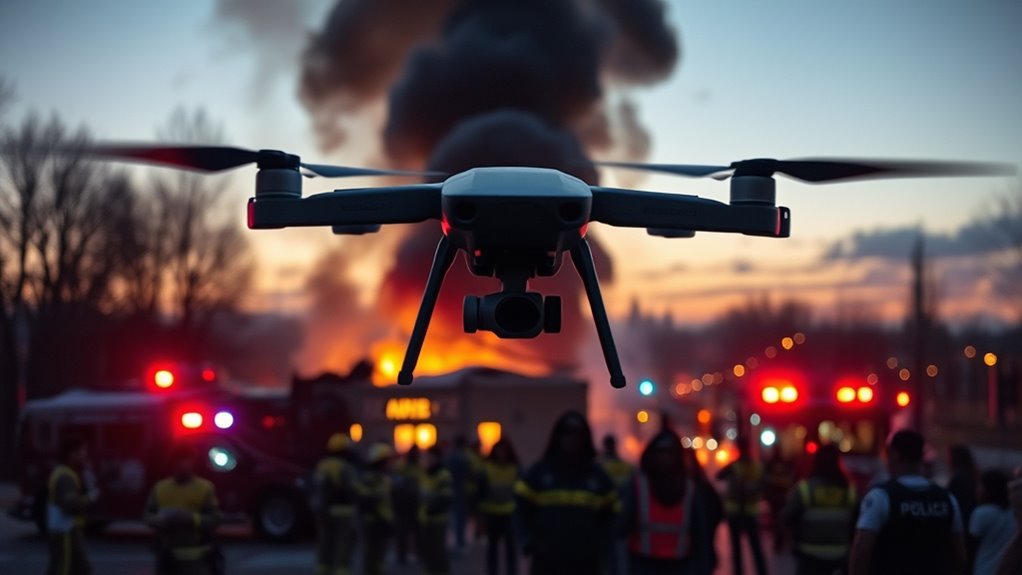

Drones in emergency response help police and firefighters arrive faster—often within minutes—and gather real-time intelligence, improving scene assessment and decision-making. They can clear calls without ground dispatch, locate victims, and monitor hazards across diverse incidents like fires, crimes, or natural disasters. Drones also enhance safety, reduce costs, and support de-escalation. If you want to see how these technologies are transforming our response efforts, there’s more to explore.
Key Takeaways
- Police and fire agencies deploy drones rapidly, often arriving first on scene to provide real-time situational awareness.
- Drones assist in call management by clearing up to 25% of incidents without ground unit deployment.
- They help locate victims, identify hazards, monitor large events, and support search and rescue operations.
- Drones improve operational efficiency, reduce response times, and serve as force multipliers during complex or dangerous scenes.
- Challenges include privacy concerns, regulatory compliance, and operational safety, but future integration promises broader use.
Rapid Deployment and Response Times of Emergency Drones
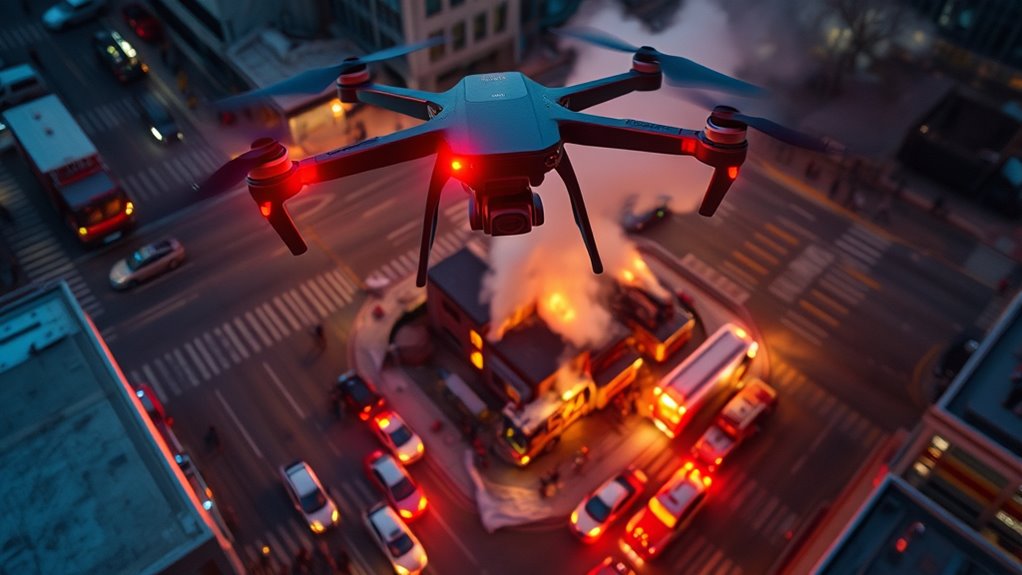
Emergency drones are revolutionizing response times by deploying rapidly to scene, often arriving within 90 seconds or less. When you activate a drone, it quickly takes off and reaches the incident location faster than traditional patrol units. In major deployments, drones arrive approximately 48% faster than officers responding to Priority 1 calls. While patrol units typically take 8 to 10 minutes to reach an emergency, drones can arrive in about 3.5 minutes. In some cases, drones arrive first on scene over 74% of the time, providing immediate situational awareness. This swift deployment accelerates decision-making and helps stabilize situations before ground units arrive. Overall, emergency drones drastically cut response times, enabling quicker assessments and more effective emergency management.
Enhancing Call Management and Increasing Clearance Rates
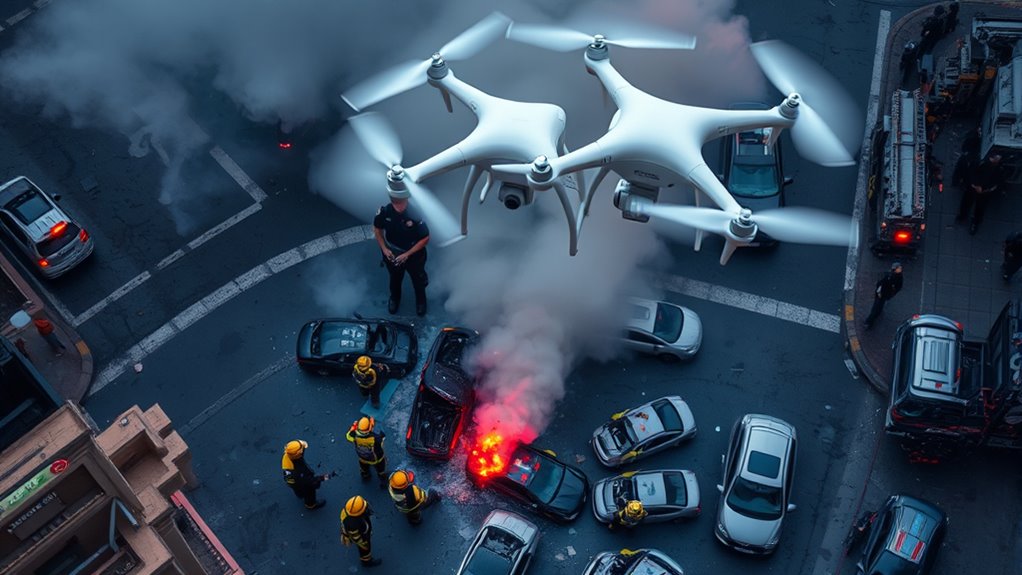
Have drones revolutionized how calls are managed and resolved? Absolutely. When drones arrive first on scene, they often provide enough information to clear about 25% of emergency calls without dispatching ground officers. This quick response helps reduce workload and accelerates resolutions. Departments like Elizabeth Police cleared 21% of drone-responded calls before officers arrived, saving valuable time and resources. Similarly, Redmond Police cut ground dispatches by 25% through drone response. By offering real-time aerial views, drones help assess threats, confirm or dismiss suspicions, and determine whether a full police or fire response is necessary. This streamlining improves overall call management, increases clearance rates, and guarantees resources are allocated efficiently, making emergency responses faster and more effective. Enhanced situational awareness through drone technology plays a crucial role in achieving these improvements.
Drones as Tools for De-escalation and Use of Force Reduction

Could deploying drones be the key to reducing the need for force during tense situations? Absolutely. Drones provide real-time aerial views that help officers understand threats before arriving, which can lower the likelihood of escalation. They act as a primary de-escalation tool, calming situations by giving clear visuals of the scene. This reduces the fear of the unknown, allowing officers to plan safer approaches. By confirming threat levels or reducing perceived danger, drones help avoid unnecessary force. Additionally, aerial surveillance can identify when backup is needed and when a situation is under control. Chief Roxanna Kennedy highlights that drones are the biggest de-escalation asset in her department. Using drones in this way fosters safer encounters and preserves community trust. Incorporating community engagement and other community amenities with drone operations can also enhance public understanding and transparency. Understanding the safety practices for drone deployment ensures both officer and public safety during these operations. Moreover, integrating European cloud solutions can improve data security and operational efficiency in drone management systems.
Improving Operational Efficiency and Resource Allocation
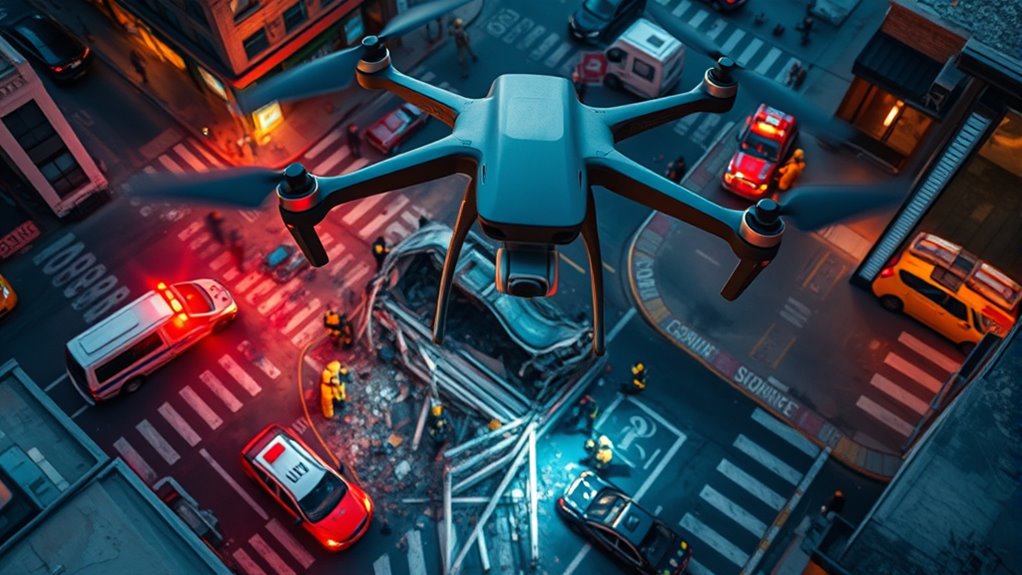
Deploying drones substantially enhances operational efficiency by optimizing resource allocation and personnel deployment. With rapid response times, you can cover more ground quickly, reducing the need for multiple units to respond to the same incident. For example, drones often arrive within minutes, providing real-time intelligence that helps determine whether ground units are necessary. This speeds up decision-making, allowing you to allocate officers and firefighters more effectively, especially during staffing shortages. Drones also serve as force multipliers, enabling fewer personnel to manage large or complex scenes. By handling routine assessments or monitoring ongoing incidents, they free up resources for other priorities. Additionally, understanding the capabilities of drones can help emergency responders utilize them more effectively in various scenarios. Incorporating natural features into drone operations can enhance their effectiveness in diverse environments. Recognizing terrain and environmental conditions allows for better planning and deployment of drone assets, ensuring optimal operation regardless of surroundings. Furthermore, awareness of environmental conditions can help prevent drone malfunctions and improve safety during operations. For instance, being aware of weather patterns can aid in scheduling drone flights to avoid adverse conditions that could impair their performance. Overall, integrating drones into your operations maximizes coverage, improves response times, and guarantees smarter use of limited personnel and equipment.
Expanding Coverage for Diverse Emergency Situations
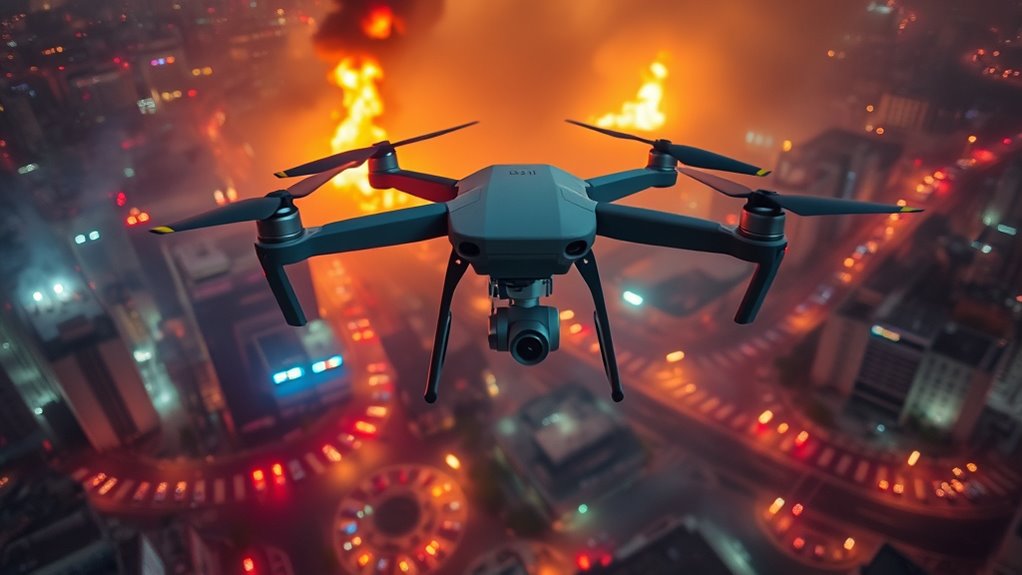
Expanding coverage for diverse emergency situations can significantly improve overall response effectiveness. You can leverage drones to broaden emergency response by covering a wider range of incident types. Their quick deployment enhances first-responder capabilities, providing critical information in diverse situations. Reliable backup power ensures that drone operations remain uninterrupted during power outages, further supporting emergency efforts. Incorporating drone insights can further optimize response strategies and improve safety outcomes. Additionally, implementing cost-effective solutions makes widespread drone deployment more feasible for emergency agencies. Integrating navigation and mapping capabilities allows drones to operate more efficiently in complex environments, enhancing mission success. Utilizing outdoor technology can also improve drone durability and performance in challenging environments, ensuring mission continuity during extreme conditions.
Broader Emergency Response Scope
As drone technology advances, its role in emergency response is expanding beyond traditional calls to address a wider range of situations. You can now utilize drones for diverse emergencies like mental health crises, domestic disputes, and welfare checks. This broader scope allows responders to quickly assess scenarios, gather critical information, and adapt their strategies. Drones also assist in natural disasters, providing aerial views of affected areas and locating victims. Additionally, they support fire operations by monitoring wildfires and hazardous zones, reducing risk to personnel. Enhanced capabilities enable responders to make more informed decisions in complex situations, especially when rapidly assessing emergency scenarios. Incorporating advanced drone sensors further improves the accuracy and effectiveness of these responses. Furthermore, expanding the scope of drone applications enhances overall emergency management efficiency and safety, leveraging remote sensing technology to improve situational awareness.
Enhanced First-Responder Capabilities
Enhanced first-responder capabilities through drone technology enable emergency teams to address a broader range of situations more effectively. Drones help you quickly assess complex scenarios, locate victims, and gather critical information in real time. This expands your operational reach beyond traditional methods, allowing faster responses to fires, accidents, or mental health crises.
| Situation Type | Drone Use | Benefit |
|---|---|---|
| Fire Incidents | Aerial surveys and hotspot detection | Faster hazard identification |
| Medical Emergencies | Locate victims and assess injuries | Quicker aid delivery |
| Search & Rescue | Cover large or inaccessible areas | Increased search efficiency |
| Hazardous Scenes | Provide real-time visuals for safety | Improved decision-making |
| Crowd Control | Monitor large gatherings | Enhanced safety and management |
Diverse Incident Coverage
How are drones transforming emergency response across a wide range of incidents? They enable responders to handle diverse situations more effectively. Drones can quickly assess scenes involving fires, accidents, or hazardous materials, providing real-time data to guide decisions. They help locate missing persons in wilderness areas or urban settings, often faster than ground teams. Drones also assist in managing mental health crises and domestic disputes by offering aerial insights without immediate risk. This broad coverage improves safety, reduces response times, and enhances resource allocation.
- Rapid assessment of fire scenes and hazardous zones
- Search and rescue operations in challenging terrains
- Monitoring of large-scale public events or protests
- Supporting mental health and domestic incident responses
- Gathering intelligence during ongoing criminal activities
The Growing Scope of Drone Program Applications
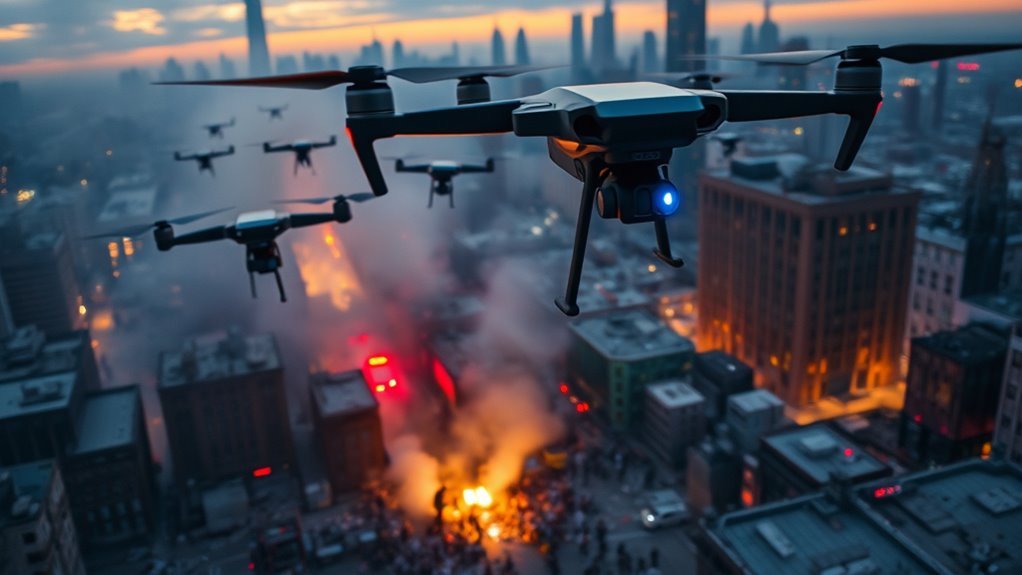
The scope of drone program applications is rapidly expanding beyond initial emergency response functions. You now see agencies using drones for crime scene documentation, suspect tracking, and real-time video support during ongoing incidents. Fire departments employ drones for building inspections, hazardous material assessments, and wildfire monitoring. These programs also assist in search and rescue missions, locating missing persons more efficiently. Drones help verify incident locations, reducing miscommunication during 911 calls. As technology advances and costs decline, agencies are integrating drones into routine patrols and community engagement efforts. This expansion enhances situational awareness, resource management, and officer safety. Overall, drone programs are evolving from specialized tools into essential components of holistic emergency response and public safety strategies.
Case Studies: Success Stories From Major Police Departments
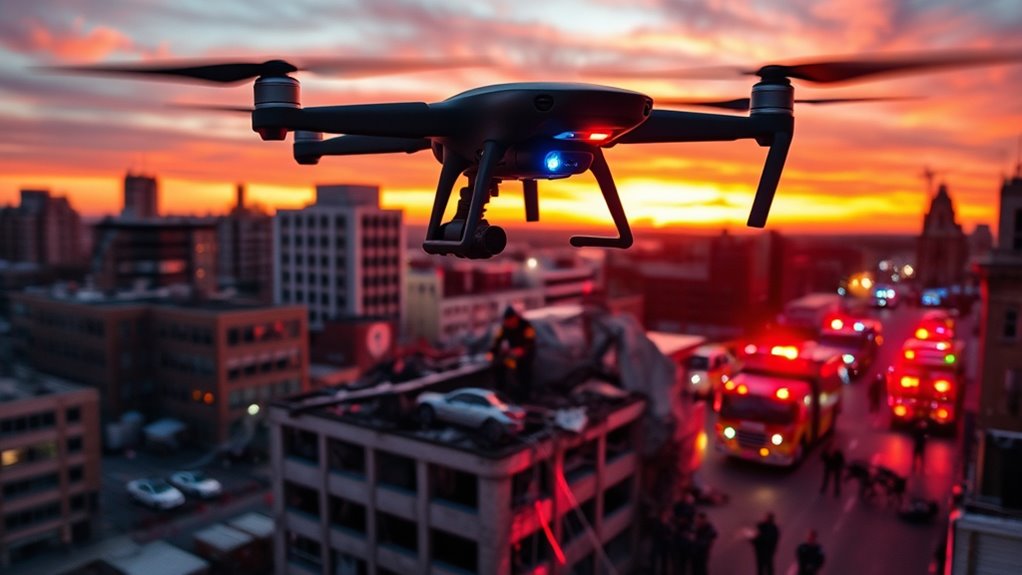
You’ll see how Chula Vista’s quick drone deployments have revolutionized emergency response, arriving first in most cases and reducing ground dispatches considerably. Meanwhile, Redmond’s strategic use of drones has optimized resource allocation, cutting response times and dispatches by a quarter. These success stories highlight how major police departments leverage drone technology to improve efficiency and save lives.
Chula Vista’s Rapid Deployments
Chula Vista Police Department has demonstrated remarkable success with its drone deployment program, substantially enhancing emergency response efficiency. By deploying drones swiftly, they arrive first on scene in 74% of cases, reducing response times by nearly 137% compared to patrol units. This rapid deployment has led to thousands of avoided ground responses, saving resources and increasing safety. The program’s expansion from 1,000 calls in 2019 to 4,600 in 2023 highlights its growing impact. Drones now assist in locating suspects, providing real-time video, and supporting multiple emergency types. Their quick response capability enables the department to make informed decisions, de-escalate potentially dangerous situations, and optimize resource allocation.
- Drones arrive on scene in under 90 seconds, often faster than officers
- Significant reduction in ground dispatches, freeing up personnel
- Enhanced situational awareness improves safety during critical incidents
- Supports diverse emergencies, from mental health to violent crimes
- Program growth reflects ongoing commitment to innovative policing
Redmond’s Resource Optimization
Redmond Police Department has leveraged drone technology to substantially optimize resource allocation and improve operational efficiency. By deploying drones, you can respond to priority calls in about 3.5 minutes, markedly faster than patrol units, which typically take 8-10 minutes. This rapid response has reduced ground dispatch needs by 25%, saving personnel and resources. Drones arrive first on scene 74% of the time, providing critical situational awareness that helps de-escalate situations and assess threats remotely. These aerial capabilities enable you to resolve approximately one in four emergency calls without dispatching officers, freeing up resources for other priorities. With drone flights increasing by 153%, Redmond maximizes patrol efficiency, enhances response coverage, and supports proactive policing, all while reducing response times and improving public safety outcomes.
Technological Advancements Driving Program Growth
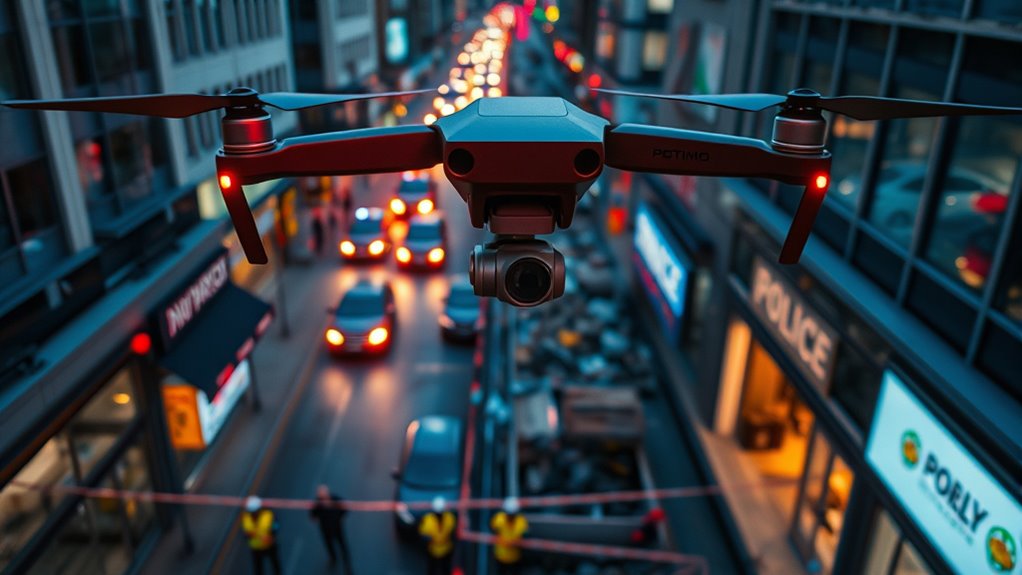
Advancements in drone technology are accelerating the growth of emergency response programs by making them more effective and affordable. You’ll see improved flight stability, longer battery life, and enhanced camera capabilities, which boost operational efficiency. As costs decline, more agencies can adopt drone programs. Additionally, integration of AI and real-time data analysis allows for faster decision-making and better situational awareness. The development of user-friendly controls and automated flight features reduces training time, making deployment easier. These innovations also enable drones to operate in diverse conditions, expanding their utility across multiple emergency scenarios.
- Enhanced stabilization and longer flight times
- High-resolution, thermal, and night vision cameras
- AI-powered analytics for quicker assessments
- Automated flight paths and obstacle avoidance
- Cost reductions facilitating broader program adoption
Challenges and Considerations in Drone Integration
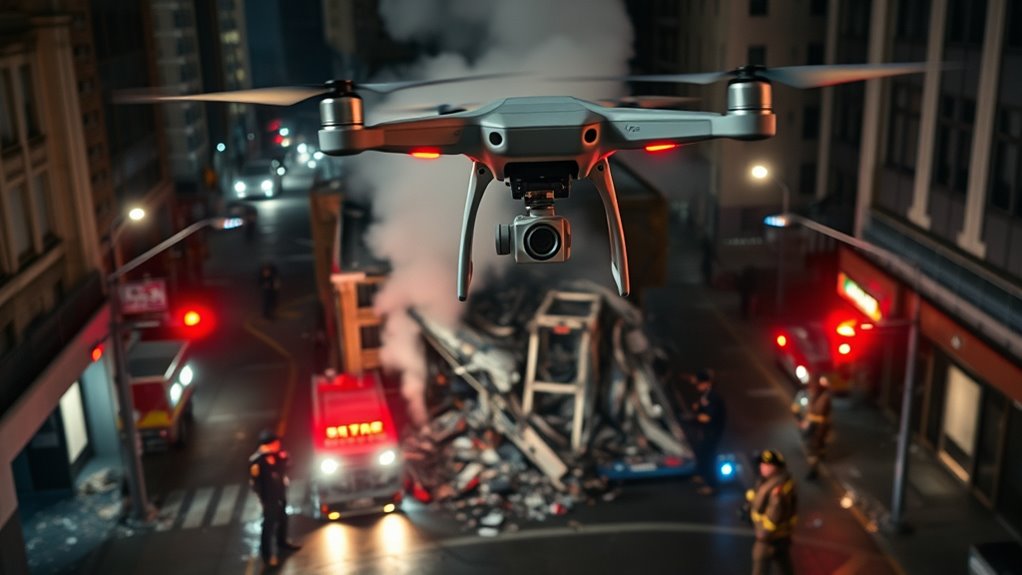
As you integrate drones into emergency response, you need to address privacy and data concerns that can impact public trust. Regulatory compliance also presents challenges, as laws vary and evolve quickly, requiring ongoing oversight. Additionally, operational safety risks, such as drone crashes or interference, demand careful planning to guarantee effective and secure deployments.
Privacy and Data Concerns
Integrating drone technology into emergency response raises significant privacy and data concerns that agencies must carefully address. You need to contemplate how aerial footage might intrude on individuals’ privacy rights, especially in residential areas. Data collection and storage pose risks of misuse or unauthorized access, raising questions about data security. There’s also potential for surveillance overreach, which could erode public trust if not transparently managed. Additionally, you must balance quick response benefits with respecting civil liberties.
- Ensuring data is used solely for emergency purposes
- Implementing strict access controls and encryption
- Establishing clear policies on footage retention
- Maintaining transparency with the public
- Regularly reviewing privacy protocols to adapt to evolving technology
Regulatory Compliance Challenges
Regulatory compliance presents a considerable hurdle for law enforcement agencies seeking to expand drone use in emergency response. You must navigate complex federal, state, and local regulations that govern drone operations, which can vary markedly across jurisdictions. Obtaining necessary certifications, such as Part 107 waivers from the FAA, requires time and resources, often delaying deployment. Privacy laws also impose restrictions on data collection and surveillance, forcing you to balance operational needs with legal obligations. Additionally, restrictions on flying over private property or in certain airspaces limit drone flexibility during emergencies. Compliance challenges can slow down response times and add administrative burdens, making it essential to develop clear policies, conduct regular training, and maintain up-to-date knowledge of evolving regulations to ensure lawful and effective drone integration.
Operational Safety Risks
Operational safety risks pose significant challenges when deploying drones in emergency response. You must consider potential crashes, interference with manned aircraft, and system failures that could cause injuries or damage. Weather conditions like high winds or rain can compromise drone stability and control, increasing accident risk. Privacy concerns also arise if drones capture sensitive information unintentionally. Additionally, operator error or misjudgment can lead to unsafe flight paths or accidents.
- Risk of collision with obstacles or other aircraft
- Weather-related control issues impacting stability
- Privacy violations during aerial surveillance
- Operator fatigue or misjudgment leading to mishaps
- Technical failures causing loss of control or data breaches
Future Perspectives on Drone Use in Emergency Services

As drone technology continues to advance, its role in emergency services is poised for significant growth. You’ll see expanded deployment across various incident types, including mental health crises, domestic violence, and large-scale disasters. Automated systems and AI integration will enhance real-time situational awareness, enabling quicker decision-making and resource allocation. Drones will become more autonomous, reducing the need for direct operator control, and improving response times even further. Expect increased collaboration between law enforcement, fire departments, and other agencies, creating unified response networks. Additionally, costs will continue to decline, making drone programs more accessible for smaller jurisdictions. As regulations evolve, you’ll likely witness broader adoption, turning drone use into a standard tool for saving lives and improving safety in emergency response.
Frequently Asked Questions
What Privacy Concerns Are Associated With Police Drone Operations?
You might worry that police drones could infringe on your privacy by capturing images or videos without consent. They can monitor private property, track individuals, or gather data beyond emergency scenes. While intended for safety, these operations raise concerns about surveillance overreach, data storage, and misuse. Ensuring strict policies and transparency helps balance emergency response benefits with respecting personal privacy rights.
How Do Agencies Ensure Drone Data Security and Confidentiality?
You should know that over 80% of agencies implement strict data security measures to protect drone footage. They use encrypted communication channels, access controls, and regular audits to keep data confidential. These steps prevent unauthorized access and guarantee sensitive information stays secure. By prioritizing cybersecurity, agencies safeguard privacy and maintain public trust while harnessing the rapid response capabilities drones offer.
What Training Is Required for Officers Operating Emergency Drones?
You need specialized training to operate emergency drones effectively. This includes understanding drone controls, navigation, and safety protocols. You also learn how to interpret aerial footage for situational awareness, maintain data security, and ensure privacy compliance. Additionally, training covers emergency procedures, legal considerations, and communication skills for coordinating with teams. Regular refresher courses and certifications help you stay current with evolving technology and operational best practices.
Are There Legal Restrictions on Drone Use During Emergencies?
You might worry about legal restrictions, but most jurisdictions have clear rules for emergency drone use. During emergencies, law enforcement and fire departments often operate under special exemptions or emergency declarations that allow for broader use of drones without violating privacy laws or regulations. These exemptions prioritize public safety, enabling quick response and situational awareness, so you can rely on drones as a legal, effective tool during critical incidents.
How Do Drones Handle Adverse Weather Conditions During Operations?
You should know that drones can struggle in adverse weather like heavy rain, snow, or strong winds, which can limit their flight capabilities and safety. Operators often delay or cancel missions during such conditions to avoid accidents or data inaccuracies. While some drones are built to withstand certain weather elements, you need to monitor weather reports closely and adapt your deployment strategies to ensure safe, effective operations in challenging weather.
Conclusion
As you embrace the future of emergency response, drones prove to be game-changers that revolutionize how police and firefighters save lives. Their rapid deployment and advanced capabilities make traditional methods seem outdated—like using a flashlight in a flood. By integrating these cutting-edge tools, you can guarantee faster, safer, and more efficient responses. The potential is limitless, and with ongoing innovation, drones could become the most powerful force in emergency services the world has ever seen.