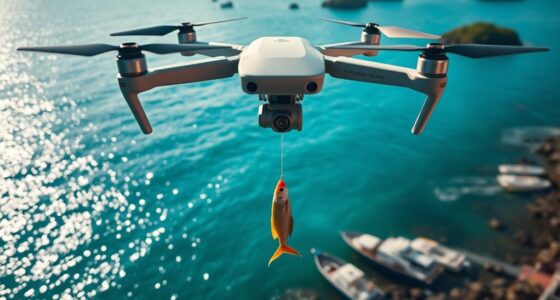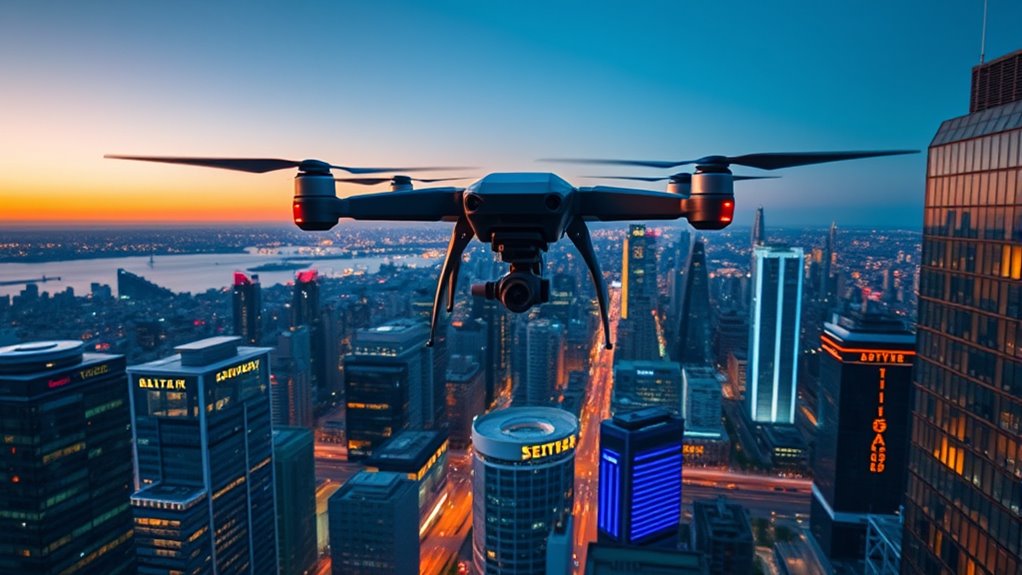
By 2025, the drone industry will see major advances in autonomous navigation, allowing drones to operate safely and efficiently without human input. You’ll notice increased use across sectors like delivery, agriculture, and infrastructure inspection, thanks to smarter sensors and AI. Regulations will evolve, integrating advanced compliance tech to guarantee safety and privacy. If you keep exploring, you’ll uncover how these innovations are shaping a future where drones seamlessly integrate into daily life.
Key Takeaways
- Autonomous drones will operate safely and efficiently without human input, expanding applications across sectors like delivery and agriculture.
- Enhanced sensors and AI will enable complex environment navigation, obstacle avoidance, and real-time adaptation.
- Regulatory frameworks will evolve to support widespread drone deployment, including digital registration, geofencing, and compliance tools.
- Industry and policymakers will collaborate to develop smarter regulations, balancing innovation, safety, and privacy concerns.
- Increased adoption of autonomous drones will drive sector-specific innovations and improve operational efficiency by 2025.
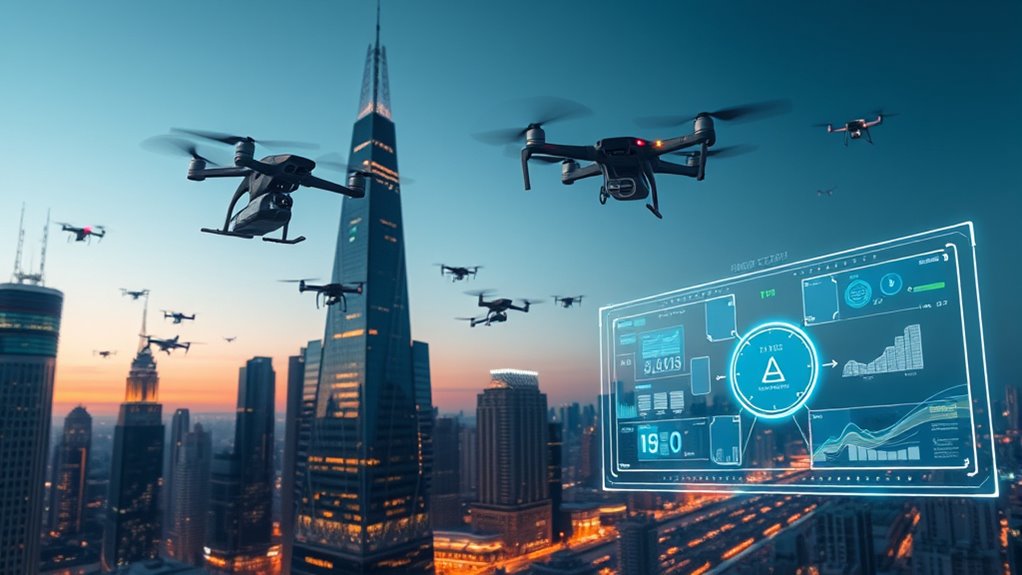
The drone industry is set to transform considerably by 2025, driven by rapid technological advancements and increasing adoption across various sectors. One of the most notable shifts will be in autonomous navigation, where drones will become more capable of flying safely and efficiently without human intervention. Advanced sensors, AI algorithms, and real-time data processing will enable drones to navigate complex environments, avoid obstacles, and adapt to changing conditions on the fly. This progress will open doors for applications like package delivery, infrastructure inspection, and agricultural monitoring, where precision and reliability are vital. As autonomous navigation improves, you’ll notice fewer restrictions on where drones can operate, making their integration into daily life more seamless.
However, along with these technological leaps come significant regulatory challenges. Governments and regulatory bodies are still figuring out how to create frameworks that guarantee safety, privacy, and security while fostering innovation. You’ll find that current regulations might limit your drone’s capabilities or restrict where you can fly, especially in urban areas or near sensitive sites. These rules are often slow to adapt to new tech, creating a gap between what drones can do and what they are permitted to do legally. Managing this landscape will require drone manufacturers and operators to stay informed and work closely with regulators. Expect more standardized policies, licensing requirements, and no-fly zones designed to prevent accidents and protect privacy, but these can also slow down deployment or complicate operational logistics.
Despite these hurdles, progress in autonomous navigation is likely to push regulatory challenges to the forefront. Both industry leaders and policymakers will need to collaborate to develop smarter, more flexible regulations that support innovation without sacrificing safety. You might see the rise of digital registration systems, geofencing technologies, and real-time compliance monitoring that help drones operate within legal boundaries. The push for autonomous systems will also encourage the development of safety redundancies and fail-safe mechanisms, easing regulators’ concerns and paving the way for broader adoption. Moreover, the integration of European cloud infrastructure can provide secure and scalable data management solutions that support these advancements and regulatory needs.
Frequently Asked Questions
How Will Drone Regulations Evolve Globally by 2025?
By 2025, you’ll see drone regulations align more with international standards, making cross-border operations smoother. Countries will adopt unified rules to ensure safety and privacy. Enforcement strategies will become more sophisticated, using technology like geo-fencing and real-time tracking to prevent misuse. This global approach will foster innovation while maintaining security, so you’ll find it easier to operate drones across different regions with clearer guidelines and consistent compliance requirements.
What New Drone Technologies Are Expected to Emerge?
You can expect new drone technologies like advanced AI integration and swarm technology to emerge. AI will enable drones to make smarter decisions in real-time, improving efficiency and safety. Swarm technology will allow multiple drones to coordinate seamlessly, enhancing capabilities in areas like search and rescue or military operations. These innovations will revolutionize how you use drones, making them more autonomous, adaptable, and effective in various industries.
How Will Drones Impact Privacy Laws in the Future?
You’ll see privacy concerns shape future regulations as drones become more advanced. Expect stricter surveillance regulations to protect individual rights, limiting how and where drones can record. Authorities will likely implement clearer rules to prevent misuse, ensuring that drone operators respect privacy boundaries. As a drone user, you’ll need to stay informed about these evolving laws to avoid violations and support responsible drone use in public and private spaces.
What Are the Key Challenges for Drone Cybersecurity?
Oh, the irony—you’d think drones would be secure, but cyber vulnerability remains a big challenge. Hackers exploit weak encryption standards, turning your flying camera into a potential security breach. You must prioritize robust encryption and constantly update cybersecurity measures. Without these, your drones could become pawns in cyberattacks, risking data theft or loss of control. Staying ahead of evolving threats requires vigilance and stronger cybersecurity protocols.
How Will Drone Manufacturing Costs Change by 2025?
By 2025, you’ll see manufacturing costs for drones decrease considerably as production efficiency improves. Advances in automation and scalable manufacturing processes will lower material and labor expenses, making drones more affordable. Innovations in design and component standardization will also contribute to cost reductions. This means you’ll benefit from more accessible drone technology, enabling wider adoption across various industries without compromising quality or performance.
Conclusion
As you stand on the cusp of 2025, the drone industry symbolizes a soaring horizon of innovation and possibility. Just as a compass guides explorers, these advancements steer industries toward new frontiers, echoing your own journey of adaptation. Embrace this flight into the future, where each drone’s ascent reflects your potential to navigate change with agility and vision. The sky isn’t the limit—it’s the beginning of endless opportunities waiting to be uncovered.