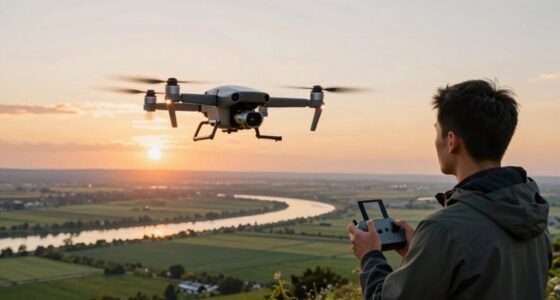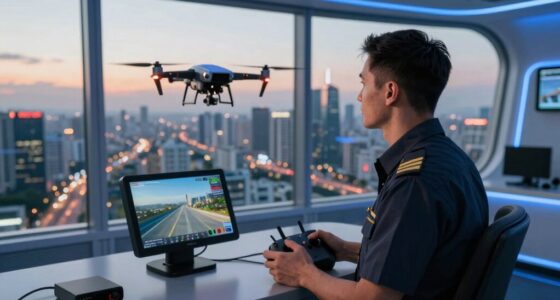

Many experienced drone pilots wish they had focused on mastering safety protocols and environmental awareness sooner. Prioritizing these areas helps prevent costly accidents and improves photo quality. By understanding weather conditions, regulations, and emergency procedures early on, you can fly more confidently and responsibly. Developing good habits from the start saves time and reduces risks. Staying ahead in these essentials makes your flying experience safer and more enjoyable—if you keep exploring, you’ll find even more tips to sharpen your skills.
Open a free Amazon Business account
Business pricing, bulk buying and tax-exempt orders.
As an affiliate, we earn on qualifying purchases.
Key Takeaways
- Prioritizing comprehensive understanding of weather conditions and environmental factors for safer, higher-quality flights.
- Practicing emergency procedures and troubleshooting early to build confidence and prevent accidents.
- Focusing on mastering aerial photography techniques for more impactful and professional-looking images.
- Staying well-versed in flight safety rules and regulations to avoid legal issues and ensure responsible flying.
- Gaining flight experience with purpose and planning to accelerate skill development and avoid common mistakes.
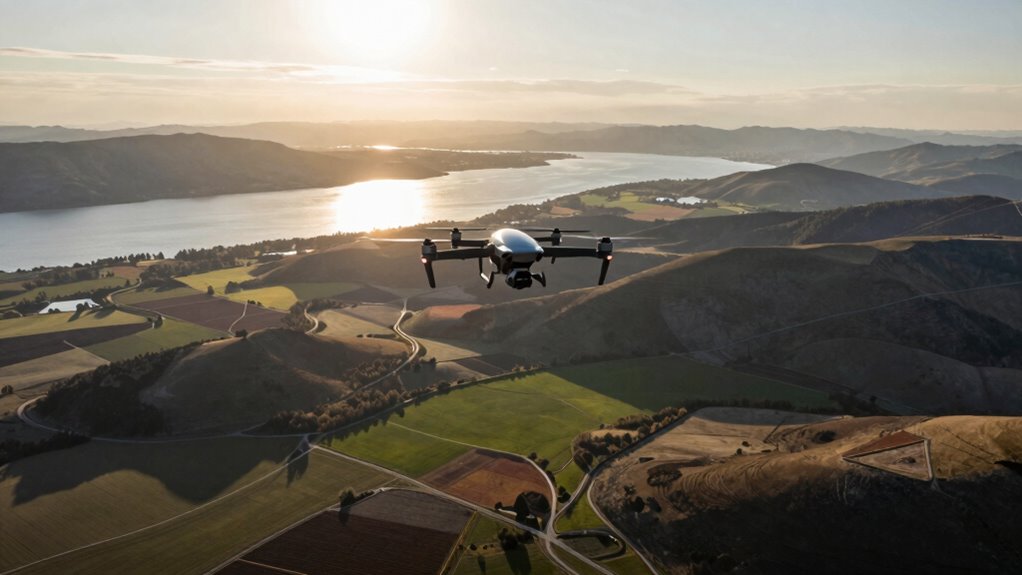
Flying a drone can be thrilling, but many pilots wish they’d known certain tips and tricks before they took to the skies. If you’re just starting out, you might not realize how much more there is to aerial photography than just capturing beautiful shots. It’s about understanding the nuances of flight safety, camera angles, and how to make the most of your drone’s capabilities without risking damage or legal issues. Early on, you may focus solely on the fun of flying, but as you gain experience, you realize that planning your shots and guaranteeing safety are equally important.
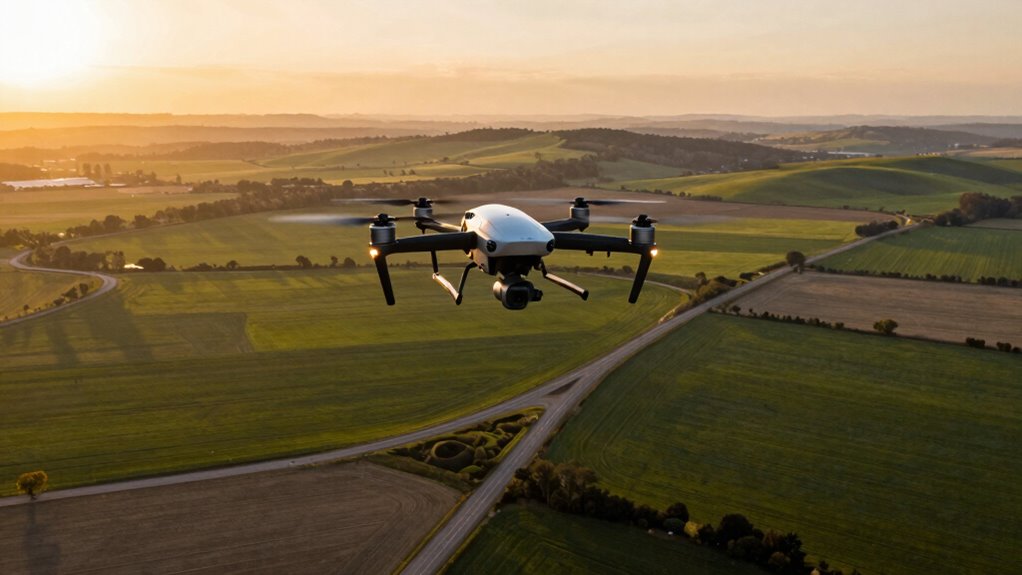
Aerial photography isn’t just about pointing your drone and snapping pictures. You need to think about composition, lighting, and altitude to get the most compelling images. It’s tempting to chase dramatic angles, but without proper planning, you might end up with shaky footage or photos that don’t quite work. Learning how to stabilize your drone and control the camera smoothly is key. You’ll also discover that flying with purpose makes your shots more professional and impactful.
Flight safety is another aspect many pilots overlook in their early days. It’s easy to get caught up in the excitement of flying, but understanding the rules and regulations is vital. Knowing where you’re allowed to fly, maintaining visual line of sight, and respecting privacy laws can save you from hefty fines or worse, accidents. Many beginners underestimate how quickly situations can change—like sudden gusts of wind or unexpected obstacles—so practicing safe flying habits from the start helps prevent crashes and damage. Always check your drone’s battery levels, keep clear of crowded areas, and stay aware of your surroundings. These simple steps protect you and others while allowing you to enjoy flying responsibly. Developing a flight safety mindset early on can significantly reduce risks and improve your overall flying experience. Additionally, familiarizing yourself with aerial photography techniques can help you capture more stunning and professional-looking images. Understanding weather conditions is also crucial, as adverse weather can impact your flight safety and image quality.
Another thing many pilots wish they’d focused on earlier is mastering emergency procedures. Quick response to a loss of signal or a low battery can save your drone from crashing. Practicing these scenarios in open areas builds confidence and ensures you’re prepared when it counts. Furthermore, learning how to properly troubleshoot technical issues can save you time and frustration during critical moments. It’s also beneficial to learn about the drone’s flight modes to better adapt to different shooting environments and situations. Additionally, understanding how to troubleshoot technical issues prevents frustration and keeps your aerial photography sessions smooth.
Ultimately, the most valuable lessons come from experience, but being aware of these key areas—focused on aerial photography and flight safety—can accelerate your progress. You’ll fly smarter, capture better images, and avoid common pitfalls. With a little extra effort upfront, you’ll find yourself enjoying the skies more and making the most of your drone’s potential.
As an affiliate, we earn on qualifying purchases.
Frequently Asked Questions
What Are the Best Practices for Drone Maintenance and Troubleshooting?
You should regularly check your drone’s batteries, ensuring proper calibration to prevent power issues. Inspect propellers closely for cracks, chips, or warping before each flight, replacing damaged ones promptly. Keep your drone clean and free of debris, and regularly update firmware to fix bugs. Troubleshoot connectivity or motor problems by resetting components and checking connections. Consistent maintenance like this helps prevent failures and extends your drone’s lifespan.
How Can I Improve My Drone Flying Skills Quickly?
Mastering drone flying feels like conquering the skies instantly. To improve quickly, dedicate yourself to practicing aerial photography and perfecting flight maneuvering daily. Push your limits with challenging drills, film from diverse angles, and analyze each flight to identify improvements. Invest time in understanding your drone’s controls deeply, and simulate complex scenarios. Consistent, focused practice accelerates your skills, transforming you into a confident pilot capable of stunning aerial captures and precise maneuvers.
What Legal Considerations Should I Be Aware of Before Flying?
Before flying, you should prioritize legal compliance by understanding airspace regulations and local laws. Check if you need permits or registration, especially for commercial use or flying near airports. Always stay updated on temporary flight restrictions and no-fly zones. Respect privacy laws and avoid flying over private property without permission. Being aware of these legal considerations helps you avoid fines, penalties, and safety issues, making your drone experience responsible and smooth.
How Do I Choose the Right Drone for My Needs?
Imagine holding a sleek drone with a sharp drone camera that captures every detail and versatile flight modes that adapt to your needs. To choose the right drone, consider your primary purpose—filming, racing, or photography—and match it to features like camera quality, flight modes, and ease of control. Visualize yourself effortlessly maneuvering through landscapes, knowing you’ve selected a drone that perfectly fits your skill level and ambitions.
What Insurance Options Are Available for Drone Operators?
You should explore drone liability insurance to protect yourself from potential damages or accidents. This coverage helps with insurance claims if your drone causes injury or property damage. Many policies also include coverage for equipment theft or loss. By securing the right insurance, you’re better prepared for unexpected incidents, giving you peace of mind and ensuring you remain compliant with legal requirements. Always compare policies to find the best fit for your drone operations.

3 SET/12 PCS Propeller for BF/XIL 193 max,193 max 1,max 2,193 PRO2,SG906 PRO2,SG906 MAX,Max 1,Max 2 Four-axis Aircraft Blade Aerial Photography Drone Accessories
- Package Includes: 12 propellers, 30 screws, screwdriver
- Compatible Models: SG906, BF/XIL 193 Max series
- Material: Durable PC plastic
As an affiliate, we earn on qualifying purchases.
As an affiliate, we earn on qualifying purchases.
Conclusion
By learning from seasoned pilots, you’re planting seeds of wisdom that will grow into confidence and skill. Don’t wait to stumble through mistakes—embrace the lessons early and build your drone flying journey on a sturdy foundation. Remember, every flight is a brushstroke on the canvas of your experience. With focus and foresight, you’ll navigate the skies with the ease of a bird in flight, turning challenges into opportunities to soar higher.
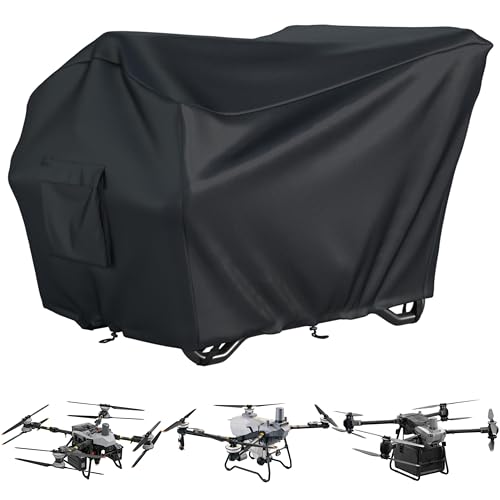
Agricultural Drone Cover,Dimensions: 48L × 36W × 36H In,Compatible With DJI T25P, T55, T70, T100S,FlyCart30 Series Agricultural Drones,Heavy-Duty Outdoor Dustproof and Waterproof Cover
- Protective Drone Cover: Waterproof, dustproof, UV-resistant
- Durable Material: 600D waterproof Oxford fabric
- Universal Compatibility: Fits DJI T25P, T55, T70, T100S, FlyCart30
As an affiliate, we earn on qualifying purchases.
As an affiliate, we earn on qualifying purchases.
As an affiliate, we earn on qualifying purchases.
Flea & tick season Picks
flea and tick prevention
As an affiliate, we earn on qualifying purchases.