
If you’re looking for the best Mac Studio options for seamless photography workflows in 2025, I’d recommend considering the Mac mini with M4 Pro for demanding tasks, the standard M4 Mac mini with 24GB RAM for balanced performance, the redesigned 2024 Mac mini with M4 for versatility, and the M4 Mac mini with 16GB RAM for efficient multitasking. Each offers excellent power and compatibility for high-res editing and multi-display setups. Keep exploring to find the perfect fit for your needs.
Key Takeaways
- Choose models with high-core CPUs and GPUs like the M4 Pro for demanding photo editing and rendering tasks.
- Opt for at least 24GB RAM and large SSDs (512GB or more) to handle large RAW files and fast workflow.
- Select Mac mini configurations supporting multiple high-res displays, including dual 6K monitors, for enhanced workspace.
- Prioritize models with versatile ports, Thunderbolt 5, and high-speed connectivity for seamless peripheral and data transfer.
- Consider energy-efficient designs with expandable storage options and ecosystem features that streamline file management and backups.

Apple 2024 Mac mini Desktop Computer with M4 Pro chip with 12‑core CPU and 16‑core GPU: Built for Apple Intelligence, 24GB Unified Memory, 512GB SSD Storage, Gigabit Ethernet. Works with iPhone/iPad
- Compact Size: Five by five inches of powerful performance
- Powerful M4 Pro Chip: Includes 12-core CPU and 16-core GPU
- Ample Memory: 24GB Unified Memory for multitasking
As an affiliate, we earn on qualifying purchases.
Apple Mac mini Desktop Computer with M4 Pro chip
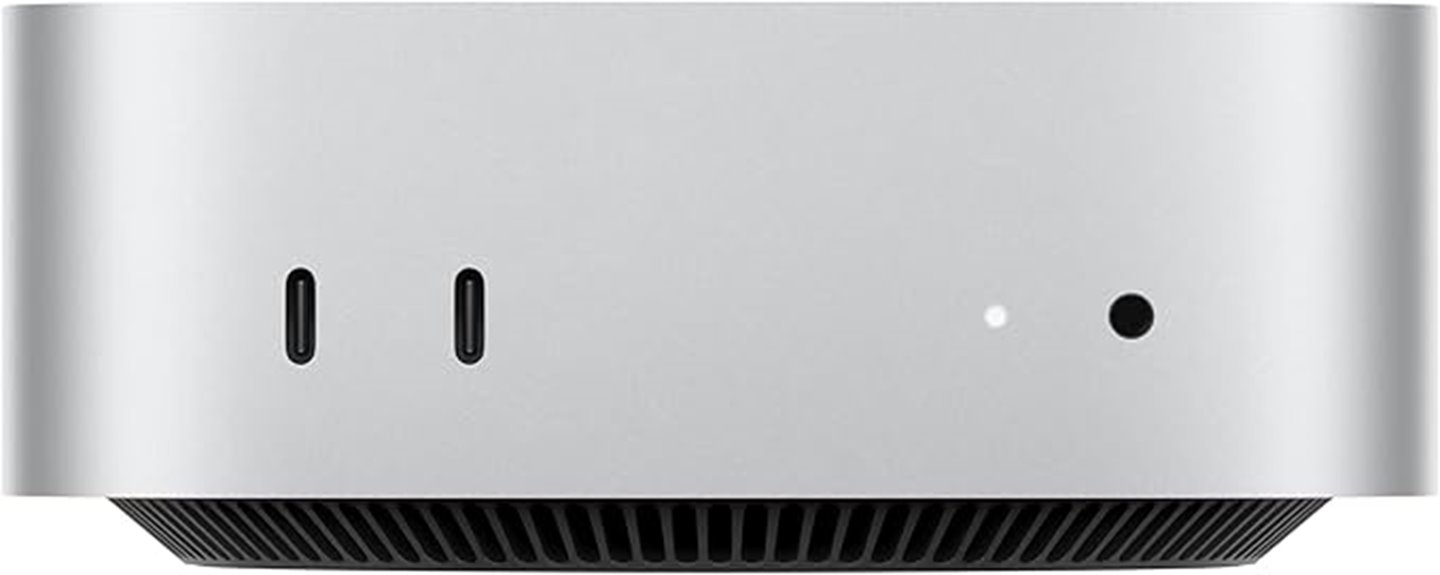
If you’re looking for a compact yet powerful option for seamless photography workflows, the Apple Mac mini with the M4 Pro chip is an excellent choice. Its 12-core CPU, 16-core GPU, and hardware-accelerated ray tracing handle demanding tasks like photo editing and scene rendering effortlessly. With up to 64GB of unified memory and 8TB of storage, it offers ample power and space for large files. The small size—just 5×5 inches—fits easily next to your monitor, while multiple ports, including Thunderbolt 5 and HDMI, support multiple displays. Seamlessly integrating with Apple’s ecosystem, it’s perfect for professional photographers seeking performance in a minimal footprint.
Best For: professionals and creatives seeking a compact yet powerful desktop for demanding tasks like photo editing, media rendering, and creative workflows.
Pros:
- Compact size with a sleek design that fits easily next to monitors or in tight spaces
- High-performance M4 Pro chip with configurable CPU, GPU, and abundant memory options for demanding applications
- Supports multiple high-resolution displays with versatile connectivity options including Thunderbolt 5 and HDMI
Cons:
- Limited upgradeability due to integrated design; internal components are not user-accessible
- Premium price point for high-end configurations
- Slightly heavier than some ultra-compact desktops, which may affect portability if moved frequently
Apple 2024 Mac mini Desktop Computer with M4 chip with 10‑core CPU and 10‑core GPU: Built for Apple Intelligence, 24GB Unified Memory, 512GB SSD Storage, Gigabit Ethernet. Works with iPhone/iPad
- Compact Size: Five by five inches of powerful performance
- Powerful M4 Chip: Includes 10-core CPU and GPU for speed
- Ample Memory: 24GB Unified Memory for multitasking
As an affiliate, we earn on qualifying purchases.
Apple Mac mini Desktop Computer with M4 Chip (512GB SSD, 24GB RAM)
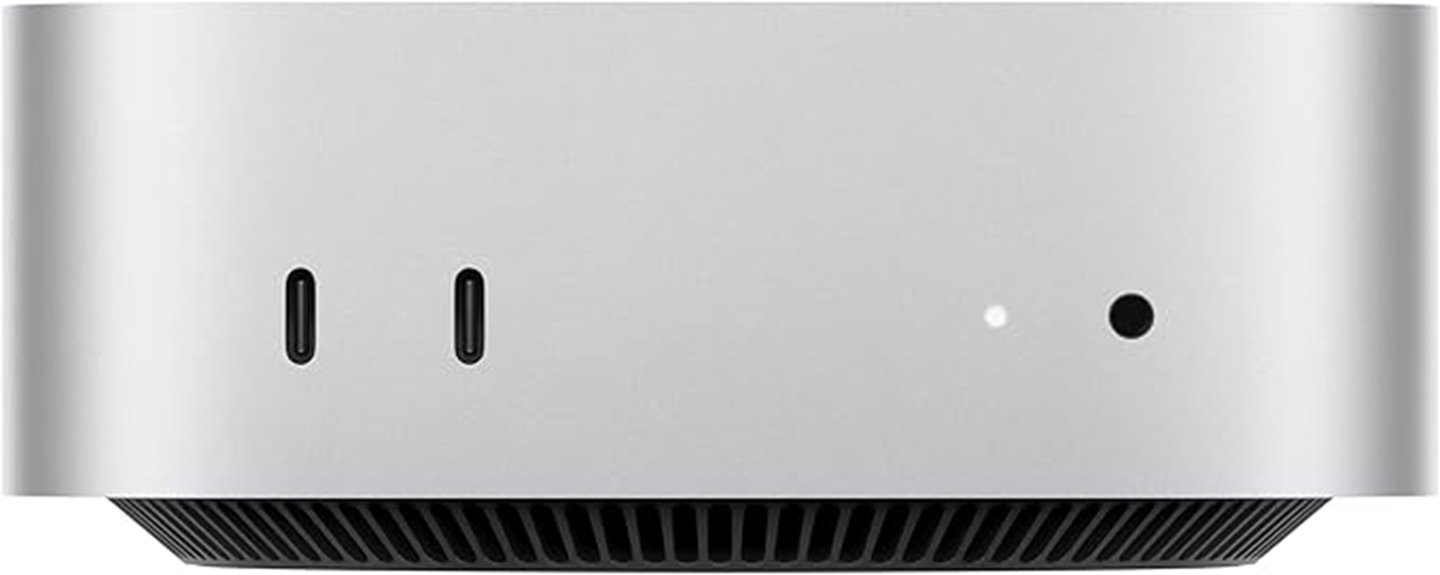
The Apple Mac mini with M4 chip is an ideal choice for photographers seeking a compact yet powerful workstation in 2025. Its small 5×5 inch size and lightweight design make it easy to place anywhere, whether next to your monitor or in a tight space. Powered by the M4 chip with a 10-core CPU, 10-core GPU, and 24GB of unified memory, it handles large RAW files and demanding editing tasks effortlessly. The 512GB SSD ensures quick access to your files, while supporting multiple high-resolution displays. With robust connectivity options and seamless integration into the Apple ecosystem, this mini packs serious power in a tiny form factor.
Best For: Creative professionals and power users seeking a compact yet high-performance desktop capable of handling demanding tasks and large files.
Pros:
- Compact and lightweight design easily fits into any workspace or studio.
- Powerful M4 chip with a 10-core CPU and GPU delivers fast processing and smooth multitasking.
- Supports multiple high-resolution displays, ideal for editing and creative workflows.
Cons:
- Limited upgrade options due to integrated components and small form factor.
- Price may be high for those requiring only basic computing needs.
- Limited port selection on the front, which might require additional peripherals or hubs.
Apple 2024 Mac mini Desktop Computer with M4 chip with 10‑core CPU and 10‑core GPU: Built for Apple Intelligence, 16GB Unified Memory, 256GB SSD Storage, Gigabit Ethernet. Works with iPhone/iPad
- Compact Size: Five by five inches of power
- Powerful M4 Chip: 10-core CPU and GPU for speed
- Ample Memory: 16GB Unified Memory
As an affiliate, we earn on qualifying purchases.
Apple 2024 Mac mini Desktop Computer with M4 Chip
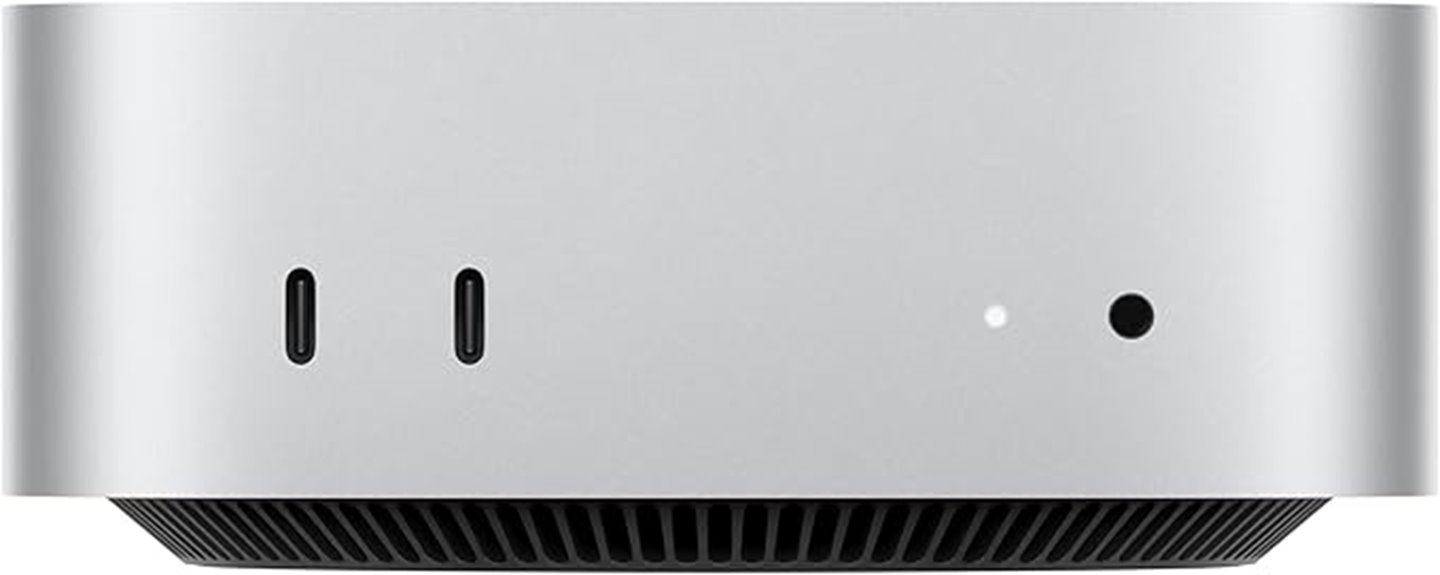
For photographers seeking a compact yet powerful workstation, the Apple 2024 Mac mini with M4 chip stands out as an excellent choice. Its sleek five-by-five-inch design fits easily beside monitors or in tight spaces, making it ideal for streamlined setups. Powered by the redesigned M4 chip, it delivers lightning-fast performance and smooth multitasking, supported by 16GB of unified memory and a 256GB SSD. The device offers versatile connectivity, including Thunderbolt, HDMI, USB-C, Ethernet, and a headphone jack, ensuring seamless integration with peripherals. Plus, its ecosystem features, privacy protections, and environmental sustainability make it a reliable, efficient, and eco-friendly option for photography workflows in 2025.
Best For: photographers and creative professionals seeking a compact, high-performance desktop for editing and multitasking in limited space.
Pros:
- Compact five-by-five-inch design ideal for small workspaces
- Powered by the advanced M4 chip for fast performance and responsiveness
- Versatile connectivity options including Thunderbolt, HDMI, USB-C, and Ethernet
Cons:
- Limited internal storage with only 256GB SSD, which may require external drives for large files
- No dedicated GPU, potentially limiting high-end graphics performance for intensive tasks
- Slightly higher price point compared to other mini desktops with similar specs
Apple 2024 Mac mini Desktop Computer with M4 chip with 10‑core CPU and 10‑core GPU: Built for Apple Intelligence, 16GB Unified Memory, 512GB SSD Storage, Gigabit Ethernet. Works with iPhone/iPad
- Compact Size: Five by five inches of power
- Powerful M4 Chip: Unleashes full speed and capabilities
- Elegant Design: Fits next to monitors and anywhere
As an affiliate, we earn on qualifying purchases.
Apple Mac mini Desktop Computer with M4 Chip and 16GB RAM

With its powerful M4 chip and 16GB of unified memory, the Apple Mac mini Desktop Computer is an ideal choice for photographers seeking a compact yet capable workstation. Its sleek 5×5-inch design easily fits on any desk, making it perfect for tight spaces. The M4 chip’s 10-core CPU and GPU deliver fast processing and smooth graphics, essential for editing high-resolution images. Support for multiple displays, including up to two 6K monitors, ensures ample workspace. Built-in Wi-Fi 6E and Thunderbolt 4 ports provide fast connectivity. Plus, its energy-efficient, carbon-neutral design aligns with eco-conscious workflows, making it a reliable, efficient tool for photography professionals.
Best For: photographers and creative professionals seeking a compact, high-performance desktop for editing high-resolution images and multitasking with multiple displays.
Pros:
- Compact and sleek design fits easily in tight spaces and on any desk.
- Powerful M4 chip with 10-core CPU and GPU ensures fast processing and smooth graphics performance.
- Supports up to three displays, including two 6K monitors, for expansive workspace.
Cons:
- Limited storage options starting at 512GB, which may require external drives for large media libraries.
- No dedicated graphics card, which could impact demanding 3D rendering or gaming.
- Limited upgradability; RAM and storage are not user-replaceable after purchase.
Factors to Consider When Choosing Mac Studio for Photography Workflows
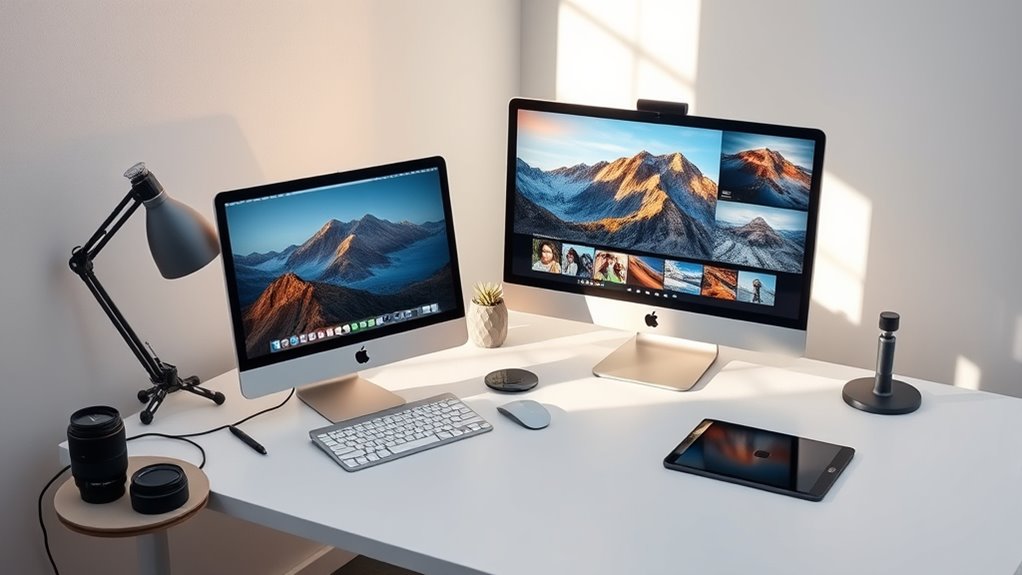
When selecting a Mac Studio for my photography workflow, I focus on key factors like processing power, display compatibility, and storage capacity. I also consider the available ports for peripherals and how well it integrates with my existing ecosystem. Addressing these points helps me choose a setup that’s efficient and future-proof.
Processing Power Needs
Choosing the right Mac Studio for photography workflows hinges on having sufficient processing power to handle demanding tasks efficiently. A multi-core CPU with at least 10 cores is essential for editing large, high-resolution files and rendering complex images quickly. GPU performance matters too, as it impacts real-time previews, filters, and 3D rendering, so a powerful, dedicated graphics card is a must. I also recommend 24GB or more of RAM to guarantee smooth multitasking when working with multiple high-res images and software. Fast media engines and hardware-accelerated decoding and encoding reduce export and rendering times, boosting overall workflow efficiency. Ultimately, scalable processing power prepares you for future demands, like 8K editing and advanced features, keeping your setup ready for upcoming software updates.
Display Compatibility Options
Selecting a Mac Studio that aligns with your photography workflow means paying close attention to display compatibility. You want to guarantee it supports multiple high-resolution monitors, like 6K or 8K displays, for detailed editing and color accuracy. Check that the device has enough Thunderbolt or HDMI ports to connect all your desired screens simultaneously. Compatibility with DisplayPort 2.1 over Thunderbolt 5 is essential for leveraging the latest high-resolution displays. Also, verify the maximum number of external displays supported and their resolution limits to match your workflow needs. Additionally, consider the refresh rates of these displays—higher rates like 240Hz can offer smoother editing and review sessions. These factors help create a seamless, efficient editing environment tailored to professional photography.
Storage and Memory Capacity
High storage capacity is vital for managing large RAW files, extensive photo libraries, and high-resolution videos without constantly relying on external drives. Opting for configurable storage options up to several terabytes guarantees I have ample space for backups, caches, and project files, minimizing workflow interruptions. Sufficient memory, like 32GB or more, greatly enhances performance—enabling faster rendering, exporting, and real-time editing of high-res images and videos. When choosing a Mac Studio, balancing storage and RAM based on my workflow needs is key for maximum speed and efficiency. More memory helps handle complex projects and multitasking smoothly, while larger storage keeps everything accessible without bottlenecks. Together, these factors ensure a seamless, efficient photography workflow, even with the most demanding media files.
Connectivity and Ports
When building a photography workspace with a Mac Studio, I need to make sure it has enough ports to connect all my devices without hassle. I look for multiple Thunderbolt 4 or USB-C ports to connect external drives, cameras, and peripherals seamlessly. It’s also essential to have HDMI or other video outputs to support multiple high-resolution displays for editing. Fast Ethernet ports, like 10Gb Ethernet, help me transfer large files quickly and collaborate remotely. I also consider audio ports, such as headphone jacks or digital audio outputs, for monitoring during editing. Overall, I check the port configuration to guarantee it meets my current needs and future upgrades, avoiding the hassle of additional adapters or hubs. This setup keeps my workflow smooth and efficient.
Ecosystem Integration
A well-designed workspace isn’t just about ports and hardware; it also depends on how smoothly your Mac Studio fits into your existing Apple ecosystem. When your devices work seamlessly together, it dramatically boosts your workflow efficiency. Features like iPhone Mirroring and AirDrop make transferring photos and files quick and effortless. Continuity tools such as Handoff and Universal Clipboard let you start editing on one device and pick up right where you left off on another. Deep integration with macOS and Apple Silicon ensures consistent performance and software compatibility. Using native Apple apps and services streamlines organization, editing, and backups, saving you time and reducing hassle. Prioritizing ecosystem integration means your Mac Studio becomes a powerful hub that complements and enhances your entire photography workflow.
Frequently Asked Questions
How Does GPU Performance Impact Photo Editing on Mac Studio?
GPU performance really speeds up my photo editing process. It handles complex tasks like rendering high-resolution images and applying filters smoothly, without lag. A powerful GPU reduces rendering times, making my workflow more efficient. When I use a Mac Studio with a strong GPU, I notice a significant boost in performance, allowing me to edit more quickly and focus on creativity instead of waiting for processes to finish.
What Are the Best Storage Options for Large Photo Libraries?
Imagine your photo library overflowing like a tidal wave—crucial to keep it safe and accessible. I recommend using high-capacity SSDs connected via Thunderbolt 3 or 4 for blazing-fast transfers and reliability. External RAID arrays are fantastic for redundancy and speed, while cloud storage like iCloud or Dropbox offers seamless access everywhere. Combining local SSDs with cloud backups gives me peace of mind and smooth workflows, even with massive photo collections.
Can Mac Studio Handle 4K or 8K Video Editing Alongside Photography?
Yes, the Mac Studio can handle 4K and 8K video editing along with photography. I’ve found it’s powerful enough to manage demanding tasks thanks to its robust M1 Ultra or M2 Ultra chips, ample RAM, and fast SSD options. Whether I’m editing high-resolution videos or large photo libraries, it performs smoothly, making it an excellent choice for professionals juggling both photography and video workflows seamlessly.
How Important Are Port Options for Connecting External Displays and Peripherals?
Port options are essential for my workflow because they determine how easily I connect external displays and peripherals. I need multiple USB-C or Thunderbolt ports for high-speed data transfer, external drives, and multiple monitors. Without enough ports, I’d constantly switch cables, disrupting my workflow. So, I look for a Mac Studio with versatile, ample port options to keep my setup efficient and seamless, especially when handling large photo and video files.
What Software Compatibility Considerations Exist for Professional Photographers?
Did you know that over 80% of professional photographers rely heavily on Adobe Creative Cloud? I find software compatibility vital, especially with tools like Lightroom and Photoshop. When choosing a Mac Studio, I consider how well it supports my editing software and peripherals. Ensuring compatibility means smoother workflows, fewer crashes, and quicker edits. I always double-check that my essential apps run seamlessly to stay efficient and creative.
Conclusion
Choosing the right Mac Studio can truly transform your photography workflow, making it smoother and more efficient. I’ve found that even the smallest upgrade, like RAM or storage, can unexpectedly uncover new creative potential. It’s funny how the right setup often appears just when you need it most, turning a good workflow into a great one. Trust me, investing wisely now will save you headaches—and inspire your best work—down the road.