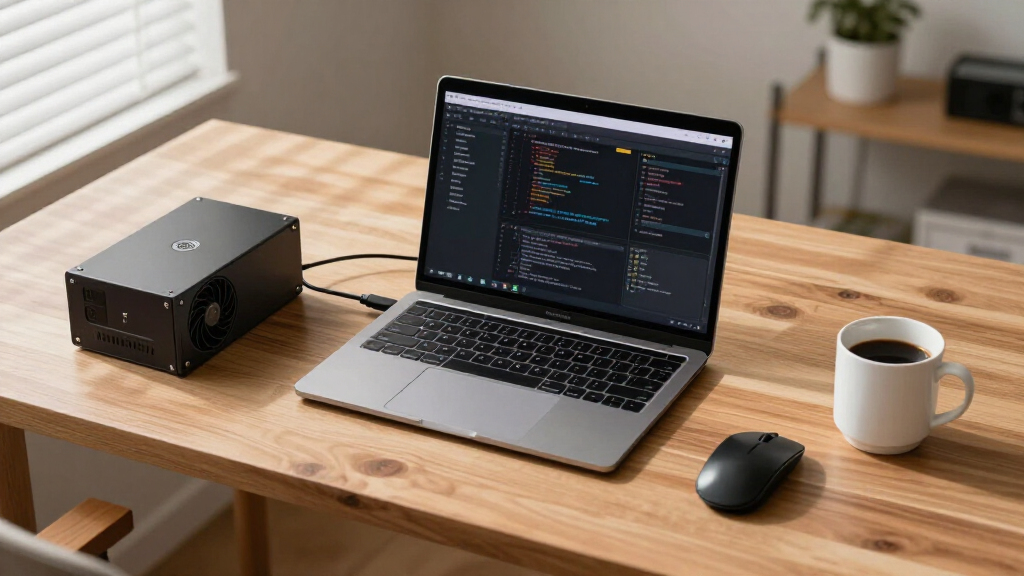

🔍 Read the full analysis: The Top External GPUs For AI Innovation In 2026 on ThorstenMeyerAI.com
Listen free for 30 days with Audible
Thousands of audiobooks and originals — cancel anytime.
Start your free trialAs an affiliate, we earn on qualifying purchases.
TL;DR
In 2026, the most prominent external GPUs for AI applications include the Razer Core X V2, ASUS ROG XG Mobile, and MINISFORUM DEG1. These models balance performance, compatibility, and value, supporting high-end graphics for AI workloads. Selection depends on device compatibility, power needs, and portability.
In 2026, external GPUs (eGPUs) remain a critical tool for AI professionals and enthusiasts seeking to enhance computational power without replacing their existing hardware. For a comprehensive overview, see the original analysis of top external GPU options. The Razer Core X V2 is identified as the top overall choice due to its reliable compatibility and robust power delivery, supporting a wide range of graphics cards and laptops. Those interested in high-performance GPU options can explore the 15 best GPUs for DLSS 5 in 2026. This development underscores the growing importance of external GPU solutions in AI workflows, especially as demand for high-performance computing continues to rise.
The Razer Core X V2 leads the market in 2026 as the most versatile and dependable eGPU enclosure. It offers up to 650W of power delivery, supporting the latest high-end graphics cards, and features Thunderbolt 3 connectivity for fast data transfer. Its robust build quality and compatibility across many laptops and mini PCs make it a preferred choice for AI developers and researchers.
Another notable model is the ASUS ROG XG Mobile, which is distinguished by its compact design and support for high-end gaming and AI workloads. It provides up to 330W of power and supports the latest GPU architectures, making it suitable for users prioritizing mobility without sacrificing performance. Meanwhile, the MINISFORUM DEG1 offers excellent value, supporting full-sized graphics cards and providing a cost-effective option for those requiring high computational throughput at a lower price point.
These models exemplify the tradeoffs users face: larger enclosures support more powerful cards and better cooling but are less portable, while smaller models enhance mobility but may limit GPU support. Connectivity standards like Thunderbolt 3/4 and USB4 remain critical, with Thunderbolt 4 providing the highest data transfer speeds essential for demanding AI tasks. For more on portable storage solutions supporting AI workflows, see the best portable external hard drives.
Why External GPUs Are Critical for AI in 2026
The availability of high-performance external GPUs in 2026 significantly impacts AI development by enabling more accessible, scalable, and cost-effective computing solutions. Researchers and developers can upgrade their existing laptops or mini PCs without full system replacements, accelerating AI research and deployment. As AI models grow in complexity and size, these external enclosures provide the necessary computational power, bridging the gap between desktop and portable computing.
This trend also democratizes access to AI hardware, allowing smaller labs and individual researchers to leverage high-end graphics processing without extensive infrastructure investments. Additionally, the compatibility and performance improvements in 2026 mean AI workflows are more efficient, reducing bottlenecks in training and inference tasks, which are critical for real-time applications like autonomous systems and large language models.
external GPU enclosure Thunderbolt 3
As an affiliate, we earn on qualifying purchases.
As an affiliate, we earn on qualifying purchases.
Evolution of External GPUs and AI Hardware in 2026
Over the past few years, external GPUs have evolved from niche accessories to essential components for AI and high-performance computing. In 2024, the market saw a surge in models supporting Thunderbolt 4 and USB4, with increased power delivery and cooling solutions. By 2025, major manufacturers like Razer, ASUS, and MINISFORUM introduced models optimized for AI workloads, supporting the latest GPU architectures such as NVIDIA’s Ada Lovelace and AMD’s RDNA 3.
Industry trends indicate a growing reliance on external GPU solutions to extend the lifespan of existing hardware, especially as AI models demand more GPU memory and compute power. The 2026 landscape reflects a mature market with a focus on compatibility, thermal management, and power efficiency, driven by the expanding role of AI across sectors from healthcare to autonomous vehicles.
As an affiliate, we earn on qualifying purchases.
Outstanding Questions About External GPU Compatibility and Future Upgrades
While the leading models offer broad compatibility, it remains unclear how future GPU architectures and connection standards might influence long-term support. Some users report intermittent issues with specific laptops or operating system updates, and the pace of technological change suggests ongoing adjustments will be necessary. Additionally, the full impact of emerging standards like USB4 2.0 on AI workloads is still under evaluation, with real-world performance data limited at this stage.
As an affiliate, we earn on qualifying purchases.
Upcoming Developments in External GPU Technology for AI
Manufacturers are expected to release next-generation enclosures supporting faster connection standards and higher wattage delivery, further boosting AI capabilities. Software updates and BIOS support improvements will enhance compatibility, reducing setup issues. Industry analysts predict that integrating AI-specific features, such as dedicated cooling for deep learning workloads and optimized power management, will become standard in upcoming models. Users should anticipate new releases in late 2026 and early 2027, aimed at supporting the next wave of AI hardware advancements.
compact external GPU for AI workloads
As an affiliate, we earn on qualifying purchases.
As an affiliate, we earn on qualifying purchases.
Key Questions
Can I use an external GPU with any laptop?
No, compatibility depends mainly on the presence of Thunderbolt 3/4 or USB4 ports. Even with the right port, some laptops may have BIOS or hardware limitations that restrict external GPU use. Always verify your device’s specifications before purchasing an eGPU enclosure.
Are external GPUs worth it for AI workloads?
Yes, especially for users who need to run intensive AI models or training tasks. External GPUs provide significant performance boosts without requiring hardware upgrades, making them a cost-effective solution for expanding computational capacity.
What connection standard offers the best performance for AI tasks?
Thunderbolt 3 and Thunderbolt 4 currently provide the highest data transfer rates—up to 40Gbps—making them ideal for high-performance AI workloads. USB4 is promising but varies in real-world performance depending on the device.
How does size affect eGPU performance and portability?
Smaller, portable enclosures support lower wattage and fewer high-end cards but are easier to carry. Larger models support full-sized GPUs and better cooling, offering higher performance at the expense of portability. Choose based on your specific mobility and power needs.
Source: ThorstenMeyerAI.com
Fall Picks
fall essentials
As an affiliate, we earn on qualifying purchases.