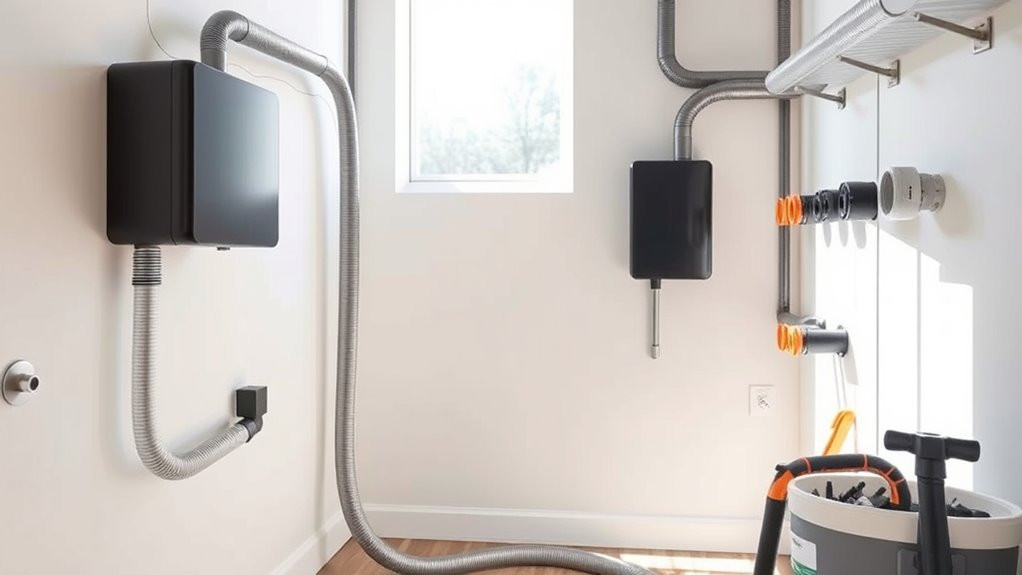

If you’re looking for the best central vacuum kits to install yourself, I recommend options like the Intervac Accessories Kit, Universal Low Voltage Installation Kit, and Electric Installation Kit, which offer easy-to-follow instructions and compatible parts for DIY projects. These kits come with everything you need, from pipes to fittings, ensuring a smooth installation. Keep in mind your home’s layout and system brand. If you want a detailed guide, there’s more to explore ahead.
Key Takeaways
- Look for comprehensive kits with pre-cut, labeled pipes and clear instructions to simplify DIY installation.
- Choose kits compatible with your home’s piping and inlet types, including low-voltage or electrical options.
- Select systems with adequate pipe length, fittings, and accessories to accommodate your home’s size and layout.
- Opt for reputable brands offering detailed guides, support, and warranties to ensure quality and assistance.
- Consider budget and component completeness to find kits that balance affordability with all necessary parts for easy setup.
Central Vacuum Inlet Valve, 2 Pack
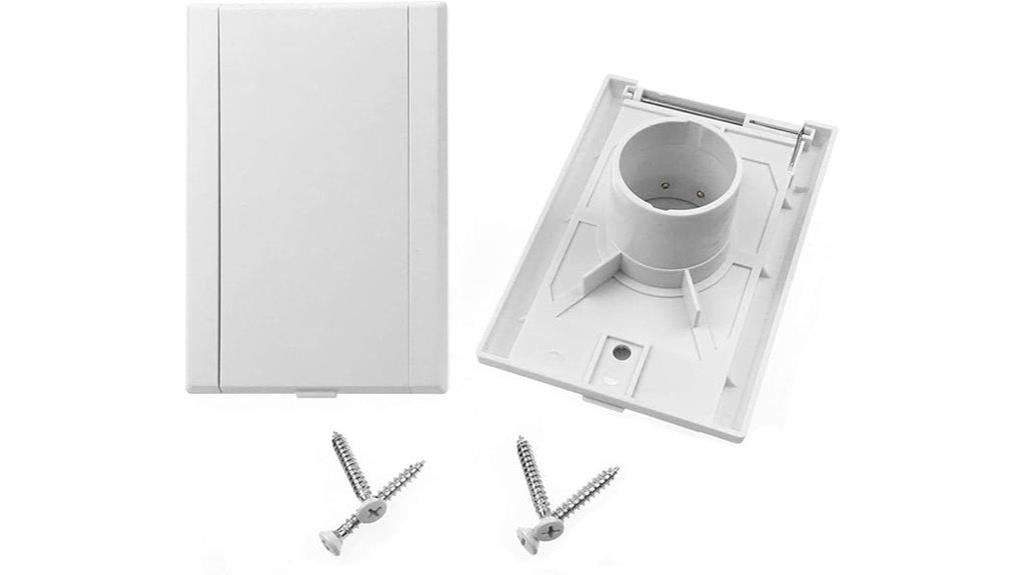
Are you looking to upgrade or replace your central vacuum inlets with a reliable, easy-to-install option? The Central Vacuum Inlet Valve, 2 Pack, is a perfect choice. Designed for Nutone systems, it features a durable plastic build and a full door cover that hides screws and springs for a clean look. It’s compatible with all direct connect hoses and most low-voltage, straight suction hoses, making installation straightforward with included screws and mounting brackets. This non-powered inlet is ideal for new setups or replacing worn-out faceplates, giving your system a fresh appearance while ensuring efficient suction. It’s a practical upgrade for DIY enthusiasts.
Best For: DIY homeowners and installers seeking a durable, easy-to-install replacement inlet valve compatible with Nutone central vacuum systems.
Pros:
- Durable plastic construction with a full door cover for a sleek appearance
- Compatible with all direct connect hoses and most low-voltage, straight suction hoses
- Easy installation with included mounting screws and compatibility with standard brackets or kits
Cons:
- Not compatible with electrical or specialized hoses such as Sears/Kenmore or Budd hoses
- Limited to suction only, non-powered operation
- May require additional mounting brackets or rough-in kits for certain installations
Intervac Central Vacuum Accessories Kit
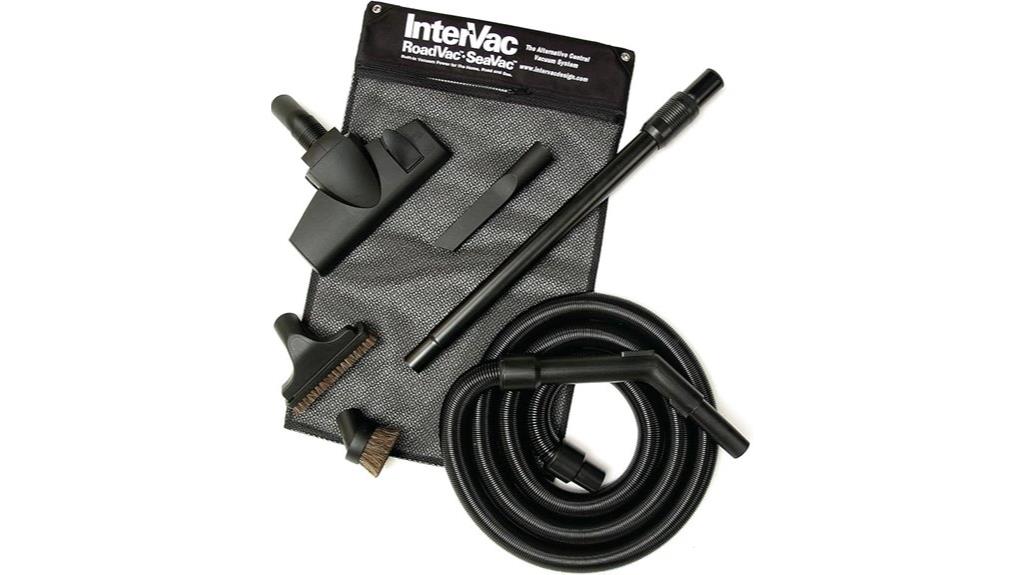
Looking for a versatile and complete accessory kit that makes whole-home cleaning effortless? The Intervac Central Vacuum Accessories Kit is just that. It’s a 7-piece set with essential tools like a stretch hose, metal wands, crevice tool, and upholstery brush, all designed for top performance. The 35-foot flexible hose is easy to maneuver around furniture and hard-to-reach spots, retracts for compact storage, and prevents tugging. Compatible with all InterVac systems, including models like CondoVac and GarageVac, this kit is quick to set up—about five minutes—and built with commercial-grade durability. It’s perfect for homes, garages, RVs, and boats.
Best For: homeowners, RV owners, and boat enthusiasts seeking an easy-to-use, durable, and versatile central vacuum accessory kit for comprehensive cleaning.
Pros:
- Complete 7-piece set includes all essential tools for thorough cleaning
- 35-foot flexible hose offers excellent reach and maneuverability around furniture and hard-to-access areas
- Easy to set up in approximately 5 minutes with intuitive click-in connections
Cons:
- May require compatibility checks for specific vacuum models beyond Intervac systems
- Slightly heavier hoses could be cumbersome for some users over extended use
- Not suitable for cleaning systems outside of Intervac brand or incompatible models
Central Vacuum Cleaner Installation Kit for Suction Boxes

The Central Vacuum Cleaner Installation Kit for Suction Boxes is an excellent choice for DIY enthusiasts who want an all-inclusive, ready-to-assemble system. It includes three suction cans with round and rectangular lids, plus 13 vacuum pipes with various bends and connectors, making setup flexible for different layouts. The kit also provides safety bends, mounting frames, and essential accessories like pipe clamps, control cables, and adhesive. Designed for independent installation, it supports basic pipe routing and connections. Whether you’re configuring a small or large space, this kit guarantees proper fit, safety, and functionality, making it a reliable solution for your central vacuum system.
Best For: DIY homeowners and installers seeking a comprehensive, easy-to-assemble central vacuum system kit for various room configurations.
Pros:
- Includes all essential components for a complete installation, reducing the need for additional purchases
- Supports flexible layout options with multiple pipe bends and connectors
- Designed for independent setup, ideal for DIY enthusiasts with basic installation skills
Cons:
- May require some technical knowledge for optimal assembly and connection
- Limited to basic pipe routing; complex layouts might need additional accessories
- No detailed installation instructions included, which could pose challenges for first-time users
Universal Low Voltage Installation Kit (5), 130′ of Pipe
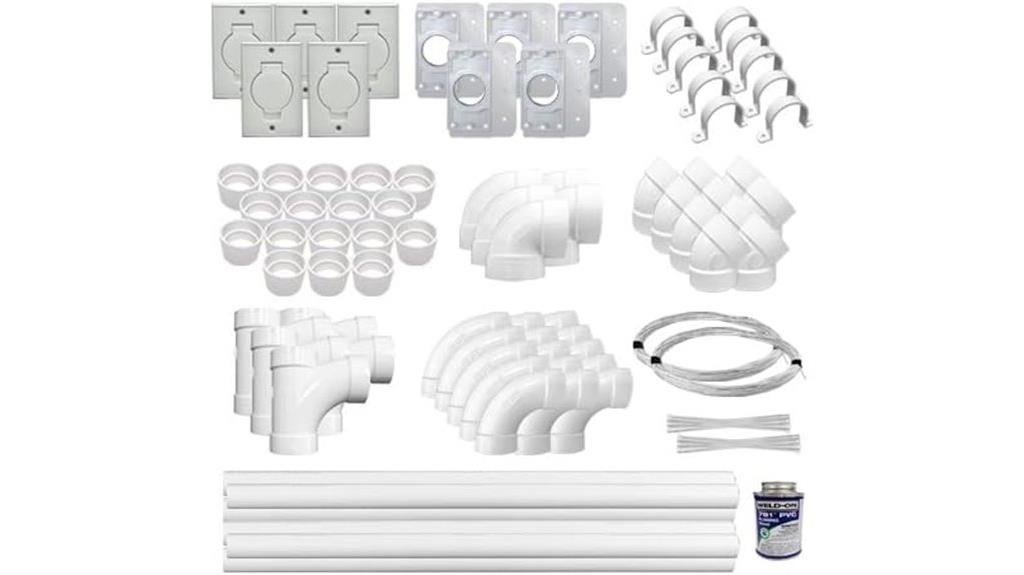
If you’re installing a central vacuum system and need a versatile, all-in-one solution, the Universal Low Voltage Installation Kit (5) with 130 feet of pipe is an excellent choice. It includes everything necessary for a smooth setup: 130 feet of 5-foot pipe sections, wire, mounting brackets, couplings, elbows, and door inlets. The kit is compatible with various models, featuring Hayden 1500 style low voltage inlets. Plus, it provides essential fittings, cable ties, and an installation manual, making the process straightforward. This extensive kit is perfect for DIYers looking to cover large areas efficiently without needing multiple components from different sources.
Best For: DIY homeowners and installers seeking a comprehensive, flexible central vacuum system installation kit capable of covering large areas with all necessary components included.
Pros:
- Includes all essential components such as pipe, wire, fittings, and mounting hardware for easy installation.
- Compatible with multiple central vacuum models, featuring Hayden 1500 style low voltage inlets.
- Provides ample length of pipe and wiring (130 feet each) for extensive coverage and efficient setup.
Cons:
- May be more than needed for small or simple installations, potentially leading to unused materials.
- The kit’s size and component variety can be overwhelming for first-time DIYers without prior experience.
- Limited to systems compatible with Hayden 1500 style low voltage inlets, which may restrict use with other models.
Central Vac Electric Installation Kit (4), 110 ft. of Pipe
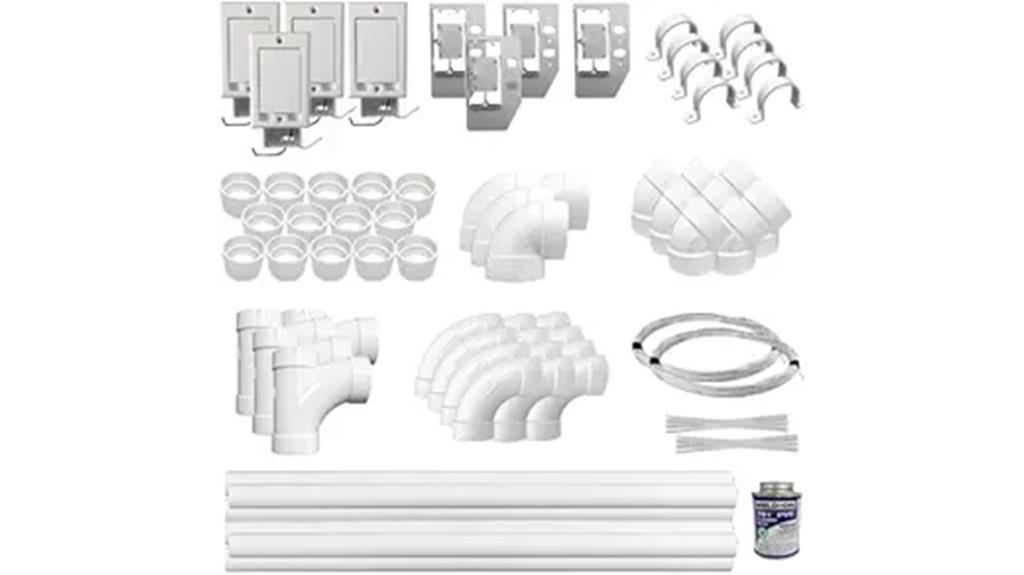
For those planning a thorough central vacuum system, the Central Vac Electric Installation Kit (4) with 110 feet of pipe offers a complete, easy-to-assemble solution. It includes all necessary materials: 22 five-foot pipe sections, four square door inlets, sweep 90’s, tees, short 90’s, 45’s, pipe straps, stop couplings, glue, cable ties, and an installation manual. Compatible with all direct connect hoses, including Electric Hayden 1760 inlets, it features wiring for easy setup. With 110 feet of piping and components, it provides extensive coverage for various spaces. Everything is designed for straightforward installation, making it ideal for DIY enthusiasts seeking a reliable, ready-to-go central vacuum system.
Best For: DIY homeowners and contractors seeking a comprehensive, easy-to-install central vacuum system with extensive piping coverage.
Pros:
- Complete kit with all necessary components included, simplifying installation.
- Compatible with all direct connect hoses, including Electric Hayden 1760 inlets.
- Provides 110 feet of piping, ideal for large spaces and extensive coverage.
Cons:
- May require basic plumbing skills for proper setup.
- Fixed pipe length may not suit very small or very large spaces without additional modifications.
- Bulkier components could be challenging to maneuver in tight or complex installation areas.
My Filtered Home Central Vacuum Installation Kit
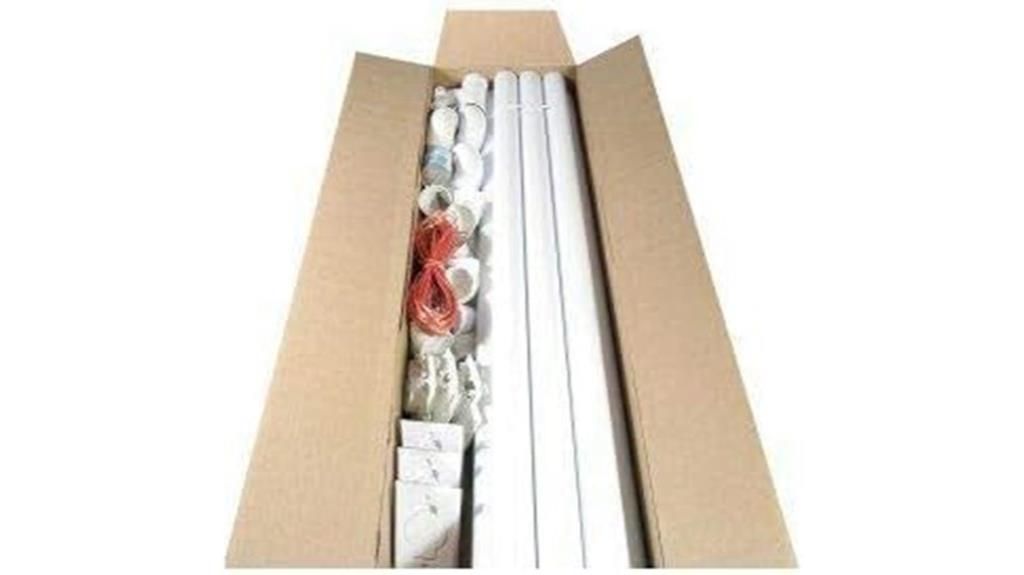
Designed for homeowners seeking a reliable indoor central vacuum installation, the My Filtered Home Central Vacuum Installation Kit offers high-quality components compatible with popular brands like Nutone, Beam, and Eureka. It includes 48 feet of pipe, fittings, wall inlets, and accessories, meeting ASTM F2158 standards. The kit features 12 four-foot pipes, elbows, tees, couplings, mounting plates, and low-voltage wiring, making installation straightforward. It’s suitable for indoor use, with a capacity of 125 ml, and includes three white inlet valves. Lightweight at 33.9 pounds, this kit provides everything needed for a DIY setup, backed by a customer rating of 4.1 stars.
Best For: homeowners seeking a comprehensive, easy-to-install indoor central vacuum system compatible with major brands.
Pros:
- Includes all necessary components for a DIY installation, such as pipes, fittings, and wall inlets
- Meets ASTM F2158 standards, ensuring quality and safety
- Compatible with popular brands like Nutone, Beam, and Eureka for versatile use
Cons:
- Not portable; designed solely for indoor fixed installation
- Limited to a single power level with no cordless or battery options
- Customer reviews indicate a moderate rating of 4.1 stars, suggesting some users may experience installation or compatibility issues
Universal Low Voltage Installation Kit (3), 80 ft. of Pipe

The Universal Low Voltage Installation Kit (3), 80 ft. of Pipe stands out as an ideal choice for homeowners or installers seeking a versatile and all-encompassing solution for central vacuum system setup. It’s compatible with most makes and models, using Hayden 1500 style inlets, making it highly adaptable. The kit includes everything needed for installation: fittings, elbows, couplings, mounting brackets, wiring, pipe sections, and detailed instructions. With 80 feet of pipe, multiple elbows, and accessories, it provides flexibility for various layouts. Whether you’re a DIY enthusiast or a professional, this kit simplifies the process, ensuring a secure, efficient, and reliable central vacuum system.
Best For: homeowners and professional installers seeking a comprehensive, adaptable, and easy-to-install central vacuum system setup.
Pros:
- Compatible with most makes and models, including Hayden 1500 style inlets.
- Includes all necessary components for a complete installation, reducing the need for additional purchases.
- Flexible layout options with 80 feet of pipe and multiple fittings for various home configurations.
Cons:
- Might be more than needed for small or simple installations, potentially leading to excess materials.
- Requires some technical knowledge for proper installation despite detailed instructions.
- The kit’s universal design may include features or fittings not compatible with very specific or specialized systems.
Merchandise Mecca Central Vacuum Install Kit
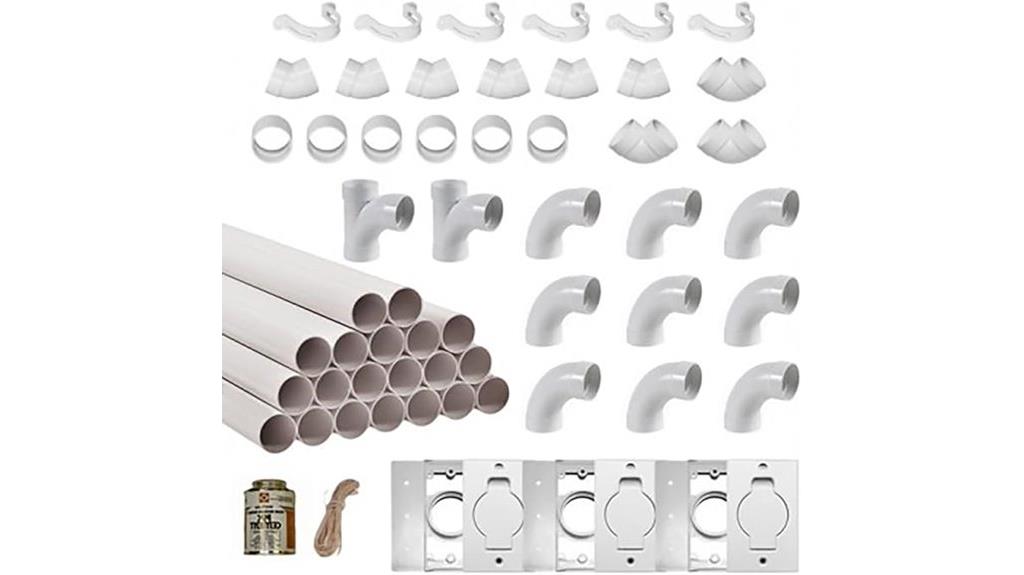
If you’re looking for a professional-grade installation kit that simplifies setting up a central vacuum system, the Merchandise Mecca Central Vacuum Install Kit stands out. It includes 48 feet of durable 2-inch pipe, fittings, wall inlets, wiring, and all necessary components for a seamless setup. Compatible with brands like Nutone, Beam, Eureka, and others, it’s designed for 3-valve systems and meets ASTM F2158 standards for quality. The kit features a exhaustive selection of elbows, couplings, and mounting plates, making installation efficient and straightforward. It’s perfect for DIYers aiming for a professional finish without extra trips or missing parts.
Best For: DIY homeowners and professional installers seeking a comprehensive, high-quality central vacuum system setup kit compatible with multiple brands.
Pros:
- Includes all essential components such as pipes, fittings, wall inlets, and wiring for a complete installation.
- Meets ASTM F2158 standards, ensuring durability and high quality.
- Compatible with numerous popular vacuum brands, offering versatile use.
Cons:
- May contain more parts than necessary for small or simple installations.
- Does not include detailed installation instructions, requiring some technical knowledge.
- The 48-foot pipe length might be excessive for very small spaces, leading to potential storage or handling challenges.
OVO Central Vacuum Carpet Deluxe Kit

For homeowners seeking powerful, versatile carpet cleaning, the OVO Central Vacuum Carpet Deluxe Kit stands out with its adjustable electric carpet beater and LED light, making it easy to tackle all carpet types—even in dimly lit spaces. The kit includes a lightweight, crushproof 35-foot hose with a swivel handle that prevents kinking, plus a 72-inch power cord. It’s compatible with most inlet sizes and major brands like Beam, Electrolux, and Hoover. The set features a premium pivoting floor brush, soft bristle accessories, and organized storage options. Backed by a 2-year warranty, this kit combines durability, performance, and ease of installation.
Best For: homeowners seeking versatile, powerful carpet cleaning with adjustable features and organized storage for various flooring types.
Pros:
- Includes adjustable electric carpet beater with LED light for enhanced visibility in dark areas.
- Lightweight, crushproof 35-foot hose with swivel handle prevents kinking and improves maneuverability.
- Compatible with most inlet sizes and major vacuum brands, offering versatile cleaning options.
Cons:
- Pigtail power cord may require additional extension cords for larger spaces.
- Some users might find the assortment of accessories excessive for minimal cleaning needs.
- Compatibility with all inlet sizes and brands is not guaranteed; verification needed before purchase.
OVO Central Vacuum Installation Kit (INST-3P-WH-NAD)
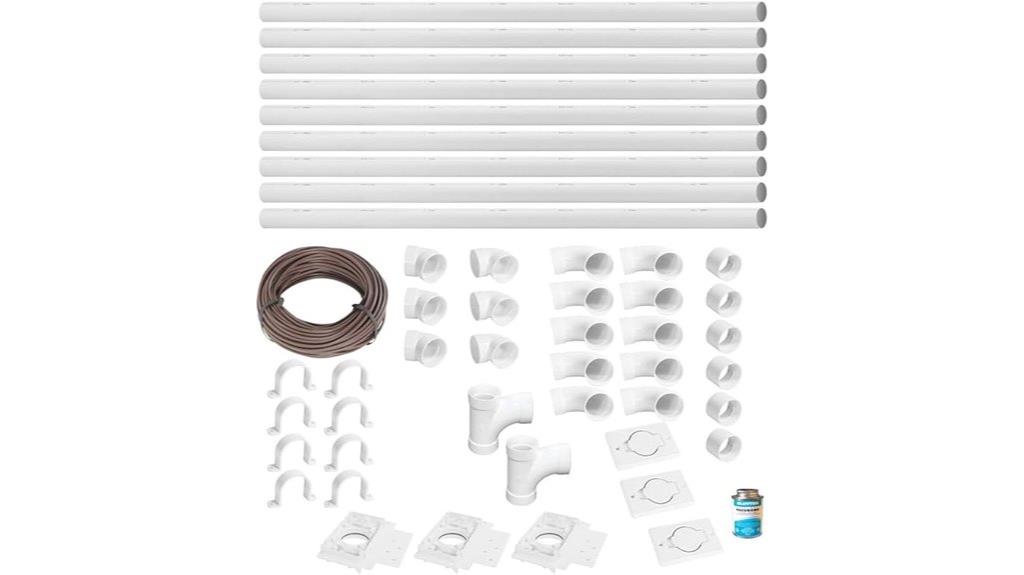
Designed for versatility, the OVO Central Vacuum Installation Kit (INST-3P-WH-NAD) stands out as an excellent choice for homeowners seeking a universal, easy-to-install system. It’s compatible with all systems using 2-inch pipes and low-voltage wiring, making it a flexible option. The kit includes 48 feet of PVC pipe, multiple elbows, and fittings, along with 50 feet of electrical wire and PVC cement for secure connections. With three round door inlets and mounting brackets, installation is straightforward. Whether you’re replacing an old system or setting up a new one, this kit provides everything needed for a professional-grade setup you can do yourself.
Best For: homeowners seeking a versatile, easy-to-install central vacuum system compatible with standard 2-inch pipes and low-voltage wiring.
Pros:
- Universal compatibility with various central vacuum systems
- Includes comprehensive installation components such as pipes, elbows, and wiring
- Easy to install with all necessary accessories provided
Cons:
- May require basic DIY skills for proper installation
- Limited to systems using 2-inch pipes and low-voltage wiring
- Does not include vacuum units or power units, only installation kit
Factors to Consider When Choosing Central Vacuum Kits for DIY Installation

When selecting a central vacuum kit for DIY installation, I consider how well it will fit with my existing system and how complex the installation process is. I also look at the included fittings and accessories, as well as the system’s power and capacity to meet my cleaning needs. Finally, I keep an eye on my budget to find a kit that offers the best value without sacrificing performance.
Compatibility With Existing Systems
Making certain your central vacuum kit is compatible with your existing system is crucial for a smooth and successful DIY installation. I recommend checking that the kit’s pipe diameter matches your current piping to prevent connection issues. Confirm that the voltage and inlet types—whether low voltage or electrical—are compatible with your setup. It’s also important to verify that the brand and model specifications align, avoiding potential compatibility problems. Make sure the wiring and electrical components in the kit adhere to your existing electrical standards to ensure safety and proper operation. Finally, review how the new system integrates with your piping layout to guarantee seamless coverage throughout your space. Taking these steps helps prevent installation headaches and ensures your system functions efficiently from the start.
Installation Complexity Level
Choosing the right central vacuum kit for DIY installation depends heavily on its complexity level. I consider factors like the number of inlet points, pipe length, and system design, as these influence how much skill and time are needed. Kits with pre-cut, labeled pipes, easy-to-follow instructions, and fewer fittings tend to be less involved, making them ideal for beginners. However, systems that require electrical wiring or wall modifications increase difficulty and might need professional help. Using exhaustive installation kits that include all components simplifies the process, reducing extra tools or parts. Before starting, I always assess the complexity level to determine if I can handle the installation myself or if it’s better to hire a professional, ensuring a smooth and safe setup.
Included Fittings and Accessories
Having all the necessary fittings and accessories included in a central vacuum kit is essential for a straightforward DIY installation. I look for kits that include elbows, couplings, T’s, and pipe straps to ensure a complete, secure system. It’s also important that the accessory set contains inlet valves compatible with my system’s inlet sizes and types. I verify that essential connectors and adapters are provided for seamless connections between pipes, hoses, and inlets. Fittings should meet industry standards like ASTM F2158 to guarantee durability and safety. Additionally, I consider whether the kit offers enough variety of fittings to match my layout and room configurations, avoiding the need for extra purchases. This ensures a smoother installation process and a reliable, long-lasting system.
System Power and Capacity
When selecting a central vacuum system, I focus on the power rating, typically between 300W and 700W, to match my home’s size and cleaning needs. A higher wattage generally means stronger suction, but I also check the airflow capacity, measured in CFM, since more airflow means better cleaning performance. I review the motor specifications to guarantee it can handle different surfaces like carpets and hard floors. For larger homes with multiple rooms, I verify that the system can support several inlet valves without losing suction. If I want flexibility, I opt for models with adjustable or variable power settings, so I can customize suction strength for different tasks. This way, I ensure my central vacuum is powerful enough to do the job efficiently.
Budget and Cost Factors
Budget considerations play a significant role in selecting a central vacuum kit that fits both your cleaning needs and financial plan. I recommend setting a clear budget upfront, including parts, tools, and potential professional help. Comparing complete kits versus individual components can reveal better value, especially if you already have some tools. Don’t forget to factor in accessories or fittings needed for your space, as these can add to total costs. Sometimes, spending a bit more on a higher-quality kit with better durability, compatibility, or warranty coverage can save money in the long run. Also, watch out for hidden expenses like shipping, taxes, or specialized tools not included in the kit. Planning carefully guarantees you get the best system without exceeding your budget.
Brand Reputation and Support
Choosing a central vacuum kit from a reputable brand can make a significant difference in your DIY installation experience. A trusted brand usually offers better customer support, warranties, and easily accessible replacement parts, which are vital for troubleshooting and long-term maintenance. Established brands also provide detailed installation guides and instructional videos, helping you avoid common mistakes. Positive reviews and high ratings from trusted sources are good indicators of a brand’s reliability and quality. Additionally, brands with strong support networks often respond quickly via phone, email, or chat to assist with any issues. Opting for a well-known brand not only boosts your confidence during installation but also guarantees the product meets industry standards and durability expectations, making your DIY project smoother and more successful.
Frequently Asked Questions
Can I Install a Central Vacuum Kit Without Professional Help?
Yes, you can install a central vacuum kit yourself. I’ve done it, and with some basic tools, patience, and careful planning, it’s manageable. Just follow the manufacturer’s instructions closely, mark the pipe routes, and guarantee proper sealing. If you’re comfortable with DIY projects and have a bit of technical know-how, you’ll find it quite doable. Remember, taking your time makes all the difference!
What Tools Are Needed for DIY Central Vacuum Installation?
Think of installing a central vacuum as setting up the backbone of clean floors. You’ll need basic tools like a drill, screwdrivers, a stud finder, a pipe cutter, and a level. A sharp utility knife helps with trimming pipes, and pliers can be handy for tightening fittings. With these tools, you’re ready to navigate the maze of your walls and create a smooth, efficient vacuuming system yourself.
How Long Does It Typically Take to Install a Central Vacuum System?
Installing a central vacuum system usually takes me about 4 to 8 hours, depending on your home’s size and complexity. I find that planning the layout carefully and gathering all tools beforehand speeds things up. For smaller homes, it might be quicker, while larger or more complex setups could take longer. Patience and following instructions closely help guarantee a smooth installation.
Are There Compatibility Issues Between Different Vacuum Kits and Homes?
Yes, there can be compatibility issues between different vacuum kits and homes. I always check the size of my space, the type of walls, and existing electrical setups before choosing a kit. Some kits may not fit certain wall types or require additional adapters. It is crucial to read the specifications carefully and, if needed, consult with a professional to guarantee your chosen system works seamlessly with your home.
What Maintenance Is Required After Installing a Central Vacuum System?
Think of your central vacuum system as a garden needing regular care. After installation, I check the filters monthly, replace bags when full, and clear the hoses of any blockages. I also inspect the inlets for dust buildup. Regular maintenance keeps the system humming smoothly, much like tending to a garden ensures healthy growth. Staying proactive prevents future issues and extends your vacuum’s lifespan, making cleaning effortless and efficient.
Conclusion
In the end, choosing the right DIY central vacuum kit feels almost serendipitous—like the perfect fit was waiting just around the corner. With the options aligned to my needs, I realized that a little research and the right tools can turn a formidable task into a rewarding project. Sometimes, what seems like coincidence is just the universe guiding us toward making smarter, cleaner choices—one installation at a time.