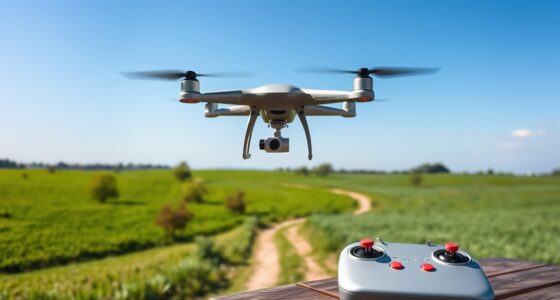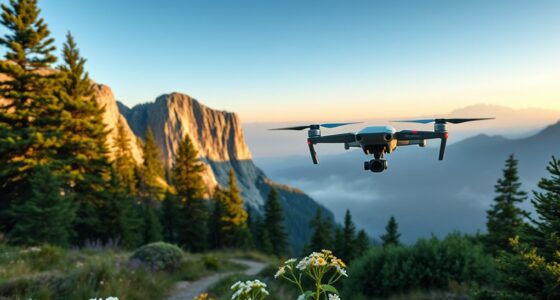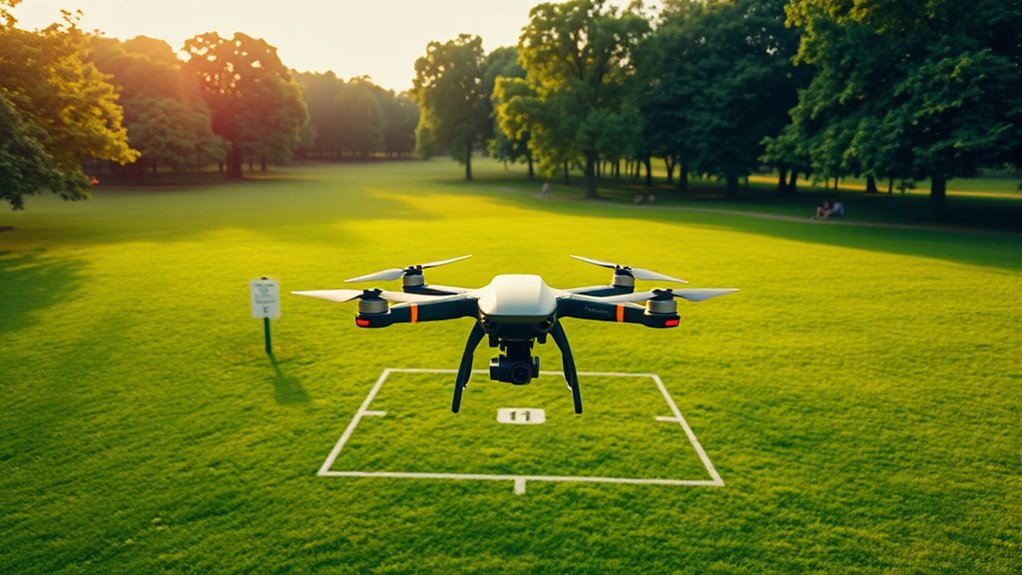

To find safe drone-friendly spots, start by checking local regulations and no-fly zones using official maps or apps. Look for open spaces like parks or designated flying areas, and always seek permission if flying on private property. Use online tools and drone mapping platforms to identify restrictions and safe zones. Consider weather and environmental factors before flying. Keep these tips in mind, and you’ll discover more ways to choose the best spots for safe, legal drone flights.
Key Takeaways
- Verify local regulations, no-fly zones, and airspace rules using official maps and apps before flying.
- Use drone mapping tools and online resources to identify open, obstacle-free, and designated drone-friendly areas.
- Seek permission from private property owners and choose public parks with designated flying zones.
- Check weather conditions, wind speed, and environmental hazards to ensure safe flying conditions.
- Respect property rights, maintain privacy, and adhere to altitude and restriction guidelines for legal operation.

FAA Drone Labels (2 Sets of 3) + FAA UAS Registration ID Card for Hobbyist Pilots – Optional Battery Labels
You get 2 sets of 3 Labels, 1 FAA ID Card – All customized with your FAA information
As an affiliate, we earn on qualifying purchases.
As an affiliate, we earn on qualifying purchases.
Understanding Local Regulations and Airspace Rules

Before flying your drone, understanding the local regulations and airspace rules in your area is essential. You need to verify your drone is properly registered, which is often a legal requirement. Check whether you must complete drone registration with authorities before taking off. Additionally, some locations require flight plan approval, especially if you’re flying in controlled airspace or near sensitive areas. Familiarize yourself with no-fly zones, altitude limits, and local restrictions to avoid penalties. Knowing these rules helps you fly safely and responsibly. Always verify the latest regulations through official sources before your flight. This airspace classification knowledge is crucial for safe drone operation. This preparation prevents legal issues and keeps you aware of any special permissions or restrictions needed for your intended flying location. Being aware of airspace regulations ensures you stay compliant and avoid potential safety hazards.
Furthermore, understanding community guidelines related to drone use can help you maintain good relationships with neighbors and local authorities, reducing the risk of conflicts or complaints.

Hover – Drone and UAV News, no-fly zone maps, and weather!
– Flight Readiness Indicator: We give you a simple to understand flight status to let you know if…
As an affiliate, we earn on qualifying purchases.
As an affiliate, we earn on qualifying purchases.
Utilizing Online Resources and Drone Mapping Tools

Leveraging online resources and drone mapping tools can substantially enhance your planning process. These tools help you identify drone-friendly spots by providing detailed aerial views and real-time data. For example, drone photography and aerial surveys offered by mapping platforms reveal land features, restrictions, and potential hazards. To visualize, consider this table:
| Land Features | Suitable Flying Conditions |
|---|---|
| Open fields, lakes | Clear weather, minimal wind |
| Urban areas, parks | Low crowd times, legal zones |
| Forest edges, hills | Safe altitude, obstacle awareness |
| Water bodies, beaches | Wide open space, no fly zones |
Additionally, these mapping tools are often integrated with European cloud servers, ensuring data security and faster access, which is particularly beneficial for extensive planning. They also provide real-time updates on temporary restrictions or events that might impact your drone activities. Incorporating accurate mapping technology can further improve precision in identifying safe flight zones, especially in unfamiliar areas. Utilizing these mapping tools to plan your flights can help you avoid restricted zones and ensure safer, more enjoyable drone flights.

DJI Mini 5 Pro Fly More Combo with DJI RC 2, Drone with Camera, 1-Inch CMOS, 4K Drone for Beginners with Omnidirectional Obstacle Sensing, ActiveTrack 360°, 225° Gimbal Rotation, 3 Batteries
Ultra-Light, Palm-Sized Foldable Design – Compact and foldable, this palm-sized drone slips easily into a pocket and offers…
As an affiliate, we earn on qualifying purchases.
As an affiliate, we earn on qualifying purchases.
Identifying Public Parks and Open Spaces for Flying

Public parks and open spaces offer convenient locations for drone flying, but finding the right spots requires some research. Start by exploring local parks that are popular within the drone community, as they often have designated flying areas or are known for drone-friendly policies. Always check park regulations before flying; many parks have specific rules about drone use, such as altitude limits or restricted zones. Look for parks with wide, open spaces away from crowds and sensitive areas like playgrounds or wildlife habitats. Consulting official city or park district websites can provide details on regulations and designated flying zones. Understanding drone regulations and restrictions is essential to ensure compliance and safety. Additionally, engaging with local drone groups can help identify drone-friendly spots and share experiences with fellow enthusiasts. Researching field-of-view considerations can help you choose the best locations for your drone’s capabilities. Being aware of airspace restrictions is also crucial to avoid interference with manned aircraft and to stay within legal boundaries. By doing your homework, you’ll ensure a safe, enjoyable experience while respecting park rules and fellow visitors.

SKYROVER X1 Drone with Camera Combo with Screen Controller, 4K/60fps Video, 8K Photo, 360° Obstacle Avoidance, Under 249g, 9.32-Mi Transmission, AI Night Shot, 96-Min Flight Time with 3 Batteries
Cinematic 4K/60fps HDR Video & 48MP Photos: Captures smooth 4K/60fps HDR video and detailed 48 MP photos with…
As an affiliate, we earn on qualifying purchases.
As an affiliate, we earn on qualifying purchases.
Exploring Private Property and Gaining Permissions

While public parks are often open for drone flights, exploring private property can expand your options—if you have the right permissions. Before flying, always respect property rights and seek permission from the owner. Approach this with drone etiquette in mind; be polite, transparent, and clear about your intentions. Explain how you’ll operate safely and minimize disturbance. Keep in mind that gaining permission isn’t just about legal access, but also about building trust. If granted permission, stick to agreed boundaries and avoid flying over areas that could invade privacy or cause concern. Remember, responsible behavior fosters good relationships and ensures you’ll stay welcome on private property. Always prioritize safety, respect property rights, and communicate clearly to make your private property flights smooth and trouble-free. Understanding property rights is essential to ensure respectful and lawful drone operation. Additionally, being aware of local regulations can help prevent inadvertent legal issues during your flights. To further ensure a positive experience, familiarize yourself with the psychological impact of responsible drone use, which includes maintaining respectful distances and ensuring your flights do not cause stress or disturbance to others. Recognizing the importance of trust-building with property owners can facilitate more opportunities for drone flying in private spaces.
Recognizing No-Fly Zones and Restricted Areas
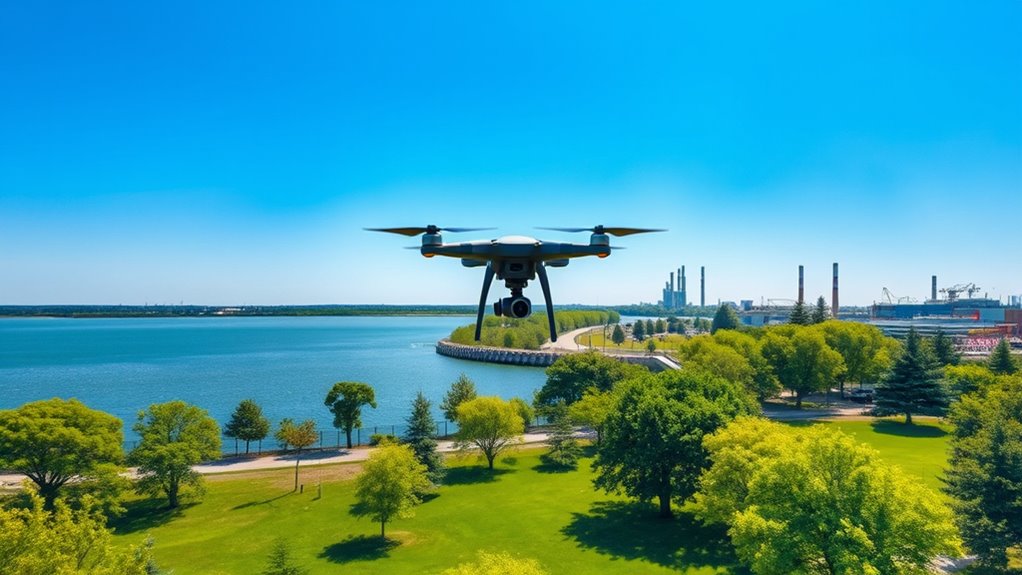
Understanding no-fly zones and restricted areas is essential for safe drone operation. No fly zones are designated areas where flying your drone is prohibited, often for safety or security reasons. Restricted areas are zones where flight is allowed only under specific conditions or permissions. You can usually identify these areas through official maps, apps, or local signage. Pay attention to symbols indicating no fly zones, such as airport boundaries or government facilities. Ignoring these restrictions can result in fines, legal issues, or safety hazards. Always verify your flight location before taking off, and use reliable tools to check for any updates or temporary restrictions. Recognizing and respecting no-fly zones and restricted areas keeps your drone flights safe, legal, and responsible. Additionally, understanding the types of no-fly zones helps you better plan your flights and avoid inadvertent violations.
Tips for Assessing Safety and Environmental Conditions

Before flying, make sure to check local regulations to stay within legal boundaries. Keep an eye on weather patterns to avoid sudden changes that could affect safety. Also, assess your surroundings for obstacles or hazards that might compromise your flight. Consider incorporating natural landscapes into your planning to enhance your experience and safety. Additionally, understanding airspace regulations can help prevent potential legal issues and ensure safe operation. Being aware of geographic features can help you select optimal locations that minimize risks and provide better flying conditions. Using smart home automation systems can also assist in monitoring environmental factors and securing your drone area. Incorporating real-time environmental data can further improve your decision-making during flights.
Check Local Regulations
Have you checked the local regulations before planning your flight? Knowing the rules guarantees a safe, legal experience. Here are four key steps:
- Verify no-fly zones or restrictions in your area.
- Understand altitude limits to prevent violations.
- Check if drone battery management policies are enforced.
- Review rules on camera settings optimization to avoid privacy issues.
- Use passive voice detection tools to improve your writing clarity and ensure your documentation is straightforward.
Observe Weather Patterns
How can you guarantee safe flying conditions? Start by checking the latest weather forecasting updates for your area. Reliable forecasts help you anticipate rain, fog, or thunderstorms that could interfere with your flight. Next, perform a thorough wind analysis; strong or gusty winds can destabilize your drone and cause crashes. Look for steady, light breezes instead. Pay attention to changing weather patterns throughout the day, as conditions can shift quickly. Avoid flying in extreme heat or cold, which can affect your drone’s battery life and performance. By actively observing weather patterns and analyzing wind conditions before flying, you ensure a safer experience and protect your equipment from weather-related damage. Proper preparation minimizes risks and helps you find the best conditions for drone flight.
Evaluate Surroundings
- Scan for obstacles that could block your line of sight
- Identify potential environmental hazards beforehand
- Monitor wind speed and direction
- Confirm the area is free from crowds or sensitive wildlife
Evaluating these factors helps maintain safety and protects your drone.
Frequently Asked Questions
How Do I Find Local Drone Enthusiast Communities for Flying Tips?
To find local drone enthusiast communities, start by searching for drone meetups and flying clubs in your area online. Check social media platforms like Facebook and Meetup for groups dedicated to drone flying. Attend local events or workshops to connect with experienced pilots. Joining these groups gives you access to flying tips, shared knowledge, and safe spots to practice. Engaging with the community boosts your flying skills and enjoyment.
Are There Specific Times of Day Best for Drone Flying?
The best flying times for your drone are early mornings and late afternoons, as these offer ideal lighting conditions. During these times, the sun’s at a lower angle, reducing glare and shadows that can interfere with your footage. Avoid midday when the sun is directly overhead, causing harsh shadows and potential overexposure. Flying during these optimal lighting periods also helps with visibility and control, ensuring a safer and more enjoyable experience.
Can Weather Conditions Affect Drone Flight Safety?
Weather conditions definitely affect drone flight safety. Weather hazards like rain, snow, or fog can damage your drone or impair visibility. High wind speeds are especially dangerous, causing instability and loss of control. Always check the forecast before flying, avoid flying in strong winds or storm conditions, and make sure the weather is clear and calm. Staying aware of weather hazards helps you fly safely and protect your equipment.
How Do I Handle Conflicts With Other Drone Pilots?
Address conflicts with fellow drone pilots like a calm river flowing around stones. You should practice respectful communication, listen to their concerns, and share your intentions clearly. If disagreements escalate, focus on conflict resolution by finding common ground or suggesting alternative flying areas. Remember, respectful dialogue and understanding turn potential turbulence into smooth sailing, ensuring everyone enjoys flying safely and harmoniously.
What Are the Environmental Impacts of Flying Drones in Natural Areas?
Flying drones in natural areas can disturb wildlife, causing stress and behavioral changes, and may lead to habitat degradation if you’re not careful. You might scare animals away from their nests or feeding sites, disrupting ecosystems. To minimize environmental impacts, stick to designated drone zones, keep your flights brief, and maintain a respectful distance from wildlife. Responsible flying helps protect the environment and preserves natural habitats for everyone to enjoy.
Conclusion
Finding safe, drone-friendly spots is essential for enjoyable flying experiences. By understanding local rules, using online tools, and respecting no-fly zones, you can avoid fines and accidents. Did you know that over 80% of drone accidents happen due to flying in restricted areas? Staying informed and cautious not only keeps you safe but also helps protect others and the environment. So, plan ahead, fly responsibly, and enjoy exploring from new heights!