Drone swarms coordinate multiple drones by using algorithms inspired by nature, like bird flocks or insect colonies. Each drone operates based on local data and simple rules, allowing them to communicate reliably and adapt dynamically to their environment. They can spread out, form formations, or adjust to obstacles without centralized control. This seamless coordination enables complex tasks to be completed efficiently. If you keep exploring, you’ll discover how these systems are shaping future aerial operations.

Get the latest gadgets delivered free with Prime
- Fast, free delivery on millions of items
- Prime Video, Amazon Music and more included
- Member-only deals all year
Key Takeaways
- Drone swarms use decentralized algorithms inspired by natural behaviors like bird flocks for coordination.
- Each drone operates based on local data and simple rules, enabling real-time decision-making.
- Reliable communication systems facilitate seamless data sharing among drones during flight.
- Adaptive algorithms allow drones to dynamically respond to environmental changes and threats.
- Distributed control ensures resilience, allowing the swarm to continue functioning despite individual drone failures.
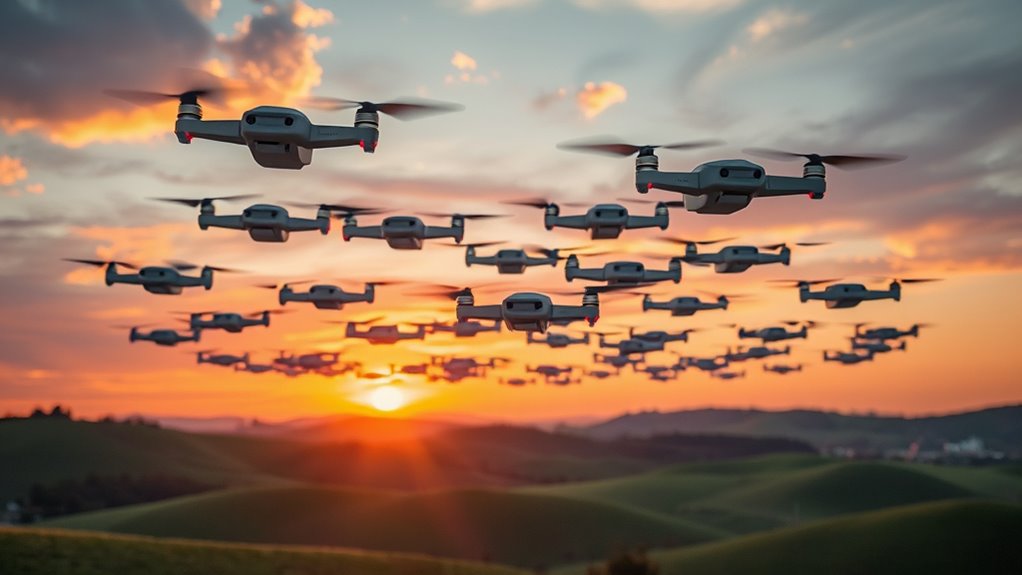
Drone swarms are revolutionizing the way we approach tasks like surveillance, search and rescue, and military operations. By deploying multiple drones that work together seamlessly, you can cover large areas quickly and efficiently, often outperforming individual drones or traditional methods. At the heart of this coordination are aerospace innovations that make it possible for these drones to communicate, adapt, and act as a unified system. These advancements include lightweight materials, improved battery technologies, and more reliable communication systems, all designed to enhance the capabilities of drone swarms. As you explore the potential of these systems, you’ll see how aerospace innovations enable drones to operate longer, fly farther, and perform more complex maneuvers. These aerospace innovations are supported by advancements in European cloud servers, which provide the energy-efficient and secure infrastructure necessary for real-time data processing and coordination.
The core of drone swarm technology lies in sophisticated algorithms called swarm algorithms. These algorithms mimic natural behaviors observed in flocks of birds, insect colonies, or fish schools, allowing drones to coordinate without central control. When you deploy a drone swarm, each drone runs its own set of instructions based on local data and simple rules, such as avoiding collisions, maintaining formation, or moving toward a target. The magic happens when these individual actions synchronize into a cohesive effort, thanks to swarm algorithms that facilitate real-time decision-making and adaptability. This decentralized approach means that if one drone encounters an obstacle or fails, others can quickly adjust their paths, maintaining the overall mission without interruption.
Implementing swarm algorithms requires precise programming and robust communication protocols. As you set up a drone swarm, you’ll notice how these algorithms enable dynamic responses to changing environments. For example, during a search and rescue operation, drones can spread out to cover an area efficiently, then converge on a detected signal or victim. In military scenarios, they can adapt formations based on threats or terrain. These capabilities are driven by continuous advancements in aerospace technologies that support real-time data sharing and processing. The result is a resilient, flexible system where drones work in harmony, making complex tasks manageable and even routine.
As you consider the future of drone swarms, you’ll recognize how ongoing aerospace innovations and refined swarm algorithms are pushing the boundaries of what’s possible. From environmental monitoring to tactical operations, these systems promise to transform industries by delivering faster, safer, and more cost-effective solutions. With each technological leap, drone swarms become more autonomous, intelligent, and capable of tackling challenges that once seemed insurmountable. This combination of aerospace breakthroughs and advanced algorithms is shaping a new era of coordinated aerial operations, where your role as a user or developer becomes *essential* in harnessing their full potential.
Frequently Asked Questions
How Do Drone Swarms Communicate in Real-Time?
You see, drone swarms communicate in real-time using wireless protocols like Wi-Fi or Bluetooth, enabling quick data exchange. They rely on distributed algorithms that help each drone make decisions independently while staying coordinated. This system allows the drones to share information efficiently, adapt to changes, and maintain formation without centralized control. By combining these wireless protocols and algorithms, you guarantee seamless, synchronized movements across the entire drone swarm.
What Are the Main Challenges in Coordinating Large Drone Swarms?
You face challenges like guaranteeing swarm resilience, so the group adapts to drone failures or environmental changes. Using distributed algorithms helps you coordinate large swarms efficiently without relying on a central controller, but designing these algorithms can be complex. You also need to manage communication delays and maintain synchronization among drones, which is vital for smooth operation. Overcoming these hurdles ensures your swarm functions effectively in dynamic, unpredictable scenarios.
How Do Drone Swarms Adapt to Environmental Changes?
Your drone swarm adapts to environmental changes like chameleons blending with their surroundings. You rely on adaptive algorithms and environmental sensing to detect shifts in weather, obstacles, or terrain. These systems enable each drone to quickly adjust their flight paths and formation, ensuring seamless coordination. By constantly analyzing sensor data, your drones stay flexible, responding efficiently to unpredictable conditions and maintaining perfect harmony in any environment.
What Safety Measures Prevent Collisions Within a Swarm?
You implement collision avoidance systems and strict safety protocols to prevent drone collisions. These systems use sensors and algorithms to detect nearby drones and obstacles, automatically adjusting flight paths. Safety protocols include maintaining safe distances, synchronized communication, and real-time monitoring. By actively managing drone movements and adhering to these safety measures, you guarantee each drone stays on course, reducing the risk of collisions within the swarm.
How Is Energy Management Handled in Large Drone Groups?
Sure, because managing energy in a massive drone group is just a walk in the park, right? You rely on advanced battery efficiency and smart power distribution to keep everyone flying smoothly. Drones share power seamlessly, extend battery life, and coordinate recharging strategies, so no one drops out mid-mission. It’s like a well-oiled electric circus, where every drone gets its fair charge and keeps the show going without a hitch.
Conclusion
Imagine a flock of birds, perfectly synchronized, dancing through the sky with unity and purpose. That’s what drone swarms do—flying together in harmony, each drone aware of the others. As you watch them move seamlessly, you realize the incredible potential of collective intelligence. With every coordinated flight, the future of technology unfolds before your eyes—where teamwork isn’t just human, but a symphony of machines working as one, transforming possibilities into reality.
Fall Picks
fall essentials
As an affiliate, we earn on qualifying purchases.