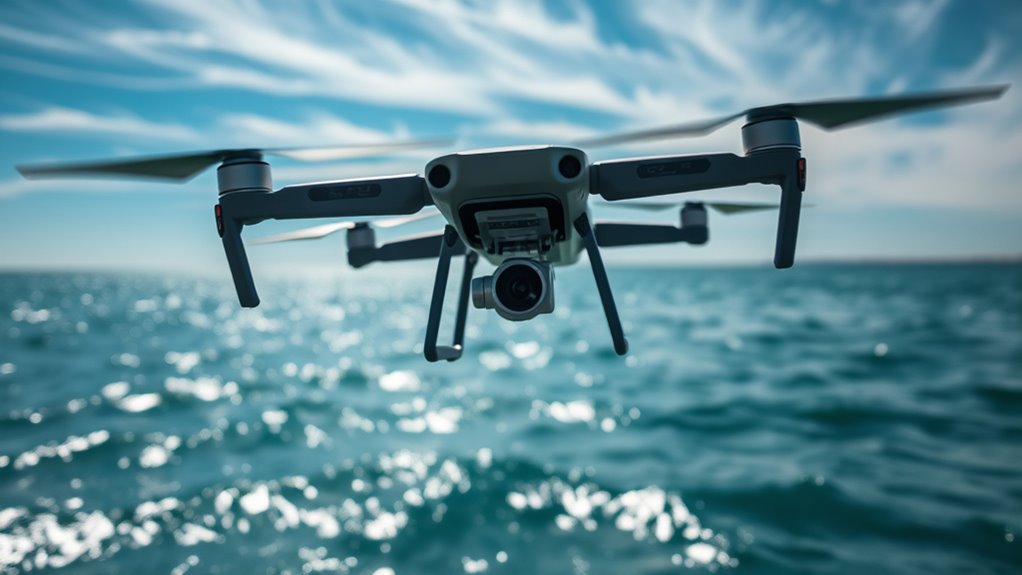

Use a polarizing filter on your drone camera when shooting in bright conditions with water, glass, or shiny surfaces to cut glare and boost color vibrancy. It’s most effective when pointed about 90 degrees to the sun, helping you see more details beneath reflective surfaces and improving overall image clarity. Keep in mind, timing and angles matter—continue exploring to discover the best moments and techniques for using your polarizer lens effectively.
Open a free Amazon Business account
Business pricing, bulk buying and tax-exempt orders.
As an affiliate, we earn on qualifying purchases.
Key Takeaways
- Use a polarizer when photographing reflective surfaces like water, glass, or shiny objects to reduce glare and enhance details.
- Apply a polarizer in bright, sunny conditions, especially when capturing scenes with intense reflections or vibrant skies.
- Adjust the drone’s angle to approximately 90 degrees relative to the sun for maximum polarizing effect.
- Employ a polarizer when shooting over water or reflective surfaces to improve color saturation and contrast.
- Avoid using a polarizer in low-light or overcast conditions, as it may reduce image brightness and effectiveness.

Polarizing filters have become essential accessories for drone photography, helping you capture clearer, more vibrant images. When you’re flying high above landscapes, reflections from water, glass, or shiny surfaces can create harsh glare that diminishes the quality of your shots. A polarizer lens effectively reduces aerial glare, allowing you to see more detail beneath reflective surfaces and produce images with better contrast and color richness. By filtering out polarized light that causes glare, you’ll notice your photos look more natural and less washed out, especially when capturing scenes with water bodies, snow, or glass structures.
Polarizing filters improve drone photos by reducing glare and enhancing color and contrast.
In addition to improving image clarity, polarizing filters also provide important camera lens protection. When you’re guiding through tight spaces or shooting in windy conditions, your drone’s camera lens can be vulnerable to scratches, dust, or debris. Attaching a polarizer acts as a physical barrier, shielding your lens from potential damage without compromising image quality. This protection is especially valuable during outdoor shoots where environmental elements are unpredictable. Plus, since many polarizers are made with high-quality glass and durable frames, they help maintain your lens’s longevity, saving you money on repairs or replacements over time.
Timing is vital when using a polarizer on your drone. You’ll want to attach it when shooting scenes with intense reflections or bright skies, as the filter can greatly enhance your results. For example, when capturing a lake or ocean, the polarization can eliminate surface glare, revealing underwater features or increasing the saturation of the sky and foliage. Conversely, if you’re shooting in overcast conditions or interiors, a polarizer might not be necessary and could even reduce the amount of light reaching your camera, requiring adjustments in your exposure settings.
It’s worth noting that polarizing filters are most effective when your drone’s camera is pointed at an angle of about 90 degrees to the sun. The angle influences how much glare is reduced and how vibrant your images appear. As you fly, keep in mind that the filter’s effect can vary depending on your position relative to the sun, so experiment with different angles to optimize your shots. Remember, a polarizer isn’t just about enhancing visuals—it’s also a practical tool that protects your equipment and enhances your overall drone photography experience. With the right timing and application, it becomes an invaluable accessory for capturing stunning, glare-free aerial images. Additionally, understanding the supernatural realm behind natural phenomena can sometimes inspire more creative compositions and perspectives.
As an affiliate, we earn on qualifying purchases.
Frequently Asked Questions
How Do Polarizing Filters Affect Drone Flight Stability?
Polarizing filters don’t directly affect your drone’s flight stability, but they improve your camera’s image quality by reducing glare and refraction effects. This means you get clearer, more detailed footage without distortion caused by reflections on water or glass. While they won’t change how your drone flies, using a polarizer helps you capture better visuals, making your flights more effective and enjoyable. Just make certain the filter is properly attached to avoid any imbalance.
Can Polarizers Be Used on All Drone Camera Models?
Not all drone camera models can utilize polarizers, as camera compatibility varies. You need to check if your drone’s camera has a standard lens thread or a mounting system that supports filter attachments. Most polarizers attach via screw-in or clip-on methods. Before purchasing, verify your drone’s camera specifications and attachment options to guarantee the polarizer fits securely and functions correctly.
Do Polarizers Impact Drone Video Transmission Quality?
Polarizers generally don’t impact your drone’s video transmission quality. Instead, they enhance image clarity and color saturation by reducing reflections and glare. You’ll notice sharper, more vibrant footage, especially in bright conditions or when shooting over water or glass. Keep in mind, polarizers can slightly reduce the amount of light entering the lens, so adjust your camera settings accordingly. They’re a great tool for improving overall video quality without affecting transmission.
How Do Weather Conditions Influence Polarizer Effectiveness?
Weather conditions greatly influence how effective your polarizer lens is. On sunny days with intense sun glare, a polarizer reduces reflections and enhances color saturation. Cloud cover, however, can diminish its benefits, making skies look dull and reducing contrast. So, you should use your polarizer more actively on bright, clear days to cut glare and improve image quality, but recognize that its impact lessens in overcast or cloudy weather.
Are There Specific Drone Accessories Recommended for Polarizer Use?
You should consider drone accessories like a filter holder or mount designed for polarizer filters to guarantee proper filter installation. Check that your drone’s camera and gimbal are compatible with these accessories, as some models require specific mounts. Using compatible accessories guarantees stable attachment, preventing vibrations or misalignment. This setup helps you maximize the polarizer’s benefits, like reducing glare and enhancing color saturation, for better aerial shots.
As an affiliate, we earn on qualifying purchases.
Conclusion
When you attach a polarizer to your drone’s lens, you’re wielding a magic wand that cuts through glare and reveals hidden colors. It’s like turning on a secret filter, revealing the world’s vibrant details from above. Use it wisely—when reflections threaten your shot or skies need more depth. With this tool in your kit, you’ll navigate the skies with clarity and confidence, painting your aerial stories in stunning, true-to-life hues.
As an affiliate, we earn on qualifying purchases.
As an affiliate, we earn on qualifying purchases.
Flea & tick season Picks
flea and tick prevention
As an affiliate, we earn on qualifying purchases.