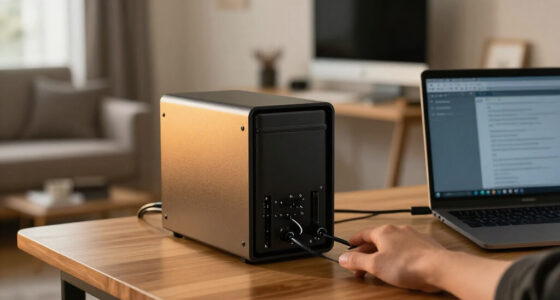
🔍 Read the full analysis: 10 Home Theater Projectors To Help Recreate The Cinema Experience In 2027 on ThorstenMeyerAI.com

Get the latest gadgets delivered free with Prime
- Fast, free delivery on millions of items
- Prime Video, Amazon Music and more included
- Member-only deals all year
TL;DR
A buying guide from ThorstenMeyerAI.com compares 10 projectors for different rooms and budgets, naming the Epson Home Cinema LS11000 its best overall pick. Its product descriptions and performance claims are not independently verified in the supplied material, and the list does not establish that these models are new or specifically released for 2027.
ThorstenMeyerAI.com has presented 10 home theater projectors for buyers seeking a cinema-style setup, recommending the Epson Home Cinema LS11000 for dedicated media rooms and the NexAurea Smart Projector for lower-cost smart features. The guide says room lighting, resolution and setup convenience are key tradeoffs, but the supplied material does not confirm release dates, current prices or independent test results for the models.
The guide’s main distinction is between projectors built for dark, dedicated rooms and units intended for flexible living-room use, as discussed in the original analysis. It describes the Epson LS11000 as a laser model with 4K PRO-UHD clarity, while presenting the NexAurea as a native 1080p option with Wi-Fi 6. Those descriptions and its “best overall” designation are the source’s assessments, not independently verified findings in the material provided.
Other named models include the Optoma UHZ36, which the guide says offers more than 2,000 ANSI lumens for rooms with daylight; the HAPPRUN 1500 ANSI Lumens model, described as suitable for moderate ambient light; and the Epson Home Cinema 980, identified as a traditional lamp-based projector. It also mentions HAPPRUN and Aurzen models for built-in streaming access, and an X9 Pro model with Bluetooth 5.4. The source does not provide a complete, clearly itemized 10-model list or prices in the supplied excerpt.
The buying criteria include native resolution versus 4K signal decoding, light-source lifespan, brightness, HDR and contrast, automatic focus and keystone correction, HDMI support and wireless connectivity, all relevant considerations in choosing a 4K home theater projector. The guide cautions that a projector advertised as supporting 4K may accept a 4K source while displaying fewer native pixels. Buyers should check each model’s specification sheet rather than treating a signal-compatibility label as proof of native 4K resolution, a distinction also worth considering when comparing AI projector options.
The 10 picks
- 1
 Epson Home Cinema LS11000 4K PRO-UHD Laser ProjectorView on Amazon →
- 2
 Optoma UHZ36 4K UHD Laser HDR Home Theater Projector – BlackView on Amazon →
- 3
 Epson Home Cinema 980 3-Chip 3LCD 1080p Movie ProjectorView on Amazon →
- 4
 X9 Pro Smart Projector with VIDAA OS, 1080p Native Resolution, 4K Decoding, H…View on Amazon →
- 5
 HAPPRUN 1500 ANSI Lumens 4K Decoding Projector with Official Google TVView on Amazon →
- 6
 HAPPRUN Native 1080P Bluetooth Projector with Official Licensed Google TVView on Amazon →
- 7
 NexAurea Smart Projector with Native 1080p, 4K Decoding, Wi-Fi 6, Bluetooth 5…View on Amazon →
- 8
 Smart Outdoor Projector with 4K Support, WiFi & Bluetooth, Dual Speakers, Aut…View on Amazon →
- 9
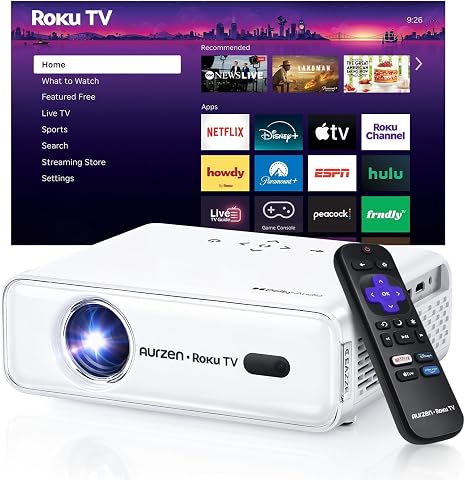 Aurzen Roku TV Smart Projector with Wifi and Bluetooth, Roku Streaming Experi…View on Amazon →
- 10
 HAPPRUN Native 1080P Bluetooth ProjectorView on Amazon →
Match Brightness to Your Room
The recommendations matter because a projector’s performance depends on the room as much as the device. A high-resolution model may still produce a washed-out picture in daylight, while a bright model may not deliver the deepest blacks in a dark cinema room. The guide’s distinction between brightness and image fidelity gives buyers a practical starting point: identify the room’s light conditions before comparing headline resolution or smart features.
Long-term ownership also depends on the light source. The source says laser models can avoid recurring lamp replacements and maintain brightness more consistently, while traditional lamps cost less upfront but require replacement. These are general buying considerations, not a verified cost comparison for the models listed; the guide provides no model-by-model prices, measured operating costs or test data.
Products Worth Considering

Jackery Solar Generator 1000 V2 with 200W Solar Panel, 1,070Wh, 1,500W, Dune White

Bose QuietComfort Headphones (2nd Gen), Wireless Noise-Cancelling Over-Ear Headphones, Black

LG UltraGear 27GX700A-B 27-Inch QHD OLED Gaming Monitor
As an affiliate, we earn on qualifying purchases.
Resolution and Light-Source Tradeoffs
The guide sorts the market into three broad light-source categories: laser, LED and traditional lamp. It says laser models commonly carry ratings above 20,000 hours, while LED options tend to use less power but may have lower peak brightness. Lamp models can have a lower initial price but add replacement costs. Actual longevity and brightness vary by product and use, and the source excerpt does not supply test methods or manufacturer documentation for each figure.
Resolution labels also require care. “4K support” can refer to the input signal a projector accepts, rather than the number of pixels it displays. The guide describes native 1080p as a practical baseline for many living rooms and suggests native 4K for viewers who want finer detail on large screens. It provides no screen-size or viewing-distance comparisons to define when that difference will be most visible.
“The main tradeoff you will face is between raw brightness and color accuracy.”
— ThorstenMeyerAI.com guide
Prices and Test Evidence Are Missing
The supplied source material does not establish whether all 10 named picks are available in 2027, when the guide was published, or what they cost. It also does not include independent measurements, hands-on testing results, a full ranked list of all 10 models, or documentation supporting product-specific claims about brightness, resolution and wireless standards. Claims such as “best overall” should be read as the guide’s recommendations rather than an industry consensus.
It is also unclear which exact HAPPRUN and Aurzen models are intended, since the excerpt refers to brands without consistently giving full model names. The guide says the Optoma UHZ36 exceeds 2,000 ANSI lumens and identifies Wi-Fi 6 and Bluetooth 5.4 on specific models, but the supplied material does not show how those specifications were verified.
Verify Models Before Buying
Readers considering a purchase should compare current manufacturer specifications and retailer listings, confirm native resolution and measured brightness, and check whether smart apps and wireless features are supported in their region. A screen, throw distance and room-light assessment may also change which projector fits best. The source material provides no announced follow-up testing, updated prices or availability schedule, so those details remain to be checked as the 2027 buying period approaches.
Key Questions
Which projector does the guide recommend overall?
The guide names the Epson Home Cinema LS11000 as its best overall pick for dedicated media rooms. That is the source’s recommendation, not an independently verified ranking in the supplied material.
Does 4K support mean a projector displays native 4K?
No. A projector may accept a 4K input and scale it to a lower native resolution. Check the model’s display resolution to distinguish native 4K from 4K decoding or signal support.
Which models does the guide associate with brighter rooms?
It points to the Optoma UHZ36, described as exceeding 2,000 ANSI lumens, and a HAPPRUN model listed at 1,500 ANSI lumens. The excerpt does not provide independent brightness measurements.
Are these confirmed 2027 releases?
The source frames its recommendations for 2027, but the supplied material does not confirm that the projectors are new releases for that year or provide availability dates.
Source: ThorstenMeyerAI.com