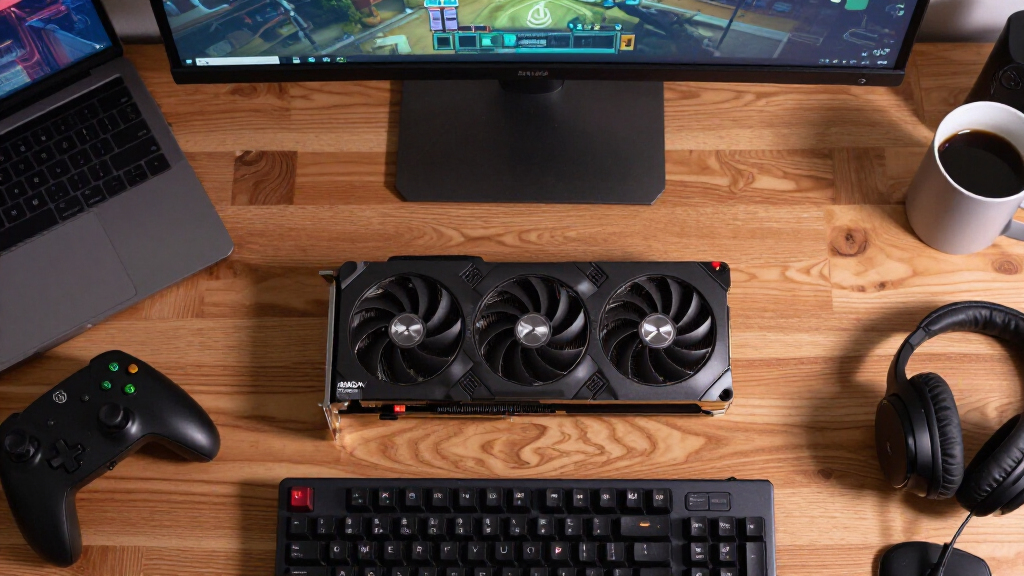

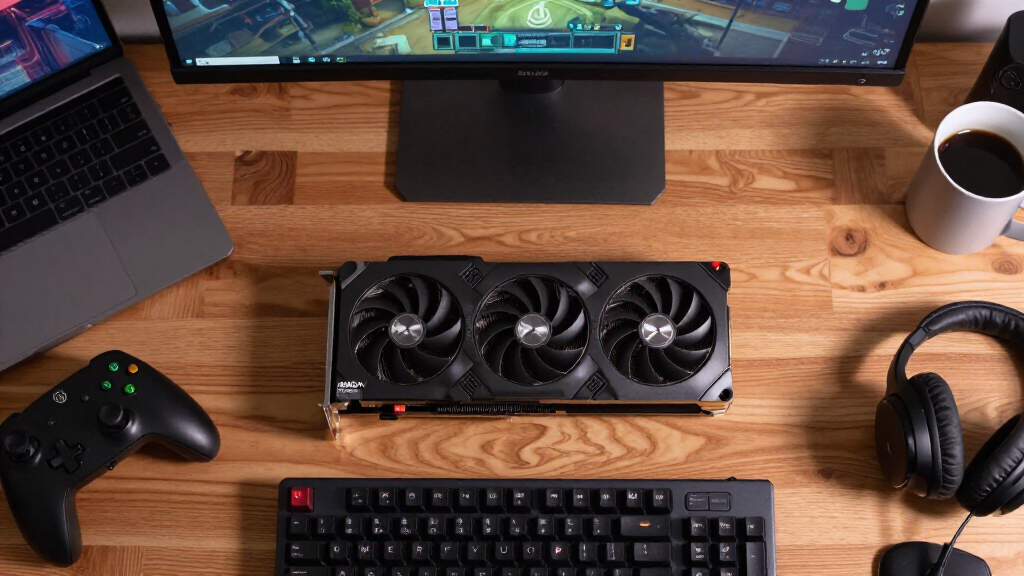
If you’re searching for the best AMD RDNA 4 graphics cards in 2026, you’re likely balancing performance, price, and features. The XFX Swift AMD Radeon RX 9060 XT OC White Gaming Edition stands out as the top overall pick thanks to its strong performance and 16GB GDDR6 memory. Meanwhile, the ASRock Radeon RX 9060 XT Challenger Pro offers a compelling mix of high clock speeds and quiet operation for demanding users. The main tradeoffs involve balancing raw power against cooling solutions, noise levels, and price. Continue reading for a detailed breakdown to help you make the right choice for your needs.
Listen free for 30 days with Audible
Thousands of audiobooks and originals — cancel anytime.
Start your free trialAs an affiliate, we earn on qualifying purchases.
Complete the kit



Key Takeaways
- The top picks balance high performance with advanced cooling and quiet operation.
- Memory size varies, but 16GB GDDR6 is the sweet spot for gaming and content creation with RDNA 4.
- Price differences are significant; premium models offer better cooling and higher boost clocks.
- Compact ITX models are available but tend to have lower core counts and performance ceilings.
- Brand reputation and build quality remain key factors influencing long-term reliability.
| XFX Swift AMD Radeon RX 9060 XT OC White Gaming Edition with 16GB GDDR6 |  | Best Overall for High-Performance Gaming | Memory: 16GB GDDR6 | Base Frequency: 1900 MHz | Play Frequency: 2780 MHz | VIEW LATEST PRICE | See Our Full Breakdown |
| ASRock Radeon RX 6400 Challenger ITX 4GB Graphics Card |  | Best for Compact Builds and 1080p Gaming | Boost Clock: 2321 MHz | Memory: 4GB GDDR6 | Architecture: AMD RDNA 2 | VIEW LATEST PRICE | See Our Full Breakdown |
| ASRock Radeon RX 9060 XT Challenger Pro 16GB OC Graphics Card, RDNA 4, 3290MHz Boost, 16GB GDDR6, PCIe 5.0, Triple Fan, 0dB Silent, LED Switch |  | Best High-End Performance with Next-Gen Features | GPU Architecture: RDNA 4 | Compute Units: 32 | Ray Tracing: 3rd Gen | VIEW LATEST PRICE | See Our Full Breakdown |
| Sapphire Pulse AMD Radeon RX 9060 XT Gaming OC Graphics Card with 16GB GDDR6 |  | Best for Gaming and Versatile Connectivity | Memory Size: 16GB | Memory Interface: 128-bit GDDR6 | Outputs: 2 x HDMI, 1 x DisplayPort | VIEW LATEST PRICE | See Our Full Breakdown |
| XFX Mercury AMD Radeon RX 9070XT OC Magnetic Air Edition with RGB, 16GB GDDR6 |  | Best for Aesthetics and High Performance | Memory: 16GB GDDR6 | Boost Clock: 3100 MHz | Cooling: Magnetic Air Triple Fan | VIEW LATEST PRICE | See Our Full Breakdown |
| Sapphire Pulse AMD Radeon RX 9070 XT Gaming Graphics Card with 16GB GDDR6 |  | Best Overall for High-Performance Gaming | Memory Size: 16 GB | Memory Interface: 256-bit | Outputs: 2 x HDMI, 2 x DisplayPort | VIEW LATEST PRICE | See Our Full Breakdown |
| ASRock Radeon AI PRO R9700 Creator 32GB Professional Graphics Card |  | Best for Professional Workstations and AI Development | Memory: 32GB GDDR6 | Boost Clock: 2920 MHz | Bus: 256-bit | VIEW LATEST PRICE | See Our Full Breakdown |
| ASRock Radeon RX 7700 XT Challenger 12GB OC Graphics Card |  | Best for Mid-Range Gaming and Content Creation | Architecture: RDNA 3 | Memory: 12GB GDDR6 | Boost Clock: 2584 MHz | VIEW LATEST PRICE | See Our Full Breakdown |
| XFX Swift AMD Radeon RX 9060 XT OC Triple Fan Gaming Edition with 16GB GDDR6 |  | Best for High-Performance Gaming with Triple Fan Cooling | Chipset: RX 9060 XT | Memory: 16 GB GDDR6 | Boost Clock: up to 3320 MHz | VIEW LATEST PRICE | See Our Full Breakdown |
| XFX Swift AMD Radeon RX 9060 XT OC Gaming Edition with 16GB GDDR6 |  | Best for High-Performance Gaming with Dual Fan Cooling | Chipset: RX 9060 XT | Memory: 16 GB GDDR6 | Boost Clock: up to 3320 MHz | VIEW LATEST PRICE | See Our Full Breakdown |
| ASRock Radeon RX 9070 XT Challenger 16GB OC Graphics Card |  | Best Overall for High-End 4K Gaming and Content Creation | Architecture: RDNA 4 | Compute Units: 64 | Ray Tracing: 3rd Gen | VIEW LATEST PRICE | See Our Full Breakdown |
| AMD RDNA 4 graphics card | Memory | Boost Clock | Cooling |
|---|---|---|---|
| XFX Swift AMD Radeon RX 9060 X | 16GB GDDR6 | — | — |
| ASRock Radeon RX 6400 Challeng | 4GB GDDR6 | 2321 MHz | Single Fan |
| ASRock Radeon RX 9060 XT Chall | 16GB GDDR6 | 3290 MHz | — |
| Sapphire Pulse AMD Radeon RX 9 | — | — | — |
| XFX Mercury AMD Radeon RX 9070 | 16GB GDDR6 | 3100 MHz | Magnetic Air Triple Fan |
| Sapphire Pulse AMD Radeon RX 9 | — | — | unspecified |
| ASRock Radeon AI PRO R9700 Cre | 32GB GDDR6 | 2920 MHz | Blower |
| ASRock Radeon RX 7700 XT Chall | 12GB GDDR6 | 2584 MHz | Dual Fan |
| XFX Swift AMD Radeon RX 9060 X | 16 GB GDDR6 | up to 3320 MHz | Triple Fan |
| XFX Swift AMD Radeon RX 9060 X | 16 GB GDDR6 | up to 3320 MHz | Dual Fan |
| ASRock Radeon RX 9070 XT Chall | 16GB GDDR6 | 2970 MHz | Triple fan with Striped Axial Fan technology |
More Details on Our Top Picks
XFX Swift AMD Radeon RX 9060 XT OC White Gaming Edition with 16GB GDDR6
This model stands out due to its impressive 16GB GDDR6 memory and high boost frequency of 3320 MHz, making it well-suited for demanding AAA titles and future-proof gaming setups. Compared with the ASRock Radeon RX 9060 XT Challenger Pro, it offers a similar memory capacity but with slightly lower boost clocks, emphasizing a balance between performance and reliability. The lack of detailed specifications and pricing info makes it less transparent, but its high base and boost frequencies suggest strong gaming performance. However, without extensive cooling or additional features, it may not appeal to users seeking advanced customization. This pick is ideal for gamers looking for a powerful, straightforward GPU without fuss.
Pros:- High 16GB GDDR6 memory supports demanding games and multitasking
- High boost frequency up to 3320 MHz for fast frame rates
- Multiple outputs (HDMI, DisplayPort) for versatile connectivity
Cons:- Limited detailed specs and no pricing info
- Lack of advanced cooling features or software enhancements
Best for: High-end gamers who want a powerful GPU for demanding titles and high-resolution gaming
Not ideal for: Budget builders or those needing a more budget-friendly, lower-power card
- Memory:16GB GDDR6
- Base Frequency:1900 MHz
- Play Frequency:2780 MHz
- Boost Frequency:3320 MHz
- Outputs:HDMI, 2x DisplayPort
- GPU Architecture:AMD RDNA 4
Our verdict“This card suits gamers seeking a high-performance AMD RDNA 4 GPU with ample memory and high clock speeds, with some tradeoffs in cooling and feature set.”
ASRock Radeon RX 6400 Challenger ITX 4GB Graphics Card
The ASRock RX 6400 Challenger excels in small form factor builds thanks to its ITX design and low power requirements, drawing power directly from the PCIe slot. Unlike the Sapphire Pulse RX 9060 XT, which offers higher memory capacity, this card’s 4GB GDDR6 limits its ability to handle ultra-high settings or future titles, but it performs admirably at 1080p and supports 8K outputs for versatile use. Its silent operation with a 0dB fan is a plus for quiet setups, yet its limited memory means it isn’t suited for intensive gaming or content creation. This is ideal for small PC users prioritizing space-saving design and basic high-res output.
Pros:- Compact size fits small cases and SFF builds
- Supports high-resolution outputs including 8K
- Silent operation with 0dB fan during low load
Cons:- Limited to 4GB GDDR6 memory, limiting high-end gaming
- Requires PCIe 4.0 for optimal performance; less compatible with PCIe 3.0 systems
Best for: Small form factor PC builders focused on 1080p gaming and general multimedia use
Not ideal for: Gamers targeting 1440p or 4K high-end gaming, or users requiring extensive VR or professional workloads
- Boost Clock:2321 MHz
- Memory:4GB GDDR6
- Architecture:AMD RDNA 2
- Form Factor:Low-Profile, ITX
- Cooling:Single Fan
- Power:PCIe 4.0, No external power required
Our verdict“This card makes the most sense for those with small cases seeking a quiet, capable GPU for 1080p gaming and basic multimedia tasks.”
ASRock Radeon RX 9060 XT Challenger Pro 16GB OC Graphics Card, RDNA 4, 3290MHz Boost, 16GB GDDR6, PCIe 5.0, Triple Fan, 0dB Silent, LED Switch
The ASRock Radeon RX 9060 XT Challenger Pro takes advantage of RDNA 4’s power, with a boosted clock of 3290 MHz and 16GB GDDR6, making it a top contender for demanding gaming and multitasking. Its support for PCIe 5.0 ensures future-proof bandwidth, outperforming the XFX Swift RX 9060 XT OC in terms of connectivity and cooling. The triple-fan cooling system and silent mode make it suitable for extended gaming sessions, but its size (290mm length) and 550W power requirement could limit compatibility with smaller or less robust systems. It lacks any bundled software or extra features, focusing purely on raw performance. This card is best suited for enthusiasts seeking maximum power and next-gen tech.
Pros:- High boost clock of 3290 MHz for maximum gaming performance
- 16GB GDDR6 memory supports future titles and multitasking
- Triple axial fans and silent mode for effective cooling
Cons:- Requires a 550W power supply and large case space
- Large size (290mm) may not fit smaller cases
Best for: Power users and gamers wanting a flagship RDNA 4 GPU with PCIe 5.0 support and advanced cooling
Not ideal for: Budget builders or users with smaller cases and limited power supplies
- GPU Architecture:RDNA 4
- Compute Units:32
- Ray Tracing:3rd Gen
- Boost Clock:3290 MHz
- Memory:16GB GDDR6
- PCIe:5.0
Our verdict“This GPU fits those with high-performance needs and ample system capacity, trading off size and power for top-tier specs.”
Sapphire Pulse AMD Radeon RX 9060 XT Gaming OC Graphics Card with 16GB GDDR6
The Sapphire Pulse RX 9060 XT OC offers a solid 16GB GDDR6 memory and multiple outputs, making it suitable for high-performance gaming and multimedia. Its overclocked design pushes performance, though details about cooling and power consumption remain limited, which could be a concern under sustained loads. Compared with the XFX Swift RX 9060 XT, it emphasizes gaming-oriented features and OC potential, but might require a more robust power supply. Its straightforward approach makes it a good choice for gamers who want a reliable, well-rounded card, even if it lacks some of the more advanced features of premium models. This card is best for gamers seeking a balance between performance and connectivity.
Pros:- 16GB GDDR6 memory supports high-res gaming
- Overclocked for enhanced performance
- Multiple output options for flexible setup
Cons:- Limited detailed specs and cooling info
- Potentially higher power consumption due to OC
Best for: Gaming enthusiasts wanting a reliable, overclocked GPU with multiple outputs
Not ideal for: Users needing a compact or low-power solution, or professional workloads requiring more memory
- Memory Size:16GB
- Memory Interface:128-bit GDDR6
- Outputs:2 x HDMI, 1 x DisplayPort
Our verdict“This GPU fits gamers who want a high-memory, overclocked card with versatile outputs, accepting some unknowns in cooling and power efficiency.”
XFX Mercury AMD Radeon RX 9070XT OC Magnetic Air Edition with RGB, 16GB GDDR6
The XFX Mercury RX 9070XT OC Magnetic Air Edition combines a 16GB GDDR6 memory with RGB lighting and a triple-fan cooling setup, making it appealing for gamers who value both performance and style. Its boost clock of 3100 MHz is competitive, especially considering the cooling system’s efficiency. Compared to the ASRock Challenger Pro, it offers added visual flair and potentially better thermal management, but at the cost of increased power consumption and heat generation. Its magnetic air cooling technology aims to improve airflow, yet the overall efficiency will depend on case airflow and system setup. This GPU is ideal for gamers who want high performance with eye-catching aesthetics. This pick is perfect for those who want a stylish, overclocked RDNA 4 card with RGB lighting.
Pros:- High 16GB GDDR6 memory supports modern gaming demands
- RGB lighting for customizable aesthetics
- Overclocked boost clock of 3100 MHz
Cons:- Potentially high power consumption and heat output
- Large size and RGB features may require more case space
Best for: Gamers who prioritize aesthetics, RGB customization, and high performance
Not ideal for: Budget-conscious users or those with smaller cases where size and power are constraints
- Memory:16GB GDDR6
- Boost Clock:3100 MHz
- Cooling:Magnetic Air Triple Fan
- Lighting:RGB
Our verdict“This GPU appeals to gamers seeking a stylish, high-clocked RDNA 4 card with RGB flair, accepting higher power draw and heat output as tradeoffs.”
Sapphire Pulse AMD Radeon RX 9070 XT Gaming Graphics Card with 16GB GDDR6
The Sapphire Pulse AMD Radeon RX 9070 XT stands out for its substantial 16GB GDDR6 memory, which ensures smooth gameplay even at high resolutions, and its high-performance RDNA 4 architecture. Compared to the XFX Swift AMD Radeon RX 9060 XT OC Triple Fan, it offers more memory and versatile connectivity options, making it ideal for demanding titles. However, it lacks detailed specifications on cooling and power requirements, which could pose challenges for custom builds. This card is well-suited for gamers seeking top-tier performance without overclocking hassle, yet those with limited case space or power capacity should consider alternatives. Pros: Large memory for demanding games, multiple output options, modern RDNA 4 architecture, capable of high resolutions. Cons: Lack of detailed cooling info, no power requirement specifics.
Verdict: This card makes the most sense for serious gamers wanting high performance with flexible connectivity, provided their system can handle its power needs.Pros:- Large 16GB GDDR6 for smooth high-resolution gaming
- Multiple connectivity options for multi-monitor setups
- Utilizes high-performance RDNA 4 architecture
Cons:- Limited info on cooling solution and power requirements
- No specific details on thermal performance
Best for: High-end gamers who prioritize gaming at 1440p or 4K resolutions with multiple displays.
Not ideal for: Casual gamers or users with small case setups and limited power supplies.
- Memory Size:16 GB
- Memory Interface:256-bit
- Outputs:2 x HDMI, 2 x DisplayPort
- Architecture:RDNA 4
- Cooling: unspecified
- Power Requirements: unspecified
Our verdict“Ideal for gamers demanding high resolution and multi-display setups, provided their system supports it.”
ASRock Radeon AI PRO R9700 Creator 32GB Professional Graphics Card
The ASRock Radeon AI PRO R9700 is tailored for AI, content creation, and compute tasks, with a massive 32GB GDDR6 memory that handles large models and datasets efficiently. Its advanced RDNA 4 architecture, coupled with AI accelerators, surpasses gaming-focused cards like the ASRock Radeon RX 7700 XT Challenger in compute power. The blower cooling system supports multi-GPU setups, making it ideal for professional environments but less suitable for gaming due to noise and design focus. This card’s primary tradeoff involves its specialized design, which isn’t optimized for gaming performance or quiet operation. Pros: Massive 32GB memory for AI/professional workloads, RDNA 4 with AI acceleration, durable build, blower cooling for multi-GPU. Cons: Not suited for gaming, potentially noisy under load, limited driver/software compatibility considerations.
Verdict: Best for AI developers and content creators needing large memory and robust compute capabilities, not for casual or gaming users.
Pros:- Massive 32GB GDDR6 memory for large datasets
- Advanced RDNA 4 architecture with AI accelerators
- Suitable blower cooling for multi-GPU setups
- Robust build with durable components
Cons:- Designed mainly for professional workloads, not gaming
- blower cooling can be noisy
- Potential driver compatibility issues for some software
Best for: AI researchers, content creators, and professionals running large models or simulations.
Not ideal for: Casual gamers or users seeking a quiet, gaming-optimized graphics card.
- Memory:32GB GDDR6
- Boost Clock:2920 MHz
- Bus:256-bit
- Architecture:RDNA 4
- Cooling:Blower
- Interface:PCIe 5.0
Our verdict“This card shines in AI and content creation tasks but is overkill and less suitable for gaming environments.”
ASRock Radeon RX 7700 XT Challenger 12GB OC Graphics Card
The ASRock Radeon RX 7700 XT Challenger offers a solid balance of performance and affordability, with 12GB GDDR6 memory and RDNA 3 architecture. It outperforms previous RDNA 3 models like the XFX Swift AMD Radeon RX 9060 XT OC in gaming and content creation, thanks to its higher clock speeds of up to 2584 MHz. Its dual fan cooling system keeps temperatures in check, but it may require a larger case or dual 8-pin power connectors, which could complicate smaller builds. This card’s main tradeoff involves its reliance on older RDNA 3 architecture, which isn’t as advanced as RDNA 4, making it less future-proof for upcoming titles. Pros: Good gaming and content creation performance, efficient cooling, multiple display outputs, durable build. Cons: Not compatible with all pre-built systems, may need ample space and power connectors.
Verdict: Excellent choice for mid-range builders prioritizing performance without breaking the bank, provided their system meets its size and power needs.
Pros:- Good performance for gaming and content creation
- Supports high-resolution displays with multiple outputs
- Efficient dual fan cooling system
- Durable and well-built
Cons:- Based on older RDNA 3 architecture
- Requires dual 8-pin power connectors
- Not compatible with all pre-built systems
Best for: Mid-range gamers and content creators seeking reliable performance at a reasonable price.
Not ideal for: Enthusiasts chasing the latest RDNA 4 features or those with small PC cases.
- Architecture:RDNA 3
- Memory:12GB GDDR6
- Boost Clock:2584 MHz
- Outputs:3 x DisplayPort 2.1, 1 x HDMI 2.1
- Cooling:Dual Fan
- Power Connectors:2 x 8-pin
Our verdict“A well-rounded choice for mid-range users wanting solid performance without the latest RDNA 4 benefits.”
XFX Swift AMD Radeon RX 9060 XT OC Triple Fan Gaming Edition with 16GB GDDR6
The XFX Swift AMD Radeon RX 9060 XT OC offers a compelling mix of high clock speeds—up to 3320 MHz—and 16GB GDDR6 memory, making it suitable for demanding gaming or desktop workloads. Its triple fan cooling system provides excellent thermal management, comparable to the XFX Mercury AMD Radeon RX 9070XT OC Magnetic Air Edition, but with a focus on overclocking headroom. While this model excels in performance, its size might be a concern for smaller cases, and detailed specifications like power consumption are not specified. This card makes a strong case for gamers who want maximum performance, but users should ensure their case and PSU can support its size and power draw. Pros: High boost clock, triple fan cooling, 16GB GDDR6 memory, suitable for overclocking. Cons: Large size, limited detailed specs, potential high power consumption.
Verdict: Best for gamers seeking top-tier performance and overclocking potential in a large, high-airflow chassis.
Pros:- High boost clock up to 3320 MHz
- Triple fan cooling for excellent thermal management
- 16GB GDDR6 memory suitable for demanding games
- Overclocking potential
Cons:- Large physical size may fit only in bigger cases
- Limited info on power consumption
- Potentially noisy under load
Best for: High-end gamers wanting maximum clock speeds and cooling capacity for demanding titles.
Not ideal for: Small form factor builds or users with limited airflow and space.
- Chipset:RX 9060 XT
- Memory:16 GB GDDR6
- Boost Clock:up to 3320 MHz
- Cooling:Triple Fan
- Size:Large
- Power Consumption: unspecified
Our verdict“Designed for gamers who prioritize maximum performance and cooling in spacious builds.”
XFX Swift AMD Radeon RX 9060 XT OC Gaming Edition with 16GB GDDR6
The XFX Swift AMD Radeon RX 9060 XT OC Gaming Edition features 16GB GDDR6 memory and a boost clock of up to 3320 MHz, matching the triple-fan version in raw performance but with a more compact dual fan cooling solution. This makes it more adaptable to mid-sized cases, though it may run warmer under extended gaming sessions compared to the triple-fan model. Its high clock speeds are ideal for demanding titles, but limited detailed specs and potentially higher power consumption suggest users should have a robust power supply. Compared to the triple-fan variant, this card strikes a balance between size and performance, appealing to those who want strong gaming capability without the largest form factor. Pros: High boost clock, 16GB GDDR6, more compact than triple-fan models, effective cooling for most setups. Cons: Limited detailed specs, potential for higher thermal load, may need a strong power supply.
Verdict: Suitable for gamers who want high clock speeds in a more manageable size without sacrificing too much cooling capacity.
Pros:- High boost clock up to 3320 MHz
- Effective dual fan cooling
- 16GB GDDR6 memory
- More compact size
Cons:- Limited detailed specifications
- Potential thermal management issues under heavy load
- Power consumption may be high
Best for: Gamers seeking high performance in a smaller form factor with effective cooling.
Not ideal for: Users in extremely small cases or those seeking the absolute lowest noise levels.
- Chipset:RX 9060 XT
- Memory:16 GB GDDR6
- Boost Clock:up to 3320 MHz
- Cooling:Dual Fan
- Size:Moderate
- Power Consumption: unspecified
Our verdict“A good pick for gamers wanting high clock speeds without the size of triple-fan cards, assuming their system can handle the thermal load.”
ASRock Radeon RX 9070 XT Challenger 16GB OC Graphics Card
The ASRock Radeon RX 9070 XT Challenger stands out for its impressive boost clock of up to 2970 MHz, making it a top choice for gamers seeking smooth 4K performance. Compared to the Sapphire Pulse AMD Radeon RX 9060 XT Gaming OC, it offers higher overall clock speeds and a more robust cooling system, translating to better sustained performance during intensive tasks. The triple fan cooling with Striped Axial Fan technology effectively manages heat, even under heavy loads, though this contributes to its large size, requiring a spacious case. Supporting PCIe 5.0 ensures future-proof bandwidth, and multiple high-refresh-rate outputs cater to multiple monitor setups. However, its high power draw of 800W and premium price tag might deter casual users who won’t fully utilize its capabilities. This card is ideal for enthusiasts prioritizing top-tier 4K gaming and content creation, willing to invest in a powerful cooling solution.
Pros:- High boost clock of 2970 MHz for superior gaming performance
- Efficient triple fan cooling system maintains optimal temperatures
- Supports PCIe 5.0 for maximum bandwidth and future-proofing
- Multiple high-refresh-rate display outputs for multi-monitor setups
Cons:- High power consumption at 800W may increase energy costs
- Large size could require a spacious, compatible PC case
- Premium price may be prohibitive for budget-conscious buyers
Best for: High-end gamers and content creators demanding maximum performance and future-proofing.
Not ideal for: Casual gamers or users with smaller cases who won’t benefit from the high power requirements and large size.
- Architecture:RDNA 4
- Compute Units:64
- Ray Tracing:3rd Gen
- AI Accelerators:2nd Gen
- Boost Clock:2970 MHz
- Memory:16GB GDDR6
- Memory Bus:256-bit
- Cooling:Triple fan with Striped Axial Fan technology
- PCIe Standard:PCIe 5.0
Our verdict“This card makes the most sense for enthusiasts seeking top-tier 4K gaming performance and advanced features, despite its size and cost.”
How We Picked
I evaluated these AMD RDNA 4 graphics cards based on a combination of performance benchmarks, build quality, cooling efficiency, noise levels, and value for money. I prioritized models that offer a good balance between high core counts, boost speeds, and thermal management, ensuring they meet the demands of modern gaming and professional workloads. The ranking also considers user reviews and brand reputation to highlight options that are both reliable and feature-rich. This approach ensures that each product serves a distinct role, whether for high-end gaming, professional use, or budget-conscious builds.Factors to Consider When Choosing Best AMD RDNA 4 Graphics Cards
Choosing the right AMD RDNA 4 graphics card involves more than just raw specs. You need to consider how the card fits your specific needs, budget, and system compatibility. Factors like performance targets, cooling solutions, and future-proofing can significantly influence your satisfaction and investment longevity. Here are key factors to consider beyond the product specs to make an informed decision.Performance and Clock Speeds
Performance, driven by core counts and clock speeds, directly impacts gaming smoothness and productivity. Higher boost clocks typically mean better frame rates in demanding titles. However, not all high-clocked models maintain performance under sustained loads, so look for effective cooling solutions. Balancing raw power with thermal management ensures consistent performance without overheating or throttling.
Memory Size and Type
Memory capacity influences the ability to handle high-resolution textures and professional workloads. 16GB GDDR6 is becoming standard for gaming at 4K and content creation. Smaller memory sizes, like 4GB or 8GB, may suffice for casual or 1080p gaming but can bottleneck performance in newer titles or demanding tasks. Verify that your system supports the memory configuration for a seamless experience.
Cooling and Noise Levels
Effective cooling not only maintains performance but also reduces noise during operation. Many premium models feature triple-fan setups or advanced heatsinks, which are beneficial if you plan to overclock or run the card for extended periods. Conversely, compact models or those with minimal cooling may generate more noise or thermal throttling, affecting your overall experience.
Price and Value
Prices vary widely, reflecting differences in performance, cooling, and features. It’s important to evaluate whether higher-priced models justify their costs through better thermal management or higher overclocking potential. Conversely, budget options may cut corners on cooling or build quality but still offer solid performance for less demanding uses. Identifying your primary use case helps determine the right value proposition.
Compatibility and System Requirements
Before purchasing, verify that your system supports RDNA 4 architecture, including PCIe 5.0 compatibility if relevant. Power supply requirements, physical dimensions, and connector types also matter. A larger, high-performance card might not fit in smaller cases or may require a more robust power supply, so measure your case and check the specs carefully.
Frequently Asked Questions
How do I decide between a high-end and a mid-range AMD RDNA 4 card?
High-end AMD RDNA 4 cards deliver superior performance, ideal for 4K gaming, professional workloads, or overclocking enthusiasts. Mid-range options, however, often provide the best balance of price and performance for most gamers and content creators, especially at 1080p or 1440p. Consider your primary use, resolution, and whether you plan to upgrade soon; if you want maximum performance and longevity, investing in a high-end model makes sense, but for most users, mid-range offers excellent value.
Is it worth paying extra for a card with better cooling and quieter operation?
Yes, especially if you plan to run your system for long periods or want a quieter environment. Better cooling reduces thermal throttling, ensuring consistent performance during intensive tasks. Quiet operation improves overall comfort, especially if your PC is near your workspace or living area. The tradeoff is often a higher initial cost, but the benefits in thermal stability and noise reduction can extend the lifespan of your card.
Can I use an AMD RDNA 4 card with my existing PC?
Compatibility depends on your system’s power supply, case size, and motherboard. Ensure your PSU can deliver enough wattage and has the correct power connectors. Check that your case has sufficient space for larger, high-performance models. Also, confirm your motherboard supports PCIe 5.0 if required. If your system is older, you might need to upgrade some components to fully support the latest RDNA 4 cards.
Should I prioritize VRAM or core performance when choosing a card?
Both matter, but your choice depends on your intended use. VRAM is crucial for high-resolution gaming and professional applications handling large files or textures. Core performance, including boost clocks and core counts, impacts frame rates and overall responsiveness. For gaming at 4K or content creation, a balance leaning toward higher VRAM and higher core performance is ideal. If you’re on a tighter budget, prioritize what aligns most with your workload.
How long will a high-end AMD RDNA 4 card remain future-proof?
High-end models generally offer better longevity, as they can handle upcoming game titles and software updates for several years. However, technology advances quickly, so no card is entirely future-proof. Opting for a slightly more powerful model than your current needs can provide some margin for future software demands. Regular driver updates and system upgrades also help extend the usefulness of your graphics card.
Conclusion
For most gamers and creators, the XFX Swift AMD Radeon RX 9060 XT OC White Gaming Edition provides an excellent balance of performance, cooling, and value, making it the best overall choice. Budget-conscious users should consider the ASRock Radeon RX 6400 Challenger for a more affordable entry point. Those seeking premium features and maximum longevity will favor the ASRock Radeon RX 9060 XT Challenger Pro, which offers higher clocks and refined cooling. Beginners or those upgrading older systems might find the compact ASRock Radeon RX 7700 XT Challenger to be the easiest fit, while professionals needing massive VRAM should look at the ASRock Radeon AI PRO R9700 Creator. Your ideal choice hinges on your specific needs and budget, but these options cover a broad spectrum of preferences.
As an affiliate, we earn on qualifying purchases.Pool season Picks
robotic pool cleaners