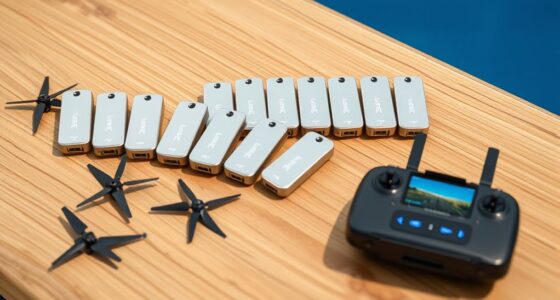

Remote id broadcast modules are essential for drone operators needing compliant, reliable identification solutions. The best overall pick, the Dronetag Mini Remote ID Module, offers a compact design with strong connectivity, making it versatile for most drones. The Holy Stone FAA Compliant Module stands out for its ease of use, especially for GPS drone users, while the BS Combo Remote ID Solution provides a comprehensive package for FPV pilots. However, tradeoffs such as size, compatibility, and cost influence the choice—more options mean more considerations. Continue reading for a full breakdown of these modules and what makes each one unique.

Get the latest gadgets delivered free with Prime
- Fast, free delivery on millions of items
- Prime Video, Amazon Music and more included
- Member-only deals all year
Complete the kit



Key Takeaways
- The top picks balance size, ease of installation, and compliance features, with the Dronetag Mini leading for versatility.
- Compatibility with different drone models varies significantly, impacting overall usability.
- Affordable options like Holy Stone suit beginners but may lack advanced features found in premium modules.
- Premium modules often offer better build quality and integrated features, justifying higher costs for professional use.
- Most modules require careful attention to regulatory compliance and future updates, which can affect long-term value.
| Dronetag Mini Remote ID Module – 1.5 – Black |  | Best Overall for Compact, Versatile Use | Dimensions: 54x35x15 mm | Weight: 32 grams | Battery: LiPo 3.7V 500 mAh | VIEW ON AMAZON | See Our Full Breakdown |
| BS Combo Remote ID Solution for FPV |  | Best for FPV Drone Customization and Flexibility | Compatibility: Various hardware setups | Power input: Up to 17V | Firmware updates: Via Dronetag App | VIEW ON AMAZON | See Our Full Breakdown |
| Spektrum Sky Remote ID Module, SPMA9500 |  | Best for Long-Range Reliable Connectivity | FAA RID Compliant: Yes | FCC Certified: Yes | Bluetooth Version: 4 and 5 | VIEW ON AMAZON | See Our Full Breakdown |
| Potensic FAA Compliant Remote Identification Broadcast Module for Drones |  | Best for Rugged, Waterproof Outdoor Use | Compatibility: Drones >250g, all types | Waterproof Rating: IP54 | Battery Life: Up to 4 hours | VIEW ON AMAZON | See Our Full Breakdown |
| Remote ID Mini (External, Antenna and Power Wire Installed) |  | Best External Antenna for Signal Reliability | VIEW ON AMAZON | See Our Full Breakdown | |||
| Ruko R111S Remote ID Module for Drone with GPS Tracker and Beeper |  | Best Overall for Versatile Safety and Long Flight Time | Weight: 13.5g | Dimensions: 1.3 x 1.1 x 0.5 inches | Battery Life: Up to 3 hours (buzzer off), 2.5 hours (buzzer on) | VIEW ON AMAZON | See Our Full Breakdown |
| Holy Stone FAA Compliant Remote Identification Broadcast Module for GPS Drones with 4K Camera |  | Best for Holy Stone Drone Owners Needing FAA Compliance | Compatibility: Holy Stone HS series and others | Regulation Compliance: FAA Remote ID | Protection Features: Overcharging, over-discharging, low temperature | VIEW ON AMAZON | See Our Full Breakdown |
| Ruko R111S Remote ID Module for Drone with GPS Tracker and Beeper |  | Best for Versatile GPS Tracking and Mounting Flexibility | Weight: 13.5g | Dimensions: 1.3 × 1.1 × 0.5 inches | Battery Life: Up to 3 hours | VIEW ON AMAZON | See Our Full Breakdown |
| Holyton FAA Compliant Remote Identification Broadcast Module for GPS Drones |  | Best for Long-Lasting FAA Compliance and Easy Setup | Weight: 13.5 grams | Dimensions: 1.3 x 1.1 x 0.5 inches | Battery Life: Up to 5 hours | VIEW ON AMAZON | See Our Full Breakdown |
| remote id broadcast module | Compatibility | Battery Life |
|---|---|---|
| Dronetag Mini Remote ID Module | — | 8-14 hours |
| BS Combo Remote ID Solution fo | Various hardware setups | — |
| Spektrum Sky Remote ID Module | — | — |
| Potensic FAA Compliant Remote | Drones >250g, all types | Up to 4 hours |
| Remote ID Mini | — | — |
| Ruko R111S Remote ID Module fo | Drones over 250g, DJI Mini series, Mavic, FPV, Phantom, Inspire, Matrice | Up to 3 hours (buzzer off), 2.5 hours (buzzer on) |
| Holy Stone FAA Compliant Remot | Holy Stone HS series and others | — |
| Ruko R111S Remote ID Module fo | DJI Mini, Mavic, FPV, Spark, Phantom, Inspire, Matrice series | Up to 3 hours |
| Holyton FAA Compliant Remote I | Drones over 250g including DJI Mini 2 SE, Mini 3, Mavic, Phantom, Inspire, Matrice | Up to 5 hours |
More Details on Our Top Picks
Dronetag Mini Remote ID Module – 1.5 – Black
The Dronetag Mini stands out for its incredibly compact design, making it ideal for drone pilots who prioritize minimal weight and size. Compared with bulkier modules like the Potensic FAA Compliant Remote ID, it offers a lighter footprint without sacrificing long battery life—up to 14 hours—perfect for extended flights. Its support for LTE, GNSS, and multiple sensors provides comprehensive tracking, although the absence of a specified IP rating means water resistance isn’t guaranteed, which could be a concern in adverse weather. While the Micro USB charging port is less modern, the device’s global LTE coverage and multi-constellation GNSS make it flexible for diverse environments. This pick makes the most sense for professionals and recreational users needing a lightweight, feature-rich module with reliable long-term operation.
Pros:- Extremely compact and lightweight, easy to attach to any drone
- Long battery life up to 14 hours for extended operations
- Supports global LTE and multi-constellation GNSS for reliable tracking
- Multiple sensors enhance drone position accuracy
Cons:- Lack of IP rating raises concerns about water and dust resistance
- Requires external LTE and Bluetooth antennas for optimal performance
- Charging via Micro USB could be less convenient than newer ports
Best for: Drone operators seeking a lightweight, all-in-one ID solution suitable for both recreational and professional use
Not ideal for: Users requiring water-resistant modules or rugged outdoor durability, as the IP rating isn’t specified
- Dimensions:54x35x15 mm
- Weight:32 grams
- Battery:LiPo 3.7V 500 mAh
- Battery Life:8-14 hours
- Operating Temperature:-20 °C to +60 °C
- Cellular Bands:3, 8, 20 (EU); 2, 4, 12 (US)
Our verdict“This module is best for users who need a lightweight, feature-packed device capable of long-term operation across varied environments.”
BS Combo Remote ID Solution for FPV
The BS Combo Remote ID Solution is tailored for FPV drone pilots who want a flexible, easy-to-integrate system. Its design supports various hardware setups, making it ideal for custom FPV builds that need real-time tracking and compliance with FAA and EASA regulations. While setup is straightforward, it relies heavily on the Dronetag App for firmware updates, which could be a hassle for users seeking a plug-and-play experience. Its limited info on battery life suggests it may require frequent recharging, especially during long flights. Compared to the Spektrum Sky Module’s straightforward Bluetooth use, the BS Combo’s compatibility with multiple protocols like Spektrum XBUS and SRXL2 offers greater customization but at the cost of added complexity. This solution is best suited for experienced FPV pilots who want adaptable hardware with real-time data logging.
Pros:- Supports multiple hardware configurations for versatile integration
- Real-time tracking and flight logging ensure compliance and data record-keeping
- Supports firmware updates via the Dronetag App for ongoing improvements
Cons:- Requires app for setup and firmware updates, adding complexity
- Limited info on battery life may mean frequent recharges
- Designed specifically for FPV aircraft, less suited for general drones
Best for: Experienced FPV drone pilots needing a customizable, regulation-compliant ID system
Not ideal for: Beginners or those seeking a simple, standalone ID device, due to setup complexity and reliance on app updates
- Compatibility:Various hardware setups
- Power input:Up to 17V
- Firmware updates:Via Dronetag App
- Supported protocols:Spektrum XBUS, SRXL2
Our verdict“This module is ideal for experienced FPV enthusiasts who need a flexible, regulation-ready ID solution with advanced customization options.”
Spektrum Sky Remote ID Module, SPMA9500
The Spektrum Sky Remote ID Module takes a straightforward approach, prioritizing ease of use and regulation compliance. Its Bluetooth 4 and 5 capabilities promise reliable long-range communication, which is advantageous over products like the Dronetag Mini that may rely more on LTE and GNSS. The FAA RID compatibility and FCC certification are clear advantages for users who need verified regulatory approval. However, the lack of detailed specifications or battery info makes it less suitable for users who want in-depth technical insight or planning extended flights. Compared to the Potensic FAA Module, which offers IP54 waterproofing, the Spektrum module’s focus on connectivity makes it a strong choice for clear, long-distance communication, but it might fall short in durability or rugged outdoor use. This device suits those seeking a simple, compliant module with dependable long-range Bluetooth connectivity.
Pros:- FAA RID compliance simplifies regulatory approval
- Bluetooth 4 and 5 support long-range, reliable communication
- Easy to install and operate for quick deployment
Cons:- Limited detailed specifications reduce configurability insight
- No mention of battery life or ruggedness features
- Lacks advanced sensor or multi-constellation support
Best for: Drone pilots requiring a regulation-compliant, easy-to-install remote ID solution focused on long-range Bluetooth communication
Not ideal for: Users needing detailed technical specs or rugged outdoor durability, as those features are not emphasized
- FAA RID Compliant:Yes
- FCC Certified:Yes
- Bluetooth Version:4 and 5
- Range:Long-range
Our verdict“This module is well-suited for users seeking a simple, regulation-compliant device with dependable long-range Bluetooth connectivity.”
Potensic FAA Compliant Remote Identification Broadcast Module for Drones
The Potensic FAA Compliant Remote ID Module excels in durability, featuring IP54 waterproof and dustproof ratings, making it particularly suitable for commercial or outdoor applications where weather resistance is vital. Its precise GPS positioning with less than 3 meters error ensures reliable identification for heavier drones over 250g, similar to the Ruko modules. Its support for various drone types, including multirotors and fixed-wing aircraft, offers broad versatility. While its long battery life of up to 4 hours supports typical flight durations, the lack of detailed dimensions or weight information might pose installation challenges for some users. Compared to the lightweight Dronetag Mini, this module emphasizes ruggedness and durability, but at the expense of size and potentially ease of attachment. It’s best for operators who need a tough, waterproof ID device that can handle demanding outdoor environments.
Pros:- FAA compliance guarantees legal operation for drones over 250g
- IP54 waterproof and dustproof protection enhances outdoor durability
- Supports a wide range of drone types and models
- High GPS accuracy (less than 3 meters) for reliable identification
Cons:- Limited detailed dimensions and weight info could complicate installation
- Battery life of only up to 4 hours may restrict longer flights
- Compatibility verification needed for specific drone models
Best for: Commercial operators or outdoor drone pilots needing weather-resistant, FAA-compliant ID modules for heavier or professional-grade drones
Not ideal for: Recreational users or those flying lightweight drones, as the module might be bulkier and designed for durability rather than portability
- Compatibility:Drones >250g, all types
- Waterproof Rating:IP54
- Battery Life:Up to 4 hours
- Bluetooth:5.1 or above
- GPS Accuracy:Less than 3 meters
Our verdict“This module is best suited for rugged outdoor use and professional applications where durability and weather resistance are priorities.”
Remote ID Mini (External, Antenna and Power Wire Installed)
The Remote ID Mini External offers a straightforward external antenna setup with pre-installed power wiring, making it attractive for users who need reliable signal reception. While its simplicity is appealing, there is little detailed information about other features or specifications, which makes it harder to assess its full capabilities. Unlike the Dronetag Mini, which emphasizes compactness, this external model likely adds size and weight but could improve signal strength in challenging environments. Its external antenna design is ideal for scenarios where signal penetration and stability are critical, such as urban or obstructed areas. However, without user reviews or comprehensive specs, potential buyers should verify compatibility and expected performance. This device makes most sense for operators who prioritize signal reliability over discreetness or minimal size.
Pros:- External antenna improves signal reception in obstructed environments
- Pre-installed power wire simplifies setup
- Designed for reliable performance over various terrains
Cons:- Limited available features and detailed specifications
- Potentially bulkier and heavier than integrated modules
- No user reviews or extensive testing data available
Best for: Drone operators needing enhanced signal reception for remote identification in challenging environments
Not ideal for: Those seeking a compact, lightweight ID module, as external antennas generally increase size and weight
Our verdict“This external antenna-equipped module is best suited for operators needing robust signal reception in environments with interference or obstructions.”
Ruko R111S Remote ID Module for Drone with GPS Tracker and Beeper
The Ruko R111S stands out for its combination of safety features and compatibility with a broad range of drone models, including DJI and FPV units. Its built-in beeper and GPS tracker significantly enhance drone recoverability, making it ideal for pilots concerned with lost drone recovery. Compared to the Holyton module, it offers a slightly longer battery life and more versatile mounting options, though its 500-1000 meter range is less than ideal for long-range flyers. The compact design minimizes weight impact, but the non-replaceable battery means users must charge it frequently—limiting continuous use. This module makes the most sense for hobbyists or commercial operators seeking a lightweight, reliable safety tool without sacrificing flight time.Pros:- Compact and lightweight, minimally impacting drone flight
- Built-in beeper and GPS improve safety and locate lost drones
- Long battery life supports multiple flights with quick recharge
Cons:- Limited range of 500-1000 meters may not suit all applications
- Battery cannot be swapped, requiring recharging after use
Best for: Drone enthusiasts and professionals who need a lightweight safety module with reliable GPS tracking and beeper for various drone models.
Not ideal for: Users requiring extended range beyond 1000 meters or those preferring a replaceable battery for continuous operation.
- Weight:13.5g
- Dimensions:1.3 x 1.1 x 0.5 inches
- Battery Life:Up to 3 hours (buzzer off), 2.5 hours (buzzer on)
- Charging Time:40 minutes
- Range:500-1000 meters
- Compatibility:Drones over 250g, DJI Mini series, Mavic, FPV, Phantom, Inspire, Matrice
Our verdict“This pick excels for drone operators needing a lightweight, all-in-one safety module with decent range and long battery life.”
Holy Stone FAA Compliant Remote Identification Broadcast Module for GPS Drones with 4K Camera
Designed specifically for Holy Stone GPS drones, this module guarantees FAA compliance, which is critical for legal flying in regulated airspace. It offers the advantage of built-in protections against overcharging, over-discharging, and low temperatures, ensuring safe operation. Unlike the Ruko modules, it’s limited to Holy Stone models, which can be restrictive if you fly multiple brands. Its installation process may seem complex for some users, and with the upcoming regulatory deadline, it’s a timely upgrade for Holy Stone users wanting legal clarity. The focus on FAA compliance makes it ideal for hobbyists who want straightforward regulation adherence without extra features, but it’s less suitable for those with diverse fleets or seeking advanced GPS features.Pros:- Ensures FAA compliance, avoiding legal issues
- Compatible with multiple Holy Stone models
- Provides overcharge, over-discharge, and temperature protections
Cons:- Limited to Holy Stone drones, reducing versatility
- Installation may be complex for some users
Best for: Holy Stone drone owners who want to ensure FAA compliance and simple integration with their existing models.
Not ideal for: Drone pilots flying non-Holy Stone models or those needing a more versatile, cross-brand module.
- Compatibility:Holy Stone HS series and others
- Regulation Compliance:FAA Remote ID
- Protection Features:Overcharging, over-discharging, low temperature
Our verdict“This module is ideal for Holy Stone users seeking straightforward FAA compliance with safety protections.”
Ruko R111S Remote ID Module for Drone with GPS Tracker and Beeper
This Ruko R111S version offers similar core features as the first, emphasizing GPS tracking and beeper functions for drone locateability, but it adds more mounting accessories, making it easier to attach securely to different drone types. Its lightweight, 13.5g design ensures minimal flight interference, but the effective range remains capped at 500-1000 meters, similar to the previous model. While it supports FAA compliance and long battery life, users must ensure proper attachment for GPS effectiveness. Compared to the Holyton module, it offers more flexible mounting options but shares the same range limitations, making it suitable for pilots prioritizing mounting versatility over long-distance tracking.Pros:- Lightweight and compact, easy to mount
- Supports FAA Remote ID compliance
- Includes multiple accessories for flexible installation
- Long-lasting, quick-charge battery
Cons:- Limited effective range of 500-1000 meters
- Requires proper attachment for GPS accuracy
- Dependent on app connectivity for live location updates
Best for: Drone operators needing a lightweight, versatile GPS and beeper module with multiple mounting options for various aircraft.
Not ideal for: Long-range flyers requiring over 1 km tracking, or users seeking a replaceable battery solution.
- Weight:13.5g
- Dimensions:1.3 × 1.1 × 0.5 inches
- Battery Life:Up to 3 hours
- Charging Time:40 minutes
- Range:500-1000 meters
- Compatibility:DJI Mini, Mavic, FPV, Spark, Phantom, Inspire, Matrice series
Our verdict“This model suits drone users needing adaptable mounting options combined with reliable safety features in a lightweight package.”
Holyton FAA Compliant Remote Identification Broadcast Module for GPS Drones
Offering up to five hours of operation, the Holyton FAA module beats the previous options in endurance, making it an excellent choice for long-duration flights. Its straightforward installation and compatibility with a broad range of drones over 250 grams provide a practical solution for pilots seeking FAA compliance without fuss. Compared to the Ruko modules, Holyton’s longer battery life stands out, but some users might find the setup instructions less clear. The inclusion of multiple mounting accessories enhances versatility, though unobstructed outdoor space is necessary for optimal connectivity. This product is perfect for those who prioritize extended flight times combined with compliance and ease of installation, yet it’s less suited for quick, short missions or indoor use.Pros:- FAA compliant, suitable for regulated flying
- Longest battery life among these options at 5 hours
- Includes multiple mounting accessories for versatility
- Lightweight design minimizes flight impact
Cons:- Requires unobstructed outdoor space for optimal operation
- Setup instructions may be complex for some users
- Limited to drones over 250g
Best for: Drone operators needing extended flight duration with FAA compliance and straightforward setup on various aircraft.
Not ideal for: Users flying in confined or obstructed environments where signal clarity might be hampered.
- Weight:13.5 grams
- Dimensions:1.3 x 1.1 x 0.5 inches
- Battery Life:Up to 5 hours
- Charging Time:40 minutes
- Compatibility:Drones over 250g including DJI Mini 2 SE, Mini 3, Mavic, Phantom, Inspire, Matrice
- Video Resolution:4K
Our verdict“This module is ideal for long-duration drone flights where FAA compliance and ease of installation are priorities.”

How We Picked
We evaluated remote id broadcast modules based on several key factors: performance reliability, ease of installation, build quality, compatibility with various drone models, and compliance with current regulations. Cost was also considered, especially in relation to features and durability. Our ranking favors modules that strike a balance between affordability and advanced capabilities, ensuring they are suitable for different user types—whether hobbyists or professionals. Products were also assessed for user reviews and manufacturer reputation to gauge real-world performance and support.| remote id broadcast module | Compatibility |
|---|---|
| Dronetag Mini Remote ID Module | — |
| BS Combo Remote ID Solution fo | Various hardware setups |
| Spektrum Sky Remote ID Module | — |
| Potensic FAA Compliant Remote | Drones >250g, all types |
| Remote ID Mini | — |
| Ruko R111S Remote ID Module fo | Drones over 250g, DJI Mini series, Mavic, FPV, Phantom, Inspire, Matrice |
| Holy Stone FAA Compliant Remot | Holy Stone HS series and others |
| Ruko R111S Remote ID Module fo | DJI Mini, Mavic, FPV, Spark, Phantom, Inspire, Matrice series |
| Holyton FAA Compliant Remote I | Drones over 250g including DJI Mini 2 SE, Mini 3, Mavic, Phantom, Inspire, Matrice |
Factors to Consider When Choosing Remote Id Broadcast Modules
Choosing the right remote id broadcast module involves understanding your drone’s specifications and your operational needs. Beyond just compliance, consider how easy it is to install and whether the module offers future-proof features. Compatibility with your drone’s hardware and software is critical, as some modules are designed for specific models or firmware versions. Cost can also be a decisive factor—more expensive modules often provide better durability and additional functions, but may be unnecessary for casual pilots. Be mindful of maintenance needs and regulatory changes that could impact your choice over time.Compatibility and Integration
Most remote id modules are designed for specific drone models or operating systems. Ensuring compatibility before purchase prevents costly returns or installation issues. Some modules require external antennas or power sources, which can complicate installation, especially on smaller drones. Check if the module supports your drone’s firmware or if updates are needed. For professional setups, compatibility with existing telemetry and control systems can streamline operations and reduce setup time.
Ease of Installation and Use
Ease of installation varies widely; some modules are plug-and-play, while others require soldering or complex wiring. Consider whether your drone’s design allows for easy access and mounting. User-friendly modules with clear instructions reduce setup time and minimize errors. For those unfamiliar with electronics, selecting modules with external antennas or pre-installed wiring can be advantageous, but these may come at a higher cost or bulkier size.
Regulatory Compliance and Future-Proofing
Regulatory standards for remote id are evolving, so choosing a module that is compliant today doesn’t guarantee future-proofing. Look for modules that are FAA or equivalent compliant and support updates to meet future regulations. Some modules come with firmware that can be updated over-the-air, providing ongoing compliance and security enhancements. Avoid unsupported or outdated modules, as they risk non-compliance and potential legal issues.
Build Quality and Durability
Since remote id modules are exposed to environmental factors, durability is key. Weatherproofing, rugged casing, and reliable connectors extend the lifespan and ensure consistent operation. Cheaper modules may skimp on quality, leading to failures over time. For commercial or frequent use, investing in higher-quality modules can reduce maintenance costs and prevent downtime. Always review user feedback on build quality before making a purchase.
Cost and Value
Price varies significantly across remote id modules, often reflecting added features or build quality. While budget options are suitable for casual pilots, professional operators benefit from investing in modules with advanced features like GPS tracking, longer-range broadcast, or integrated antennas. Consider the total cost of ownership, including potential upgrades and support. Sometimes, paying a premium upfront can provide better reliability and compliance assurance in the long run.
Frequently Asked Questions
Will a remote id broadcast module work with my existing drone?
Compatibility depends on your drone’s make and model, as well as its firmware. Many modules specify supported drone types or require specific mounting options. Before purchasing, verify that the module is compatible with your drone’s hardware and software. In some cases, firmware updates or additional adapters might be necessary to ensure proper operation. If your drone is older or custom-built, double-check with the manufacturer or community forums for compatibility insights.
How do remote id modules impact drone flight time?
Most remote id broadcast modules introduce minimal additional weight and power draw, but some can slightly reduce flight time due to extra wiring or antennas. Compact, low-power modules are designed to minimize this impact, making them suitable even for lightweight drones. Larger or more feature-rich modules may require more power, which can affect flight duration, especially on smaller batteries. Always consider your drone’s power capacity when selecting a module to avoid unexpected battery drain.
Are there any ongoing costs associated with remote id modules?
Generally, remote id modules are a one-time purchase, but some may require firmware updates or subscriptions for enhanced features—such as cloud connectivity or remote monitoring. Manufacturers may release firmware updates to maintain compliance or improve performance, which are usually free or low-cost. It’s wise to choose modules from reputable brands that provide ongoing support and updates, reducing long-term expenses and ensuring continued compliance.
Can I install a remote id module myself, or do I need professional help?
Many modules are designed for DIY installation, with detailed instructions and plug-and-play options. However, some modules, especially those requiring soldering or custom wiring, may benefit from professional installation to ensure proper setup and optimal performance. If you’re comfortable with basic electronics or have experience with drone modifications, you can likely handle installation yourself. For complex setups or high-value drones, professional help can prevent damage and ensure compliance.
What features should I prioritize for commercial drone operations?
For commercial use, reliability, durability, and compliance are paramount. Look for modules with GPS tracking, high transmission range, and robust build quality to withstand environmental conditions. Features like firmware update support and remote management can also be beneficial for ongoing operation. Investing in higher-end modules that offer better integration, longer broadcast range, and compliance assurance can help avoid regulatory issues and improve operational efficiency.
Conclusion
For casual hobbyists or light drone operators, the Holy Stone FAA Compliant Remote Identification Broadcast Module offers a straightforward, budget-friendly option. Professionals seeking durability and advanced features should consider the Dronetag Mini Remote ID Module for its versatility and solid build. Beginners will benefit from modules with simple installation and clear instructions, like the Holy Stone, while commercial users should prioritize modules with GPS tracking and high-range capabilities, such as the BS Combo solution. Ultimately, selecting the right module depends on your drone’s specifications, your operational needs, and your budget.