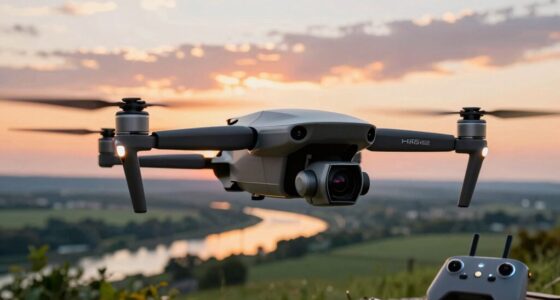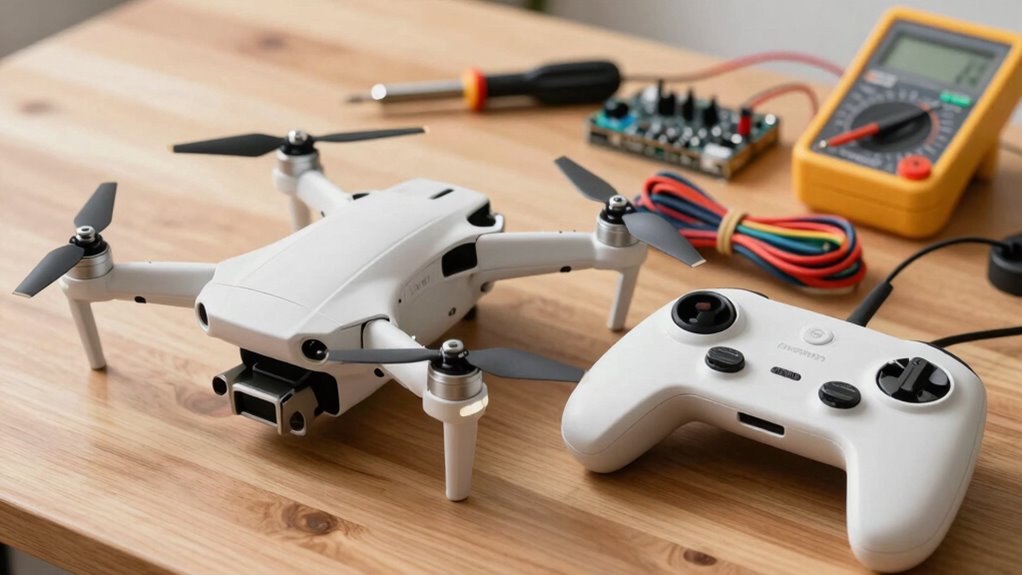

To build a serious beginner drone kit without going overboard, choose a durable, lightweight frame made from plastic or carbon fiber that can handle crashes and support upgrades. Pick a user-friendly flight controller with customizable flight modes and good reviews. Match motors and propellers to your flying needs—bigger for photography, smaller for racing—and add a reliable battery for longer flights. Focus on easy assembly and compatibility, and with consistent practice, you’ll quickly improve your skills. Keep exploring to learn more.

Get the latest gadgets delivered free with Prime
- Fast, free delivery on millions of items
- Prime Video, Amazon Music and more included
- Member-only deals all year
Key Takeaways
- Choose a durable, lightweight frame like plastic or carbon fiber for balance between strength and ease of handling.
- Select a user-friendly flight controller with customizable modes suitable for beginners and future upgrades.
- Opt for mid-sized motors and batteries that support both stable photography and responsive flight.
- Use compatible, lightweight camera gear and mounts for optional aerial photography capabilities.
- Invest in a reliable remote control with good range and practice regularly to develop precise flying skills.
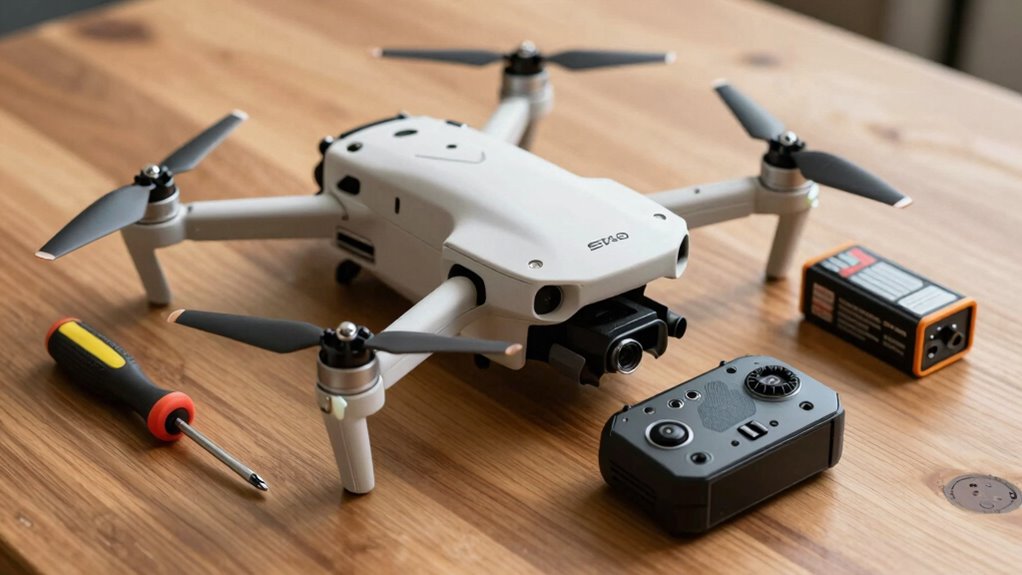
Getting started with building your own drone can be an exciting and rewarding experience, especially if you’re new to the hobby. With the right approach, you can create a serious beginner drone kit that balances performance and simplicity, opening doors to activities like aerial photography and drone racing. The key is to choose components that are easy to assemble, reliable, and versatile enough to grow with your skills.
Start with a solid frame that’s durable but lightweight. A good beginner kit often includes a frame made from plastic or carbon fiber, which can withstand crashes while keeping the drone agile. Pair this with a basic but capable flight controller that offers stable flight modes and enough customization options for future upgrades. The flight controller acts as the drone’s brain, so it’s worth investing in one that’s well-reviewed and user-friendly.
Start with a lightweight, durable frame and a user-friendly flight controller for stable, customizable drone flights.
When selecting motors and propellers, aim for a balance that suits both aerial photography and drone racing. For aerial photography, you want stable, smooth flight, so opt for larger, more powerful motors that can carry a camera. For drone racing, agility and speed are more important, so smaller, high-RPM motors work better. If you’re unsure, choose a kit that includes adjustable components, allowing you to tweak for different activities. Propellers should match your motors and be easy to swap out as you experiment.
The battery is another vital part. A good lithium-polymer (LiPo) battery with the right voltage and capacity ensures longer flight times without adding unnecessary weight. Keep in mind that higher capacity batteries offer longer flights but may reduce agility, so find a sweet spot that supports your intended activities. Battery capacity plays a crucial role in overall flight performance and flight time. Additionally, understanding the importance of biodiversity in maintaining healthy ecosystems can inspire eco-friendly choices in drone materials and disposal. Incorporating sustainable practices in drone construction, such as recyclable parts or eco-conscious manufacturing, can contribute positively to environmental health.
For camera gear, if aerial photography interests you, look for a lightweight gimbal or mount that can stabilize your camera during flight. Many beginner kits don’t include a camera, but you can add one later. When choosing components, consider the compatibility of your drone parts to ensure seamless integration and avoid frustration during assembly. For drone racing, focus less on camera stabilization and more on speed and responsiveness.
Finally, don’t forget the remote control. A reliable transmitter with multiple channels and good range makes flying more intuitive and precise. Practice with your controller regularly, and you’ll develop the skills needed to navigate complex courses or capture stunning aerial shots.
Building this kind of serious beginner drone kit sets you up for success, whether you’re filming landscapes or racing through obstacle courses. Keep it simple at first, learn the basics, and you can enhance your skills and then gradually upgrade as you become more confident and experienced.
beginner drone frame plastic carbon fiber
As an affiliate, we earn on qualifying purchases.
As an affiliate, we earn on qualifying purchases.
Frequently Asked Questions
What Is the Ideal Drone Size for Beginners?
For beginners, a small to medium-sized drone, around 250-350mm in size, is ideal. It’s manageable for learning advanced flight techniques and allows you to practice precise control without risking damage. This size also provides room for drone skin customization, making your drone unique and fun. Choose a drone that’s not too heavy, so you can easily develop your skills and explore more complex maneuvers confidently.
How Much Should I Budget for a Beginner Drone Kit?
You should budget around $150 to $300 for a beginner drone kit, including essential drone accessories. This range covers a decent drone with stable flight capabilities and extra accessories like spare batteries, a carrying case, and replacement parts. Investing in drone accessories enhances your flight training experience, helping you learn controls and maneuvers efficiently. Keep an eye out for bundles that offer great value while giving you everything you need to start flying confidently.
Are There Any Safety Precautions for First-Time Drone Pilots?
Yes, as a first-time drone pilot, you should prioritize safety precautions. Always wear safety gear like goggles to protect your eyes, and check your surroundings before flying. Stay within designated flight zones to avoid accidents and legal issues. Keep a safe distance from people and property, and avoid flying in bad weather. Following these precautions guarantees a safe and enjoyable flying experience while minimizing risks.
Can I Upgrade Parts of My Beginner Drone Later?
Think of your drone as a growing tree; you can definitely upgrade parts later to help it flourish. You can add advanced features to enhance performance and extend flight time, like a battery upgrade. Keep in mind, as you upgrade, compatibility matters. Start with essential components, then gradually introduce improvements. This way, your drone evolves with your skills, making each flight more exciting and tailored to your ambitions.
What Legal Requirements Do I Need to Know?
You need to know drone regulations in your area, like registration requirements and no-fly zones, to avoid fines. Also, be aware of privacy concerns; avoid flying over private property or capturing images without permission. Check local laws before flying, and always respect others’ privacy. Staying informed about your country’s drone laws helps you fly safely and legally, ensuring you enjoy your drone experience without legal trouble.
user-friendly flight controller for drones
As an affiliate, we earn on qualifying purchases.
As an affiliate, we earn on qualifying purchases.
Conclusion
Building your beginner drone kit is a brilliant balance of basics and brilliance. By choosing carefully, you create a confident craft that’s fun, functional, and future-ready. Remember, patience and precision pave the path to proficiency. With the right resources and a little perseverance, your drone dreams take flight. So, start simple, stay steady, and soar smoothly into your soaring skies — success is just a kit away!
As an affiliate, we earn on qualifying purchases.
As an affiliate, we earn on qualifying purchases.
Halloween Picks
halloween
As an affiliate, we earn on qualifying purchases.