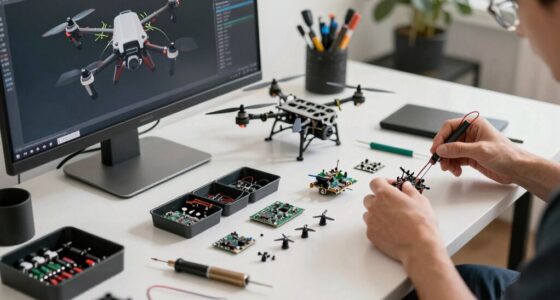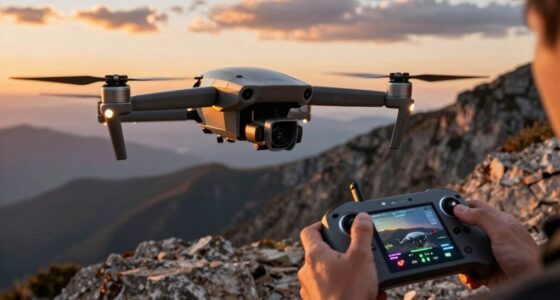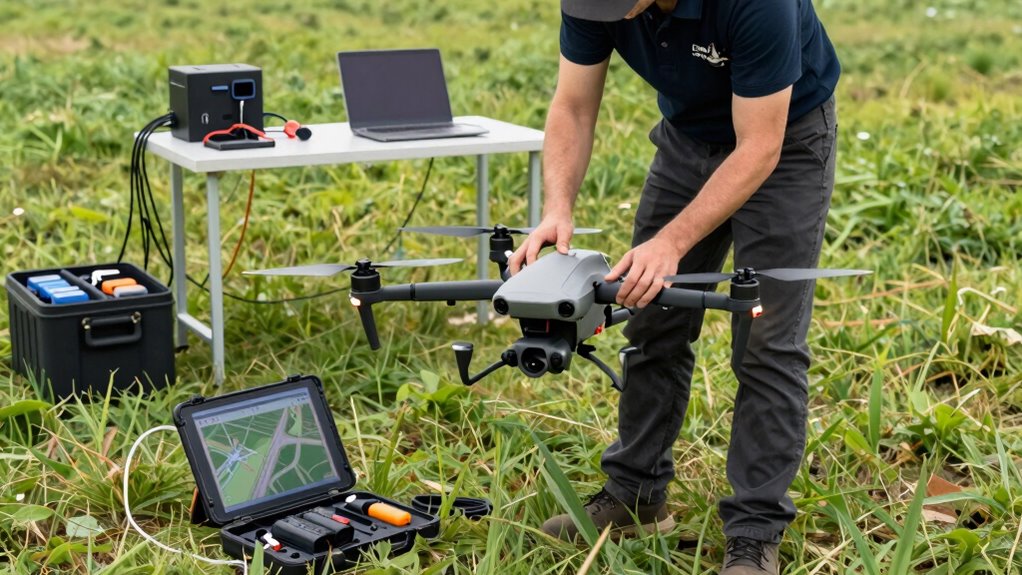

To build a repeatable drone workflow, start with thorough pre-flight checks, verifying equipment and planning your route for precision. Guarantee compliance with local regulations and keep organized documentation. During flights, follow your plan, monitor telemetry, and transfer data securely—preferably to the cloud with automated backups. Regularly review your process for improvements and streamline tasks for consistency. Mastering these steps will help you develop a reliable, professional routine that consistently produces quality data, and you’ll find more tips as you explore further.

Get the latest gadgets delivered free with Prime
- Fast, free delivery on millions of items
- Prime Video, Amazon Music and more included
- Member-only deals all year
Key Takeaways
- Establish standardized pre-flight checklists covering equipment, flight plan, and data analysis setup for consistency.
- Ensure regulatory compliance by documenting permits, notifications, and restricted area protocols systematically.
- Follow a consistent flight execution protocol, including real-time monitoring and immediate data transfer.
- Automate data backup to cloud storage immediately after each flight and organize files systematically.
- Regularly review and refine workflow processes based on feedback to enhance efficiency and reliability.
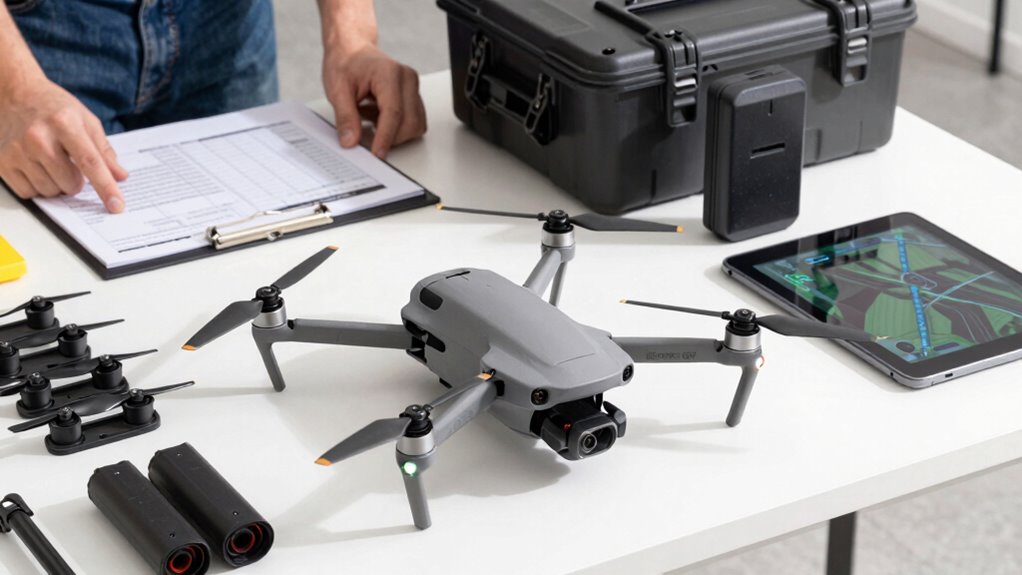
Are you tired of inconsistent results and wasted time during your drone projects? Building a repeatable drone workflow can transform how you operate, ensuring efficiency and accuracy from start to finish. The first step is to establish a clear pre-flight routine. Double-check your equipment, including batteries, SD cards, and firmware updates, to prevent unexpected failures. Planning your flight path with precision helps streamline data collection and minimizes errors. Incorporate aerial data analysis into your workflow by setting up a system to process images and sensor data promptly, so insights are available quickly and accurately. This step not only boosts productivity but also ensures your data aligns with project goals, whether for mapping, inspection, or surveying.
Next, focus on maintaining regulatory compliance at every stage. Familiarize yourself with local drone regulations and obtain necessary permits before flying. Incorporate checklists that document compliance measures, like notifying authorities or avoiding restricted areas. Staying organized with documentation ensures you can easily demonstrate adherence to rules, which reduces legal risks and potential project delays. Incorporate regulatory compliance into your routine to make adherence automatic, not an afterthought. This proactive approach keeps your operations smooth and minimizes the chance of fines or project shutdowns due to oversight.
When it comes to executing the flight, stick to your planned route and monitor your drone in real-time. Use reliable telemetry tools to keep tabs on battery levels, signal strength, and flight altitude. After completing each flight, immediately transfer your data to a secure storage system—preferably cloud-based—for backup. This practice prevents data loss and makes post-flight analysis faster. Create a consistent naming and organization system for your files so you can easily locate specific datasets later. Regular backups are essential, especially if you’re working on multiple projects or collaborating with a team. Automating these backups can save time and reduce human error, ensuring your valuable aerial data is protected.
Finally, review your entire workflow periodically. Gather feedback on what’s working well and where bottlenecks occur. Adjust your routines, tools, or compliance procedures as needed to keep the process smooth and dependable. By establishing a disciplined, repeatable workflow from preparation through backup, you reduce variability, improve data quality, and stay compliant with regulations. This consistency allows you to focus more on analysis and results, rather than troubleshooting or redoing work. Over time, your drone operations become more predictable, efficient, and professional—giving you confidence in every project you undertake.
As an affiliate, we earn on qualifying purchases.
Frequently Asked Questions
What Are Common Mistakes to Avoid in Drone Workflow Processes?
You should avoid neglecting workflow documentation, which guarantees consistency and clarity. Overlooking team coordination can cause miscommunications or duplicated efforts. Rushing through the prep or backup stages often leads to errors or missed data. Don’t skip reviewing your procedures regularly, and always keep your documentation updated. By focusing on clear communication and thorough documentation, you reduce mistakes, streamline operations, and make your drone workflow more reliable and efficient.
How Do Weather Conditions Impact the Workflow Consistency?
Weather hazards considerably impact your workflow consistency by causing delays or cancellations. You might think clear skies mean perfect conditions, but unexpected wind or rain can disrupt your planned flight. Always incorporate weather hazards into your flight planning, checking forecasts meticulously. Unpredictable weather can compromise safety and data quality, so adapting your workflow to these conditions guarantees more reliable results and minimizes downtime, keeping your drone operations smooth and repeatable.
What Software Tools Are Best for Workflow Automation?
You should use software tools that excel in automated scheduling and data management to streamline your drone workflow. Programs like DroneDeploy or DJI Terra offer automation features that schedule flights and process data efficiently. These tools help you stay consistent, reduce manual errors, and manage large datasets seamlessly. By integrating such software, you guarantee your drone operations are repeatable, organized, and ready for backup, no matter the project scope.
How Often Should Drone Equipment Be Calibrated?
Think of your drone like a finely tuned instrument—regular calibration keeps it performing at its best. You should calibrate your equipment after every significant crash, firmware update, or roughly every 3 to 6 months, depending on usage. Consistent equipment maintenance and calibration frequency guarantee flight accuracy, safety, and reliable data collection. Skipping these steps risks errors, so make calibration a routine part of your drone workflow.
What Safety Protocols Should Be Integrated Into the Workflow?
You should integrate safety protocols like wearing proper safety gear—helmet, goggles, and gloves—before each drone flight. Make certain emergency procedures are clear and practiced, such as how to handle a drone malfunction or crash. Establish a checklist to confirm safety gear is in place, and communicate emergency steps to your team. Regularly review and update safety protocols to ensure everyone’s preparedness and minimize risks during drone operations.
As an affiliate, we earn on qualifying purchases.
Conclusion
Now that you’ve laid the groundwork, think of your drone workflow as a well-choreographed dance—smooth, reliable, and ready to impress. By refining each step, from prep to backup, you create a rhythm that minimizes surprises and maximizes results. Remember, a little extra attention now keeps the hiccups at bay later. Stay diligent, keep practicing, and your drone operations will become an effortless performance—one that’s both impressive and dependable.
drone telemetry monitoring tools
As an affiliate, we earn on qualifying purchases.
As an affiliate, we earn on qualifying purchases.
professional drone flight planning software
As an affiliate, we earn on qualifying purchases.
As an affiliate, we earn on qualifying purchases.
Evergreen bestsellers Picks
bestsellers
As an affiliate, we earn on qualifying purchases.