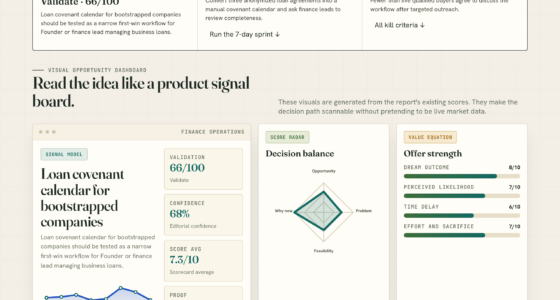
📊 Full opportunity report: White-collar professional services. The Tier 1 displacement. on ThorstenMeyerAI.com — validation score, market gap, and execution plan.

Get the latest gadgets delivered free — and shop member deals
- Fast, free delivery on millions of items
- Access to Prime Big Deal Days deals on October 6–7
- Prime Video, Amazon Music and more included
TL;DR
The white-collar professional services sector is experiencing a notable displacement pattern, with major firms reducing graduate hiring and testing AI tools that could replace a large portion of entry-level roles. This signals a structural shift in how these sectors operate and develop talent.
Major white-collar professional services firms are reducing graduate intake and deploying AI tools at an unprecedented scale in 2026, signaling a significant shift in employment patterns and talent development within the sector.
In 2023, the Big 4 accounting firms—KPMG, Deloitte, EY, and PwC—cut graduate intake by 29%, 18%, 11%, and 6% respectively, reflecting automation-driven efficiency gains. Simultaneously, investment banks like Goldman Sachs and Morgan Stanley are testing AI systems that could replace up to two-thirds of entry-level analyst roles, a move driven by cost pressures and technological maturation.
Legal firms show lagging employment displacement signals, with law firms increasing graduate numbers by 13% in 2023-2024 despite a stable 93.4% law-school employment rate, but small firms are experimenting with AI to reduce staffing costs—one case study reports a 27% reduction in staffing expenses with rising profits. Consulting firms like McKinsey are an outlier, projecting a 12% increase in North American hiring in 2026, emphasizing a divergence within the sector.
Research indicates that the displacement pattern aligns with the cohort-bifurcation hypothesis observed in software engineering, but with more sectoral fragmentation and a longer-term pipeline erosion, extending over 5-10 years rather than 2-5. The pattern shows a clear bifurcation: junior cohorts face displacement, while senior and partner-level roles are increasingly augmented or unaffected, but the pipeline for senior roles is eroding.
White-collar
professional services.
The Tier 1 displacement.
KPMG -29% · Deloitte -18% · EY -11% · PwC -6% graduate intake reductions · Goldman Sachs + Morgan Stanley AI testing could replace 2/3 entry-level analysts · BLS 0% paralegal growth 2024-2034 · McKinsey +12% contra-signal. The cohort-bifurcation hypothesis confirmed with sub-sector heterogeneity that strengthens the framework.
This is Atlas Essay 03 — the second Dimension 1 sector forensic, and the first test of Essay 02’s cohort-bifurcation hypothesis. White-collar professional services is the Tier 1 displacement empirically confirmed — but with two structural distinctions from software engineering. The empirical evidence is fragmented across four sub-sectors: Big 4 accounting (cleanest 6-29% graduate intake reductions) Investment banking (compression not extinction · Goldman + Morgan Stanley AI testing) Consulting (fragmented · McKinsey +12% contra-signal) Legal (lagging aggregate signals · emerging firm-level restructuring). The pipeline problem horizon is structurally longer: 5-10 year partner-track / equity-track gap 2030-2035+ vs software engineering’s 2-5 year 2027-2029 mid-level gap. The attribution-rigor framework extends from three factors to four — pyramid-model pressure is the professional-services-specific factor.
Four sub-sectors. Intensity gradient.
White-collar professional services is the second-most-documented sector for AI-driven labor displacement after software engineering. The empirical evidence is structurally fragmented across four sub-sectors with different intensities — the heterogeneity itself is the structural signature.
signal
framing
pattern
aggregate
Three cohorts. Pattern confirmed.
The cohort-bifurcation hypothesis from Essay 02 (junior cohort displaced · senior cohort augmented · pipeline collapsing) operationally tested across all four sub-sectors. Pattern empirically supported with sub-sector heterogeneity in intensity but consistent in structural form.
Four factors. Pyramid pressure added.
Essay 02 established three converging factors driving the cohort-bifurcation in software engineering. Essay 03 adds the fourth factor: pyramid-model pressure is structurally specific to professional services and not present in software engineering. The Atlas’s attribution-rigor framework operates sector-by-sector.
specific
Pipeline gap. 5-10 years.
The pipeline problem manifests differently in professional services than software engineering. The 5-8 year associate-to-partner apprenticeship model produces a structurally longer pipeline-gap horizon: 2030-2035+ partner-track / equity-track gap. Both are cohort-bifurcation second-order effects, but the horizon difference is structurally significant.
White-collar professional services is the Tier 1 displacement empirically confirmed. The cohort-bifurcation hypothesis from Essay 02 holds across all four sub-sectors documented — Big 4 accounting cleanest, investment banking through compression framing, consulting fragmented with McKinsey contra-signal, legal lagging at aggregate level but restructuring at firm level. The sub-sector heterogeneity is the structural signature, not a deviation from it. The pipeline problem manifests with a structurally longer 5-10 year horizon — 2030-2035+ partner-track / equity-track gap. The attribution-rigor framework extends to four factors with pyramid-model pressure as the sector-specific factor. Two of four Phase 1 sector forensics shipped. Both support the cohort-bifurcation hypothesis. The structural-empirical pattern is robust.
Implications of Sector-Wide Displacement Patterns
This shift indicates a fundamental transformation in how white-collar professional services develop talent and structure their workforce. The reduction in graduate intake and the adoption of AI tools may influence traditional career pathways, potentially leading to changes in sector dynamics over time. For workers, especially early-career professionals, this may increase competition and job insecurity. For firms, it highlights the importance of adapting talent strategies and leveraging AI effectively.
As an affiliate, we earn on qualifying purchases.
Sector-Specific Displacement Evidence and Trends
The empirical evidence from 2023-2026 confirms that the cohort-bifurcation pattern observed in software engineering also manifests across legal, banking, consulting, and accounting sub-sectors. The Big 4 accounting firms exhibit the most direct evidence with significant graduate intake reductions driven by AI automation of routine tasks. Investment banks are testing AI for core analytical roles, with potential replacement of up to two-thirds of entry-level analysts. Legal sector signals are more mixed, with some firms increasing graduate numbers despite automation trends, but small firms adopting AI to cut costs. Consulting firms like McKinsey are projecting increased hiring, reflecting sector heterogeneity and strategic differences.
The pattern’s structural mechanism involves automation reducing the need for junior roles, while senior roles are increasingly filled through augmentation rather than replacement, but with a longer pipeline erosion extending over a decade. This fragmentation across sub-sectors suggests a complex, sector-specific evolution of labor markets driven by AI and macroeconomic pressures.
“The cohort-bifurcation pattern from software engineering holds in white-collar professional services, but with more sectoral fragmentation and a longer-term pipeline erosion.”
— Thorsten Meyer
automated accounting software for firms
As an affiliate, we earn on qualifying purchases.
As an affiliate, we earn on qualifying purchases.
Unclear Long-Term Impact on Sector Talent Pipelines
While current data confirms sectoral reductions in graduate hiring and AI adoption, the long-term effects on talent pipelines, senior leadership development, and sector structure remain uncertain. It is not yet clear how these trends will evolve over the next 5-10 years, especially regarding the erosion of the partner and senior associate pipeline and potential sector resilience or further displacement.
entry-level analyst AI replacement
As an affiliate, we earn on qualifying purchases.
As an affiliate, we earn on qualifying purchases.
Projected Developments and Sector Adaptation Strategies
Expect ongoing testing and deployment of AI tools across sectors, with further reductions in entry-level roles likely. Firms may also develop new talent pathways to address pipeline challenges, potentially involving more senior-level training or alternative career models. Monitoring sector hiring patterns and AI integration over the next 1-3 years will help clarify how these structural shifts unfold and whether sector-specific strategies can mitigate displacement effects.
professional services automation software
As an affiliate, we earn on qualifying purchases.
As an affiliate, we earn on qualifying purchases.
Key Questions
How significant are the reductions in graduate hiring across sectors?
In the Big 4 accounting firms, reductions range from 6% to 29%, with similar trends in banking and legal sectors indicating a contraction in entry-level hiring driven by automation and cost pressures.
What role is AI playing in these sector shifts?
AI tools are automating routine tasks, reducing the need for junior staff, and testing the replacement of large portions of entry-level analyst roles—particularly in banking and accounting—while legal firms are experimenting with AI for cost efficiency.
Will the sector’s senior talent pipeline be affected?
Evidence suggests a potential long-term reduction in the pipeline for senior roles over 5-10 years, which could influence leadership development and sector stability.
Why is McKinsey increasing hiring despite automation trends?
McKinsey’s approach appears to differ, possibly focusing on AI augmentation rather than replacement, and aiming to expand talent capacity amid sector-specific strategic considerations.
What are the broader implications for workers and firms?
Workers may face increased competition and job insecurity, particularly at entry levels, while firms need to adapt their talent development and operational models to sustain growth amid automation pressures.
Source: ThorstenMeyerAI.com
Fall Picks
fall essentials
As an affiliate, we earn on qualifying purchases.