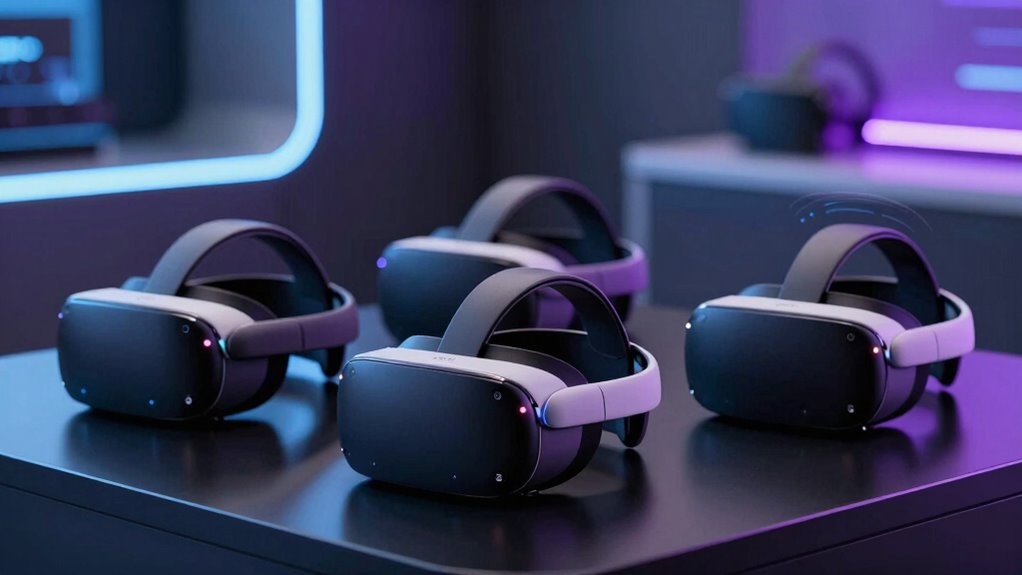

With eye tracking becoming a standard feature in high-end VR headsets, choosing the right device depends on your priorities—whether it’s high-resolution visuals, untethered gaming, or advanced mixed reality capabilities. The Meta Quest Pro stands out for work and social use, while the Pimax Crystal offers ultra-sharp visuals for simulation enthusiasts. For a balanced mix of wireless convenience and gaming, the Meta Quest 3S is a strong choice, whereas the HTC Vive Focus Vision is ideal for those seeking PC compatibility and mixed reality features. Each of these options presents tradeoffs in price, hardware requirements, and feature set, so I’ll help clarify which best fits different needs.

Get the latest gadgets delivered free — and shop member deals
- Fast, free delivery on millions of items
- Access to Prime Big Deal Days deals on October 6–7
- Prime Video, Amazon Music and more included
Complete the kit

Key Takeaways
- Meta Quest Pro excels in mixed reality and multitasking, suitable for professionals and creators.
- Meta Quest 3S offers excellent value for wireless gaming with a large library of titles.
- Pimax Crystal is best for users demanding ultra-high resolution and wide FOV for simulation.
- HTC Vive Focus Vision combines eye and hand tracking with PC compatibility, ideal for immersive enterprise use.
- Tradeoffs include high costs, hardware complexity, and limited portability depending on the headset.
| Meta Quest Pro | 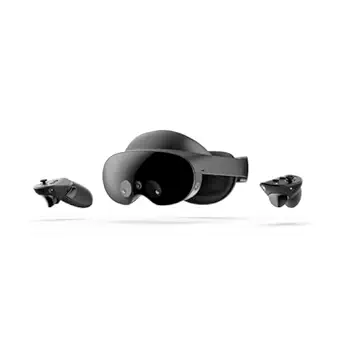 | Best for Mixed Reality and Multitasking | Storage: 256GB | RAM: 12GB | Sensors: 10 VR/MR sensors | VIEW ON AMAZON | See Our Full Breakdown |
| Meta Quest 3S 128GB VR Headset with Gorilla Tag Bundle and 3-Month Horizon+ Trial |  | Best for Wireless Gaming and Value | Storage: 128GB | Processor: Snapdragon XR2 Gen 2 | Memory: 8GB RAM | VIEW ON AMAZON | See Our Full Breakdown |
| Pimax Crystal Super VR Headset, 3840×3840 per Eye, Ultrawide, 140° FOV, Eye-Tracking, PC Compatible |  | Premium for Ultra-High Resolution and Wide FOV | Resolution: 3840×3840 per eye | Field of View: 140° | Display Technology: QLED & Mini-LED | VIEW ON AMAZON | See Our Full Breakdown |
| Meta Quest 3 512GB VR Headset with Gorilla Tag Bundle and 100+ Games Trial |  | Best for High-Resolution Wireless Gaming | Storage: 512GB | Display: 4K+ | Processor: Snapdragon XR2 Gen 2 | VIEW ON AMAZON | See Our Full Breakdown |
| HTC Vive Focus Vision — Mixed Reality and PC VR Headset with Controllers |  | Best for PC VR and Mixed Reality Integration | Display Resolution: 2448×2448 per eye | Field of View: 120° | Refresh Rate: 90Hz | VIEW ON AMAZON | See Our Full Breakdown |
| vr headsets with eye tracking | Storage |
|---|---|
| Meta Quest Pro | 256GB |
| Meta Quest 3S 128GB VR Headset | 128GB |
| Pimax Crystal Super VR Headset | — |
| Meta Quest 3 512GB VR Headset | 512GB |
| HTC Vive Focus Vision | — |
More Details on Our Top Picks
Meta Quest Pro
The Meta Quest Pro is designed for those who want a high-end mixed reality experience combined with productivity features. It boasts a sleek ergonomic design and high-resolution mixed reality passthrough, making it ideal for creative and professional workflows. Compared to the Meta Quest 3, it leans more toward work and social interaction rather than gaming, thanks to its advanced sensors and avatar expression capabilities. Its hardware supports multitasking, and controllers feature self-tracking and haptics, enhancing interaction. However, the need for a Meta account and limited availability for some users could be a barrier.
Pros:- High-resolution mixed reality passthrough for detailed overlays
- Ergonomic design for extended wear
- Supports multitasking and expressive avatars
- Advanced controllers with self-tracking
Cons:- Requires a Meta account to operate
- Limited availability for under-18s in some regions
Best for: Professionals and creators seeking immersive mixed reality for work and social use
Not ideal for: Casual gamers or users who prefer untethered VR for gaming alone
- Storage:256GB
- RAM:12GB
- Sensors:10 VR/MR sensors
- Display Technology:Pancake lenses, quantum dot
- Connectivity:Meta account required
Our verdict“A premium mixed reality headset best suited for professional use and immersive social experiences.”
Meta Quest 3S 128GB VR Headset with Gorilla Tag Bundle and 3-Month Horizon+ Trial
The Meta Quest 3S emphasizes untethered gaming, with improved graphics and faster load times thanks to the Snapdragon XR2 Gen 2 processor. It includes a bundle with Gorilla Tag and a 3-month Horizon+ trial, making it attractive for casual and dedicated gamers. Its wireless nature offers maximum freedom of movement, but battery life might limit longer sessions. The need for additional purchases after the trial and the premium bundle price are notable tradeoffs. Compared to the Quest Pro, it’s less suited for professional work but excels in gaming and entertainment.
Pros:- Wireless, untethered VR experience
- Enhanced graphics with Snapdragon XR2 Gen 2
- Includes exclusive game bundle and Horizon+ trial
- Longer battery life than previous models
Cons:- Battery life limits extended play
- Additional purchase needed for full game library
- Higher cost for the bundle
Best for: Casual gamers and VR enthusiasts seeking wireless freedom and a broad game library
Not ideal for: Professionals needing advanced mixed reality or multitasking features
- Storage:128GB
- Processor:Snapdragon XR2 Gen 2
- Memory:8GB RAM
- Battery Life:2+ hours
- Included Trial:3-month Horizon+
Our verdict“A compelling choice for wireless, entertainment-focused VR users willing to invest in a premium bundle.”
Pimax Crystal Super VR Headset, 3840×3840 per Eye, Ultrawide, 140° FOV, Eye-Tracking, PC Compatible
The Pimax Crystal offers an extraordinary visual experience with 3840×3840 resolution per eye and a 140° field of view, making it ideal for flight, racing, or other simulation enthusiasts. Its eye-tracking enhances realism, especially in complex training or immersive scenarios. The headset’s high-fidelity display and wide FOV surpass most consumer options, but this comes with a need for a powerful PC and a complex setup process. It’s best suited for users who prioritize visual immersion over portability or casual use.
Pros:- Ultra-sharp 3840×3840 per eye resolution
- Expansive 140° wide FOV
- High-fidelity spatial audio
- Ergonomic, replaceable interfaces
Cons:- Requires powerful PC hardware
- Expensive for casual users
- Complex setup process
Best for: Simulation enthusiasts requiring high resolution and wide FOV
Not ideal for: Casual users or those with modest PC hardware
- Resolution:3840×3840 per eye
- Field of View:140°
- Display Technology:QLED & Mini-LED
- Refresh Rate:90Hz+
- Eye-Tracking:Yes
Our verdict“The ultimate choice for high-fidelity visual immersion in simulation applications, suited for demanding users.”
Meta Quest 3 512GB VR Headset with Gorilla Tag Bundle and 100+ Games Trial
The Meta Quest 3 combines high-end wireless VR with a stunning 4K+ display, making it ideal for immersive gaming and mixed reality. Its Snapdragon XR2 Gen 2 processor delivers smooth performance, and the included bundle with Gorilla Tag and a 3-month Horizon+ trial broadens entertainment options. While the visual clarity and untethered experience are impressive, its battery life and setup needs can be limiting. It’s a versatile option for gamers who want a portable yet high-quality VR experience, though at a premium price.
Pros:- High-resolution 4K+ display
- Wireless, untethered experience
- Includes exclusive game bundle and Horizon+ trial
- Next-level performance with Snapdragon XR2 Gen 2
Cons:- Limited battery life for long sessions
- Price may be high for some users
- Requires setup space
Best for: VR gamers seeking high-resolution visuals and portability
Not ideal for: Users primarily interested in mixed reality or professional applications
- Storage:512GB
- Display:4K+
- Processor:Snapdragon XR2 Gen 2
- Memory:8GB RAM
- Battery Life:2+ hours
Our verdict“A high-resolution wireless headset perfect for gaming and entertainment, suitable for demanding users willing to pay a premium.”
HTC Vive Focus Vision — Mixed Reality and PC VR Headset with Controllers
The HTC Vive Focus Vision offers a standalone mixed reality experience with the flexibility of PC VR compatibility. Its high-resolution 2448×2448 pixels per eye and 120° FOV make it suitable for immersive applications, especially with eye and hand tracking enhancing interaction. The hot-swappable batteries support extended use, but the setup can be complex, and pricing details are less transparent. Compared to the Quest line, it leans more toward professional or enterprise use, with enhanced tracking and PC connectivity.
Pros:- High-resolution 5K-like visuals
- Built-in eye and hand tracking
- Hot-swappable batteries for extended use
- Supports PC VR and mixed reality apps
Cons:- Complex setup process
- Price not clearly specified
- Heavy or bulky design may affect comfort
Best for: Users needing PC VR integration and advanced tracking for enterprise or simulation
Not ideal for: Casual users or those seeking simple standalone gaming
- Display Resolution:2448×2448 per eye
- Field of View:120°
- Refresh Rate:90Hz
- Tracking:Eye and hand tracking
- Battery:Hot-swappable
Our verdict“A versatile mixed reality headset designed for professional and enterprise applications requiring precise tracking and PC connectivity.”

How We Picked
Our selection focused on headsets with integrated eye tracking technology, prioritizing those that balance high visual fidelity, user comfort, and practical features. We evaluated each device based on display quality, tracking accuracy, hardware requirements, and overall immersion. Cost was a significant factor, but so was versatility—whether the headset caters to gaming, professional work, or mixed reality. We also considered user experience, including setup complexity and ecosystem support, to recommend options for different types of users.
Factors to Consider When Choosing Vr Headsets With Eye Tracking
Choosing a VR headset with eye tracking depends on your main use case—whether you’re after high-fidelity visuals, mixed reality capabilities, or untethered gaming. Eye tracking enhances immersion and interaction but adds to the cost and complexity. Here, I break down what you need to consider to find the best device for your needs.
Display Quality and Visual Fidelity
High-resolution displays like the Pimax Crystal or Meta Quest 3 offer superior visual clarity, reducing screen-door effects and increasing immersion. If visual detail is your priority, focus on resolution, refresh rate, and FOV. Keep in mind, ultra-high resolutions often demand powerful PCs or higher budgets.
Tracking and Interaction
Eye tracking improves realism and interaction, especially in simulation or professional apps. Devices like the Pimax Crystal and HTC Vive Focus Vision excel here, while others like Meta Quest models provide good tracking for gaming and social use. Consider whether you need hand tracking, face tracking, or full-body support.
Portability and Wireless Experience
Wireless headsets such as Meta Quest 3S and Meta Quest 3 provide untethered freedom, ideal for casual gaming and ease of setup. However, they often compromise on resolution or battery life. Tethered options like Pimax or HTC Vive demand a powerful PC but deliver top-tier visuals and tracking accuracy.
Hardware Requirements and Ecosystem
While standalone headsets are user-friendly, PC-compatible options like Pimax and HTC Vive need robust hardware. Consider your existing setup and whether you’re willing to invest in a high-end PC. Ecosystem support, like app stores and developer tools, can also influence your experience.
Price and Value
Budget constraints are real—high-end devices like Pimax and HTC Vive come with premium price tags, but they offer unmatched fidelity. Meta Quest models strike a balance, providing good features at a more accessible price, especially with bundled content and trials. Always weigh features against your budget.
Frequently Asked Questions
How accurate is eye tracking in VR headsets?
Eye tracking in VR headsets varies in precision depending on the device. High-end models like the Pimax Crystal and HTC Vive Focus Vision offer highly accurate tracking, which enhances realism and interaction. For casual use, most consumer headsets provide sufficiently accurate tracking to improve engagement without requiring professional-level calibration.
Does eye tracking improve VR experiences for gaming?
Yes, eye tracking can significantly improve gaming experiences by enabling more natural interactions, foveated rendering (which focuses detail where you look), and social features like avatar expressions. However, the extent of these benefits depends on whether the game or application supports eye tracking integration.
Are standalone headsets with eye tracking more expensive?
Typically, adding eye tracking to standalone headsets raises the price compared to basic models. Devices like Meta Quest Pro and Quest 3 include eye tracking as standard or optional features, but they usually come at a higher cost. Tethered PC headsets like Pimax or HTC Vive tend to be more expensive overall due to their advanced hardware and PC requirements.
Can I upgrade my existing VR headset with eye tracking?
Most consumer VR headsets do not support hardware upgrades like adding eye tracking after purchase. To get eye tracking, you generally need to buy a headset that includes it as a built-in feature. Some enterprise or professional systems may offer modular solutions, but for most users, selecting the right device initially is essential.
How does eye tracking impact comfort and usability?
Eye tracking can improve usability by enabling more intuitive controls and reducing the need for hand gestures, which is especially helpful during long sessions. However, some users might experience discomfort if the eye-tracking sensors are poorly fitted or if the device is heavy. Overall, well-designed headsets aim to balance advanced features with user comfort.
Conclusion
For professionals or serious creators, the Meta Quest Pro offers unmatched mixed reality features. Gamers seeking untethered freedom and high-res visuals should consider the Meta Quest 3. Simulation enthusiasts will find the Pimax Crystal delivers extraordinary visual fidelity, provided they have a powerful PC. Meanwhile, users needing PC compatibility with advanced tracking might prefer the Vive Focus Vision. Your choice depends on your budget, intended use, and hardware setup—select accordingly.
Fall Picks
fall essentials
As an affiliate, we earn on qualifying purchases.