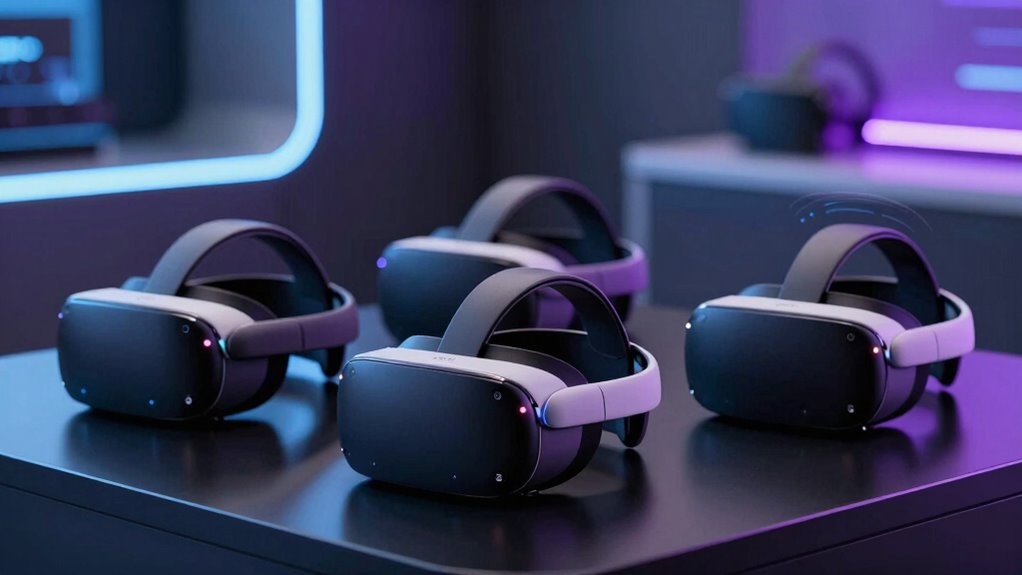
If you’re exploring the best VR headsets with eye tracking for 2026, I recommend the HTC Vive Pro Eye for precise analytics and immersion, the Meta Quest Pro for versatile standalone use with advanced features, the HTC Vive Focus Vision with its integrated facial tracking for enhanced realism, and the HTC VIVE Facial Tracker to complement immersive experiences. Each offers cutting-edge tech suited for different needs. Keep going, and you’ll uncover detailed insights about their specs and benefits.
Key Takeaways
- Prioritize headsets with high-precision eye tracking, high-resolution displays, and comfort features for immersive long-duration use.
- Look for models compatible with popular development platforms like Unity and Unreal Engine for versatile content creation.
- Consider headsets offering additional sensors like facial and hand tracking to enhance interaction and realism.
- Evaluate price-to-feature ratio, focusing on models that balance advanced eye tracking with affordability for professional or casual use.
- Check for ongoing support, software updates, and ecosystem integration to ensure longevity and compatibility in 2026.
| HTC Vive Pro Eye Virtual Reality System |  | Professional-Grade | Eye Tracking Technology: Precision eye tracking with accurate analysis | Tracking Capabilities: Head, eye, and optional room-scale tracking | Application Focus: User analytics, simulations, commercial | VIEW LATEST PRICE | See Our Full Breakdown |
| HTC VIVE Facial Tracker for Focus Series Virtual Reality Headsets | 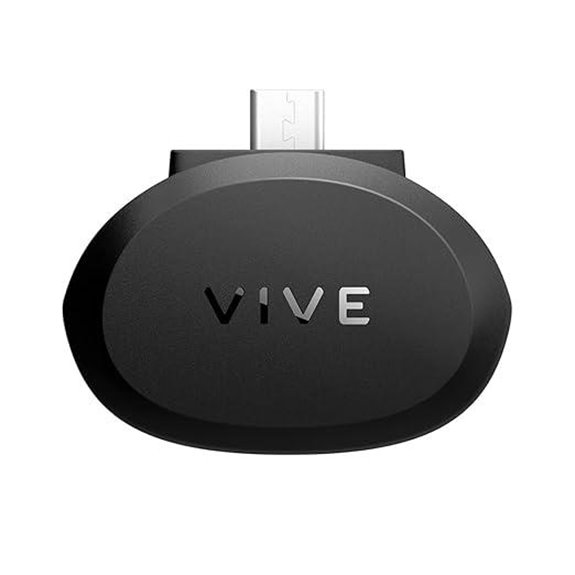 | Best for Facial Expression Capture | Eye Tracking Technology: High-fidelity facial expression and eye tracking | Tracking Capabilities: Facial, lip, and eye tracking | Application Focus: Soft skills training, digital character animation | VIEW LATEST PRICE | See Our Full Breakdown |
| Meta Quest Pro | 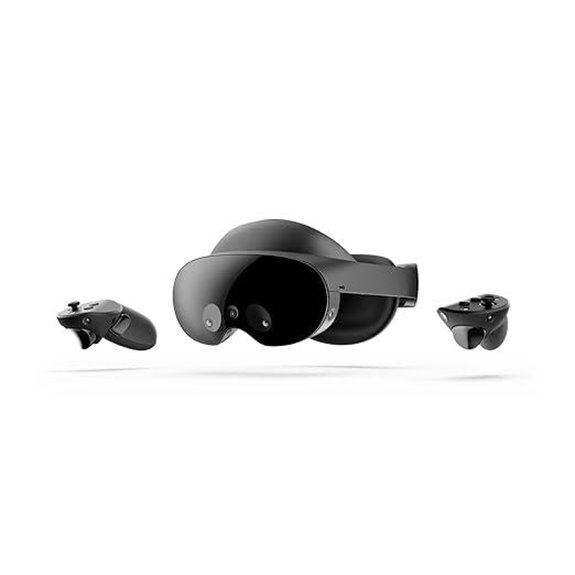 | All-in-One Powerhouse | Eye Tracking Technology: Real-time avatar expression and eye tracking | Tracking Capabilities: Facial, hand, and avatar motion tracking | Application Focus: Work, collaboration, entertainment | VIEW LATEST PRICE | See Our Full Breakdown |
| HTC Vive Focus Vision VR Headset with Facial Tracker | 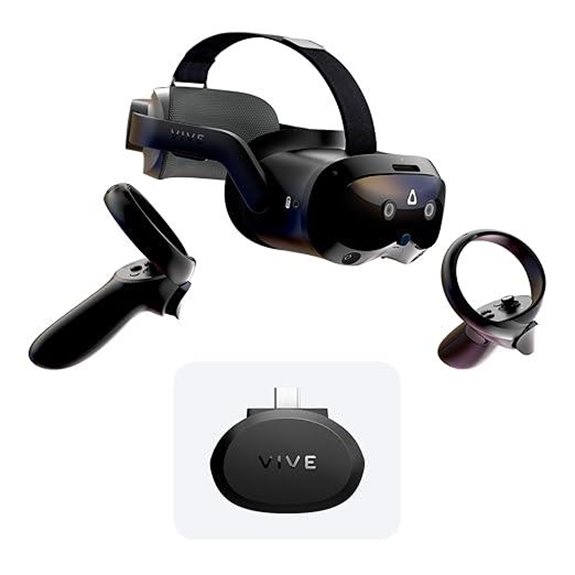 | Versatile Immersive Experience | Eye Tracking Technology: Built-in eye tracking for immersive interaction | Tracking Capabilities: Facial, eye, hand, and body tracking | Application Focus: Mixed reality, social, and professional use | VIEW LATEST PRICE | See Our Full Breakdown |
More Details on Our Top Picks
HTC Vive Pro Eye Virtual Reality System
If you’re looking for a professional-grade VR headset with precise eye tracking, the HTC Vive Pro Eye is an excellent choice. Released in June 2019, it offers advanced features like foveated rendering and detailed user analytics, perfect for creators and commercial users. The system includes the headset, controllers, base stations, and necessary cables, supporting large areas for immersive experiences. Its high visual fidelity guarantees sharp graphics and textures, while the ergonomic design prioritizes comfort during long sessions. With its accurate eye tracking and robust tracking system, it provides insights into user behavior, making it ideal for simulations, creative projects, and market research.
- Eye Tracking Technology:Precision eye tracking with accurate analysis
- Tracking Capabilities:Head, eye, and optional room-scale tracking
- Application Focus:User analytics, simulations, commercial
- Compatibility:PC VR with SteamVR support
- Form Factor:Over-ear headset, 13.8 lbs
- Release Date:June 6, 2019
- Additional Feature:Supports up to 32×32 area
- Additional Feature:Foveated rendering technology
- Additional Feature:Includes two base stations 2.0
HTC VIVE Facial Tracker for Focus Series Virtual Reality Headsets
The HTC VIVE Facial Tracker for Focus Series VR headsets stands out for anyone seeking highly detailed facial expression capture to enhance lifelike interactions in virtual environments. It tracks 38 blend shapes, including lips, jaw, cheeks, chin, teeth, and tongue, providing real-time, high-fidelity data that syncs lips with voice with near-zero lag. Compatible with VIVE Focus Vision and Focus 3, it’s perfect for improving soft skills training, digital character animation, and motion capture. I find it especially useful for presentation coaching and customer service scenarios, where understanding emotions and intentions makes communication more authentic and effective in both entertainment and professional settings.
- Eye Tracking Technology:High-fidelity facial expression and eye tracking
- Tracking Capabilities:Facial, lip, and eye tracking
- Application Focus:Soft skills training, digital character animation
- Compatibility:VIVE Focus Series headsets, Unity, Unreal
- Form Factor:Compact, lightweight facial tracker
- Release Date:October 1, 2022
- Additional Feature:Enables lip synchronization with voice
- Additional Feature:Supports 38 facial blend shapes
- Additional Feature:Compatible with Unity and Unreal
Meta Quest Pro
For professionals who want seamless collaboration and immersive multitasking, the Meta Quest Pro stands out as a top choice in 2026’s VR headset landscape. It offers resizable multitasking screens, perfect for organizing tasks, developing ideas, or messaging. The headset’s ergonomic design guarantees comfort during long sessions, while high-resolution mixed reality passthrough allows seamless interaction with the physical environment. Powered by advanced hardware—including 256GB storage, 12GB RAM, and 10 sensors—it delivers crisp visuals with pancake lenses and quantum dot tech. Supporting real-time avatar expressions and natural hand gestures, the Meta Quest Pro makes virtual collaboration more authentic and intuitive.
- Eye Tracking Technology:Real-time avatar expression and eye tracking
- Tracking Capabilities:Facial, hand, and avatar motion tracking
- Application Focus:Work, collaboration, entertainment
- Compatibility:Standalone with PC VR support via SteamVR
- Form Factor:Slim, ergonomic headset for extended wear
- Release Date:October 10, 2022
- Additional Feature:Supports real-time avatar expressions
- Additional Feature:Multi-point haptic feedback
- Additional Feature:Resizable multitasking screens
HTC Vive Focus Vision VR Headset with Facial Tracker
The HTC Vive Focus Vision VR Headset with Facial Tracker stands out for its advanced facial expression capture, making it ideal for users seeking highly realistic interactions in virtual environments. It combines standalone and PC VR capabilities with a stunning 5K display, supporting immersive visuals with 2448 x 2448 pixels per eye and a 90 Hz refresh rate. The facial tracker captures 38 blend shapes, enhancing soft skills training and digital character animation. With eye tracking, hand tracking, and body tracking, it delivers natural, lifelike interactions. Supporting VIVEPORT and SteamVR, it seamlessly connects to PCs for high-fidelity experiences, making it a versatile choice for professionals and enthusiasts alike.
- Eye Tracking Technology:Built-in eye tracking for immersive interaction
- Tracking Capabilities:Facial, eye, hand, and body tracking
- Application Focus:Mixed reality, social, and professional use
- Compatibility:Standalone and PC VR via VIVEPORT, SteamVR
- Form Factor:All-in-one standalone with high-resolution displays
- Release Date:October 17, 2024
- Additional Feature:5K high-resolution display
- Additional Feature:Supports mixed reality and PC VR
- Additional Feature:Built-in eye and facial tracking
Factors to Consider When Choosing VR Headsets With Eye Tracking
When selecting a VR headset with eye tracking, I focus on several key factors to guarantee it meets my needs. I consider compatibility with my devices, the accuracy of the eye tracking, and how comfortable it feels during extended use. Additionally, I look at hardware specs and whether the headset suits my specific use cases to make the best choice.
Compatibility and Ecosystem
Choosing a VR headset with eye tracking isn’t just about hardware; compatibility with your preferred software and ecosystem can make or break your experience. I recommend verifying that the eye tracking technology works seamlessly with platforms like Unity or Unreal Engine if you’re into development or content creation. It’s also vital to check if the headset integrates with features like social sharing, analytics, or enterprise tools you might use. Additionally, confirm it supports compatible peripherals such as facial or hand trackers for a more immersive experience. Consider the connection options—whether it connects effortlessly to your PC or runs standalone—and verify compatibility with your operating system. Finally, if cross-platform access matters, pick a headset that can operate across different devices and applications, expanding your range of experiences.
Eye Tracking Accuracy
Eye tracking accuracy plays a crucial role in maximizing the potential of VR headsets with integrated eye sensors. Precise gaze data enhances user experience, making interactions more natural and immersive. The number and placement of sensors directly influence how well the headset detects where you’re looking, impacting fidelity and responsiveness. Advanced algorithms and calibration processes can adapt to individual eye movement patterns, boosting accuracy over time. However, factors like lighting conditions, glasses, or contact lenses can introduce variability, sometimes reducing reliability. Accurate eye tracking is especially vital for applications like foveated rendering, user behavior analysis, and creating realistic avatar interactions. When choosing a headset, consider these aspects to guarantee you get the most precise and consistent eye tracking performance possible.
Comfort and Fit
Selecting a VR headset with eye tracking requires paying close attention to comfort and fit, as these factors directly impact your overall experience. Look for models with adjustable straps and padding to guarantee a comfortable fit for different head sizes and shapes. An ergonomic design that distributes weight evenly helps reduce fatigue during long sessions. Check if the headset offers customizable options, like adjustable lens spacing and facial interface adjustments, to enhance comfort. Lighter models tend to be more comfortable for extended use, so consider weight carefully. Additionally, verify that the headset accommodates users with glasses or specific eye prescriptions. Prioritizing comfort and fit ensures you can enjoy immersive VR experiences without discomfort or distractions.
Hardware and Software Specs
When evaluating VR headsets with eye tracking, it’s important to take into account their hardware and software specifications to guarantee smooth and immersive experiences. High-resolution displays with at least 90Hz refresh rates are essential for clear visuals and fluid motion. Adequate hardware, such as a minimum of 8GB RAM and powerful multi-core CPUs, supports eye tracking features without lag. Precise gaze detection and foveated rendering improve visual fidelity and performance. Compatibility with development platforms like Unity or Unreal Engine is vital for seamless integration of eye tracking data. Additionally, sensors like facial or hand trackers can complement eye tracking, enhancing interaction accuracy. Prioritizing these specs ensures your VR setup delivers peak performance, realism, and future-proofing for evolving applications.
Use Case Suitability
Choosing the right VR headset with eye tracking depends heavily on your specific use case, whether it’s gaming, training, or research. I recommend evaluating if the eye tracking capabilities are optimized for your needs, such as gaze-based interactions or behavioral analysis. Check whether the device supports essential software integrations and analytics features relevant to your application. Precision and latency are critical—guarantee they meet the demands of your tasks to avoid frustration or inaccuracies. Compatibility with other hardware and accessories should also match your workflow or environment. Finally, consider user experience factors like comfort and extended wear—these are crucial if you’ll be using the headset for long periods. Matching these aspects ensures you get the most out of your VR experience tailored to your goals.
Pricing and Value
The cost of VR headsets with eye tracking varies widely, making it important to weigh what you get for your money. Prices range from around $500 for mid-range models to over $1,500 for high-end systems with advanced features. When evaluating value, consider factors like visual fidelity, tracking accuracy, and added functionalities such as facial or hand tracking. Higher-priced options typically offer more precise eye tracking and better analytics, which are essential for professional or research use. Comparing prices across multiple retailers and looking for discounts or bundles can save you money. Features like foveated rendering or multi-modal tracking can justify the higher cost by delivering a richer user experience and more detailed insights. Ultimately, balancing features and budget helps you choose the best headset for your needs.
Frequently Asked Questions
How Does Eye Tracking Improve VR Gaming Experiences?
Eye tracking makes VR gaming more immersive and realistic by allowing the game to respond to where I’m looking. It enables smoother interactions, like selecting objects just by glancing at them, and enhances visual detail where I focus. Plus, it improves performance by reducing rendering load through foveated rendering, making gameplay more seamless. Overall, eye tracking heightens immersion, precision, and efficiency, taking my VR experience to the next level.
Are VR Headsets With Eye Tracking Suitable for Professional Applications?
Absolutely, VR headsets with eye tracking excel in professional applications. I find them fantastic for precise data collection, seamless simulations, and stunning visualizations. They streamline workflows, enhance training, and improve collaboration by capturing natural eye movements. These headsets are more than gaming gear—they’re game-changers for design, diagnostics, and decision-making. If you’re seeking serious, smart solutions, eye-tracking VR headsets are superb for professional purposes.
What Is the Battery Life Impact of Eye Tracking Features?
Eye tracking features can slightly reduce battery life because they require extra sensors and processing power. I’ve noticed that on some headsets, battery life drops by about 10-15% when eye tracking is active. However, manufacturers optimize power management, so the impact isn’t huge. Overall, I’d say it’s a reasonable trade-off for the enhanced experiences eye tracking provides, especially if you plan your usage accordingly.
How Accurate Is Eye Tracking in Different Lighting Conditions?
Eye tracking in VR headsets is quite accurate across various lighting conditions, thanks to advanced infrared sensors. I’ve found that even in dim or brightly lit environments, the technology still tracks my eye movements precisely. While extremely bright settings can sometimes cause minor inconsistencies, overall, modern eye tracking performs reliably indoors and outdoors, enhancing immersion without sacrificing accuracy or responsiveness, which really improves the VR experience.
Can Eye Tracking Data Be Used for Biometric Security?
Yes, eye tracking data can definitely be used for biometric security. I believe it’s a promising method because our eye patterns are unique, much like fingerprints. By analyzing features like iris structure and eye movement patterns, this technology can verify identities accurately. However, I think it’s still evolving, and privacy concerns need to be addressed before widespread adoption. Overall, I see it as a potential game-changer in security systems.
Conclusion
Choosing the right VR headset is like picking the perfect compass for an adventure—each one guides me through new worlds with precision and ease. With eye tracking, I can navigate immersive landscapes effortlessly, making every moment feel real. Whether I’m exploring, gaming, or working, these headsets are my trusty guides. So, I encourage you to find your perfect compass and set out on your own incredible journey through virtual reality’s vast, exciting universe.