
If you’re looking to elevate your VR gaming in 2026, I recommend considering top NVIDIA GPUs like the RTX 5070, RTX 3060, and GTX 1070, which are VR-ready with ample VRAM, advanced ray tracing, and high performance. These models support the latest connectivity standards and cooling systems, ensuring smooth, immersive experiences. Stay tuned as I explore each option in detail so you can choose the perfect GPU for your setup.
Key Takeaways
- Identify high-performance NVIDIA GPUs with at least 8GB VRAM for smooth, high-resolution VR experiences in 2026.
- Prioritize models with advanced cooling systems and low noise levels for long gaming sessions.
- Ensure compatibility with current and upcoming VR headsets through HDMI 2.0/DisplayPort 1.4 or higher.
- Look for future-proof features like PCIe 5.0, DLSS 4, and support for emerging connectivity standards.
- Consider overall performance, architecture, and driver support to maximize immersion and longevity in VR gaming.





More Details on Our Top Picks
Nvidia GeForce GTX 1070 Founders Edition (Renewed)
If you’re looking for an affordable yet VR-ready GPU, the Nvidia GeForce GTX 1070 Founders Edition (Renewed) is a solid option. Powered by the reliable GTX 1070 GPU with 8GB GDDR5 memory, it handles VR applications smoothly. Its PCIe 3.0 x16 interface ensures fast data transfer, and it’s in the original box, ready to go. With a 4.4-star rating from nearly 200 reviews, users praise its performance and value. Although used, this GPU offers a great balance of power and affordability for gamers seeking an upgrade without breaking the bank. It’s a dependable choice for immersive VR experiences in 2026.
- Memory Type:GDDR5
- Memory Size:8GB
- PCIe Version:PCIe 3.0
- Video Outputs:Not specified
- Max Resolution:Not specified
- Cooling System:Not specified
- Additional Feature:VR-ready PCIe Interface
- Additional Feature:Original boxed condition
- Additional Feature:Renewed used condition
ASUS GTX 1060 6GB Dual-Fan VR Gaming Graphics Card
The ASUS GTX 1060 6GB Dual-Fan VR Gaming Graphics Card is an excellent choice for gamers seeking reliable performance on a budget, especially those focused on virtual reality. It features a 1809 MHz boost clock in OC mode, 6GB GDDR5 memory, and supports resolutions up to 3840×2160. The dual HDMI 2.0 ports and DisplayPort 1.4 make it VR-ready, perfect for immersive gaming. Its dual-fan cooling system keeps the card quiet and cool, while auto-extreme technology guarantees durability and stability. Overall, it offers solid performance, longevity, and VR compatibility at a competitive price, making it a smart pick for entry-level to mid-range gaming setups.
- Memory Type:GDDR5
- Memory Size:6GB
- PCIe Version:PCIe 3.0
- Video Outputs:HDMI 2.0, DisplayPort 1.4
- Max Resolution:3840×2160
- Cooling System:Dual-fan cooling
- Additional Feature:Dual HDMI 2.0 ports
- Additional Feature:Auto-extreme manufacturing
- Additional Feature:Supports high-resolution up to 3840×2160
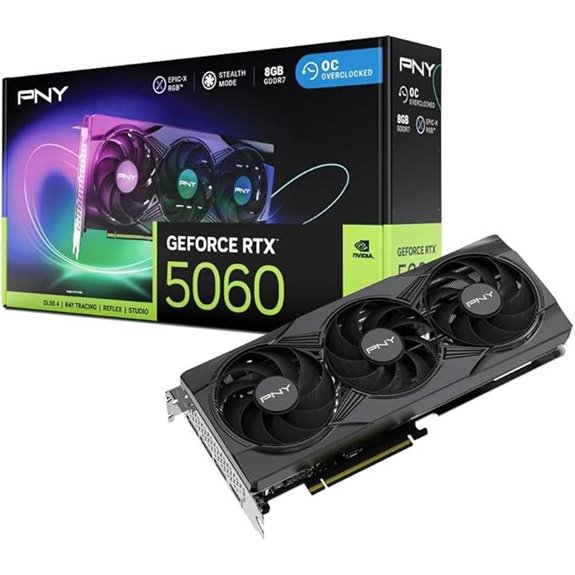
PNY NVIDIA GeForce RTX 5060 Epic-X Graphics Card
Designed for serious gamers and creative professionals, the PNY NVIDIA GeForce RTX 5060 Epic-X stands out with its 8GB GDDR7 memory and advanced AI features. It delivers high-performance gaming and smooth creative workflows thanks to NVIDIA Blackwell architecture, DLSS 4, and real-time ray tracing. The triple-fan design guarantees effective cooling, while HDMI and DisplayPort outputs support high resolutions up to 7680×4320. Compatibility with PCIe 5.0 makes it future-proof, and Reflex technology boosts responsiveness for competitive play. At just over two pounds, it’s a powerful, versatile GPU that elevates both immersive gaming and demanding creative tasks.
- Memory Type:GDDR7
- Memory Size:8GB
- PCIe Version:PCIe 5.0
- Video Outputs:HDMI 2.1, DisplayPort 2.1
- Max Resolution:7680×4320
- Cooling System:Triple fan, ARGB
- Additional Feature:DLSS 4 AI technology
- Additional Feature:8GB GDDR7 memory
- Additional Feature:NVIDIA Blackwell architecture
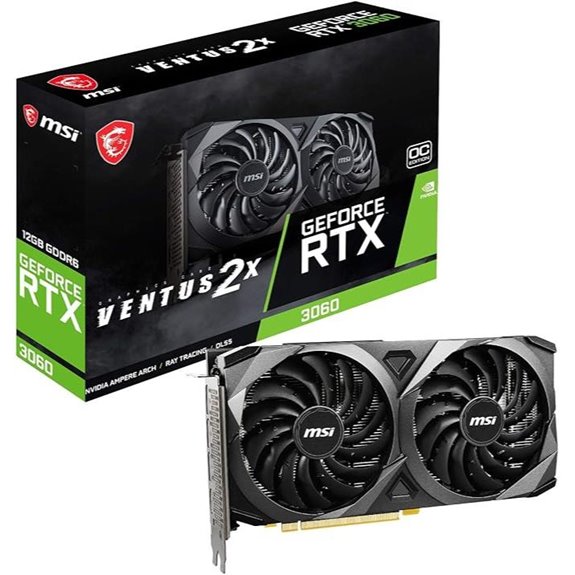
MSI GeForce RTX 3060 12GB Gaming Graphics Card
For gamers and high-performance VR enthusiasts seeking an affordable yet capable GPU, the MSI GeForce RTX 3060 12GB stands out with its ample 12GB GDDR6 memory and advanced NVIDIA Ampere architecture. It offers a solid balance of power and affordability, supporting high-resolution gaming up to 8K via DisplayPort and HDMI 2.1. The card features a PCIe 4.0 interface, enhanced Ray Tracing, and efficient cooling with the Torx Twin Fan system. With a GPU clock of 1710 MHz and robust data transfer capabilities, it handles demanding VR experiences smoothly, making it an excellent choice for immersive gaming in 2026.
- Memory Type:GDDR6
- Memory Size:12GB
- PCIe Version:PCIe 4.0
- Video Outputs:HDMI 2.1, DisplayPort 1.4a
- Max Resolution:7680×4320
- Cooling System:Twin fan
- Additional Feature:1710 MHz GPU clock
- Additional Feature:Supports 8K resolution
- Additional Feature:Torx Twin Fan cooling
MSI RTX 3050 Gaming X 6G Graphics Card
If you’re looking for a compact yet powerful GPU capable of handling demanding VR experiences in 2026, the MSI RTX 3050 Gaming X 6G is an excellent choice. It features an NVIDIA GeForce RTX 3050 chipset based on Ampere architecture, with 6GB GDDR6 memory running at 14 Gbps. The card offers real-time ray tracing, AI-enhanced graphics, and supports high resolutions up to 7680×4320. Its sleek design measures just over 8 inches long, making it suitable for most builds. With a boost clock of 1507 MHz and robust cooling, it delivers smooth performance for gaming and content creation, all while maintaining excellent reviews and support options.
- Memory Type:GDDR6
- Memory Size:6GB
- PCIe Version:PCIe 5.0
- Video Outputs:HDMI 2.1, DisplayPort 1.4a
- Max Resolution:7680×4320
- Cooling System:Not specified
- Additional Feature:1507 MHz boost clock
- Additional Feature:Compact design
- Additional Feature:96-bit memory interface
GIGABYTE GeForce RTX 5070 WINDFORCE OC Graphics Card
The GIGABYTE GeForce RTX 5070 WINDFORCE OC Graphics Card stands out as an excellent choice for compact PC builds that demand high-end VR performance. Its NVIDIA Blackwell architecture, combined with DLSS 4 and advanced RT and Tensor Cores, delivers exceptional visuals, high frame rates, and AI acceleration. With 12GB GDDR7 memory and PCIe 5.0 compatibility, it supports resolutions up to 7680×4320 pixels, ensuring future-proof performance. The WINDFORCE cooling system keeps temperatures in check during demanding sessions. Weighing just under three pounds, it fits well in small systems and is highly rated, making it a reliable option for immersive VR experiences.
- Memory Type:GDDR7
- Memory Size:12GB
- PCIe Version:PCIe 5.0
- Video Outputs:HDMI 2.1, DisplayPort 1.4a
- Max Resolution:7680×4320
- Cooling System:Windforce cooling system
- Additional Feature:2600 MHz memory speed
- Additional Feature:SFF-Ready PCIe 5.0
- Additional Feature:WINDFORCE cooling system
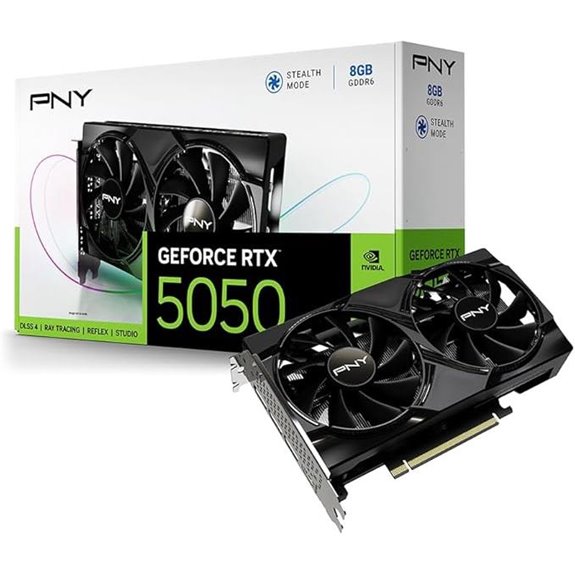
PNY NVIDIA GeForce RTX 5050 Dual Fan Graphics Card
Powered by NVIDIA’s Blackwell architecture, the PNY GeForce RTX 5050 Dual Fan offers cutting-edge AI and ray tracing capabilities, making it an excellent choice for serious gamers and creative professionals aiming for ultra-high-resolution VR experiences. It features 4th-gen Ray Tracing Cores and 5th-gen Tensor Cores, supporting DLSS 4 for faster, clearer visuals. With 8GB GDDR6 memory and support for PCIe 5.0, HDMI 2.1, and DP 2.1, it handles 7680×4320 resolution effortlessly. Its dual-fan design keeps temperatures in check during demanding sessions, ensuring reliable performance whether gaming or creating. Overall, it’s a versatile, high-performance GPU for immersive VR and professional use.
- Memory Type:GDDR6
- Memory Size:8GB
- PCIe Version:PCIe 5.0
- Video Outputs:HDMI 2.1, DisplayPort 2.1
- Max Resolution:7680×4320
- Cooling System:Dual fan
- Additional Feature:2317 MHz core speed
- Additional Feature:8GB GDDR6 memory
- Additional Feature:AI-accelerated rendering
MSI GeForce GT 1030 4GB Graphics Card
Looking for an affordable and compact GPU suitable for entry-level VR experiences? The MSI GeForce GT 1030 4GB Graphics Card is a great option. It features NVIDIA Pascal architecture, a 1430 MHz boost clock, and 4GB DDR4 memory, supporting resolutions up to 3840×2160. Its low-profile design with a single fan makes it easy to install in small setups. While it’s not a high-end card, it handles gaming, HD video, and basic VR tasks well. Plus, with features like DirectX 12 support and multi-GPU compatibility, it offers decent performance for those just starting with VR or upgrading on a budget.
- Memory Type:DDR4
- Memory Size:4GB
- PCIe Version:PCIe 3.0
- Video Outputs:HDMI 2.0b, DisplayPort 1.4a
- Max Resolution:3840×2160
- Cooling System:Single fan
- Additional Feature:Low-profile design
- Additional Feature:Supports multi-GPU setups
- Additional Feature:1430 MHz boost clock
Factors to Consider When Choosing an NVIDIA GPU for VR

When choosing an NVIDIA GPU for VR, I focus on performance power to guarantee smooth experiences, along with enough memory capacity for demanding games. Compatibility with my headset and cooling noise levels also matter to me, so I look for features that suit my setup. Finally, I consider future-proofing options to keep my system ready for upcoming VR advancements.
VR Performance Power
Have you ever wondered what makes a GPU great for VR? It’s all about VR performance power. A top-tier VR GPU needs at least 8GB of VRAM to handle high-resolution textures and to guarantee smooth rendering. Advanced ray tracing cores are vital for realistic lighting and shadows, which really boost immersion. High frame rates of 90Hz or more are necessary for a comfortable, responsive experience, so your GPU must deliver strong processing capabilities. Support for VR-specific tech like variable refresh rate (VRR) and low latency rendering minimizes motion sickness and stabilizes visuals. Plus, high compute performance, measured in teraflops, allows the GPU to handle complex scenes and real-time interactions seamlessly. Fundamentally, VR performance power determines how immersive and smooth your virtual experiences will be.
Memory Capacity Needs
Choosing the right GPU for VR isn’t just about raw processing power; memory capacity plays a pivotal role in ensuring smooth, high-quality experiences. VR applications often demand at least 8GB of GPU memory to run smoothly, especially with high-resolution headsets. More VRAM allows for better handling of detailed textures and complex virtual environments without causing performance drops. For immersive experiences with advanced graphics or multiple displays, 12GB or more is recommended. Insufficient memory can lead to increased latency, stuttering, and lower frame rates, which ruin immersion. By selecting a GPU with adequate VRAM, you future-proof your setup as VR content and resolution standards continue to evolve, ensuring sustained performance and visual fidelity over time.
Compatibility With Headsets
Ever wondered if your GPU will work seamlessly with your VR headset? To guarantee smooth performance, it’s vital to check that your GPU meets or exceeds the headset’s minimum requirements. Compatibility of video output ports is also key—look for HDMI 2.0, DisplayPort 1.4, or DisplayPort 2.0, matching your headset’s connection options. Driver support matters too; make sure the GPU’s software is optimized for VR applications and headset compatibility. Performance capabilities should align with your headset’s recommended specs to avoid lag or stuttering. Finally, confirm that your GPU supports essential VR protocols like SteamVR or Oculus Link, which facilitate seamless headset integration. Taking these factors into account guarantees a more immersive, hassle-free VR experience.
Cooling and Noise Levels
When selecting an NVIDIA GPU for VR, paying attention to cooling and noise levels is essential for a smooth and immersive experience. Efficient cooling systems like dual or triple fans help keep temperatures in check during long VR sessions, preventing overheating. GPUs with larger heatsinks dissipate heat more effectively, which also reduces noise. Advanced fan technologies, including optimized blade designs and acoustic dampening materials, contribute to quieter operation. Variable fan speed controls and auto-adjusting cooling algorithms further minimize noise by lowering fan RPM when full cooling isn’t needed. Quiet GPUs prevent distractions and discomfort, ensuring your focus stays on the game. Overall, a well-cooled, quiet GPU enhances immersion and comfort, making it a vital factor in choosing the best NVIDIA GPU for VR in 2026.
Future-proofing Features
As VR technology advances, selecting a GPU that’s ready for the future means focusing on features that guarantee long-term compatibility and performance. Supporting the latest PCIe standards like PCIe 5.0 ensures your GPU stays compatible with upcoming hardware. Advanced ray tracing and AI features, such as DLSS 4, help maintain high visual quality and smooth performance as VR applications grow more demanding. Larger VRAM, 8GB or more, allows handling of increasingly detailed textures and complex scenes in future VR content. Compatibility with emerging connectivity options like HDMI 2.1 and DisplayPort 2.1 ensures support for higher resolutions and refresh rates. Ultimately, supporting the newest architectures, such as NVIDIA Blackwell, guarantees access to the latest performance improvements and software optimizations, securing your investment for years to come.
Frequently Asked Questions
How Does VR Performance Vary Between Different NVIDIA GPU Architectures?
VR performance varies substantially between NVIDIA GPU architectures. Newer architectures like Ada Lovelace deliver faster rendering, better latency, and improved frame rates, creating a smoother experience. Older architectures like Turing or Ampere still perform well but might struggle with the most demanding VR titles. I recommend choosing the latest architecture you can afford, as it guarantees peak VR performance, reduces motion sickness, and enhances immersion.
What Is the Expected Lifespan of a High-End NVIDIA GPU for VR Use?
A high-end NVIDIA GPU for VR, like the RTX 4090, typically lasts around 4-6 years with proper use. I’ve seen gamers keep their GPUs for years, upgrading only when newer technology becomes essential for demanding titles. Regular maintenance and avoiding overheating extend lifespan. So, if you invest in a top-tier card now, it should serve you well for several years, ensuring smooth VR experiences as games evolve.
Are There Specific NVIDIA Features That Enhance VR Gaming Experiences?
NVIDIA offers several features that really boost VR gaming. I love how G-SYNC reduces screen tearing, giving me smooth visuals. NVIDIA Reflex minimizes latency, making my experience more responsive. Technologies like DLSS improve performance without sacrificing quality, which is a game-changer. Overall, these features make VR more immersive, fluid, and less tiring, enhancing every session I immerse myself in.
How Important Is VRAM Capacity for Future VR Game Compatibility?
VR gaming’s future relies heavily on VRAM capacity, especially as games become more detailed and immersive. I think having ample VRAM guarantees smoother performance, reduces lag, and allows for higher resolutions and settings. For 2026, I’d say at least 12-16GB of VRAM will be vital to keep up with upcoming titles and maintain a seamless VR experience. Upgrading VRAM now can future-proof your setup for years to come.
What Cooling Solutions Are Recommended for Maintaining GPU Performance During Extended VR Sessions?
Oh, sure, just some fancy cooling solution will keep your GPU happy during those marathon VR sessions, right? Honestly, I swear by custom liquid cooling setups—they’re silent, efficient, and keep temps low even when I’m immersed for hours. Don’t forget good case airflow and high-quality thermal paste. Trust me, a cooled GPU means smoother gameplay and fewer crashes, so invest in proper cooling—your VR experience depends on it.
Conclusion
Ultimately, selecting the perfect NVIDIA GPU for VR is about balancing boldness and budget. By considering capabilities and costs, I can confidently choose a card that delivers dazzling, dynamic, and immersive experiences. Don’t delay—dive into the details, determine your desires, and decide on the device that’ll drive your digital dreams. With the right GPU, your virtual ventures will be vibrant, vivid, and virtually victorious!