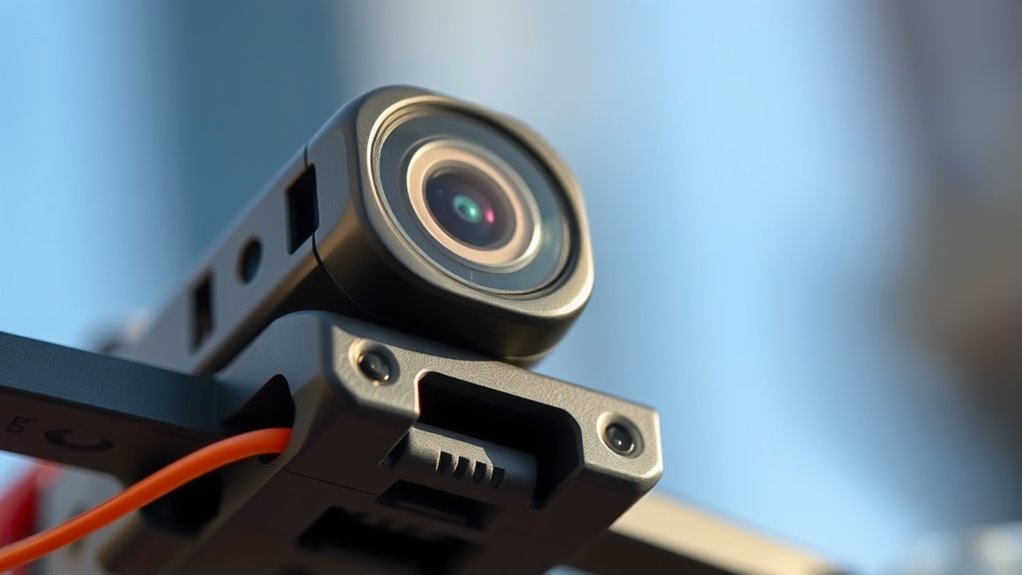
If you’re looking for the best nano FPV cameras for tiny drones, I recommend models like the MEIVIFPV, SoloGood Caddx Ant, and RunCam Nano 2, which offer high resolution, wide angles, and lightweight designs. These cameras excel in delivering sharp footage even in compact frames like Toothpicks or micro racers. Many are weather-resistant and packed with features like WDR and low-light capabilities. Stick with me to discover more top options for exceptional drone video quality.
Key Takeaways
- Compact, lightweight designs (around 14x14mm, 2-3g) ensure seamless integration into micro drones like Toothpick quads.
- High-resolution sensors (up to 1200TVL) and wide-angle lenses (up to 170°) deliver crisp, immersive footage.
- Advanced features such as WDR, 3D DNR, low-light sensitivity, and electronic shutters enhance image clarity in various lighting conditions.
- Weather-resistant options like RunCam Nano 4 support durable, all-weather FPV racing and freestyle flying.
- Compatibility with NTSC/PAL formats and multiple aspect ratios ensures versatile use across different drone systems.
MEIVIFPV FPV Camera for Drones

If you’re looking for a lightweight, high-performance FPV camera for tiny drones or cinewhoops, the MEIVIFPV FPV Camera is an excellent choice. It features a 1/3” CMOS sensor with 1200TVL resolution, providing sharp, clear images even in low light thanks to 0.001lux sensitivity. Weighing just 2 grams and measuring 14x14mm, it’s perfect for micro drones. The wide 165° field of view, WDR, and switchable PAL/NTSC formats make it versatile and reliable during fast-paced flights. Its compact design and advanced features guarantee you get excellent footage without adding much weight or bulk.
Best For: micro drone enthusiasts and cinewhoop pilots seeking a lightweight, high-resolution FPV camera with wide-angle coverage and excellent low-light performance.
Pros:
- Ultra-lightweight at only 2g, ideal for micro drones and cinewhoops
- 1200TVL resolution with 1/3” CMOS sensor for crisp, clear images
- Wide 165° field of view and WDR for optimal coverage and balanced exposure
Cons:
- Limited to analog video output, which may not suit digital FPV systems
- Small size may require precise mounting and wiring adjustments
- May have limited compatibility with some drone frames or mounting accessories
SoloGood Caddx Ant FPV Camera (1200TVL, 1.8mm, NTSC/PAL)
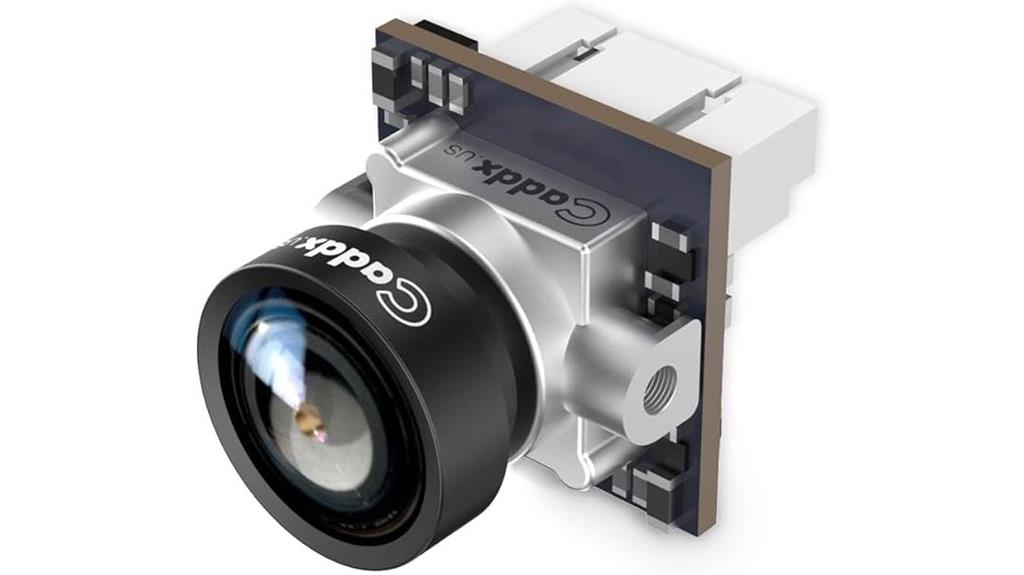
The SoloGood Caddx Ant FPV Camera stands out as an excellent choice for racers and cinewhoops seeking a lightweight, high-resolution camera. Weighing just 2 grams and measuring only 14x14mm, it fits seamlessly into tiny drones. Its 1200TVL resolution with a 1.8mm lens delivers sharp, clear images, supported by advanced features like global WDR, 3D DNR, and auto gain control. Whether in bright or low-light conditions, it performs reliably thanks to its high sensitivity (0.001lux). Switchable NTSC/PAL modes make setup flexible. Overall, it’s a compact, powerful camera perfect for those demanding crisp video quality without adding weight.
Best For: drone racers and cinewhoop pilots seeking a lightweight, high-resolution FPV camera with excellent low-light performance.
Pros:
- Ultra-lightweight at only 2 grams, ideal for tiny drones and increasing flight time.
- High resolution of 1200TVL with advanced imaging features like global WDR and 3D DNR for clear, sharp images.
- Switchable NTSC/PAL modes and wide compatibility with various FPV drone setups.
Cons:
- Limited lens options with only a 1.8mm focal length, which may restrict field of view customization.
- Slightly larger size expansion to 19x19mm with bracket might require adjustments in very tight spaces.
- As a specialized camera, it may require some technical setup for optimal performance in different environments.
RunCam FPV Camera Nano 4 Mini Cam for RC Drones
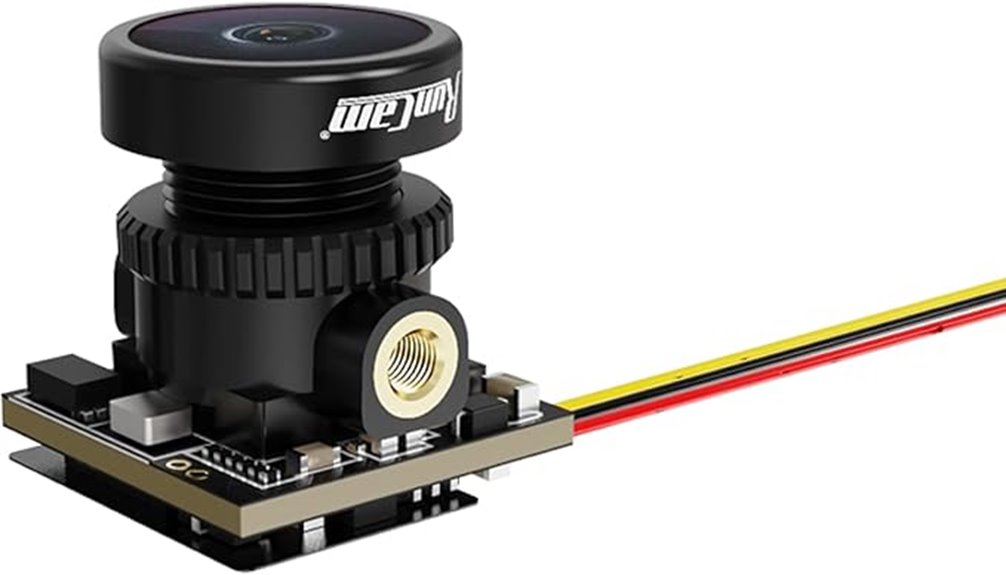
Designed for RC drone enthusiasts, the RunCam FPV Camera Nano 4 Mini Cam stands out with its upgraded ISP chip that delivers more realistic colors and improved low-light performance. It features a wide 2.1mm lens with a 155-degree field of view, capturing expansive scenic footage. Supporting 800TVL resolution with a WDR system, it offers balanced, high-quality images in various lighting conditions. Its switchable PAL/NTSC system ensures compatibility across devices, while low latency provides real-time, immersive FPV flying. Weighing just 0.102 ounces, this compact camera is perfect for racing drones needing sharp visuals and reliable night vision.
Best For: drone enthusiasts and FPV racers seeking high-quality, real-time footage with excellent low-light performance.
Pros:
- Upgraded ISP chip delivers realistic colors and enhanced night vision
- Wide 2.1mm lens with 155-degree FOV captures expansive scenic footage
- Supports 800TVL resolution with WDR for balanced images in various lighting conditions
Cons:
- Very lightweight design may require careful handling to avoid damage
- Limited to specific compatibility with FPV racing drones and quadcopters
- Small size might make installation challenging for beginners
WT05 Micro AIO 600TVL Camera for FPV Quadcopter Drone
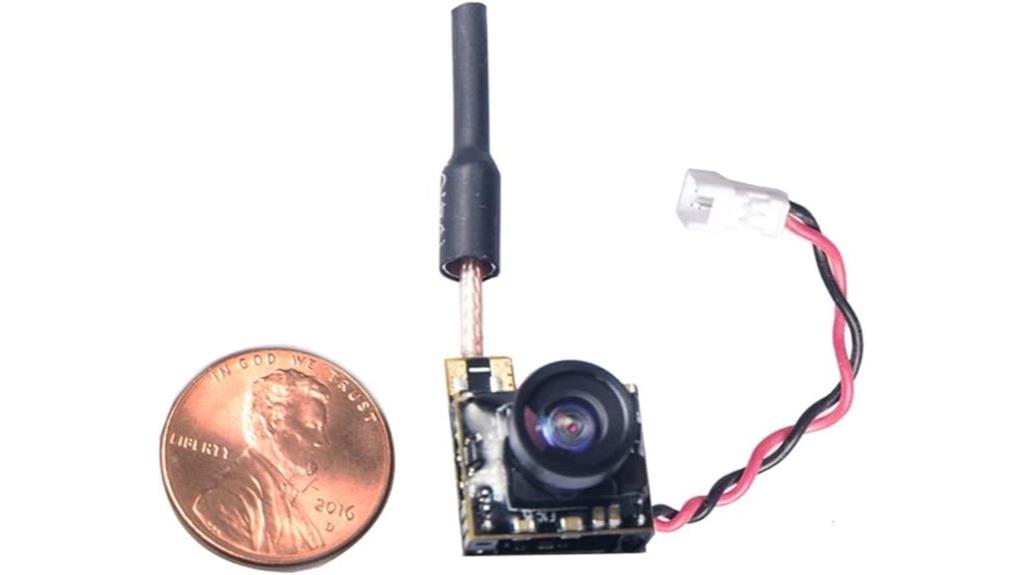
For micro drone pilots seeking a lightweight and easy-to-install FPV camera, the WT05 Micro AIO 600TVL is an excellent choice. Weighing just 3.4 grams, it combines a camera, transmitter, and antenna into a compact all-in-one system, making setup quick and straightforward. Operating on 5.8GHz with a 25mW transmitter, it offers reliable video transmission up to 25 meters. The system features simple channel switching via a button, eliminating the need for switches. Powered by a 1S LiPo battery, it’s perfect for racing or recreational tiny drones, delivering clear 600TVL video in a minimal, integrated design.
Best For: micro drone enthusiasts and racers seeking a lightweight, easy-to-install FPV camera system that offers reliable video transmission and minimal weight addition.
Pros:
- Ultra lightweight at only 3.4 grams, ideal for micro and tiny drones
- All-in-one design simplifies installation and reduces setup time
- Reliable 5.8GHz transmission with 25mW power for up to 25 meters range
Cons:
- Limited to 600TVL resolution, which may be lower than some high-end FPV cameras
- Fixed antenna type (dipole brass) may be less durable or hard to upgrade
- No adjustable settings; channel switching relies solely on button control
SoloGood Caddx Ant FPV Camera
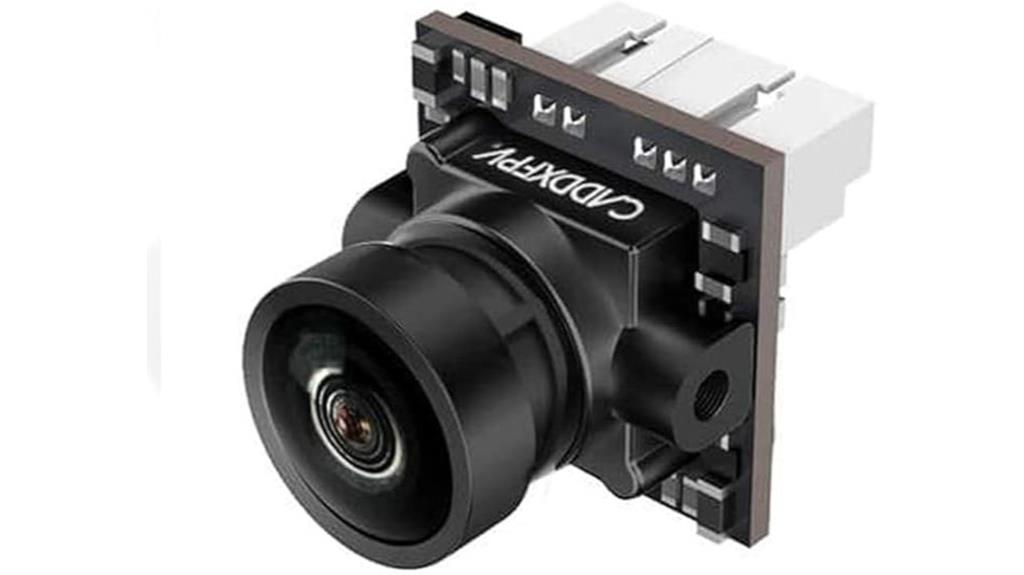
If you’re looking for a compact, versatile FPV camera that delivers high-quality images across various drone setups, the SoloGood Caddx Ant FPV Camera is an excellent choice. It supports RC FPV drones, Cinewhoop, Tinywhoop, and racing drones, with switchable NTSC and PAL formats for flexible use. Its 1/3 CMOS sensor provides sharp images at 1200TVL resolution, while features like ultra low illumination (0.001lux), global WDR, and 3D DNR ensure clear footage in diverse lighting conditions. At just 2 grams and 14x14mm, it’s ultra lightweight and perfect for high-speed, lightweight drone builds, offering reliable performance in a tiny package.
Best For: drone enthusiasts and pilots seeking a compact, high-quality FPV camera suitable for racing, cinematic, and lightweight drone builds.
Pros:
- Supports switchable NTSC and PAL formats for versatile compatibility
- High-resolution 1200TVL imaging with advanced features like global WDR and 3D DNR
- Ultra lightweight at only 2 grams, ideal for high-speed and lightweight drone applications
Cons:
- Limited physical size may restrict mounting options in some drone designs
- Requires careful handling due to its small size and delicate components
- May need additional accessories or brackets for optimal installation on certain drones
FOXEER FPV Camera Razer Mini 1200TVL for RC FPV Racing Drones
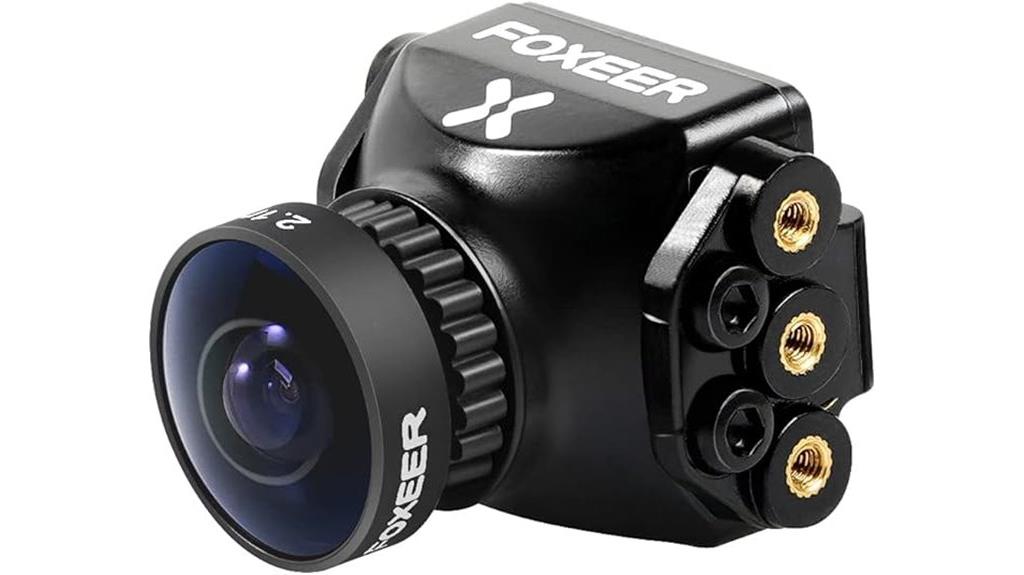
The FOXEER FPV Camera Razer Mini 1200TVL stands out as an ideal choice for RC FPV racing drones thanks to its compact size and high-resolution imaging. Featuring a 1/3″ CMOS sensor and 1200TVL resolution, it delivers crystal-clear visuals with low latency and noise, essential for racing precision. Its 90dB WDR and 0.01lux sensitivity allow it to perform well in various lighting conditions, from bright sun to darkness. The small 22x22mm size makes installation seamless without adding much weight. Plus, support for both NTSC/PAL formats and an onboard OSD makes it versatile and user-friendly for different setups.
Best For: FPV racing drone enthusiasts seeking a compact, high-resolution camera with excellent low-light performance and versatile compatibility.
Pros:
- High-resolution 1200TVL CMOS sensor delivers clear, detailed images.
- Compact 22x22mm size allows easy installation without adding significant weight.
- Supports both NTSC and PAL formats with an onboard OSD for customizable settings.
Cons:
- May require careful manual setup and calibration for optimal performance.
- Limited to specific configurations compatible with the camera’s format support.
- The small size could make handling and wiring more delicate for beginners.
BETAFPV C03 FPV Micro Camera for Micro Drones

The BETAFPV C03 FPV Micro Camera stands out for its compact design and high-resolution imaging, making it ideal for indoor micro drones like the Meteor series. It features a 1/3″ CMOS sensor with 1200TVL resolution, offering clear, dynamic images even in low light thanks to auto electronic shutter, gain control, and a 0.01Lux minimum illumination. Weighing just 1.52g, it’s built from durable ABS and fits seamlessly with BETAFPV micro canopies. With a 2.1mm lens providing a 160° FOV, auto day/night modes, and easy plug-and-play setup, this camera delivers excellent visual clarity for tiny drone pilots.
Best For: indoor micro drone pilots seeking high-quality, lightweight, and durable FPV cameras for precise and clear imaging.
Pros:
- Compact and lightweight design (1.52g) minimizes drone performance impact
- High-resolution 1200TVL CMOS sensor delivers clear, dynamic images in low light
- Easy plug-and-play setup with versatile mounting options and durable ABS construction
Cons:
- Limited to 3-5.5V power supply, requiring compatible voltage sources
- Designed primarily for indoor micro drones, less suitable for larger or outdoor drones
- Slightly limited FOV at 160°, which may not suit all filming needs
RunCam Racer Nano 4 FPV Camera
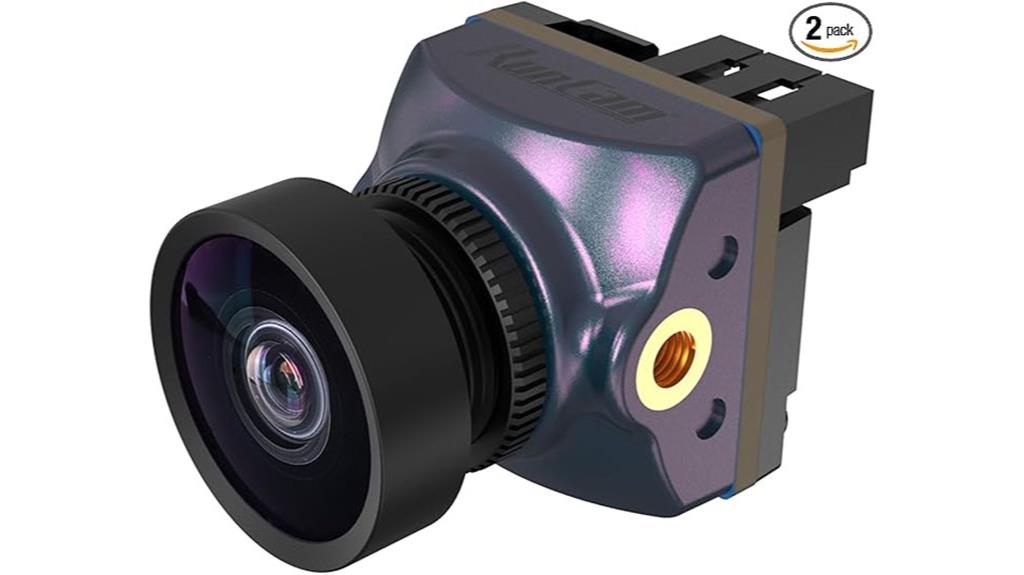
Designed for FPV racers who demand durability and clarity, the RunCam Racer Nano 4 FPV Camera stands out with its waterproof, dustproof, sealed design. Its compact size—just 1.18 x 0.79 x 0.39 inches—and lightweight build of 1.44 ounces make it perfect for tight racing frames. The camera features a wide 97° vertical field of view with low distortion, ensuring broad, clear coverage. Its professional LED track mode performs well in varying light conditions, including rain. Built for all-weather use, the sealed casing and rear cover protect against short circuits and collisions, delivering reliable, high-quality footage during intense racing sessions.
Best For: FPV racing drone enthusiasts and pilots seeking a durable, high-quality camera suitable for all-weather conditions and tight racing environments.
Pros:
- Waterproof, dustproof, and sealed design ensures durability in diverse weather conditions
- Wide 97° vertical field of view with low distortion for broad, clear coverage
- Compact and lightweight, ideal for tight racing frames and high-speed maneuvers
Cons:
- Limited to 1200TVL resolution, which may be lower than higher-end FPV cameras
- Slightly heavier at 1.44 ounces, potentially impacting weight-sensitive builds
- Requires careful handling during installation due to small size and delicate components
MEIVIFPV FPV Camera for Drones (NTSC/PAL, 1200TVL, 1.8mm Lens)
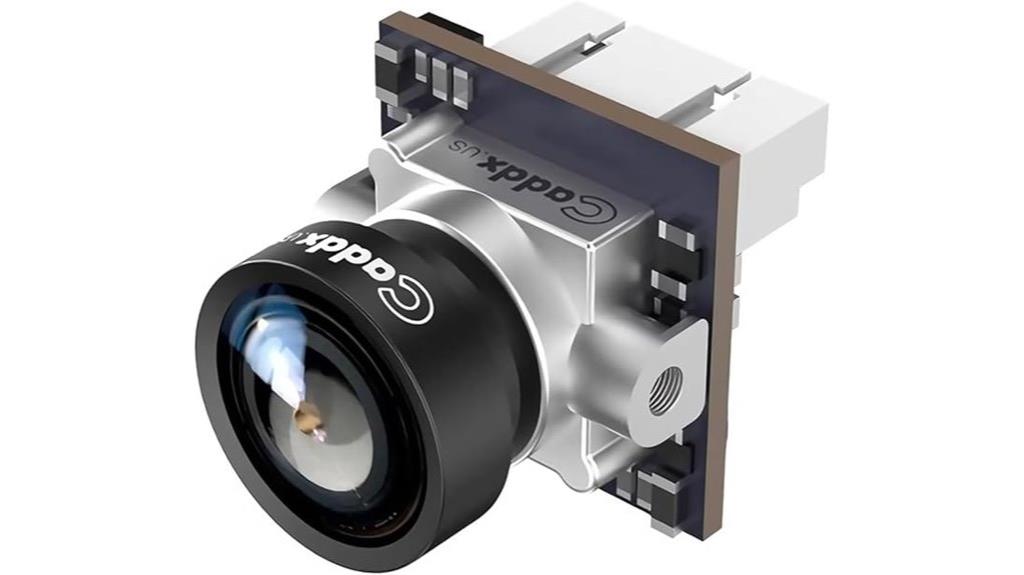
If you’re building a micro FPV drone like a Tinywhoop or Cinewhoop, the MEIVIFPV FPV Camera is an excellent choice thanks to its ultra-lightweight design and compact size. Weighing only 2 grams and measuring 14x14mm (with a bracket), it fits easily into small frames. Its 1/3 CMOS sensor delivers sharp 1200TVL resolution with a wide 165° field of view. The camera features switchable NTSC/PAL formats, WDR, 3D DNR, and a 1.8mm lens for clear, vibrant images in various lighting conditions. Built for durability and high performance, it’s perfect for racing and cinematic tiny drones.
Best For: drone enthusiasts and builders seeking a lightweight, high-resolution FPV camera for micro drones like Tinywhoop and Cinewhoop.
Pros:
- Ultra-lightweight at only 2 grams, ideal for small drone frames
- High 1200TVL resolution with a 165° wide field of view for clear, immersive footage
- Switchable NTSC/PAL formats and advanced features like WDR and 3D DNR for versatile and crisp imaging
Cons:
- Small size may require precise installation and compatible mounts
- Limited to analog FPV systems, not suitable for digital HD setups
- Slightly higher price point compared to basic cameras in its category
FPV Camera Caddx Ant 1200TVL Nano FPV Camera for Quadcopter Racing Drones
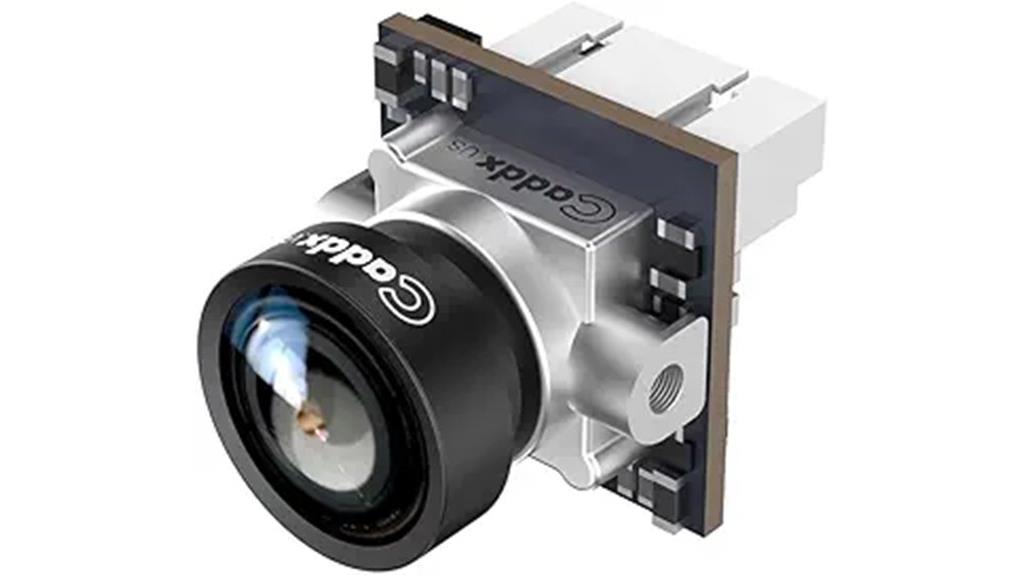
For anyone seeking high-quality footage in tight spaces, the Caddx Ant 1200TVL Nano FPV Camera stands out due to its compact size and impressive resolution. Weighing just 2 grams and measuring 14x14mm, it seamlessly fits into most nano drones. Its 1200TVL resolution with a 1/3″ CMOS sensor delivers sharp, low-noise images with minimal latency, perfect for racing and freestyle flying. Features like global WDR ensure clear visibility in bright and dark areas, while support for multiple aspect ratios and format switching enhances versatility. Overall, it’s an excellent choice for pilots wanting top-tier video quality without sacrificing agility.
Best For: drone pilots seeking high-resolution, lightweight FPV cameras for racing, freestyle flying, and tight-space filming.
Pros:
- Compact and lightweight design (14x14mm, 2g) ideal for nano drones
- High 1200TVL resolution with CMOS sensor for sharp, low-noise images
- Wide dynamic range with global WDR for clear visibility in varied lighting conditions
Cons:
- Limited to specific aspect ratios and format options, which may require adjustments for certain setups
- May require additional accessories or mountings for optimal integration
- As a specialized device, it might be more expensive compared to basic FPV cameras
RunCam Nano2 FPV Camera 700TVL CMOS NTSC Mini FPV Camera for FPV Drone
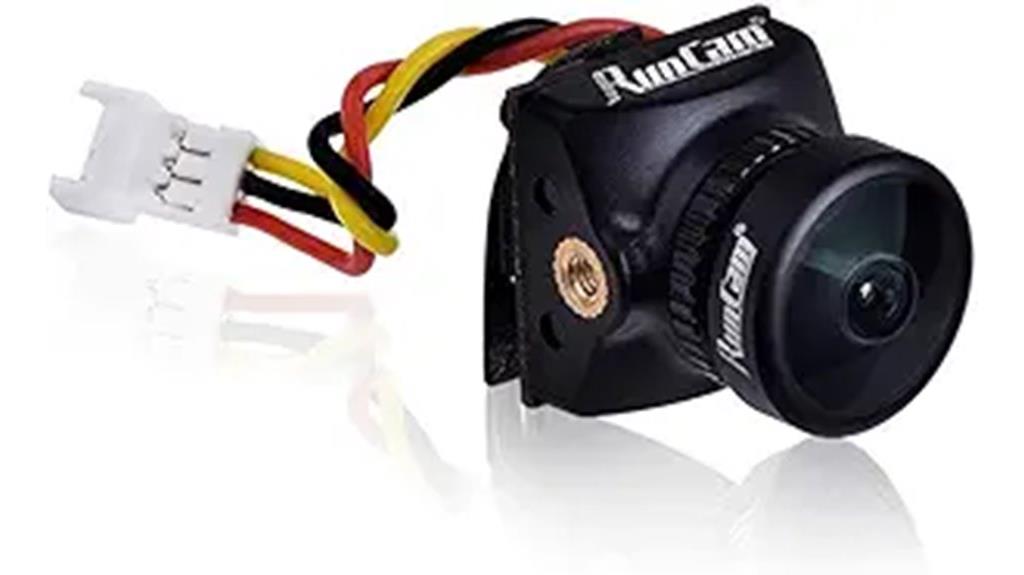
The RunCam Nano2 FPV Camera stands out as an excellent choice for mini and toothpick drone pilots seeking high-quality imaging in a tiny package. Weighing just 3.2 grams and measuring 14mm x 14mm x 16mm, it’s perfect for tight spaces. It delivers sharp 700TVL resolution with a 2.1mm lens and a broad 170° field of view. Equipped with auto D-WDR, night vision, and auto gain control, it performs well in various lighting conditions. Compatible with NTSC systems, it provides 1080p video and 12 MP stills, making it ideal for both hobby and professional FPV applications.
Best For: FPV drone enthusiasts and professional pilots seeking high-resolution, lightweight cameras for tight, agile flying in mini or toothpick drones.
Pros:
- Compact and lightweight design (3.2g, 14mm x 14mm x 16mm), ideal for small drones
- High-quality 700TVL CMOS sensor with 1080p video and 12 MP still images
- Features like auto D-WDR, night vision, and auto gain control for versatile lighting conditions
Cons:
- No built-in rechargeable battery; requires external power source
- Limited to NTSC system, non-switchable image ratio (4:3)
- No wireless or digital transmission support; relies solely on analog video transmission
RunCam Nano 2 FPV Camera for RC Drones
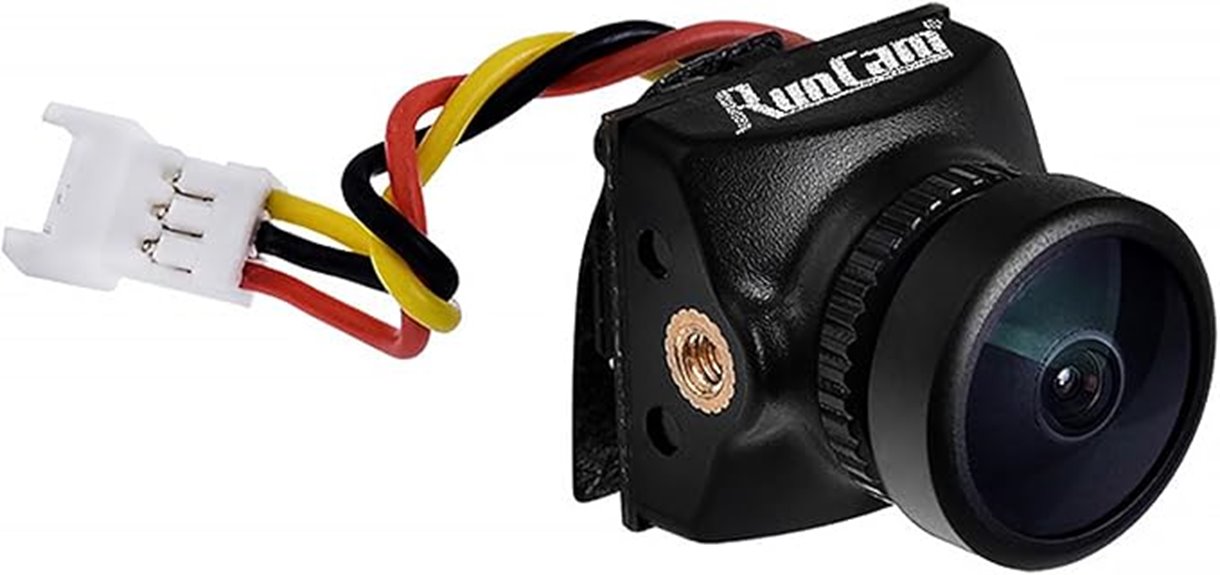
The RunCam Nano 2 FPV Camera stands out as an ideal choice for RC drone enthusiasts seeking high-resolution, sharp images in a compact form factor. Weighing just 4 grams and measuring roughly 14mm, it’s perfect for tiny quadcopters, helicopters, and RC racing cars. With a 700TVL CMOS sensor and wide field of view options (170° or 155°), it delivers detailed visuals. Features like Auto D-WDR, Auto Gain Control, and Electronic Shutter ensure clear images in changing lighting conditions. Its compatibility with NTSC systems and straightforward installation make it a top pick for those wanting reliable performance without adding weight or bulk.
Best For: RC drone enthusiasts and professionals seeking a high-resolution, lightweight, and compact FPV camera for tiny quadcopters, helicopters, and racing vehicles.
Pros:
- High-resolution 700TVL CMOS sensor provides sharp and detailed images.
- Lightweight design (4g) and small size (14mm) ideal for tiny FPV drones.
- Advanced automatic features like D-WDR, Auto Gain Control, and Electronic Shutter enhance image quality in varied lighting conditions.
Cons:
- Fixed 4:3 image ratio may limit compatibility with some modern FPV screens.
- Limited lens options (1.8mm or 2.1mm) may not suit all field of view preferences.
- Designed primarily for Toothpick style quadcopters; may require additional mounting accessories for other platforms.
RunCam FPV Camera Nano 2 for RC Drones
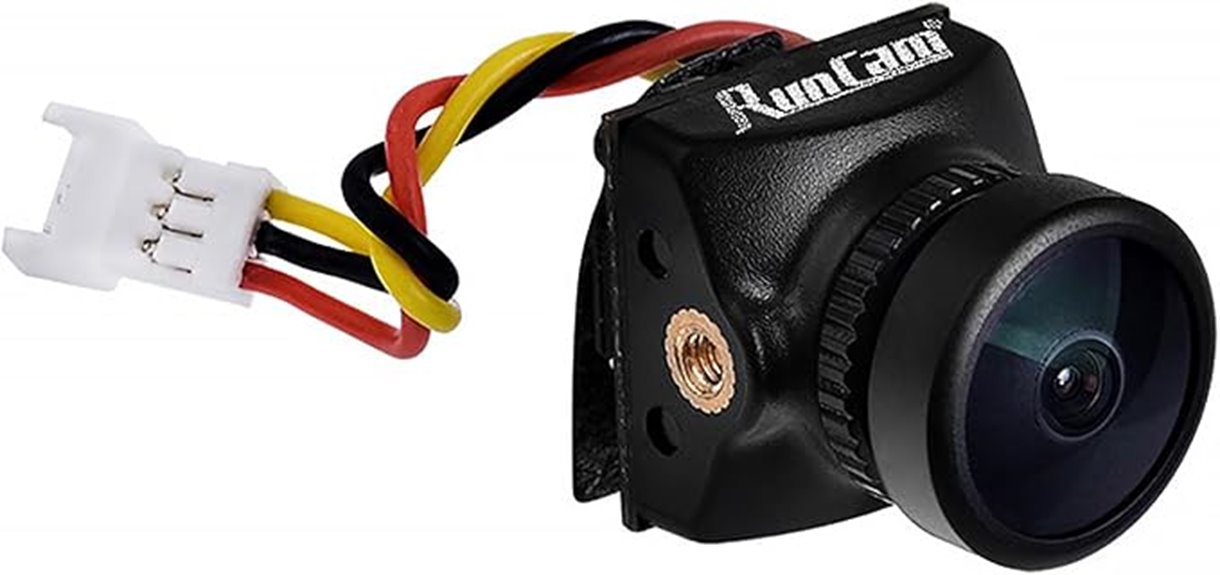
If you’re looking for a compact yet powerful FPV camera for RC drones, the RunCam FPV Camera Nano 2 is an excellent choice. It offers a sharp 700TVL resolution with a 1/3” CMOS sensor, delivering detailed images. The camera features auto D-WDR, auto gain control, and electronic shutter for clear, balanced visuals in various lighting conditions. Its small size—around 14x14x16mm—and lightweight design make it perfect for tiny drones like Toothpick quads. With options for 1.8mm or 2.1mm lenses and a wide field of view up to 170°, it provides an immersive flying experience. Ideal for racing and recreational flying alike.
Best For: hobbyists and professional RC drone pilots seeking a compact, high-quality FPV camera for racing and recreational flying.
Pros:
- High-resolution 700TVL for sharp, detailed images
- Wide field of view up to 170° for immersive flying experiences
- Compact and lightweight design ideal for tiny drones like Toothpick quads
Cons:
- Fixed 4:3 aspect ratio may limit compatibility with some modern displays
- Limited lens options (1.8mm or 2.1mm) with no adjustable focus
- Requires compatible mounting and power connections for optimal setup
FPV Camera Caddx Baby Ratel 2 for FPV Racing Drones
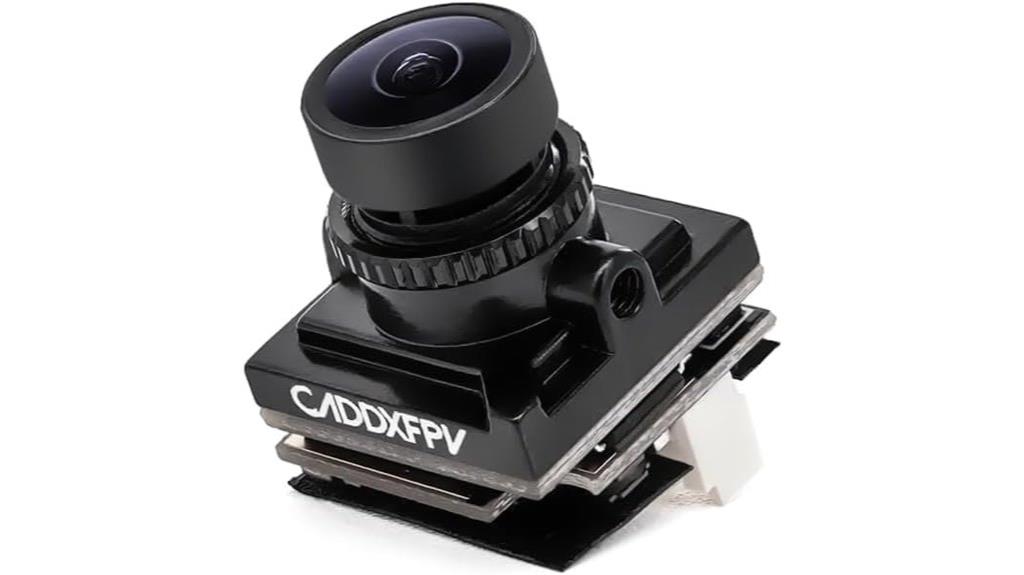
For FPV racing enthusiasts seeking a lightweight yet high-performance camera, the Caddx Baby Ratel 2 stands out with its ultra-compact design and advanced imaging technology. It features a 1/1.8-inch Starlight Sensor that delivers crisp 1200TVL resolution, ensuring clear visuals even in low light thanks to its 0.001lux sensitivity and WDR. The 1.8mm lens offers a wide 165° FOV for immersive footage. Weighing just 2 grams, it’s perfect for micro drones. Its support for switchable PAL/NTSC formats and 4:3/16:9 aspect ratios, combined with 3D DNR, makes it versatile and ideal for high-speed FPV racing.
Best For: FPV racing drone pilots and RC enthusiasts seeking a lightweight, high-quality camera with wide-angle coverage and excellent low-light performance.
Pros:
- Ultra-lightweight at just 2 grams, ideal for micro drones and lightweight setups
- Equipped with a 1/1.8-inch Starlight Sensor delivering crisp 1200TVL resolution and strong low-light performance
- Wide 165° FOV with WDR and 3D DNR for clear, immersive visuals in various lighting conditions
Cons:
- May require compatible analog FPV systems for optimal performance
- Limited to 14x14mm size, which might restrict mounting options in some configurations
- No built-in digital transmission, relying on analog FPV systems that may be susceptible to interference
MEIVIFPV FPV Camera with 1.8mm Lens for Drones
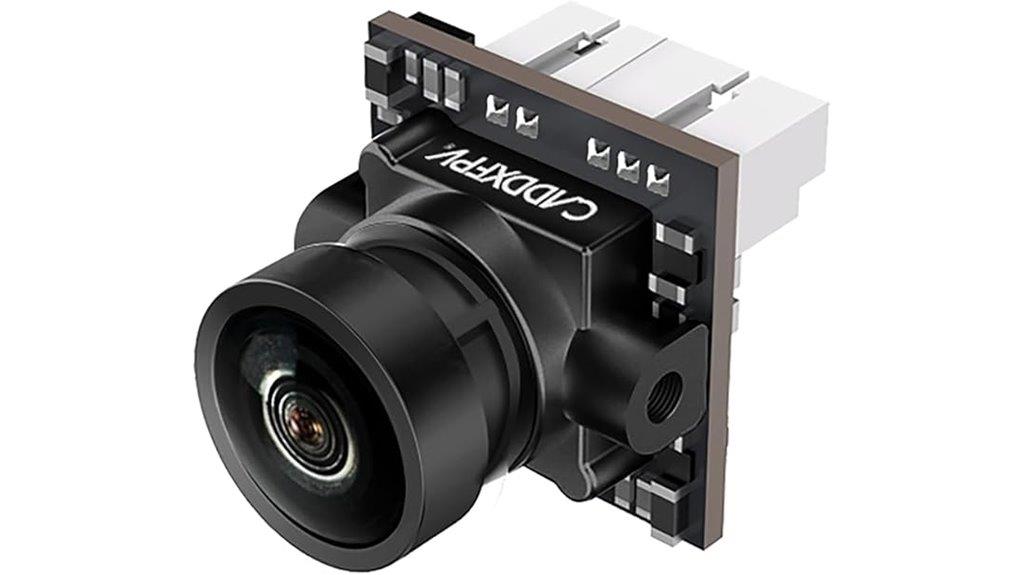
Looking for a compact FPV camera that combines high-quality imaging with versatile compatibility? The MEIVIFPV FPV Camera with 1.8mm lens fits the bill perfectly. Designed for racing drones, cinewhoops, and RC cars, it supports switchable PAL/NTSC formats, ensuring seamless use across systems. Its upgraded 1/3” CMOS sensor delivers sharp 1200TVL resolution, while features like 3D DNR, WDR, and 0.001lux sensitivity excel in low-light conditions. The wide 165° FOV captures more of the action, and its tiny 14x14mm size (19x19mm with bracket) and 2g weight make it ideal for micro drones, enhancing agility without sacrificing image quality.
Best For: drone racers, cinewhoop enthusiasts, and RC car hobbyists seeking a lightweight, high-resolution FPV camera with wide-angle coverage.
Pros:
- Supports switchable PAL/NTSC formats for versatile compatibility
- Features a 1/3” CMOS sensor with 1200TVL resolution for clear images
- Ultra-lightweight and compact design (2g, 14x14mm) ideal for micro drones
Cons:
- Limited lens options beyond the 1.8mm lens included
- May require additional mounting brackets due to size variations
- Potentially less suitable for long-range applications due to its small size and specific features
Factors to Consider When Choosing Nano FPV Cameras
When choosing a nano FPV camera, I focus on factors like resolution and clarity to guarantee sharp footage, while size and weight matter for flight performance. Low-light capability helps when flying in darker conditions, and compatibility with different formats keeps things flexible. Durability and build quality are vital for lasting use, especially in rough environments.
Resolution and Clarity
Ever wonder why some nano FPV cameras deliver sharper, more detailed images than others? It often comes down to resolution. Cameras with 1200TVL, for example, produce clearer, more precise visuals, helping you distinguish objects and navigate complex environments with confidence. But resolution isn’t everything—advanced features like Wide Dynamic Range (WDR) and Digital Noise Reduction (DNR) also boost image clarity by enhancing contrast and reducing graininess. Low-light performance, indicated by lux ratings like 0.001lux, plays a key role when flying in challenging lighting conditions, ensuring your footage stays sharp even in darkness. By combining high resolution with smart image processing, these cameras deliver stable, vivid, and reliable video streams that elevate your flying experience.
Size and Weight
Size and weight play a significant role in choosing the right nano FPV camera, especially since these cameras need to fit seamlessly into small drone frames. Nano FPV cameras are typically around 14x14mm or smaller, making their compact size vital for micro drone compatibility. A lightweight design, usually around 2-3 grams, helps maintain the drone’s agility and prolongs flight time by minimizing added weight. The small form factor also makes integration into tight spaces and tiny frames much easier, without adding bulk. Despite their size, these cameras should deliver high resolution, like 1200TVL or more, to guarantee clear, sharp images. Overall, size and weight directly impact a drone’s aerodynamics, stability, and performance during high-speed racing or cinematic flights.
Low-Light Performance
Low-light performance is a crucial factor to contemplate because it determines how well your nano FPV camera can capture clear images in dim conditions. Cameras with high lux sensitivity, like 0.001 lux, excel in low-light environments. CMOS sensors with high ISO capabilities typically outperform CCD sensors in dark settings, providing brighter, clearer footage. Wide Dynamic Range (WDR) technology helps balance exposure between bright and dark areas, improving overall visibility. The lens aperture size also matters; larger apertures, such as 1.8mm or 2.1mm, let in more light, enhancing night shots. Features like 3D DNR (Digital Noise Reduction) are essential, as they minimize grain and noise, ensuring your footage remains sharp and clean during nighttime or indoor flights.
Compatibility and Formats
When selecting a nano FPV camera, it’s important to guarantee it supports the right video signal system for your setup. Whether you’re using NTSC or PAL, ensure the camera can match your drone’s transmitter to prevent signal issues. Check if the camera offers aspect ratio options like 4:3 or 16:9, so your footage displays correctly on your monitor or recording device. Some cameras feature switchable formats, making it easy to toggle between NTSC and PAL based on regional standards or personal preference. Compatibility with your drone’s analog or digital FPV system is essential to avoid signal mismatches and maintain high video quality. Lastly, confirm that the camera’s resolution and field of view align with your flying style and coverage needs for the best experience.
Durability and Build
Choosing a nano FPV camera requires careful attention to its durability and build quality, as these factors directly impact its ability to withstand crashes and harsh conditions. I look for impact-resistant housings made from high-quality plastic or aluminum—light yet sturdy—to keep weight down without sacrificing strength. Water and dust resistance, like sealed or waterproof designs, are essential for flying in diverse environments. Reinforced mounting brackets and secure connector ports prevent damage from vibrations or minor collisions, extending the camera’s lifespan. A robust design with minimal moving parts also reduces mechanical failure risks. Overall, a well-built nano FPV camera not only survives tough landings but maintains consistent video quality over time, making it a reliable choice for serious pilots.
Price and Availability
Price and availability are key factors that can substantially influence your choice of nano FPV cameras. I recommend checking multiple online stores and local retailers to find the most competitive prices, as costs can vary considerably. Keep in mind that availability might fluctuate due to supply chain issues, which can cause delays or shortages. Newer models often come with higher prices initially but usually provide better features and value, so it’s worth considering recent releases. Also, pay attention to warranty and return policies, as they add to the overall cost-effectiveness of your purchase. Ultimately, monitor price trends and sales events, since discounts can make high-quality cameras more affordable. Staying informed helps ensure you get the best deal without compromising on your needs.
Frequently Asked Questions
How Do Nano FPV Cameras Impact Drone Flight Time?
Nano FPV cameras can slightly reduce your drone’s flight time because they add extra weight and draw power from the battery. I’ve noticed that a lightweight, efficient camera doesn’t make much difference, but heavier setups can drain the battery faster. To maximize flight time, I recommend choosing compact, low-power cameras and keeping the overall weight minimal. Balancing quality and weight is key for longer flights and great video.
Are Nano FPV Cameras Suitable for Night Flying?
Yes, nano FPV cameras can be suitable for night flying, but it depends on their specifications. I’ve found that models with enhanced low-light sensitivity and infrared capabilities perform much better in darkness. While regular nano cameras might struggle, those designed for night vision provide clearer images and safer flight. I recommend choosing a nano FPV camera with good low-light performance if you plan to fly at night regularly.
What Is the Average Lifespan of Nano FPV Cameras?
Nano FPV cameras typically last around 1 to 2 years with regular use, but this can vary based on how often you fly, environmental conditions, and handling. I’ve found that keeping the camera clean, avoiding crashes, and storing it properly can extend its lifespan. If you notice a decline in video quality or connectivity, it might be time for a replacement to guarantee your flights stay smooth.
Can Nano FPV Cameras Withstand Harsh Weather Conditions?
Nano FPV cameras generally aren’t built to withstand harsh weather conditions. I’ve found that exposure to rain, snow, or extreme cold can damage the delicate electronics inside. If you’re flying in tough weather, I recommend using protective covers or waterproof enclosures. Still, it’s best to keep these cameras sheltered whenever possible, as their small size and lightweight design make them more vulnerable to the elements.
How Do Different Lens Sizes Affect Video Quality?
Different lens sizes markedly impact video quality. A wider lens captures more of the scene, providing a broader field of view, but can introduce distortion and reduce detail. Conversely, a narrower lens focuses more on distant objects, offering sharper images with better detail, but limits your perspective. I find that choosing the right lens depends on whether you prioritize immersive coverage or detailed visuals, balancing these factors for ideal drone footage.
Conclusion
Selecting the perfect nano FPV camera opens a window to a world of vivid, adrenaline-fueled flights. As you hold your tiny drone, imagine it as an extension of your vision — capturing every twist and turn with crystal clarity. With the right camera, your flights become more than just movement; they transform into immersive journeys, where every pixel paints a story of speed, precision, and adventure. Ready to see your dreams take flight?