If you’re looking for the best midrange GPUs for VR in 2026 that won’t drain your wallet, I recommend options like the MSI GeForce RTX 3060 Ti, ASUS RTX 2060 EVO, and MSI GTX 1660 Super models. These cards offer solid performance, low latency, and great VR support without costing a fortune. They’re reliable and efficient, perfect for immersive experiences. Keep going to discover more about these top picks and what makes them ideal.
Key Takeaways
- Look for GPUs with 8GB GDDR6/5 memory and boost clocks around 1800 MHz for smooth VR experiences.
- Prioritize models with high customer ratings (4.7+ stars) for reliable midrange performance in VR gaming.
- Choose GPUs with dual-fan cooling, low noise, and good build quality for thermal stability during extended VR sessions.
- Opt for cards priced between $200-$400 offering a balanced mix of performance, VR support, and future-proofing.
- Ensure compatibility with VR headsets through matching outputs like HDMI 2.0/2.1 and DisplayPort 1.4 for seamless connectivity.
| ZOTAC GTX 1660 Super 6GB Gaming Graphics Card | 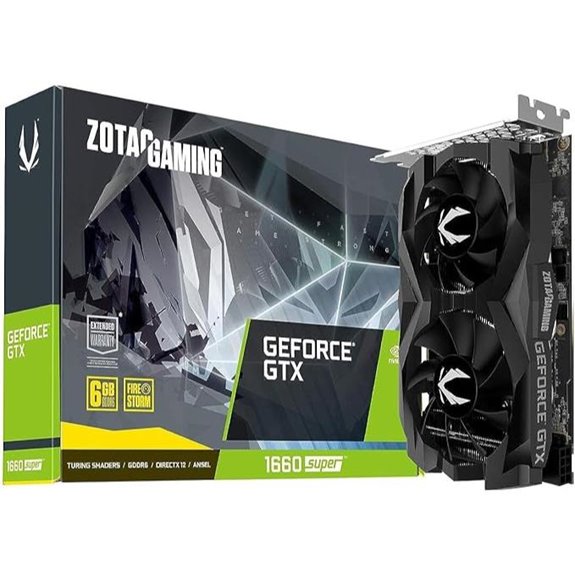 | Compact Powerhouse | Memory Size: 6GB GDDR6 | Max Resolution: 7680×4320 | Connectivity Ports: 3x DisplayPort, 1x HDMI | VIEW LATEST PRICE | See Our Full Breakdown |
| MSI GeForce RTX 3060 Ti Gaming Graphics Card | 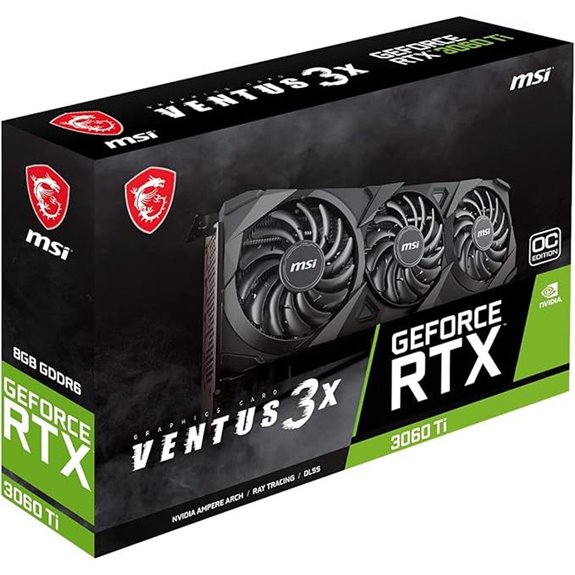 | High-Performance Gaming | Memory Size: 8GB GDDR6 | Max Resolution: 7680×4320 | Connectivity Ports: 3x DisplayPort, 1x HDMI | VIEW LATEST PRICE | See Our Full Breakdown |
| MSI GTX 1660 Super VENTUS XS OC Graphics Card | 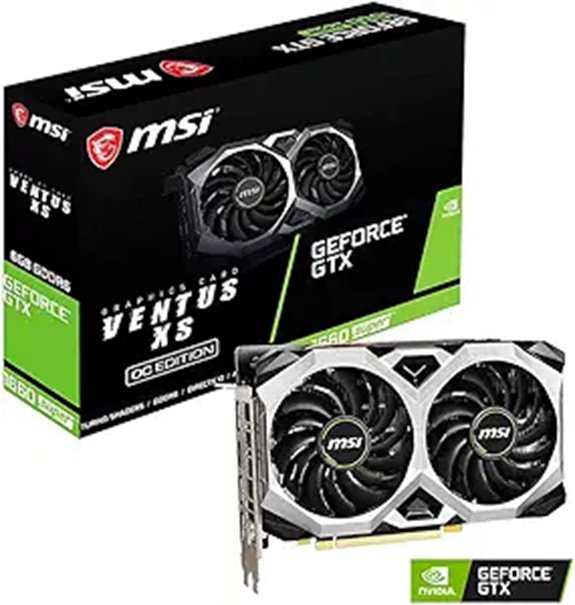 | Reliable Entry-Level | Memory Size: 6GB GDDR6 | Max Resolution: 7680×4320 | Connectivity Ports: 3x DisplayPort, 1x HDMI | VIEW LATEST PRICE | See Our Full Breakdown |
| MSI GTX 1660 Super Gaming X Graphics Card | 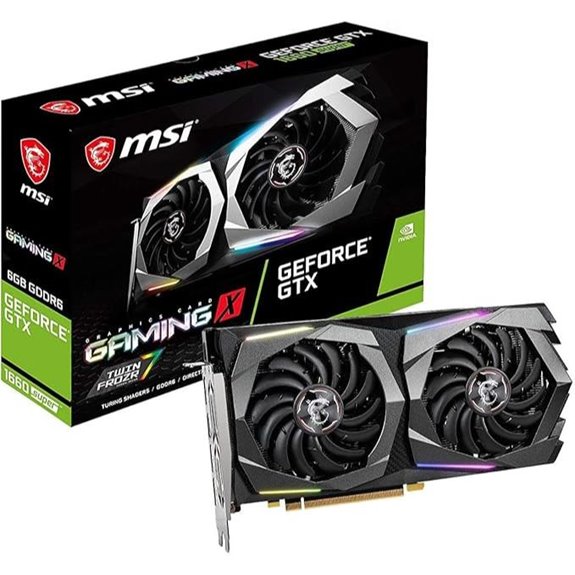 | Overclocked Excellence | Memory Size: 6GB GDDR6 | Max Resolution: 7680×4320 | Connectivity Ports: 3x DisplayPort, 1x HDMI | VIEW LATEST PRICE | See Our Full Breakdown |
| XFX Radeon RX 580 GTS Black Edition Graphics Card | 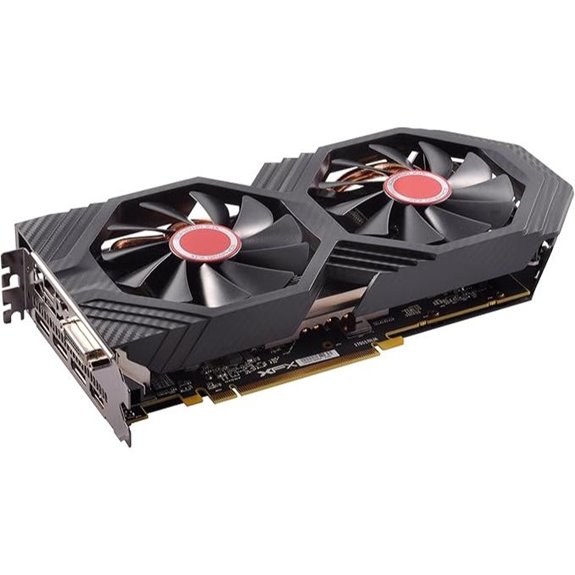 | VR Ready Value | Memory Size: 8GB GDDR5 | Max Resolution: 3840×2160 | Connectivity Ports: 3x DisplayPort, HDMI | VIEW LATEST PRICE | See Our Full Breakdown |
| GIGABYTE GeForce RTX 3060 Gaming OC 12G | 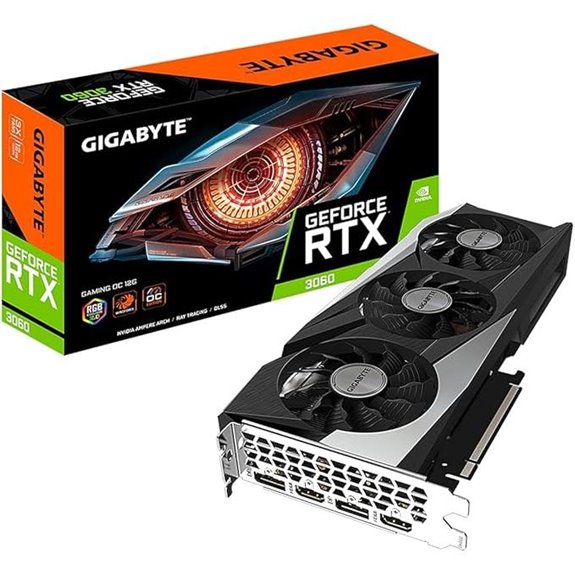 | Budget VR Champion | Memory Size: 12GB GDDR6 | Max Resolution: 3840×2160 | Connectivity Ports: 3x DisplayPort, HDMI | VIEW LATEST PRICE | See Our Full Breakdown |
| ASUS GeForce RTX 2060 EVO 6G Graphics Card | 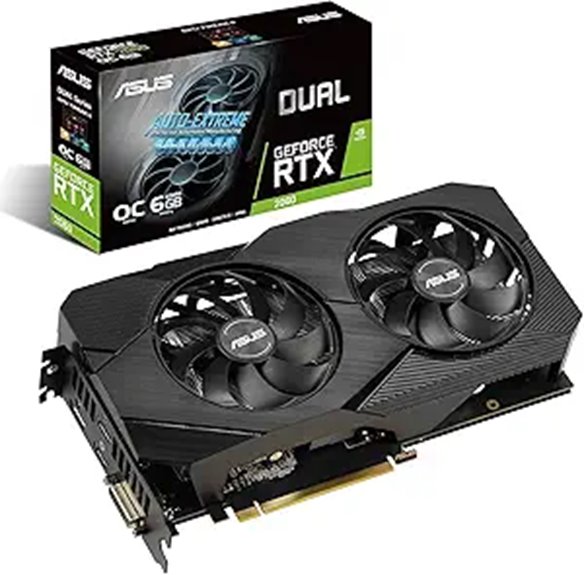 | Overclocked Performance | Memory Size: 6GB GDDR6 | Max Resolution: 7680×4320 | Connectivity Ports: 3x DisplayPort, HDMI, DVI | VIEW LATEST PRICE | See Our Full Breakdown |
| RX 590 8GB Gaming Graphics Card with Dual Fans | 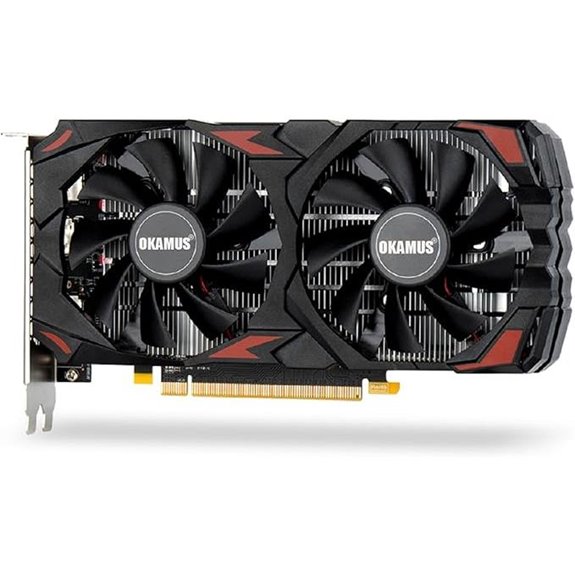 | Silent Cooling | Memory Size: 8GB GDDR5 | Max Resolution: 1080p (1920×1080) | Connectivity Ports: 2x DisplayPort, 1x HDMI | VIEW LATEST PRICE | See Our Full Breakdown |
| XFX Radeon RX 580 GTS XXX Edition 8GB Graphics Card | 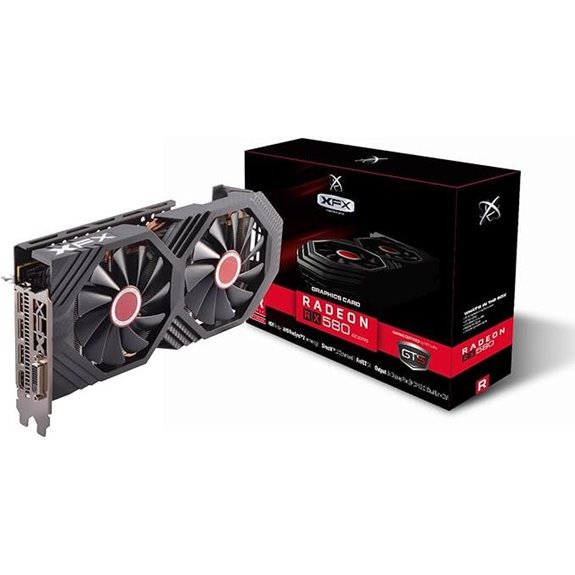 | Mining & Gaming Hybrid | Memory Size: 8GB GDDR5 | Max Resolution: 4096×2160 | Connectivity Ports: 3x DisplayPort, HDMI, DVI | VIEW LATEST PRICE | See Our Full Breakdown |
More Details on Our Top Picks
ZOTAC GTX 1660 Super 6GB Gaming Graphics Card
If you’re looking for a reliable midrange GPU that can handle VR gaming without breaking the bank, the ZOTAC GTX 1660 Super 6GB is an excellent choice. It features NVIDIA’s Turing architecture, 6GB GDDR6 memory, and a boost clock up to 1785 MHz, making it capable of smooth VR experiences. Its compact design fits most systems, and it supports 4K HDR, multiple displays, and high resolutions up to 7680×4320. With 1408 CUDA cores and G-SYNC compatibility, this card delivers solid performance for gaming and VR. Plus, it’s energy-efficient, requiring only 125W, and comes with a dual-fan cooling system for stable operation.
- Memory Size:6GB GDDR6
- Max Resolution:7680×4320
- Connectivity Ports:3x DisplayPort, 1x HDMI
- VR Compatibility:Yes
- Power Requirements:125W
- Release Date:October 2019
- Additional Feature:Compact dual-slot design
- Additional Feature:Supports G-SYNC compatibility
- Additional Feature:Boost clock up to 1785 MHz
MSI GeForce RTX 3060 Ti Gaming Graphics Card
The MSI GeForce RTX 3060 Ti Gaming Graphics Card stands out as an excellent choice for gamers seeking high performance without breaking the bank. It features NVIDIA’s Ampere architecture, a boost clock of 1695 MHz, and 8GB of GDDR6 memory, making it ideal for VR and demanding tasks. Its dual Torx fans and robust design guarantee efficient cooling and durability. Supporting high resolutions up to 7680×4320 and equipped with HDMI 2.1 and DisplayPort outputs, it delivers smooth, immersive experiences. With a high customer rating of 4.7 stars and competitive pricing, this card offers great value for midrange gaming and VR enthusiasts alike.
- Memory Size:8GB GDDR6
- Max Resolution:7680×4320
- Connectivity Ports:3x DisplayPort, 1x HDMI
- VR Compatibility:Yes
- Power Requirements:Not specified, ~200W
- Release Date:July 2021
- Additional Feature:8GB GDDR6 memory
- Additional Feature:Dual Torx fan design
- Additional Feature:Supports 25 MH/s ETH hash rate
MSI GTX 1660 Super VENTUS XS OC Graphics Card
For gamers seeking a reliable midrange GPU that handles VR smoothly, the MSI GTX 1660 Super VENTUS XS OC stands out with its 6GB GDDR6 memory and 14 Gbps speed. It features a 192-bit memory interface and supports ultra-high resolutions up to 7680×4320. Equipped with NVIDIA’s GTX 1660 Super chipset and a boost clock of 1815 MHz, it delivers solid performance for immersive VR experiences. The dual fans ensure effective cooling, while multiple outputs—including DisplayPort 1.4 and HDMI 2.0B—allow flexible setups. Overall, it’s a great choice for gamers wanting quality VR performance without overspending.
- Memory Size:6GB GDDR6
- Max Resolution:7680×4320
- Connectivity Ports:3x DisplayPort, 1x HDMI
- VR Compatibility:Yes
- Power Requirements:Not specified, ~125W
- Release Date:October 2019
- Additional Feature:Overclocked to 1815 MHz
- Additional Feature:Dual-fan cooling system
- Additional Feature:Supports ultra-high-res 7680×4320
MSI GTX 1660 Super Gaming X Graphics Card
The MSI GTX 1660 Super Gaming X stands out as a top choice for gamers seeking a midrange GPU capable of delivering smooth VR experiences without breaking the bank. It features NVIDIA’s GTX 1660 Super chipset with a boost clock of 1830 MHz, 6GB GDDR6 memory, and a 192-bit interface. Designed for high-resolution displays and multi-monitor setups, it supports DirectX 12, VR, and ultra-high resolutions up to 7680×4320. Dual fans ensure effective cooling, while its compact size makes it versatile for various setups. With a solid 4.7-star rating from nearly 1,500 reviews, it offers dependable performance for immersive VR gaming at an affordable price.
- Memory Size:6GB GDDR6
- Max Resolution:7680×4320
- Connectivity Ports:3x DisplayPort, 1x HDMI
- VR Compatibility:Yes
- Power Requirements:Not specified, ~125W
- Release Date:October 2019
- Additional Feature:1830 MHz boost clock
- Additional Feature:Dual fans for cooling
- Additional Feature:Supports VR gaming
XFX Radeon RX 580 GTS Black Edition Graphics Card
If you’re seeking a reliable midrange GPU capable of delivering smooth VR experiences, the XFX Radeon RX 580 GTS Black Edition stands out with its OC+ boost clock of 1425MHz and 8GB GDDR5 memory. It’s VR-ready, supporting AMD LiquidVR technology for low latency and stutter-free gaming. With dual BIOS, multiple display options (3xDP, HDMI, DVI), and a robust cooling system, it’s built for demanding tasks. Its performance supports high-resolution gaming up to 3840×2160 pixels, making it suitable for immersive VR. Rated 4.3 stars out of 5, it offers solid value and reliable performance for a budget-friendly VR setup.
- Memory Size:8GB GDDR5
- Max Resolution:3840×2160
- Connectivity Ports:3x DisplayPort, HDMI
- VR Compatibility:Yes
- Power Requirements:225W
- Release Date:April 2017
- Additional Feature:Dual BIOS feature
- Additional Feature:8GB DDR5 memory
- Additional Feature:Supports AMD LiquidVR tech
GIGABYTE GeForce RTX 3060 Gaming OC 12G
The GIGABYTE GeForce RTX 3060 Gaming OC 12G stands out as an excellent midrange GPU for gamers seeking high-resolution VR experiences without breaking the bank. It features NVIDIA’s Ampere architecture, with second-generation RT Cores and third-generation Tensor Cores, delivering impressive visuals and AI acceleration. With 12GB of GDDR6 memory and a core clock of 1837 MHz, it can handle up to 7680×4320 resolution smoothly. Its WINDFORCE 3X cooling system keeps temperatures in check during long sessions. Compact and durable, it’s perfect for various builds, supported by a strong customer rating of 4.7 stars, making it a solid choice for VR gaming in 2026.
- Memory Size:12GB GDDR6
- Max Resolution:3840×2160
- Connectivity Ports:3x DisplayPort, HDMI
- VR Compatibility:Yes
- Power Requirements:500W (system)
- Release Date:June 2021
- Additional Feature:RGB Fusion 2.0 lighting
- Additional Feature:WINDFORCE 3X cooling
- Additional Feature:12GB GDDR6 memory
ASUS GeForce RTX 2060 EVO 6G Graphics Card
Looking for a midrange GPU that delivers solid VR performance without breaking the bank? The ASUS GeForce RTX 2060 EVO 6G is a great choice. It’s powered by NVIDIA’s Turing architecture, with a boosted 1785 MHz clock and 1920 CUDA cores, ensuring smooth gameplay. The 6GB GDDR6 memory supports up to 4 monitors and high resolutions, perfect for immersive VR. Its dual-wing dust-resistant fans operate silently below 55°C, keeping your system cool without noise. Plus, the aluminum backplate adds durability. Overall, this card offers reliable performance, easy overclocking with ASUS GPU Tweak II, and excellent value for budget-conscious gamers seeking VR-ready hardware.
- Memory Size:6GB GDDR6
- Max Resolution:7680×4320
- Connectivity Ports:3x DisplayPort, HDMI, DVI
- VR Compatibility:Yes
- Power Requirements:Not specified, ~130W
- Release Date:May 2019
- Additional Feature:Dust-resistant wing-blade fans
- Additional Feature:Supports up to 4 monitors
- Additional Feature:Software overclocking tools
RX 590 8GB Gaming Graphics Card with Dual Fans
For gamers and content creators seeking reliable performance at 1080p, the RX 590 8GB Gaming Graphics Card with Dual Fans stands out as a solid midrange option. It features 2304 stream processors, 8GB of GDDR5 memory, and supports DirectX 12, ensuring smooth gameplay and streaming. Its dual fan silent cooling system keeps temperatures in check while operating quietly. Compatible with most ATX desktops and supporting triple-monitor setups, it’s great for immersive gaming and multitasking. With a one-year warranty and good availability, this card offers a balanced mix of performance, cooling, and affordability, making it a dependable choice for VR and general gaming in 2026.
- Memory Size:8GB GDDR5
- Max Resolution:1080p (1920×1080)
- Connectivity Ports:2x DisplayPort, 1x HDMI
- VR Compatibility:Yes
- Power Requirements:Not specified, ~180W
- Release Date:August 2025
- Additional Feature:Dual low-noise fans
- Additional Feature:Supports triple-monitor setup
- Additional Feature:Built-in heat dissipation
XFX Radeon RX 580 GTS XXX Edition 8GB Graphics Card
If you’re seeking a reliable midrange GPU that excels in VR applications, the XFX Radeon RX 580 GTS XXX Edition stands out with its factory overclocked boost clock of 1386MHz. It features 8GB GDDR5 memory and supports resolutions up to 4096×2160, making it suitable for high-resolution gaming and VR. Built on AMD’s Polaris architecture with 4th gen GCN cores, it offers excellent performance and efficiency. The card includes dual BIOS, VR readiness, and multiple outputs like DisplayPort, HDMI, and DVI. Its advanced cooling system guarantees thermal stability during intensive use, making it a solid choice for immersive VR experiences without breaking the bank.
- Memory Size:8GB GDDR5
- Max Resolution:4096×2160
- Connectivity Ports:3x DisplayPort, HDMI, DVI
- VR Compatibility:Yes
- Power Requirements:150W
- Release Date:April 2017
- Additional Feature:Factory overclocked
- Additional Feature:Ultra-low noise XL inductors
- Additional Feature:Dual BIOS mode
Factors to Consider When Choosing a Midrange GPU for VR
When selecting a midrange GPU for VR, I focus on its performance capabilities to guarantee smooth experiences. Compatibility with my VR headset and power supply requirements are also essential to avoid issues. Additionally, I consider graphics memory size, cooling, and noise levels to find a balanced and reliable option.
VR Performance Capabilities
Ever wondered what makes a midrange GPU suitable for VR? It primarily comes down to VR performance capabilities, like having at least 8GB of GDDR6 or GDDR5 memory to handle high-res textures and immersive environments smoothly. A good VR GPU must support low latency output and sustain high frame rates—90Hz or higher—to keep the experience fluid and comfortable. Hardware features like dedicated VR rendering cores and support for technologies such as NVIDIA VRWorks or AMD LiquidVR notably boost performance and realism. Additionally, supporting multiple high-bandwidth outputs, like DisplayPort 1.4 or HDMI 2.0/2.1, ensures seamless connection to headsets. Stable performance during extended sessions is also key, so efficient cooling and power management are essential factors to contemplate.
Compatibility With VR Headsets
Choosing the right midrange GPU for VR hinges on its compatibility with your headset’s specific requirements. First, confirm the GPU supports the VR headset’s recommended minimum graphics API, like DirectX 12 or Vulkan, to guarantee smooth operation. Next, check that it has enough video outputs, such as HDMI 2.0 or DisplayPort 1.4, for connecting your headset or its link box. The GPU’s maximum supported resolution and refresh rate should match your headset’s specs to prevent lag and visual issues. Additionally, verify that the GPU has VR-ready certification, which indicates it meets latency and performance standards for immersive experiences. Lastly, consider the driver support and software updates, as these are crucial for maintaining compatibility with evolving headset firmware and features.
Power Supply Requirements
A solid power supply unit (PSU) is crucial for ensuring your midrange GPU runs smoothly in a VR setup. I recommend a PSU rated between 450W and 550W to handle the GPU’s power needs reliably. Make sure it has the necessary 6-pin or 8-pin PCIe power connectors, as these are essential for proper connection and stability. Equally important is checking that the +12V rail can supply enough current to meet the GPU’s maximum power consumption. Choosing a PSU with an 80 Plus efficiency rating helps deliver stable power, reduces heat, and improves overall system reliability during long VR sessions. Also, consider future upgrades—getting a higher wattage PSU now can provide extra headroom for additional components or overclocking, saving you from future bottlenecks.
Graphics Memory Size
When selecting a midrange GPU for VR, considering the amount of graphics memory is crucial to guarantee smooth performance and future compatibility. Generally, 6GB of VRAM is the minimum needed to handle high-resolution textures and complex scenes without stuttering. Opting for 8GB or more provides extra headroom, especially for demanding VR applications and upcoming titles that will use larger assets. Sufficient VRAM reduces the need for frequent data swapping between system RAM and VRAM, which can cause latency and stuttering during gameplay. Since VR experiences often utilize high-resolution assets, having ample memory bandwidth is essential. The key is balancing cost and performance; for most midrange GPUs targeting VR, 6GB to 8GB of VRAM strikes that perfect mix.
Cooling and Noise Levels
Effective cooling solutions are vital for maintaining ideal GPU temperatures during VR gaming, as high temperatures can lead to thermal throttling and reduced performance. Dual or triple fan setups and quality heatsinks are essential to keep temperatures in check. Lower noise levels are also important for an immersive experience, and modern GPUs achieve this through dust-resistant fans, silent operation modes, and high-quality bearings that minimize fan noise. Proper airflow within your PC case and good ventilation help prevent overheating and keep noise levels down. Many midrange GPUs now incorporate custom fan curves and advanced cooling algorithms to balance thermal management with quieter operation. Ideally, your VR setup should operate below 50 decibels to ensure comfort and immersion without distraction.
Price and Value
Choosing the right midrange GPU for VR involves balancing cost and performance to get the best value for your money. Generally, these GPUs range from $200 to $400, providing a good mix of affordability and solid VR capabilities. To assess value, I compare the price to performance benchmarks like frame rates and VR support. Features like 8GB GDDR6 memory and 4K resolution support often indicate better value, especially for immersive experiences. The best price-to-performance ratio usually comes from GPUs that deliver smooth VR gameplay without the high cost of top-tier models. Additionally, monitoring price fluctuations and discounts can help you find a GPU that offers maximum value within your budget. Prioritizing performance for the cost makes for a smarter, more satisfying purchase.
Frequently Asked Questions
How Do Driver Updates Impact VR Performance on Midrange GPUS?
Driver updates can considerably boost VR performance on midrange GPUs. I’ve noticed that regularly updating my drivers improves frame rates, reduces lag, and fixes bugs that cause crashes or stuttering. Manufacturers optimize drivers for new games and VR experiences, so keeping them current ensures I get the best possible performance. It’s a simple step that makes a noticeable difference in my VR experience, making everything smoother and more immersive.
What Is the Optimal VR Headset Compatibility for These GPUS?
For the best VR experience with midrange GPUs, I recommend choosing headsets that are compatible with OpenXR or SteamVR platforms. These guarantee broad compatibility and access to a wide range of VR titles. I personally look for headsets like the Oculus Quest 2 or HTC Vive series, which work well with mid-tier GPUs. Just make sure your GPU drivers are up-to-date to optimize performance and avoid compatibility issues.
How Does GPU Overclocking Affect VR Experience and Stability?
Overclocking my GPU really boosts the VR experience by increasing frame rates and reducing latency, making gameplay smoother and more immersive. However, it can also cause instability if not done carefully, leading to crashes or artifacts. I always monitor temperatures and test stability after overclocking to guarantee my VR sessions stay fun and glitch-free. Proper cooling and gradual adjustments are key to maintaining a stable, enhanced VR experience.
Are Midrange GPUS Future-Proof for Upcoming VR Game Releases?
Midrange GPUs are becoming more future-proof for upcoming VR game releases because they balance performance, affordability, and upgradeability. I see them handling most new titles smoothly, offering a solid experience without the hefty price tag. While they may not match high-end cards for ultra settings, they’re perfect for immersive VR gaming now and still hold up well as new games evolve. They’re an excellent choice for budget-conscious gamers wanting longevity.
What Cooling Solutions Are Recommended for Prolonged VR Gaming Sessions?
For prolonged VR gaming sessions, I recommend using high-quality air coolers or liquid cooling solutions. I personally prefer aftermarket air coolers with large heatsinks and quiet fans, as they’re reliable and easy to maintain. If you want the best temperature management, a closed-loop liquid cooler is great, especially for overclocked systems. Just make sure your case has good airflow and enough space for these cooling options to keep your headset comfortable.
Conclusion
Choosing the right midrange GPU for VR is like finding a trusty steed for your digital adventures—powerful enough to carry you into immersive worlds without draining your gold. With options from the GTX 1660 Super to the RTX 3060 Ti, you can strike a balance between performance and affordability. Think of these cards as the bridge between reality and virtual domains, ready to transport you without breaking the bank. Happy gaming!